
QUITTING | BOSS MOVES | RESIGNATION | WORK
How To Navigate Employee Transitions? Boss Advice: Embrace Change
Coaching for managers on how you should emotionally and rationally process employee transitions. An interview.
Written by Karlene Joseph and Wendy Jamerson.

After my employee’s unexpected resignation, I grapple with a sense of déjà vu, a harsh reminder that the wheel of professional life turns relentlessly. As a boss, I’m reeling from the surprise, yet the irony is palpable — because, once upon a time, I had been the architect of a similar upheaval.
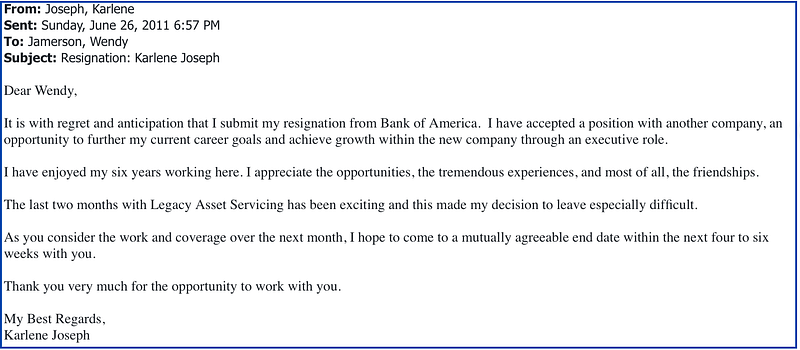
In my Bank of America days, I was in a parallel situation. I said yes to a promising role, “Mo’ Money, Mo’ Money, Mo’ Money,”¹ and the allure of leaping several rungs up my career ladder. I decided to trade the Southern warmth of Atlanta for the crisp air of New England, enticed by a higher position and a considerably fatter paycheck at The Hartford.
I sent my resignation on a Sunday night ahead of an already scheduled breakfast meeting at The Flying Biscuit. First thing on Monday morning, I would meet Wendy Jamerson, my dynamite Black woman Senior Vice President.
Over plates of breakfast fare, I said, “It’s not you, it’s me. I have to make a change.”
I thought of Wendy today, now that I was sitting on the opposite side of the table, grappling with the unexpected departure of a valuable member of my current team.
So, I asked my former boss, “Wendy, what was my quitting like from your point of view?”
What follows below is our collaborative response to the question I posed.
K. Thinking back to that day, do you recall what you thought? Do you remember what you said, what you wanted to say? What did you think about me and what I was doing?
W. Quite honestly, I have no memory of the exact words exchanged during this very important and pivotal time in our lives, but I do remember my feelings and emotions.
- sadness
I thought, “Karlene was more than a teammate. She was a friend.”
- fear
“Oh <insert expletive>! How can I lead the team to finish all the work without my right hand?”
- excitement
I reasoned, “She had a fabulous opportunity and a new adventure ahead of her, and I knew she would kill it.”
- hope
I wanted to communicate authentically, letting you know how important you were to the team, how much you would be missed, and how genuinely happy I was for you about the new role.
The fact that we remain friends to this day makes me think I did OK.
K. Yes, Wendy. You were and have continued to be an outstanding and exemplary leader. I remember being so nervous that morning ahead of our meeting. I was relieved you were so understanding. I left feeling we would remain connected and continue influencing each other. We will be friends forever.
K. But tell me, was my departure unexpected? Did you believe me when I said it wasn’t you, it was me?
W. Yes, but no. The timing of your resignation was a surprise. Although we knew each other at The Bank for years, you had been in my department for about three months when this happened. Still, I knew an employee with your talent and ambition would rise. It was my hope, even.
I did believe that you were not leaving me. I understood you were leaving for another exceptional leader who valued you. Plus, there was no way the company could match or counter the offer you received. Karlene, you took the time to explain the why and what was in it for you, and I understood. I championed your growth.
But that event sparked introspection.
Later that day, I remember thinking, “Could I have been more prepared for this? Are there things I can do to help high-performing employees feel fulfilled with their careers so they are less easily poached? Can employee turnover be embraced as a good thing?”
K. Wendy, I imagine, in short order, you also had to think about your team without me. In what ways did you see the team evolving or adapting as a result of my departure, and how did you plan to support this transformation?
W. Oh my, yes! I had to work with you on the transition plan, but other concerns made me approach the process differently than when other employees left.
While it was challenging to transition the work to an oversubscribed team, it was a straightforward task - allocate the work to the team members who could handle it best while managing expectations that we would not deliver the same amount of work on the same timeline with one less person.
However, the more challenging task would be filling the void of “Karlene’s” absence.
K. (chuckling) What do you mean?
You must know that your audacious optimism, charisma, and creativity motivated and energized the team in a highly stressful environment.
I spent more time with the team to maintain team morale and motivation and identified other teammates who could assist in this role. Another concern was the possibility of other teammates leaving, stimulated by your departure. To address this, I asked teammates for feedback on their jobs, the team, work-life after you left, or anything they wanted to share. I wanted to ensure that they felt heard, and to the extent that I could give them what they needed to feel happy and want to stay, I did.
K. (beaming) Yes, I would see you doing this!
“I calibrated my thinking to view employee turnover as something positive.” — Wendy Jamerson
After completing your transition, my team had to cope with the aftermath and move forward. During that time, I addressed the questions about how to become better prepared for similar situations in the future.
This was not a mere philosophical exercise for me — it was necessary. In those days, I knew more employees would soon leave. You remember the culture of those times. Our company faced high stress and fast-paced work, with regulatory demands, and everyone wanted our top performers — turnover was not a matter of if, but when.
To find a solution, I spoke to other managers in similar situations, my human resource business partners, mentors, and sponsors. Through these conversations, I developed a "recipe" that proved invaluable to me at the time and has continued to serve me well over the years.

K. Ah ha! Can you let us in on some of the aspects of the recipe? Employees quitting happens daily; what advice would you give managers to help them plan for or cope with an employee's departure?
W. Of course! As an in-demand executive coach, I share this formula with leaders to help them plan for and embrace employee turnover. Here are the three key ingredients:
- Consider adding “developer and exporter of key talent” to your brand. With that mindset, build transition into how you manage your team. If top talent is only expected to stay on the team for 12, 18, or 24 months, how do you leverage them to coach other team members or improve processes that make everyone better?
- Publicize your brand to attract talent from other areas who want to learn from you and grow their careers. You’ll want to provide your crucial talent opportunities for visibility to mentors, sponsors and senior leaders as part of their development. Leverage those same leaders to steer the next round of talent your way. Please get to know your people, mentor and cultivate them for that next role on your team while they are still in their current roles. Consider leveraging your external networking and other connections to build a talent pipeline.
- Carve out time quarterly or semi-annually to discuss career aspirations or conduct mini “stay interviews” with employees to stay abreast of their desires. Start by getting to know them and building trust so they will likely be more honest with you about where they want to go next and when. Additionally, as you learn their motivations, values, strengths and development opportunities, you may also be able to steer them to the next role where they will be most successful.
K. (impressed) I love this advice, Wendy. Thank you!
K. But, only some people are like you, Wendy. There is evidence that people leave bad managers. If a leader is experiencing many employees leaving their team, it may be a bad sign. I imagine they would think they’re doing something wrong. What advice would you give to a manager who has experienced high employee turnover on their team?
If a leader is dealing with high employee turnover, here are a few immediate steps they want to consider before incorporating elements of the developer and exporter of talent strategy.
- If you're wondering why employees are leaving your team, don't assume it's just about salary and benefits. Ask around and get the facts. If it's related to something you can fix, enlist the help of your manager, peers, or HR.
- Request open, honest feedback from the team. This could be done in an open team meeting, one-on-ones, or an interview-based 360. It's important to consider how the team's chemistry and level of trust will impact the feedback received. The goal is to identify any morale issues and prevent potential departures.
- Acknowledge feedback openly and quickly. Fix easy issues and communicate progress. Get coaching and training, enlist an accountability partner, and do better if it is you. Be open about what can't change — they may not like the answer, but they will appreciate your honesty, and it will manage their expectations.
I highly recommend this book on general leadership, which has a lot of pearls that are applicable.
K. Well, we can’t go wrong with a book by the legendary Carla Harris. She gives a definitive punctuation mark on this discussion! Thank you, Wendy Jamerson!
In this interview, Wendy Jamerson's insights have helped me understand the emotional and rational dimensions of addressing employee attrition.
As a leader, it's essential to combine emotional intelligence with strategic insight to build resilient teams. Wendy's reflections guide leaders through organizational change to weather attrition and foster adaptability, growth, and team spirit.
© 2023/2024 K. Joseph, All Rights Reserved
꧁༒☬T͎h͎a͎n͎k͎ ͎y͎o͎u͎ ͎f͎o͎r͎ ͎r͎e͎a͎d͎i͎n͎g͎!͎☬༒꧂
Dear reader, I hope you found this to be helpful. Please drop us a comment and let us know your reactions!
This article includes affiliate links to Amazon products. As an Amazon Associate, I earn from qualifying purchases at no extra cost to you.
¹Source: In Living Color — Homeboys Shopping Network


