

How To Monitor Our Physical Health? Start When We Are In Our 20s.
We are currently healthy, but we are also at risk. Monitor our physical health before it sways off indefinitely.
Today, data monitoring is everywhere. In blog writing, we monitor reaches, views and reads. In businesses, we monitor costs and sales performances. In transports, we monitor fuel level, engine temperature and tyre pressure. In factories, we monitor whether the machine passes its quality control test and safety test. In most careers, we do some sort of monitoring. But, when we are ourselves, how often do we monitor our physical health?
Being young, do we take our physical health for granted as ‘it never goes wrong’?
We have a long life to live. You need to constantly check your ‘body machine’ to make sure it functions optimally to help you to reach your destinations.
Why self-monitoring matters?
There is a small benefit from self-monitoring on the subject of weight management. If you are aware of your body weight is increasing, you can take actions before it is too late. If you are aware that your calories intake is too high, you can take actions to change your diet before you put on weight.
Being 20s, weight gain is one of the biggest health challenges!
In this story, I will share a few standard measurements that are proven to be associated with the risk of metabolic diseases. Additionally, I will also share some other non-standard measurements to monitor your physical health.
Measure 1: Weight, Height, and BMI
After you measure your weight and height, you can use an online BMI calculator to calculate your BMI.
If you are NOT an athlete, a Caucasian should aim for a BMI between 18.5 and 25.0. For Asian, WHO recommends a BMI between 18.5 and 23.0. The difference is because Asians deposit more fat on the internal organs at the same BMI as their Caucasians counterpart, predisposing Asians to a higher metabolic risk at a lower BMI. Interestingly, many Asians tend to be “thin on the outside, fat on the inside”. Consequently, Asians tend to develop diabetes at a lower BMI than Caucasians.
We need to acknowledge that the day-to-day fluctuation of body weight is normal. As for me, the fluctuation of my body weight is approximately +/- 0.5 kg; whereas for others who weigh more than me, the fluctuation can be as high as +/- 2.0 kg. This is very likely due to the changes in body fluid retention. The best time to measure your body weight is in the early morning, after urination and before breakfast.
Fun fact: You weigh less in the morning than at night!
Measure 2: Waist and hip circumference, and its ratio
Buy a measuring tape to measure your waist and hip circumference. You will also require the help of a kind family member to perform these measurements.
Your waist can be measured by placing the tip of the measuring tape just above your belly button and bring the tape around your abdomen. Make sure the tape is not pinching your skin and is parallel to your hip before taking the reading. Your hip can be measured by placing the tape around the widest part of your hip.

The above is the cut-off points for waist circumference and waist-hip ratio. As we know Asians have a higher metabolic risk at a lower BMI, the cut-off points for Asian men and women when the waist circumference is recommended as 90 cm and 80 cm (yes, same as the Caucasian women standard) respectively.
High waist circumference and/or high waist-hip ratio, in combination with high BMI, predicts a higher risk of fat-related diseases, such as diabetes.
Measure 3: Blood pressure
Monitoring your blood pressure is particularly important if you are at risk of hypertension. Buy a digital blood pressure monitor and learn how to use it from a pharmacy, it is relatively easy to use. You have to wrap the cuff around your upper arm, rest your arm at heart level, then push the start button.
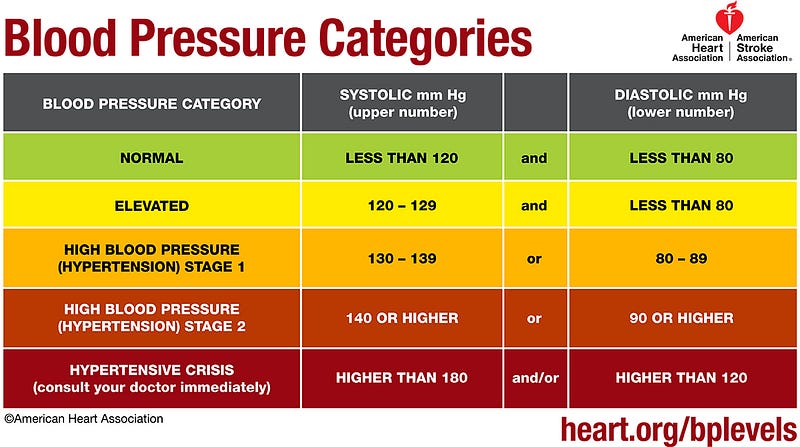
There are two numbers in blood pressure measurements: Systolic and Diastolic. Systolic measures the blood pressure when heart pumps, whereas diastolic measures the blood pressure when heart relaxes.
There is no consensus on how to define a low blood pressure. Even if your blood pressure falls far below the 120/80 (systolic/diastolic) number, like say a 90/60, you can still be a healthy person without any adverse consequences. If you are not feeling dizziness or shortness of breath, low is better than high.
Blood pressure fluctuates from day to day and can be affected by a plethora of factors, such as physical activity level, mood, stress, diet, hydration, etc. The best time to measure your blood pressure is in the early morning, after urination and before your breakfast.
Other non-standard measures
Body composition
BMI, body weight and waist-hip circumference do not tell us about how much fat we have in our body. The weight in our body is a combination of fat mass, lean mass and mineral mass (bone). Two individuals of the same weight and the same height can be very different in body composition.
Heavy, but not necessarily fat!
To find out how much fat you have, you going to need a body composition scale. Some body composition scales look like a standard bathroom scale, but other body composition scales are handheld. They are not expensive to buy but definitely choose a good one which is clinically tested and approved. The picture below shows an example of a hand-held body composition scale.
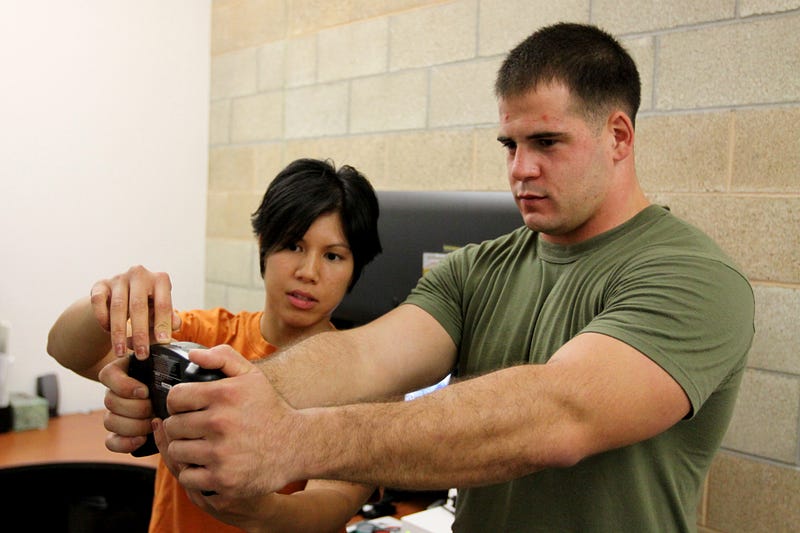
The body composition scale analyzes your body fat using a method called the bioelectrical impedance analysis (BIA). It works by sending a very small pulse of electricity across your body, from one electrode of the scale to another electrode of the scale. Electricity moves faster when your body has less fat, whereas electricity moves slower when your body has more fat. This is how the scale estimates your body fat.
Blood glucose
You can measure blood glucose by yourself using a finger-prick glucometer. It is available for purchase from a pharmacy, and a pharmacist will teach you how to use it. Checking your blood glucose is important especially if you have pre-diabetes.
Currently, about 1 out of 3 adults in US have pre-diabetes, 90% of them don’t know they have it!
The high prevalence of unconfirmed pre-diabetes is probably due to irregular monitoring, either with a doctor or by ourselves, when we are still healthy. With the glucometer, we can experiment with different diets to lower our blood glucose.
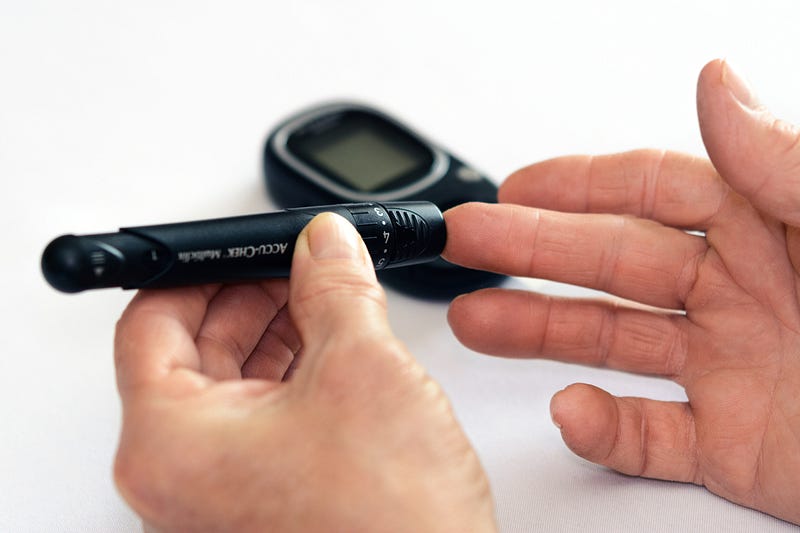
A fasting blood glucose is normally checked in the early morning before breakfast, after an overnight fast between 8 and 14 hours.
Steps
Many of the mobile devices keep track of our steps. Try to aim for 10,000 steps. How capable are we to perform 10,000 steps a day? This is especially important if we are not actively engaging in sports. By keeping up these steps, you maintain your energy expenditure and physical health, which is vital to slow age-related weight gain.

Food journal
Keep a food journal by using a good application, such as MyFitnessPal. A food journal is only accurate if you take it seriously enough. It is important to have a kitchen scale to weigh the amount of food you eat. I have shown in my previous story that a small but accumulated mismatch between calories-in and calories-out can easily trigger 0.5 kg weight gain every year. Being accurate is fundamental.
It is too easy to overestimate or underestimate intake by ‘eye-weighing’ food.
MyFitnessPal is absolutely free to use and will provide you with an estimate of how much calories you should eat. It is one of the most trusted food journal applications by dietitians.
Take home message
It is best to start monitoring health when we are still young to prevent your body from tipping over the balance of health is better than cure. Nevertheless, it is never too late to start if you are not in your 20s anymore.
Disclaimer: Be able to monitor your health does not mean you don’t have to pay your doctor a visit at least annually for your health checkup.



