
How to make your website visible on ChatGPT?
The raise of the large language models is dramatically changing the way we interact with businesses online.
The entire industrial chain of SaaS editors, marketplaces, advertisers, integrators, SEO experts, and agencies see tectonic changes in the next 24 months.
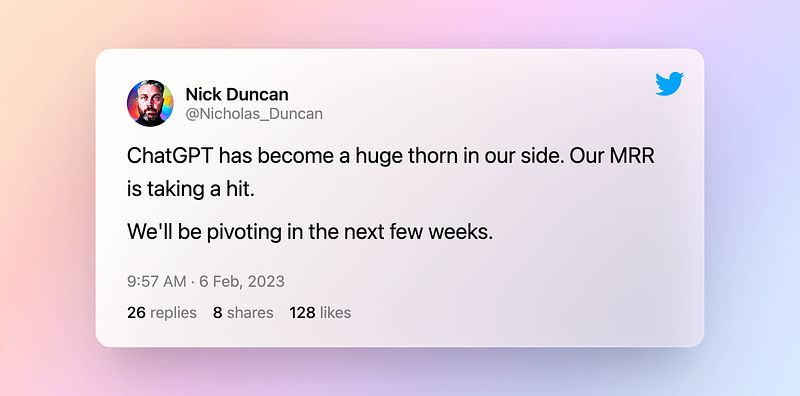
How advertise on a chat conversation without looking creepy? As left-sidebar ads? Sneaking between messages like Twitter? Will Google really die? How sell on ChatGPT3? Do I still need an e-commerce website?
The tech industry is boiling now about what to build next. Thousands of LLM-powered startups are pitching VCs now, while established actors are already the Nokias and AOLs of tomorrow’s world, without even knowing it yet. Let’s see why.

If people prefer “asking” to “searching”, GAFAs will have to “answer” questions instead of “finding” the right content to serve.
Websites will become irrelevant.
80% of the content is written for SEO. The 20% remaining pages are here to help you to find, select and buy some product or service.
If people spend more time talking to their search engines, brands will fight to be part of the conversation.
— But, How?
How advertise on a chat conversation without looking creepy? As left-sidebar ads? Sneaking between messages like Twitter?
Being the answer.
Product descriptions are now optimized for SEO. They are packed with keywords and questions that try to match search queries.
But, if a product wants to be part of a conversation between a prospect and AI, the description must provide as many characteristics as possible, instead of keywords.
Why?
Most of the complexity in the e-commerce front-end is catalog drill-down.
Today, users are literally explaining to websites, through all sorts of filters and sorting buttons, what kind of vase or trousers they want. It’s a painful process for UX designers, brands, and users.
Want your product to be the answer to a conversation? — Make sure to be crystal clear on what your product does, with 10x more details than you used to do for e-commerce.
Advertisement spending will be simplified. You will pay Google or Amazon so your services or products will be part of more conversations than the competition or that the AI will be more or less persuasive.
You don’t fight for keywords anymore, you build knowledge about your products.
PIMs will be more important than your e-commerce platform, submitting their products to large e-commerce marketplaces through APIs.
With a level of detail, we’ve never achieved before.
AI-powered marketplaces will be hungry for data, materials, sizes, use cases, shapes, and colors, but even internal components, servicing prices…
Testimonials will complete the painting.
Transparency will pay, but less than dollars. You don’t need to “convert” your visitor with a story-telling and CTAs, you need to be part of each conversation. The more you disclose about your product more chances being part of an AI recommendation. The more you pay, the better the AI will try to sell your product.
But how translate emotions, tone of voice, and brand values?
You can fake humans, but not an AI. At least not that easily.

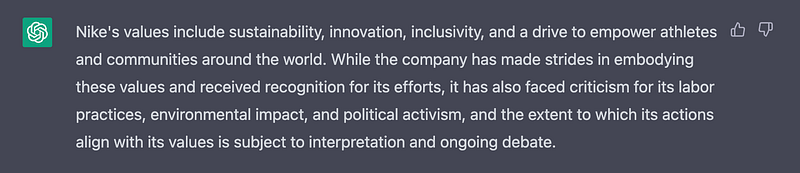
Brands will need to show less and act more. Overall I think that LLM and AI-powered search will bring more quality to the world requiring brands more transparency, honesty, and quality. Cheating human brains, full of cognitive biases is easy, AI doesn’t have them, it’s only data & stats.
Targeting will be less about intent than about persona:
I don’t need to guess what the user wants if she asks me.
And what could happen to services marketplaces like Deliveroo or Sixt?
Each time you use search or calendar+geolocation UI, you will probably see the chat.
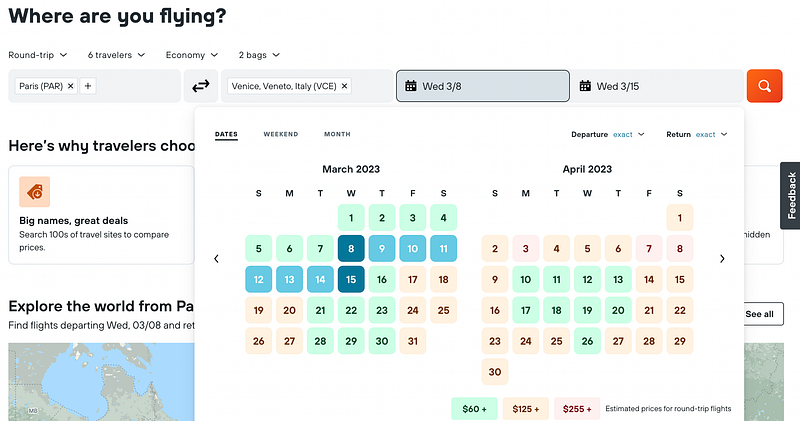
More precise, reassuring, and natural.
But more importantly, we’ll see an extreme standardization of the way we “talk” platforms. “Prompts” will be more or less complex depending on the niche. We’ve learned for the last 50 years how to interact with a mouse, buttons, drag-drop, pitching, and swiping. We’ll have to learn prompting.
APIs will offer links between natural language-fueled platforms talking to each other. Will we see an “Open-Prompt-Notation” format so platforms will be easier to connect?
Training will require data. About products, services, travel destinations, about each industry in fact.
Booking.com’s large language model will have to know everything about destinations, towns, and activities. Junk SEO content about “THE 15 BEST Things to Do in Paris” will be outplaced by Wikipedia-like data on each activity, submitted in a structured way.
Deliveroo or Uber Eats will need to know everything about dishes, allergies, and the national food of many countries.
AI will force brands to describe themselves in a structured way.
Structured data about the world will pay. Who knows the most about the world? Google. Not quite ready to disappear yet.
What that would mean for today’s SaaS editors, digital agencies, SEO experts, and UX designers, for all of our industry?
Extreme simplification of consumer-facing technologies.
I would not invest in SaaS CMSs platforms, SEO content generation platforms, e-commerce platforms, behavioral analytics platforms, …
Fewer pages, less content, probably less bullshit. The efforts will simply not pay anymore.
I see raising the power of Telegram, and new conversational all-in-one platforms like WeChat, connected with LLM providers. Mutually benefiting from data, revenue, and existing networks.
Prompting will be easier with each iteration, but will remain technical for the sake of efficiency.
It’s simply easier to codify conversation with short acronyms rather than words. We see it in any industry, speaking to any expert in any field, asking them to talk “their language”. It’s already a kind of prompting.
Niche LLMs with very complex prompting will be a new field for UX research. We already see Midjourney prompts with dozens of parameters, making it almost a programming language by itself.
/imagine prompt: pristine japanese house with a garden,
isometric projection, unreal engine, in style of sekiro shadows
die twice videogame, digital art, hyperdetailed:: anatomical
drawing::2.9 backlight::2.7 crepuscular rays::1 fire::1 macro
lens::2 amber::1.4 bronze::0.7 ceramic::2.5 cotton::1 dof
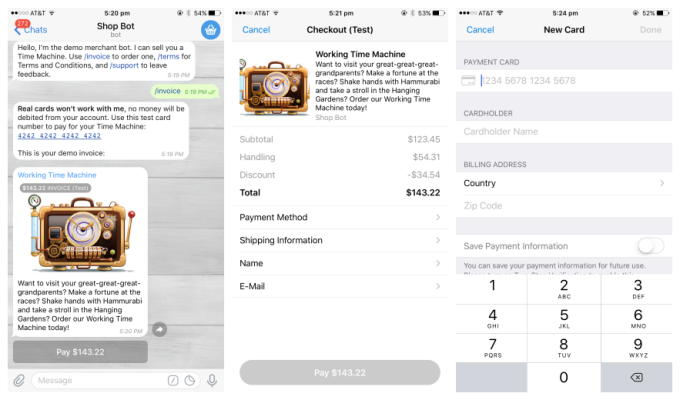
--h 1000 --w 1000 --v 4 --quality 2 --stylize 20000Where happens the checkout, is actually the only thing that matters.
Inside the conversation for commodity, like in WeChat, outside for exceptional purchases. Websites will become customer care portals.
How much information will LLM marketplace will share with the vendors is a big question, but I think that conversation analytics dashboards for example would be an interesting topic for UX designers in the coming years.
It’s all about asking the right questions.
Let’s continue the conversation on your favorite platform about this article: HackerNews or LinkedIn or Reddit



