avatarEgis R.

Free AI web copilot to create summaries, insights and extended knowledge, download it at here

3373

Abstract

by the author</figcaption></figure><p id="4a6a">Continue to train hard (how close to failure you train). As hard as you did before you began dieting.</p><p id="0a87">If you started dieting squatting 200 pounds for 6 repetitions, you should aim to stay around the same load throughout the diet (the drop in strength during the initial few weeks of dieting is normal due to reduced glycogen aka carbohydrate stores).</p><p id="eddf">That’s going to be the stimulus for your body to burn fat rather than muscle.</p><p id="10a3">Now the reduced volume will take care of the impaired ability to recover from training. <a href="https://readmedium.com/how-to-create-a-training-plan-9-key-variables-3d3b6959afe">In this article</a>, I said that you should do 10–20 sets per major muscle group per week to build muscle:</p><figure id="c630"><img src="https://cdn-images-1.readmedium.com/v2/resize:fit:800/1*1xL6VFBz4p0qWB5EWPxvvg.png"><figcaption>Image by the author</figcaption></figure><p id="097a">Let’s say you’ve been doing 16 sets per major muscle group per week before starting a diet. As you start dieting, reduce it by 10–20%. So instead of 16 sets, you would now do 13–14 sets.</p><p id="7b56">If your regular training involves training traps, forearms, abs, etc., instead of reducing overall volume, just get rid of that fluff. Focus on exercises that matter most — big compound lifts such as the squat, bench press, RDL, overhead press, etc.</p><p id="0980">So keep the intensity, reduce volume or remove less effective exercises and you will signal the body to hold on to the muscle while also managing recovery.</p><p id="e023"><b>Note:</b> The leaner you are the more this applies to you. If you have a lot of weight to lose, you can ignore the whole volume reduction thing and just train within the recommended volume landmark which is 10–20 sets per major muscle group per week.</p><h1 id="7a3b">2. Lose weight within recommended rates</h1><p id="7cdd">The more calories you cut from your diet, the more it interferes with recovery from resistance training. The body can only do so much with limited calories until it goes “Screw this moron. It’s too much. I’m going for the muscles.”</p><p id="0fd3">This is especially true for leaner individuals because they have less stored energy for their bodies to tap into.</p><p id="48c7"><b>Multiply your goal body weight in pounds by 11–12</b>. 11 if you get less than 8,000 steps a day and 12 if you get more. (If you have more than 50 pounds to lose, use 50-pound increments.)</p><p id="41d8">Once that’s taken care of, stick to these rates of weight loss (ignore them and a larger percentage of weight loss might come from muscle mass rather than fat stores):</p><figure id="6db8"><img src="https://cdn-images-1.readmedium.com/v2/resize:fit:800/1*UFGfJEUOylbvGq6hw_KNFA.png"><figcaption>Image by the author</figcaption></figure><h1 id="d362">3. Prioritize protein</h1><p id="3c9b">Higher protein intake spares lean mass from being used for energy while in a calorie deficit. <a href="https://academic.oup.com/ajcn/article-abstract/32/11/2217/4692076?redirectedFrom=fulltext">Layman et al.</a>:</p><figure id="51dc"><img src="https://cdn-images-1.readmedium.com/v2/resize:fit:800/1*HnpBHnBR_NLiDthDgLYJtg.png"><figcaption>Image by the author</figcaption></figure><p id="afa7">Compared the RDA protein recommendation (0.

Options

8g/kg) with double that (1.6g/kg) and found that the high-protein group lost less lean mass and more fat mass.</p><p id="8ef8">In <a href="https://pubmed.ncbi.nlm.nih.gov/10838463/">Demling and Desanti’s study</a>:</p><figure id="0518"><img src="https://cdn-images-1.readmedium.com/v2/resize:fit:800/1*62YStTgXoGc7lZeCAj8gqg.png"><figcaption>Image by the author</figcaption></figure><p id="559b">Subjects even gained both lean muscle and strength while also losing fat by consuming 1.5g/kg of protein and lifting weights.</p><p id="ddd3">The <a href="https://www.ncbi.nlm.nih.gov/pmc/articles/PMC6370268/">2019 study</a> concluded that:</p><figure id="e3f7"><img src="https://cdn-images-1.readmedium.com/v2/resize:fit:800/1*TJnBdwXTopIMf4HwyjEk3w.png"><figcaption>Image by the author</figcaption></figure><p id="e002">So make sure to get 1.6–2.2 grams of protein per kilogram of body weight (0.73–1 g/lb) and spread it out over 3–5 meals. I wrote near an essay on <a href="https://readmedium.com/how-often-should-you-eat-to-lose-weight-or-build-muscle-1308cffa24d2">meal frequency</a> so let’s move on.</p><h1 id="a2bd">4. Don’t miss sleep</h1><p id="1e51">It’s as scary as having a vasectomy how much muscle you can lose if you miss sleep regularly. Combine sleep deprivation with calorie deficit and you have a recipe for muscle loss:</p><figure id="e38e"><img src="https://cdn-images-1.readmedium.com/v2/resize:fit:800/1*thrr5lEEWTBgrXifBY6jhw.png"><figcaption>Image by the author</figcaption></figure><p id="89d0">How much sleep do you need? Geez, I wish I could give you a specific number.</p><p id="3bf7">I sleep around 7 hours and I feel great. Give me 6 or 9 hours and I will be drinking life-giving infusions of coffee throughout the day.</p><p id="1689">The often spouted 8-hour rule might be a good place to start. Start there and see how you feel and how your gym performance is.</p><h1 id="7399">Alrighty, here’s how to maintain muscle when dieting:</h1><ul><li><b>Resistance train</b>. No matter how much protein you plow through and how much you sleep you will probably lose muscle without it. Reduce total volume, maintain intensity and you will be fine.</li><li><b>Ditch the temptation to lose weight more quickly</b>. Obese people might get away with it (at least for some time) but most of us will not. It’s not a race. There’s no finish line. Take your time and do it in a sustainable way.</li><li><b>Increase protein intake</b>. Unless you’re strapped in bed in a nuthouse you need to go to the kitchen and start building protein-rich meals.</li><li><b>Sleep more</b>. Trying to lose fat and lift weights while sleep-deprived defeats the purpose of what you’re trying to achieve — you will see negative body composition changes.</li></ul><p id="407f">Thanks for reading. Now I’m gonna have a serious talk with my grandma. That denture cup of hers gotta go.</p><p id="ba50"><i>This is the part where I should write some soaring eulogy, a rising crescendo of enthusiasm, and all the certifications I have, all the blah barf blah. Well, I’m not going to do that. I’m just writing what I did, what hundreds of my clients did, and what the current evidence suggests. Implement or don’t. Your call. I just report science. Now go start my <a href="https://www.subscribepage.com/fatlossforlife">14-Day Fat Loss For Life FREE Course</a>.</i></p></article></body>

How To Maintain Muscle Mass While Getting Leaner
Image by the author

Losing muscle mass when dieting is worse than waking up in the middle of the night, grabbing a glass of water, and realizing that you’ve just had a generous sip from your grandma’s denture cup.

Yikes…

But how do you maintain muscle mass when getting leaner? ‘Roids? Yeah… Nah.

Actually, true muscle loss is over-exaggerated. It’s possible but you have to screw up your diet and training big time. And yet somehow many trainees manage to make a hash of it.

The following four pieces of advice will keep you from losing hard-earned muscle and ending up looking like him (I call him Gollum 2.0):

Image by the author

1. Don’t screw up your training

You have to lift weights. I’m not talking about cardio. Or run-till-you-puke HIIT. Or yoga.

I’m talking about barbells, dumbbells, machines, and cables. Squats, bench press, lunges, and overhead presses. That sorta thing.

Resistance training has shown an impressive ability to maintain muscle mass. Even when combined with huge calorie deficits. At least in untrained/obese subjects (it’s a different story with leaner/trained individuals).

Here’s what Bryner et al. did in their study:
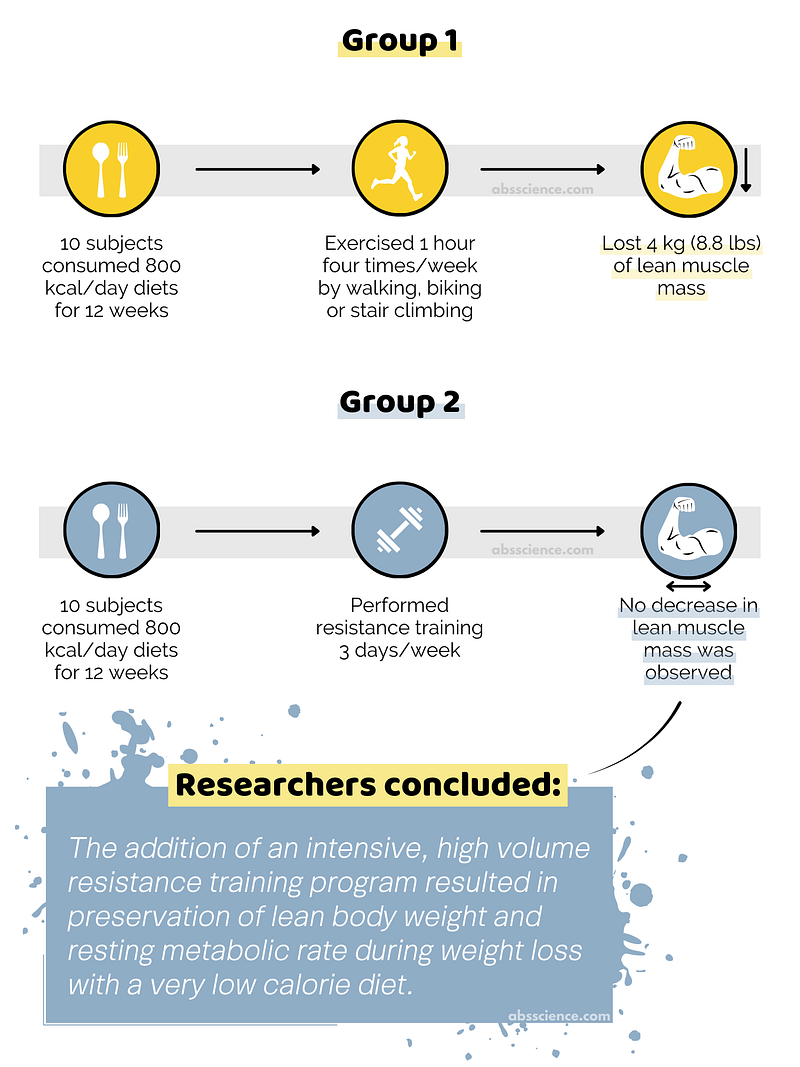
Image by the author

You see, calorie deficit (which is required for fat loss to occur) is catabolic — your body begins to use stored energy because you’re not giving it enough energy from food.

In a calorie deficit, your body wants to survive. Since muscle is metabolically expensive, it’s gotta go. It serves no purpose when all that your body wants to do is survive.

The body goes like “Oh! Look what we’ve got there! Muscle! Let’s break it down to support vital functions.”

That’s where resistance training comes in. It gives purpose. It provides a stimulus that “tells” the body to keep muscle, preventing it from being broken down and used for energy.

Now, just because resistance training preserves muscle mass doesn’t mean you need to train until the barbell crushes your adam’s apple during a bench press. Train too much and you will hear muscle disappearing with little popping sounds.

Your body is not getting enough calories to recover properly so you cannot do as much volume (sets/muscle group/week) as you do in maintenance or muscle gain phases. If you try to do more than you can recover from, then it’s no Bueno. You will probably lose muscle.

So what’s the solution then? This is the formula that I use with my clients:
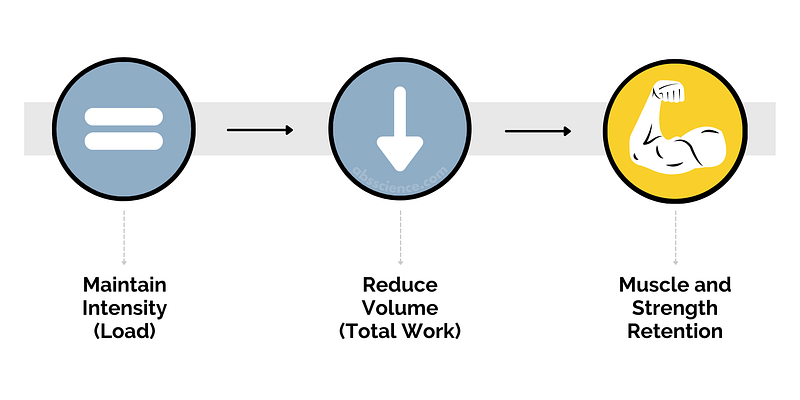
Image by the author

Continue to train hard (how close to failure you train). As hard as you did before you began dieting.

If you started dieting squatting 200 pounds for 6 repetitions, you should aim to stay around the same load throughout the diet (the drop in strength during the initial few weeks of dieting is normal due to reduced glycogen aka carbohydrate stores).

That’s going to be the stimulus for your body to burn fat rather than muscle.

Now the reduced volume will take care of the impaired ability to recover from training. In this article, I said that you should do 10–20 sets per major muscle group per week to build muscle:
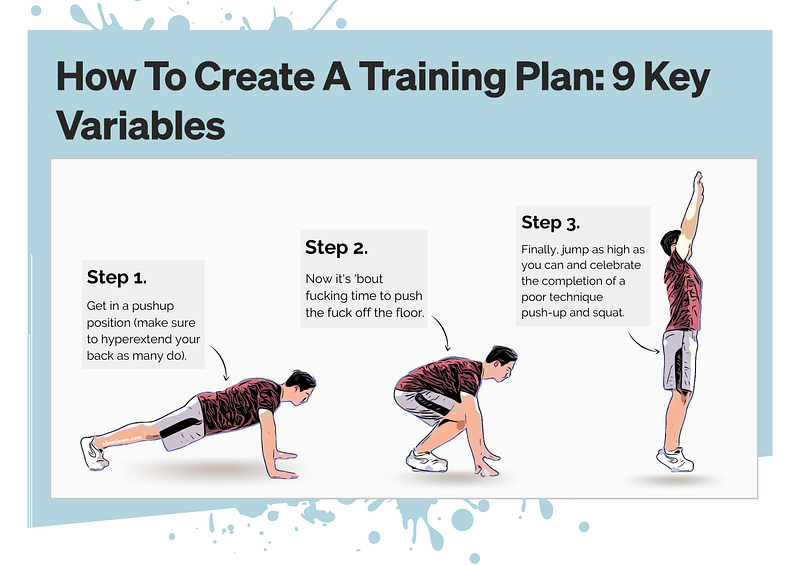
Image by the author

Let’s say you’ve been doing 16 sets per major muscle group per week before starting a diet. As you start dieting, reduce it by 10–20%. So instead of 16 sets, you would now do 13–14 sets.

If your regular training involves training traps, forearms, abs, etc., instead of reducing overall volume, just get rid of that fluff. Focus on exercises that matter most — big compound lifts such as the squat, bench press, RDL, overhead press, etc.

So keep the intensity, reduce volume or remove less effective exercises and you will signal the body to hold on to the muscle while also managing recovery.

Note: The leaner you are the more this applies to you. If you have a lot of weight to lose, you can ignore the whole volume reduction thing and just train within the recommended volume landmark which is 10–20 sets per major muscle group per week.

2. Lose weight within recommended rates

The more calories you cut from your diet, the more it interferes with recovery from resistance training. The body can only do so much with limited calories until it goes “Screw this moron. It’s too much. I’m going for the muscles.”

This is especially true for leaner individuals because they have less stored energy for their bodies to tap into.

Multiply your goal body weight in pounds by 11–12. 11 if you get less than 8,000 steps a day and 12 if you get more. (If you have more than 50 pounds to lose, use 50-pound increments.)

Once that’s taken care of, stick to these rates of weight loss (ignore them and a larger percentage of weight loss might come from muscle mass rather than fat stores):
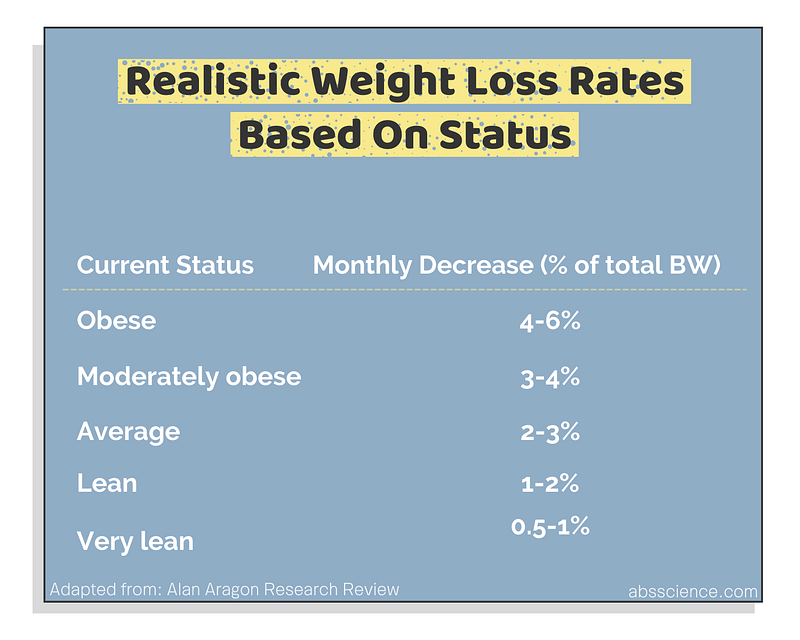
Image by the author

3. Prioritize protein

Higher protein intake spares lean mass from being used for energy while in a calorie deficit. Layman et al.:
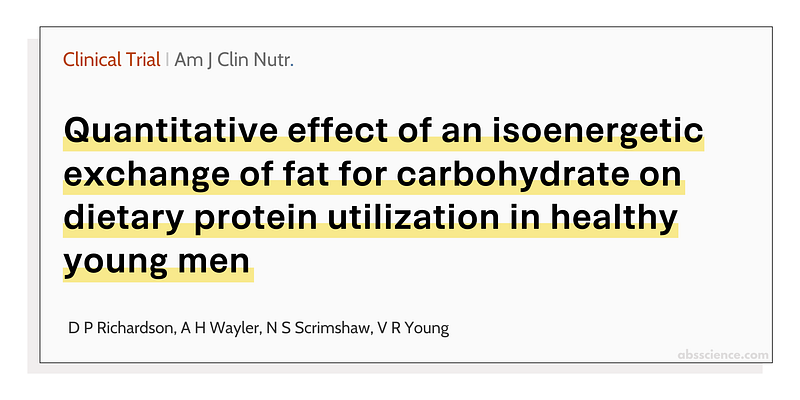
Image by the author

Compared the RDA protein recommendation (0.8g/kg) with double that (1.6g/kg) and found that the high-protein group lost less lean mass and more fat mass.

In Demling and Desanti’s study:
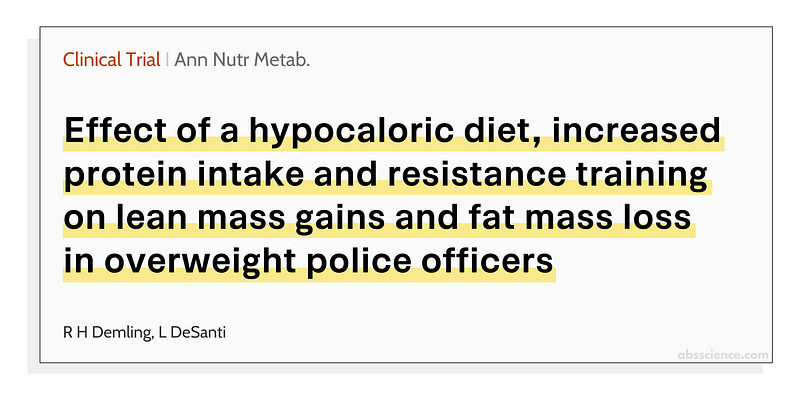
Image by the author

Subjects even gained both lean muscle and strength while also losing fat by consuming 1.5g/kg of protein and lifting weights.

The 2019 study concluded that:
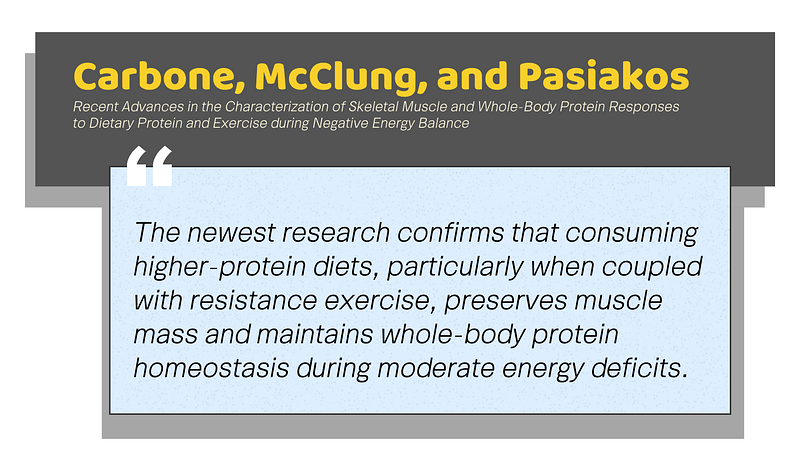
Image by the author

So make sure to get 1.6–2.2 grams of protein per kilogram of body weight (0.73–1 g/lb) and spread it out over 3–5 meals. I wrote near an essay on meal frequency so let’s move on.

4. Don’t miss sleep

It’s as scary as having a vasectomy how much muscle you can lose if you miss sleep regularly. Combine sleep deprivation with calorie deficit and you have a recipe for muscle loss:
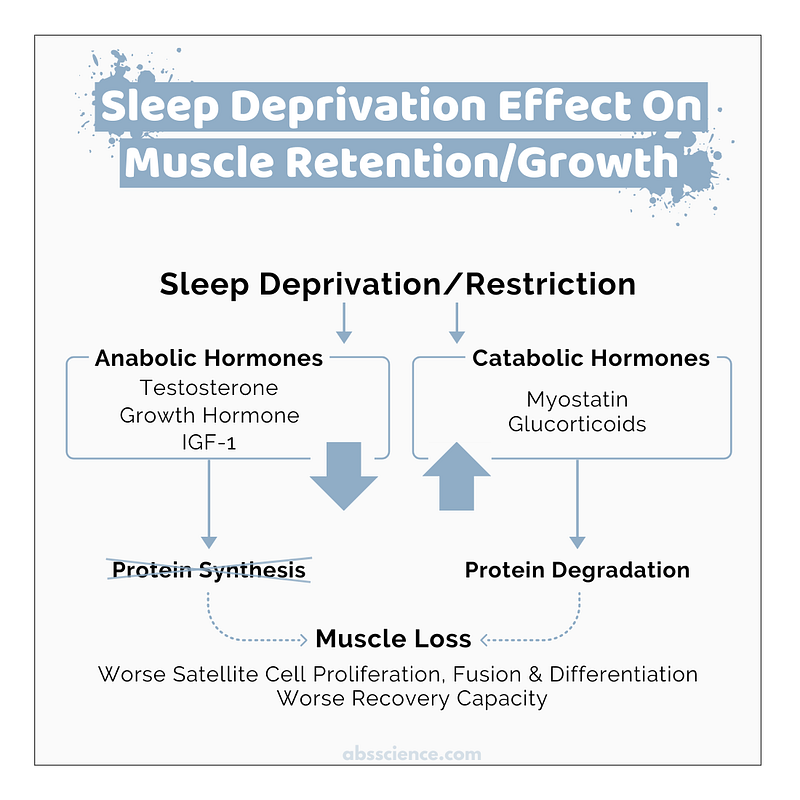
Image by the author

How much sleep do you need? Geez, I wish I could give you a specific number.

I sleep around 7 hours and I feel great. Give me 6 or 9 hours and I will be drinking life-giving infusions of coffee throughout the day.

The often spouted 8-hour rule might be a good place to start. Start there and see how you feel and how your gym performance is.

Alrighty, here’s how to maintain muscle when dieting:

  • Resistance train. No matter how much protein you plow through and how much you sleep you will probably lose muscle without it. Reduce total volume, maintain intensity and you will be fine.
  • Ditch the temptation to lose weight more quickly. Obese people might get away with it (at least for some time) but most of us will not. It’s not a race. There’s no finish line. Take your time and do it in a sustainable way.
  • Increase protein intake. Unless you’re strapped in bed in a nuthouse you need to go to the kitchen and start building protein-rich meals.
  • Sleep more. Trying to lose fat and lift weights while sleep-deprived defeats the purpose of what you’re trying to achieve — you will see negative body composition changes.

Thanks for reading. Now I’m gonna have a serious talk with my grandma. That denture cup of hers gotta go.

This is the part where I should write some soaring eulogy, a rising crescendo of enthusiasm, and all the certifications I have, all the blah barf blah. Well, I’m not going to do that. I’m just writing what I did, what hundreds of my clients did, and what the current evidence suggests. Implement or don’t. Your call. I just report science. Now go start my 14-Day Fat Loss For Life FREE Course.

Fitness
Health
Gym
Weight Loss
Diet
Recommended from ReadMedium