avatarEgis R.

Free AI web copilot to create summaries, insights and extended knowledge, download it at here

3095

Abstract

, and then stay consistent with that meal frequency. Having some kind of structure in your diet takes the guesswork out of your hands.</p><p id="a511">At the very least, it will reduce the chances of “accidentally” passing out from the tryptophan-induced Oreos coma.</p><h1 id="df34">You’re Obese or Overweight Beginner Lifter Who Wants to Build Muscle</h1><p id="6087">If you want to build muscle, intermittent fasting is a really dumb thing to do and goes against every single thing you learned in year one biology. It’s implausible to think that eating 1–2 meals a day will optimize muscle growth.</p><p id="f346">To understand why, you need to understand what muscle protein synthesis and muscle protein breakdown are.</p><h2 id="90b3">Muscle protein synthesis (MPS)</h2><p id="7d7d">The protein you eat is broken down into amino acids — building blocks of muscle. Then your body uses them to repair and, eventually, build new muscle:</p><figure id="6640"><img src="https://cdn-images-1.readmedium.com/v2/resize:fit:800/1*k_bavtBTzJ9RbvYSzYMGmA.png"><figcaption>Image Source: Author</figcaption></figure><h2 id="2431">Muscle protein breakdown (MPB)</h2><p id="6e63">It’s the opposite of MPS — muscle is broken down into amino acids.</p><p id="bb91">Now, our muscles are going through some level of muscle protein synthesis and breakdown AT ALL TIMES throughout the day. And to build muscle, you want MPS to exceed MPB:</p><figure id="31fe"><img src="https://cdn-images-1.readmedium.com/v2/resize:fit:800/1*fHF6PK6a5nFuna3g2nGI_w.png"><figcaption>Image Source: Author</figcaption></figure><p id="f2ee">And that’s where meal frequency comes in — you should have a <b>minimum</b> of 3 protein-rich meals per day to spend as much waking time as possible within MPS.</p><p id="d558">I said <i>minimum</i> because 4 or more meals may work better for some people to reach a <i>minimum</i> of 1.6 g of protein per kg per day (0.7 g/lb). This is a bare minimum to build muscle (<a href="https://www.ncbi.nlm.nih.gov/pmc/articles/PMC5828430/">source</a>):</p><figure id="a49a"><img src="https://cdn-images-1.readmedium.com/v2/resize:fit:800/1*KFV5iYUaaysNk7QaMhTKZQ.png"><figcaption>Image Source: Author</figcaption></figure><p id="1ec2">So, 3 meals are a minimum and 4 might be a sweet spot. Intermittent fasting is out of the question — put it, for all eternity, in a room next to the lift shaft because it’s sub-optimal for muscle growth.</p><h1 id="34c1">You’re Normal Weight Individual Who Wants to Get Leaner</h1><p id="c6c8">Maybe you want to uncover some abs. Just some definition. Nothing too extreme.</p><p id="fbca">You have no intention of getting 6% bodyfat shredded to the bone as I once was (looks cool but there’s not much fun of being that lean. Really. I’m not being facetious):</p><figure id="ff44"><img src="https://cdn-images-1.readmedium.com/v2/resize:fit:800/1*Yfq3GEo9464iQhIIaHMDHw.png"><figcaption>Image Source: Author</figcaption></figure><p id="e6d7">If you have no competitive or extreme leanness goals, how often you eat still doesn’t really matter for fat loss — <b>tota

Options

l daily nutrition still trumps the distribution of meals throughout the day</b>.</p><p id="635e">So follow the same guidelines as for losing weight— base the number of meals on your schedule and personal preference.</p><h1 id="eb0b">You’re Normal Weight Individual Who Wants to Build Muscle</h1><p id="8a88">In this scenario, you’re an intermediate lifter who has been lifting weights consistently for 2–4 years. As for overweight individuals with the same goal, you would benefit from a minimum of 3, ideally 4, protein-rich meals a day.</p><p id="9e34">As long as those 3 or 4 meals allow you to hit the 1.6–2.2 g/kg/day target of daily protein intake (0.7–1 g/lb), you’re golden.</p><h1 id="6657">You’re an Advanced Lifter Who Wants to Get Stage-Lean</h1><p id="0c8c">Postulating on recommendations for this very small population is just theoretical wanking because I don’t think physique competitors read my stuff.</p><p id="13d0">I think they’re sitting in front of the mirror and are like “Oh God, I’m so happy and ripped. Although… I should probably do something about my non-existing sex drive.”</p><p id="668d">So let’s just skip to the application for the general population part.</p><h1 id="8e73">Application</h1><ul><li>If you’re a novice individual who is overweight or obese, the number of meals doesn’t really matter for fat loss as long as you have regularity with those meals. If muscle gain is the goal, you should have a minimum of 3 protein-rich meals.</li><li>If you’re an intermediate normal weight lifter, the number of meals still doesn’t really matter as long as you have regularity with those meals. If muscle gain is the goal, you should have a minimum of 3, possibly 4, protein-rich meals.</li><li>If you’re an advanced physique athlete, you already know wassup and you know 101 different ways to get super shredded none of which includes my advice.</li></ul><p id="d0e7">As Alan Aragon, a nutrition researcher observed,</p><blockquote id="60b0"><p>Worrying about low daily meal frequency while cutting is unfounded when you consider the collective evidence showing similar effects on body composition with daily caloric restriction versus intermittent fasting.</p></blockquote><p id="fc2f">Meaning, as long as the number of meals falls in line with your personal preference and there’s some regularity, you will lose weight (assuming you’re in a caloric deficit).</p><p id="c559">Now, if you want to get bigger, ditch the intermittent fasting idea. No one ever became a bodybuilder by fasting. You get big by… EATING.</p><p id="78de">Plus lifting more than your iPhone.</p><p id="45c1"><i>This is the part where I should write some soaring eulogy, a rising crescendo of enthusiasm, and all the certifications I have, all the blah barf blah. Well, I’m not going to do that. I’m just writing what I did, what hundreds of my clients did, and what the current evidence suggests. Implement or don’t. Your call. I just report science. Now go start my <a href="https://www.subscribepage.com/fatlossforlife">14-Day Fat Loss For Life FREE Course</a>.</i></p></article></body>

How Often Should You Eat to Lose Weight or Build Muscle?
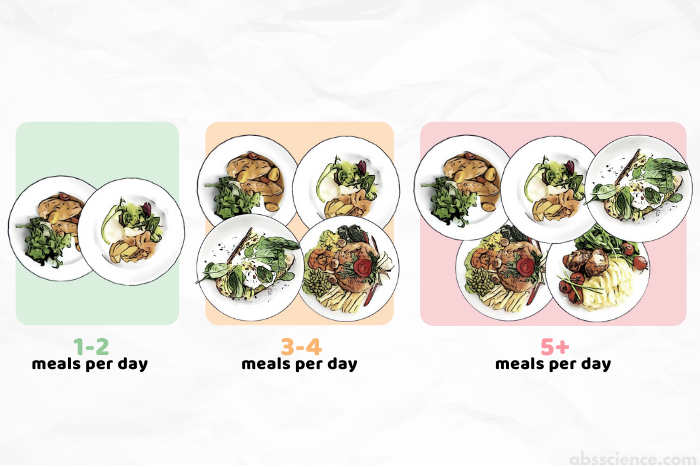
Image Source: Author

You Google “how often should you eat + to lose weight or build muscle.”

You click on the first search result (‘cuz, surely, the first one must be trustworthy).

You scroll down and you see:

“Eating small, balanced meals every 3 hours boosts your body’s fat-burning potential” or “eat frequently, every 3–4 hours, and aim for 6 small meals during the day to build muscle.”

Since you know slightly less than bugger-all about sports nutrition, you find yourself wondering whether this is true or some sort of brain-wasting disease affected the author and he’s full of a load of old baloney.

Let’s do some scientific wanking — let’s dive into different scenarios and see how meal frequency affects fat loss and muscle growth.

You’re Obese or Overweight Beginner Lifter Who Wants to Lose Fat

Aragon et al. carried out a meta-analysis on the effects of meal frequency on weight loss:
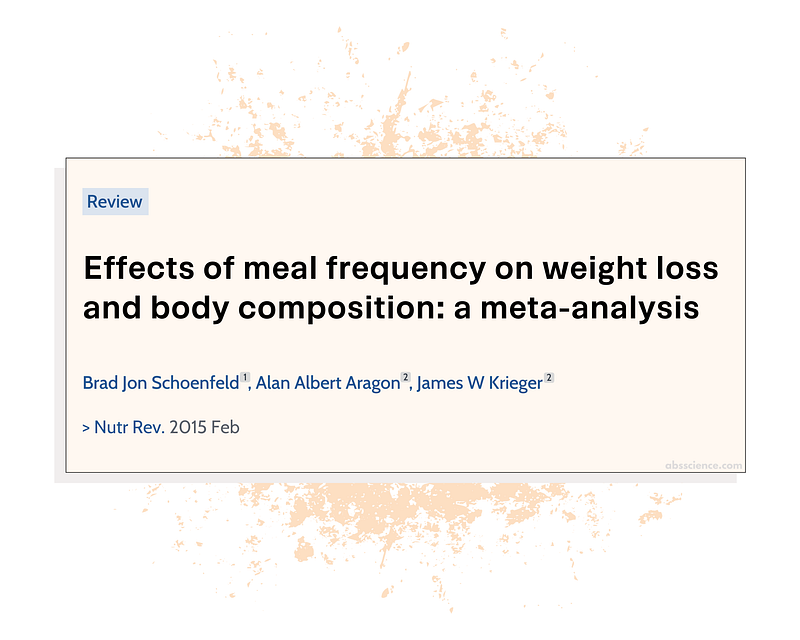
Image Source: Author

*Meta-analysis is an unbiased study to determine conclusions because it reviews all relevant studies on the topic. A single study may have biased conditions or tell only half the story.

They found fifteen relevant studies and split them into three groups:
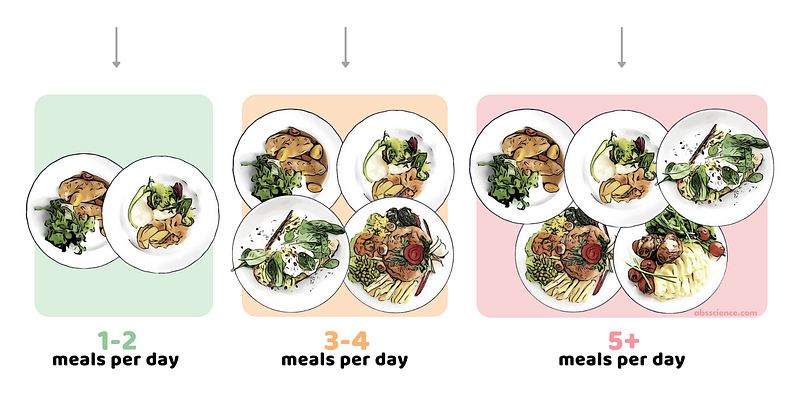
Image Source: Author

Wondering what they found? Doesn’t matter if you are or not because I’m going to show you regardless. Here goes:
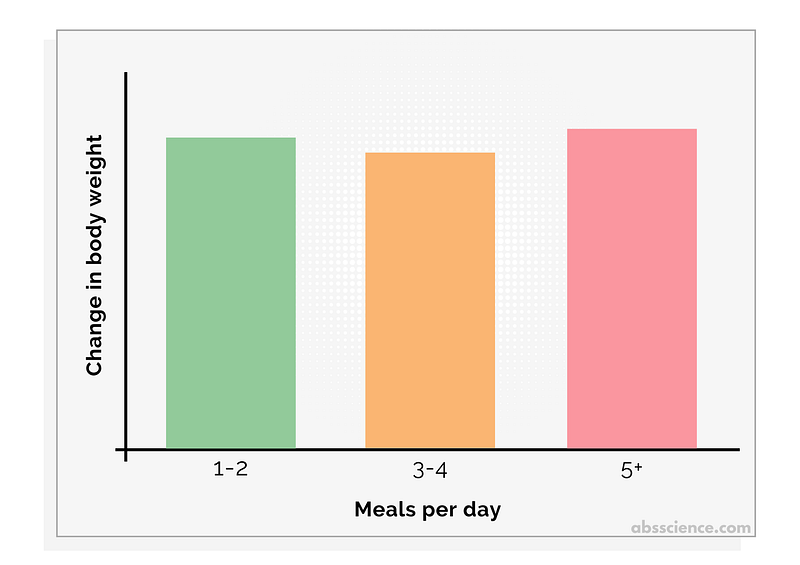
Image Source: Author

No meaningful difference in weight loss.

So whether you eat 1 or 87 meals a day, it won’t matter for fat loss as long as meal frequency fits your personal preference and schedule.

That’s exactly what the study concluded with:
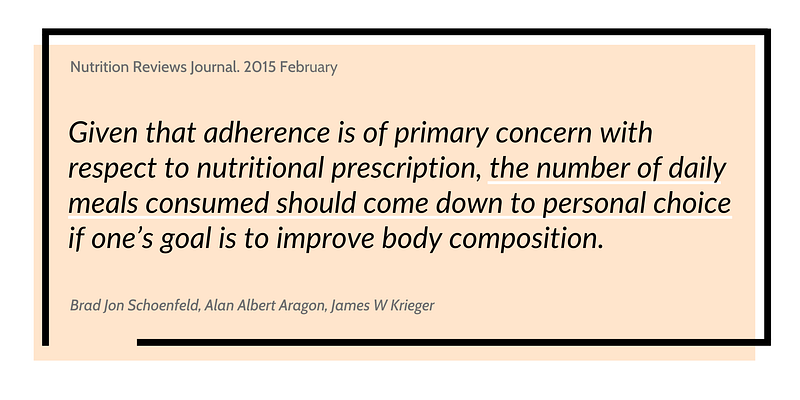
Image Source: Author

Now, just because the number of meals doesn’t matter much for fat loss, it doesn’t mean your eating pattern should be chaotic — irregular eating patterns can have negative metabolic effects.

I recommend you pick a number of meals that fit your schedule, preference, goal, and then stay consistent with that meal frequency. Having some kind of structure in your diet takes the guesswork out of your hands.

At the very least, it will reduce the chances of “accidentally” passing out from the tryptophan-induced Oreos coma.

You’re Obese or Overweight Beginner Lifter Who Wants to Build Muscle

If you want to build muscle, intermittent fasting is a really dumb thing to do and goes against every single thing you learned in year one biology. It’s implausible to think that eating 1–2 meals a day will optimize muscle growth.

To understand why, you need to understand what muscle protein synthesis and muscle protein breakdown are.

Muscle protein synthesis (MPS)

The protein you eat is broken down into amino acids — building blocks of muscle. Then your body uses them to repair and, eventually, build new muscle:
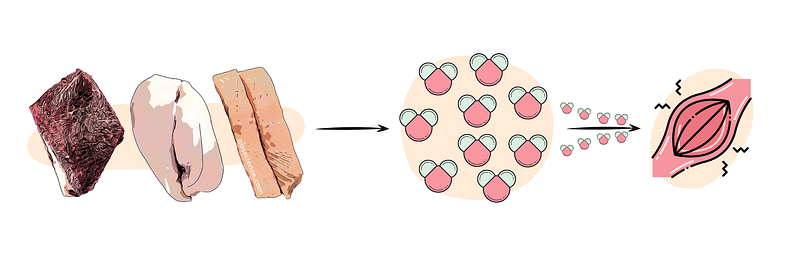
Image Source: Author

Muscle protein breakdown (MPB)

It’s the opposite of MPS — muscle is broken down into amino acids.

Now, our muscles are going through some level of muscle protein synthesis and breakdown AT ALL TIMES throughout the day. And to build muscle, you want MPS to exceed MPB:
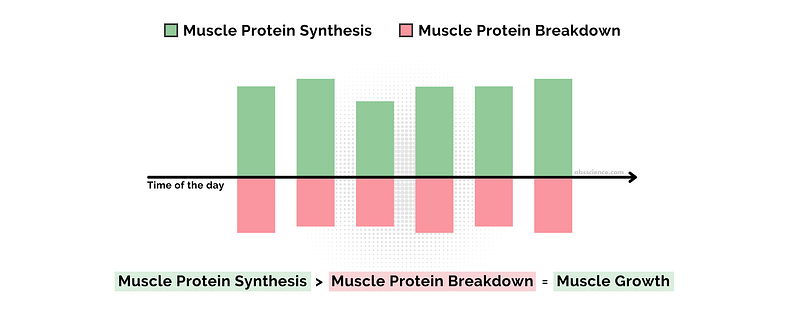
Image Source: Author

And that’s where meal frequency comes in — you should have a minimum of 3 protein-rich meals per day to spend as much waking time as possible within MPS.

I said minimum because 4 or more meals may work better for some people to reach a minimum of 1.6 g of protein per kg per day (0.7 g/lb). This is a bare minimum to build muscle (source):
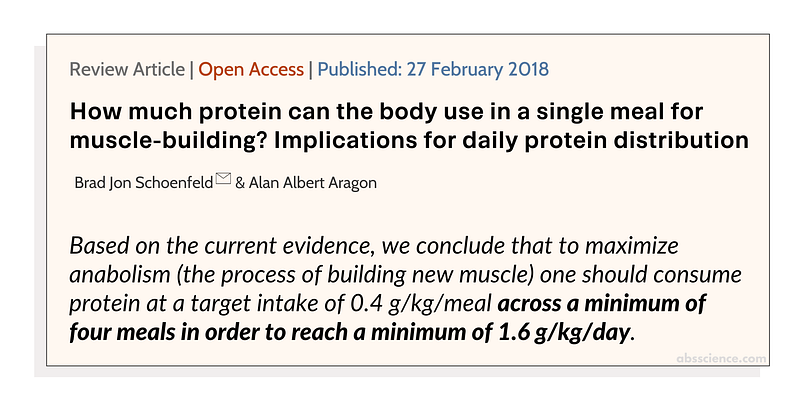
Image Source: Author

So, 3 meals are a minimum and 4 might be a sweet spot. Intermittent fasting is out of the question — put it, for all eternity, in a room next to the lift shaft because it’s sub-optimal for muscle growth.

You’re Normal Weight Individual Who Wants to Get Leaner

Maybe you want to uncover some abs. Just some definition. Nothing too extreme.

You have no intention of getting 6% bodyfat shredded to the bone as I once was (looks cool but there’s not much fun of being that lean. Really. I’m not being facetious):

Image Source: Author

If you have no competitive or extreme leanness goals, how often you eat still doesn’t really matter for fat loss — total daily nutrition still trumps the distribution of meals throughout the day.

So follow the same guidelines as for losing weight— base the number of meals on your schedule and personal preference.

You’re Normal Weight Individual Who Wants to Build Muscle

In this scenario, you’re an intermediate lifter who has been lifting weights consistently for 2–4 years. As for overweight individuals with the same goal, you would benefit from a minimum of 3, ideally 4, protein-rich meals a day.

As long as those 3 or 4 meals allow you to hit the 1.6–2.2 g/kg/day target of daily protein intake (0.7–1 g/lb), you’re golden.

You’re an Advanced Lifter Who Wants to Get Stage-Lean

Postulating on recommendations for this very small population is just theoretical wanking because I don’t think physique competitors read my stuff.

I think they’re sitting in front of the mirror and are like “Oh God, I’m so happy and ripped. Although… I should probably do something about my non-existing sex drive.”

So let’s just skip to the application for the general population part.

Application

  • If you’re a novice individual who is overweight or obese, the number of meals doesn’t really matter for fat loss as long as you have regularity with those meals. If muscle gain is the goal, you should have a minimum of 3 protein-rich meals.
  • If you’re an intermediate normal weight lifter, the number of meals still doesn’t really matter as long as you have regularity with those meals. If muscle gain is the goal, you should have a minimum of 3, possibly 4, protein-rich meals.
  • If you’re an advanced physique athlete, you already know wassup and you know 101 different ways to get super shredded none of which includes my advice.

As Alan Aragon, a nutrition researcher observed,

Worrying about low daily meal frequency while cutting is unfounded when you consider the collective evidence showing similar effects on body composition with daily caloric restriction versus intermittent fasting.

Meaning, as long as the number of meals falls in line with your personal preference and there’s some regularity, you will lose weight (assuming you’re in a caloric deficit).

Now, if you want to get bigger, ditch the intermittent fasting idea. No one ever became a bodybuilder by fasting. You get big by… EATING.

Plus lifting more than your iPhone.

This is the part where I should write some soaring eulogy, a rising crescendo of enthusiasm, and all the certifications I have, all the blah barf blah. Well, I’m not going to do that. I’m just writing what I did, what hundreds of my clients did, and what the current evidence suggests. Implement or don’t. Your call. I just report science. Now go start my 14-Day Fat Loss For Life FREE Course.

Diet
Nutrition
Weight Loss
Fitness
Health
Recommended from ReadMedium