avatarDiana Dolea

Free AI web copilot to create summaries, insights and extended knowledge, download it at here

2343

Abstract

ge</i>, we must, categorically, make a choice. This is the most beautiful part, but it is also the part that carries so much <i>weight</i>. Which poetic works can contain us the most?</p><p id="eff6">In order to be able to answer the above question, it is essential to experiment with different topics or themes: dramatic or more romantic, lyrical, ancient or contemporary poetry…</p><p id="adc1">Not everything can be to our liking or conviction, thus we must be among different voices. This idea should not discourage us because a poetic work can be read in a short time — it does not involve so many hours as to distress us. We can try, move away, try, and keep on leaving until we reach a clearer idea.</p><p id="6d12">For my part, the<i> adventure</i> started with Mario Benedetti; a writer to whom I never returned. Then I read Lang Leav — I did not like her poetry at all. As a third attempt, I approached Raúl Zurita who left me very indifferent.</p><p id="8d94">Miraculously, after Zurita, I started reading Alejandra Pizarnik’s poems — with her, I began to love poetry, even though I did not know it at the time. Soon after, Rainer Maria Rilke appeared in my life, and from that point, it was possible to create a<i> path full of wonders</i>.</p><h2 id="bda0">The motivation: literary challenges.</h2><p id="96f4">It is true that literary challenges are often a burden. However, if we manage to adjust to them in the most coherent and realistic way, they can become a fundamental key. In order to fulfill our dreams, we must link ourselves to a support or a plan that can guide us.</p><p id="829f">For example, in my case, in the beginning, I lost sight of my wish, shared in the first point. I mean, I ended up reading novels, not poetry. So that’s why I decided then to create a little literary challenge just for myself.</p><p id="7872">I had to read one poetic work a month. It worked very well for me because I used a hashtag through which I shared my impressions; I stuck to it strongly. In that way, I came to read more than 170 poetic works in seven years. That’s about 25 books a year. It may not be a very impressive number, but for me it was — it is.</p><figure id="ff9a"><img src="https://cdn-images-1.readmedium.com/v2/resize:fit:800/0*PTtLNcvn9MvE7e92"><figcaption>Photo by <a href="https://unsplash.com/@museumsvictori

Options

a?utm_source=medium&utm_medium=referral">Museums Victoria</a> on <a href="https://unsplash.com?utm_source=medium&amp;utm_medium=referral">Unsplash</a></figcaption></figure><h2 id="f661">Ways of reading poetry: an intimate peek.</h2><p id="d80d">Poetry can be read in many ways, there is no doubt about that, but as for myself, I look at it from a point of view that is very close to my spirit.</p><p id="b99d">This question can often be asked: what does the poet mean by these poems? Well, I could answer: I do not know! Why should we know about it? Are we holding the same pen?</p><p id="cc98">As a reader, I love to become aware of a poem in my own way. My gaze is always on the most intimate — I <i>receive</i> the verses as my soul transforms them; that’s why I love poetry so much!</p><p id="fcd2">I understand, however, that not all people can accept such freedom and therefore wish rather to take the literal meaning of the words. Moreover, the need to be part of the poet’s head can be a burdensome effort.</p><p id="14c6">Clearly, poetry has its audience, just as any other literary genre does; so this entry does not seek to force or place anything, it only wishes to be a means of sharing a personal experience that led from ignorance to the most infinite love.</p><p id="db78">As a child I hated poetry, but now I can assure you that it is possible to adore it, especially if we are born with a sensitivity superior to much of what exists.</p><p id="23c1">Oh, thank you for reaching this last line. Please, feel free to share your experience regarding poetry. I would love to read you!</p><h2 id="3aa9">© Diana Dolea (2024 All Rights Reserved)</h2><div id="0d04" class="link-block"> <a href="https://readmedium.com/how-to-create-poems-in-a-not-native-language-my-experience-6c8a6afd0146"> <div> <div> <h2>How to create poems in a not native language — my experience</h2> <div><h3>Some tips for writing poetry in a language that is not a native tongue.</h3></div> <div><p>medium.com</p></div> </div> <div> <div style="background-image: url(https://miro.readmedium.com/v2/resize:fit:320/0*4__btBObLAeNzh09)"></div> </div> </div> </a> </div></article></body>

Photo by Nicola Nuttall on Unsplash

How To Love Poetry — My Experience

𝐈 𝐡𝐚𝐭𝐞𝐝 𝐩𝐨𝐞𝐭𝐫𝐲, 𝐛𝐮𝐭 𝐢𝐭 𝐭𝐮𝐫𝐧𝐬 𝐨𝐮𝐭 𝐈 𝐥𝐨𝐯𝐞 𝐢𝐭 𝐧𝐨𝐰. ♥

Undoubtedly, poetry is, in many cases, not very well understood. This happens, among other reasons, because we are forced, during school, to read certain works from a very detailed point of view, which can be frustrating.

The impression that comes from such a first experience leads to an emotional detachment. We do not go back to poetry because we assume that it is not possible for us to get hold of meaning; in other words, we end up believing that poems are made up of strange stanzas and rhymes.

Yet there is a way to return to it and love it. Here below, I share my experience, summarised in several paragraphs.

The wish: I want to discover poetry.

In my case, I can’t remember the exact moment that prompted me to take up poetry again. Why did I want to return to it?

In order to arrive at something, we need, first of all, a certain interest or perhaps a certain curiosity. And how can such curiosity arise? Undoubtedly through observation. The love of others awakens in us a little desire. We want to be moved.

It can also be said that we open ourselves to new works when we start reading; that is, when our tastes are not yet defined and we want to read everything. I suppose that this is how the desire to explore the most unattainable literary genre was born in me.

Photo by Anastase Maragos on Unsplash

The selection: what kind of poetry I might like?

After the urge, we must, categorically, make a choice. This is the most beautiful part, but it is also the part that carries so much weight. Which poetic works can contain us the most?

In order to be able to answer the above question, it is essential to experiment with different topics or themes: dramatic or more romantic, lyrical, ancient or contemporary poetry…

Not everything can be to our liking or conviction, thus we must be among different voices. This idea should not discourage us because a poetic work can be read in a short time — it does not involve so many hours as to distress us. We can try, move away, try, and keep on leaving until we reach a clearer idea.

For my part, the adventure started with Mario Benedetti; a writer to whom I never returned. Then I read Lang Leav — I did not like her poetry at all. As a third attempt, I approached Raúl Zurita who left me very indifferent.

Miraculously, after Zurita, I started reading Alejandra Pizarnik’s poems — with her, I began to love poetry, even though I did not know it at the time. Soon after, Rainer Maria Rilke appeared in my life, and from that point, it was possible to create a path full of wonders.

The motivation: literary challenges.

It is true that literary challenges are often a burden. However, if we manage to adjust to them in the most coherent and realistic way, they can become a fundamental key. In order to fulfill our dreams, we must link ourselves to a support or a plan that can guide us.

For example, in my case, in the beginning, I lost sight of my wish, shared in the first point. I mean, I ended up reading novels, not poetry. So that’s why I decided then to create a little literary challenge just for myself.

I had to read one poetic work a month. It worked very well for me because I used a hashtag through which I shared my impressions; I stuck to it strongly. In that way, I came to read more than 170 poetic works in seven years. That’s about 25 books a year. It may not be a very impressive number, but for me it was — it is.

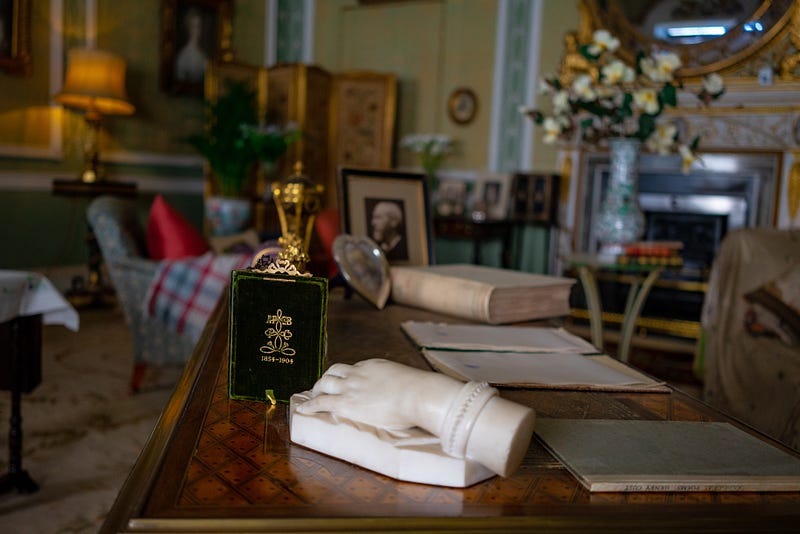
Photo by Museums Victoria on Unsplash

Ways of reading poetry: an intimate peek.

Poetry can be read in many ways, there is no doubt about that, but as for myself, I look at it from a point of view that is very close to my spirit.

This question can often be asked: what does the poet mean by these poems? Well, I could answer: I do not know! Why should we know about it? Are we holding the same pen?

As a reader, I love to become aware of a poem in my own way. My gaze is always on the most intimate — I receive the verses as my soul transforms them; that’s why I love poetry so much!

I understand, however, that not all people can accept such freedom and therefore wish rather to take the literal meaning of the words. Moreover, the need to be part of the poet’s head can be a burdensome effort.

Clearly, poetry has its audience, just as any other literary genre does; so this entry does not seek to force or place anything, it only wishes to be a means of sharing a personal experience that led from ignorance to the most infinite love.

As a child I hated poetry, but now I can assure you that it is possible to adore it, especially if we are born with a sensitivity superior to much of what exists.

Oh, thank you for reaching this last line. Please, feel free to share your experience regarding poetry. I would love to read you!

© Diana Dolea (2024 All Rights Reserved)

Poetry
Poetry On Medium
Poetry Writing
Readers
Inspiration
Recommended from ReadMedium