avatarDiana Dolea

Free AI web copilot to create summaries, insights and extended knowledge, download it at here

3562

Abstract

cripts.</h3></div> <div><p>dianadolea.medium.com</p></div> </div> <div> <div style="background-image: url(https://miro.readmedium.com/v2/resize:fit:320/1*CZzWT6yfTnwlKlyLbTcFIQ.jpeg)"></div> </div> </div> </a> </div><p id="928e">So how do I do it?<b> How do I write poems in a non-native language which I do not master it? </b>There is always such an uncertainty, but this thinking does not stop me from creating. My poetry is not perfect, I know, yet it grows over time and embraces me in its strength.</p><p id="c10f">I have recently read a very interesting <b>article by <a href="undefined">Evie Campbell</a> </b>where important <b>guidelines for writing poetry</b> are shared. They are the same points that I would comment on, although with certain nuances, since language plays a certain role here.</p><div id="5f26" class="link-block"> <a href="https://readmedium.com/how-do-poets-write-poetry-3d9fa78c1925"> <div> <div> <h2>How Do Poets Write Poetry?</h2> <div><h3>Robert Frost, Emily Dickenson, Shakespeare: How do they do it?</h3></div> <div><p>medium.com</p></div> </div> <div> <div style="background-image: url(https://miro.readmedium.com/v2/resize:fit:320/0*9Eg2jFZqMehF8YjU)"></div> </div> </div> </a> </div><h2 id="a32d">Some tips that may be helpful:</h2><ul><li><b>I immerse myself in the language</b>. I read articles on <i>Medium</i> and <i>Academia.edu</i>; I also use a notebook in order to keep a journal, and I publish comments on the various posts I read here. As well, I continually listen to videos that I find on platforms — <i>Instagram</i> and so on. All of this give me a stronger foundation to build on when writing my own poems.</li><li><b>I use two different dictionaries. </b>There are ways of expressing oneself that cannot be translated from one language to another, that is why I need a dictionary. Moreover, I find synonyms necessary so as not to repeat myself or say things in the same way. I could not create without a constant revision.</li><li><b>I read poetry in the language I acquire</b>. This help me to understand how poets use words, figurative language, and how normally they make rhymes. It is not about copying, but about observing. I pay a lot of attention to structure, for example, and punctuation, which is one of my biggest difficulties. I try to get how they use quotation marks, since I did not take any course on poetry, so everything comes from my curiosity.</li></ul><div id="bcaa" class="link-block"> <a href="https://dianadolea.medium.com/some-poems-by-charlotte-mew-f4fadb8e10c6"> <div> <div> <h2>Some poems by Charlotte Mew</h2> <div><h3>“He asked life of thee, and thou gavest him a long life: even for ever and ever.” — The Farmer’s Bride by Charlotte Mew</h3></div> <div><p>dianadolea.medium.com</p></div> </div> <div> <div style="background-image: url(https://miro.readmedium.com/v2/resize:fit:320/0*EVxOmBAJ9R7q_dWx)"></div> </div> </div> </a> </div><ul><li><b>I organize my ideas before I start writing.</b> I think about the image or ideas I want to convey before putting it into words. I imagine the message in my native tongue; but then I lo

Options

ok for a way to get it across in that other language. This help me to come up with new ways of saying things.</li><li><b>I create short poems. </b>I start to experiment with not so complex forms, as I am not yet too much comfortable with the language. Sometimes I take words that sound good to me and leave them on the side of the paper. When I have the structure of the poem formed, I go back to them so I can include them where they work best for me.</li></ul><div id="148e" class="link-block"> <a href="https://dianadolea.medium.com/where-are-you-headed-b9f258c4cb46"> <div> <div> <h2>Where are you headed</h2> <div><h3>“𝕴’𝖑𝖑 𝖗𝖎𝖘𝖊 𝖚𝖕 𝖆𝖘 𝖆 𝖕𝖔𝖊𝖒…” — 𝐌𝐚𝐫𝐢𝐧𝐚 𝐓𝐬𝐯𝐞𝐭𝐚𝐞𝐯𝐚</h3></div> <div><p>dianadolea.medium.com</p></div> </div> <div> <div style="background-image: url(https://miro.readmedium.com/v2/resize:fit:320/1*gUNpL9XkxhfTy0jxNJh25g.jpeg)"></div> </div> </div> </a> </div><ul><li><b>I do not care about rules.</b> I just seek to express what contains me in the most creative way, without worrying too much about punctuation marks, styles, or words. They may not be expressed in the best way, but poetry is an art form that admits the <i>voice</i> in its entirety. That is why I love poetry so much, because it offers me the freedom I dream of.</li><li><b>I revise a poem hours after I have written it. </b>It is true that I move away from my words and I return to it at any time thereafter. This is how the best details are perceived. I also take advantage of the later moment to translate certain words that make me doubt the most.</li></ul><p id="fef8">Overall, I embrace poems with unwavering determination and I can spend all morning with just one, but as the day draws to a close, I really enjoy this creative process, despite the hours it takes.</p><p id="ff73">Writing poetry in a non-native language can be a challenging but also very rewarding experience, so it is worthwhile not only for the simple fact of sharing a passion, but also because of the improvement of a language and the connection with readers beyond a small geographic area. By adopting this belief, I can continue on a path of literary creation.</p><p id="e5bb">Thanks for being here! Do you also write in a non-native language? What difficulties do you encounter? What does Medium give you? I look forward to reading your recommendations or experiences.</p><p id="80c8"><b>© Diana Dolea ⇝ <a href="https://dianadolea.medium.com/about">About me</a> / <a href="https://dianadolea.medium.com/list/a979ca9c531b">My poems</a></b> <b>/ <a href="https://dianadolea.medium.com/subscribe">Subscribe here!</a></b></p><p id="bdd4"><i>How can you support me? Oh, just by reading, highlighting your favorite lines, and engaging! </i><i>Thank you very much for your kind help! </i></p><div id="72d5" class="link-block"> <a href="https://dianadolea.medium.com/list/a979ca9c531b"> <div> <div> <h2>Poetry by Diana Dolea</h2> <div><h3>Some poems written with affection and hope</h3></div> <div><p>dianadolea.medium.com</p></div> </div> <div> <div style="background-image: url(https://miro.readmedium.com/v2/resize:fit:320/0*bd275fe095fb9f34c6b655c65e1ec001edbcee2b.jpeg)"></div> </div> </div> </a> </div></article></body>

How to Create Poems in a Non-Native Language

𝐒𝐨𝐦𝐞 𝐭𝐢𝐩𝐬 𝐟𝐨𝐫 𝐰𝐫𝐢𝐭𝐢𝐧𝐠 𝐩𝐨𝐞𝐭𝐫𝐲 𝐢𝐧 𝐚 𝐥𝐚𝐧𝐠𝐮𝐚𝐠𝐞 𝐭𝐡𝐚𝐭 𝐢𝐬 𝐧𝐨𝐭 𝐚 𝐧𝐚𝐭𝐢𝐯𝐞 𝐭𝐨𝐧𝐠𝐮𝐞.
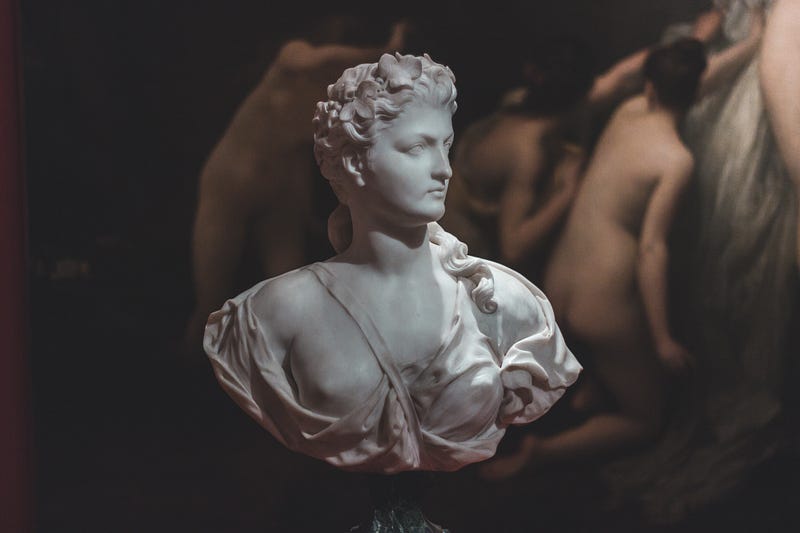
Photo by Michel Caicedo on Unsplash

I would like to start this article with a poem named The Arrival of the Bee Box, which was written by Sylvia Plath:

I ordered this, clean wood box Square as a chair and almost too heavy to lift. I would say it was the coffin of a midget Or a square baby Were there not such a din in it.

The box is locked, it is dangerous. I have to live with it overnight And I can’t keep away from it. There are no windows, so I can’t see what is in there. There is only a little grid, no exit.

I put my eye to the grid. It is dark, dark, With the swarmy feeling of African hands Minute and shrunk for export, Black on black, angrily clambering.

How can I let them out? It is the noise that appalls me most of all, The unintelligible syllables. It is like a Roman mob, Small, taken one by one, but my god, together!

I lay my ear to furious Latin. I am not a Caesar. I have simply ordered a box of maniacs. They can be sent back. They can die, I need feed them nothing, I am the owner.

I wonder how hungry they are. I wonder if they would forget me If I just undid the locks and stood back and turned into a tree. There is the laburnum, its blond colonnades, And the petticoats of the cherry.

They might ignore me immediately In my moon suit and funeral veil. I am no source of honey So why should they turn on me? Tomorrow I will be sweet God, I will set them free.

The box is only temporary.

These beautiful lines prove that it is possible to write poetry in a not native language.

As I already mentioned recently, my mother tongue is Romanian, although I have been writing in Spanish for a long time now. More than a month ago it occurred to me to also write in English, partly because I want to connect with a new audience. In this way, I believe that my lines may reach more readers and, likewise, I may brush up on my English skills. So I took the plunge.

First and foremost, I encouraged myself by writing brief notes based on different articles that I read and loved very much. However, I am fond of poetry. My first poems are written in Romanian, and I also have some later ones in Spanish. So my heart asked me to create poems. Obviously, I had doubts about this idea because my level of English is not that high. With a steaming cup of coffee in hand, I dive into poetry.

So how do I do it? How do I write poems in a non-native language which I do not master it? There is always such an uncertainty, but this thinking does not stop me from creating. My poetry is not perfect, I know, yet it grows over time and embraces me in its strength.

I have recently read a very interesting article by Evie Campbell where important guidelines for writing poetry are shared. They are the same points that I would comment on, although with certain nuances, since language plays a certain role here.

Some tips that may be helpful:

  • I immerse myself in the language. I read articles on Medium and Academia.edu; I also use a notebook in order to keep a journal, and I publish comments on the various posts I read here. As well, I continually listen to videos that I find on platforms — Instagram and so on. All of this give me a stronger foundation to build on when writing my own poems.
  • I use two different dictionaries. There are ways of expressing oneself that cannot be translated from one language to another, that is why I need a dictionary. Moreover, I find synonyms necessary so as not to repeat myself or say things in the same way. I could not create without a constant revision.
  • I read poetry in the language I acquire. This help me to understand how poets use words, figurative language, and how normally they make rhymes. It is not about copying, but about observing. I pay a lot of attention to structure, for example, and punctuation, which is one of my biggest difficulties. I try to get how they use quotation marks, since I did not take any course on poetry, so everything comes from my curiosity.
  • I organize my ideas before I start writing. I think about the image or ideas I want to convey before putting it into words. I imagine the message in my native tongue; but then I look for a way to get it across in that other language. This help me to come up with new ways of saying things.
  • I create short poems. I start to experiment with not so complex forms, as I am not yet too much comfortable with the language. Sometimes I take words that sound good to me and leave them on the side of the paper. When I have the structure of the poem formed, I go back to them so I can include them where they work best for me.
  • I do not care about rules. I just seek to express what contains me in the most creative way, without worrying too much about punctuation marks, styles, or words. They may not be expressed in the best way, but poetry is an art form that admits the voice in its entirety. That is why I love poetry so much, because it offers me the freedom I dream of.
  • I revise a poem hours after I have written it. It is true that I move away from my words and I return to it at any time thereafter. This is how the best details are perceived. I also take advantage of the later moment to translate certain words that make me doubt the most.

Overall, I embrace poems with unwavering determination and I can spend all morning with just one, but as the day draws to a close, I really enjoy this creative process, despite the hours it takes.

Writing poetry in a non-native language can be a challenging but also very rewarding experience, so it is worthwhile not only for the simple fact of sharing a passion, but also because of the improvement of a language and the connection with readers beyond a small geographic area. By adopting this belief, I can continue on a path of literary creation.

Thanks for being here! Do you also write in a non-native language? What difficulties do you encounter? What does Medium give you? I look forward to reading your recommendations or experiences.

© Diana Dolea ⇝ About me / My poems / Subscribe here!

How can you support me? Oh, just by reading, highlighting your favorite lines, and engaging! Thank you very much for your kind help!

Poetry
Poetry On Medium
Poetry Writing
Writing Tips
Writing Prompts
Recommended from ReadMedium