
LIFE INSIGHTS
How to Live a Meaningful Life
Five Stories on Life, Happiness, and The Future
Listen to Stories While Doing Gardening, Housekeeping or Any Other Tasks That Doesn’t Require Your Full Attention
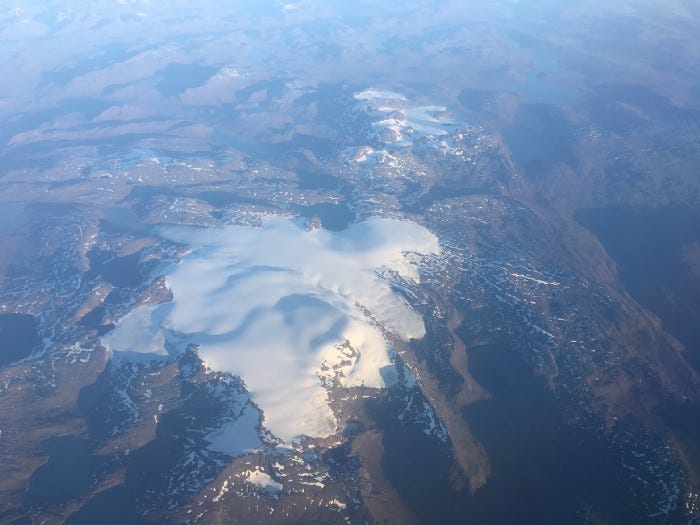
Listen to the stories
This is a collection of five of my stories that are about life and how we can use the opportunities we have. The stories were written and published on Medium over several years, and they present different approaches to the topic in the headline.
Suggested instructions for audio
You open this document (as you may have already done on your computer — audio is not currently available on mobile), and you click on the symbol next to “10 min read” where it says “> Listen”
CONTENT
1. 21 Life Lessons from a 70-Year-Old
2. The Dream Will Always Live On, if I Do the Necessary to Nourish It
3. Do We Need to Believe in Angels?
4. Oceans of Time
5. Is There Still Hope?
Part 1
21 Life Lessons from a 70-Year Old
Published on April 28, 2018, in ILLUMINATION · 10 min read
A story I wrote several years ago, now republished here in ILLUMINATION. I’ve become four years older, and I am grateful for what I have in my life. 11/2021 © Øivind H. Solheim —

I feel privileged for being who I am, and where I am now.
I am happy to have good health and no serious illnesses.
Good mental and physical health is fundamental.
This does not come by itself.
I know that I can do a lot to feel good in my life. I can take care of my body through exercise and other physical activity. And I can take care of my mental health, among other things by being active both physically and mentally.
Writing is a very good way for me to know that I am alive and doing well!
Here are my 21 tips and advice for a good life:
1. Know yourself. Know who you are.
To know yourself well is a basis for a good living.
This is a knowledge and wisdom that comes little by little.
For some people, it’s easy to know deeply who they are. For others, it can be a struggle over many years to find out. How can I find my inner peace?
It’s about being able to relax and to accept myself. Am I able to feel that I rest safely in myself?
It can be a long but also an educational process to get there. The goal is to live with daily peace and calm, seeing yourself with acceptance and gratitude.
2. Focus on what you want: your goals.
Think through where you are now and where you want to be tomorrow.
Spend a moment every morning to think about your life, and what you will achieve today.
Write some key words every morning in your notebook or diary. Write about today and tomorrow. Write about your goals, and your ideas on how to get there. Write about where you want to be tomorrow, emotionally, in your family relations. Write a few words of gratitude for people who are around.
In the morning, write your thoughts and ideas for your present writing project, if you have one. Listen to your inner voices and try to write down the essentials of your thinking.
3. Stick to your dreams, keep calm, hold steady course.
Have you started an education, make sure that this is a goal you would like to reach. And very important — be sure to complete it!
I finished school in 1966. I had decided to study at the university. I traveled to the nearest university city and began a 7 year long study.
Then I applied for a job as a lecturer in Upper Secondary school. I worked there for about 40 years, first many years as a teacher, then many years as an administrator and leader of an adult education and training center.
4. Take care of your family.
Your closest — parents, siblings, spouse, children — are your most important supporters.
Take very good care of them!
A good and healthy family relationship is crucial.
Remember, you get back according to what you invest!
Give and don’t demand to receive in return!
5. Write!
Write a journal.
Write for yourself.
Write to take care of and remember.
Write to discover where you are now, and where you want to go.
Peace in mind and confidence in yourself is important to reach where you want to go, and to make changes to your life.
Write a journal for yourself and know that what you write will be read only by you. This gives you a good opportunity to put words on what you feel and experience. It can help you to come closer to yourself and to obtain an absolutely unique peace of mind.
6. Finish what you have begun!
Occasionally, it may happen that you understand that what you started is wrong for you. Then it’s important to stop on time and not spend more energy and effort on it.
Otherwise it is good always to finish what you have begun. This means that you have a roadmap and a direction for your life journey.
You know where you are coming from,
where you are right now,
and you know where you’re going.
7. Take care of close relationships and friendships.
The most important relationships and friendships are those which will give you an important return.
Know that friendships can be uncertain.
If you get good friends, take good care of them. Remember that friendships can be fragile relationships.
Things can quickly end.
Be strong. Look forwards for the best. Prepare your inner self for the worst.
Life will always be ups and downs.
Don’t let this paralyze you.
Rest safely in yourself.
Smile!
8. You don’t have to depend on others.
Being in love is not the same as loving someone.
Wrong choices in love can cost a lot.
Sometimes it is important to trust intuition. Sometimes you just have to take a chance.
Then you will see, you will have an answer.
Trust your inner voice!
9. Remember that you’re always a learner
Being a learner is a positive thing!
Every experience, every relationship, every victory and every defeat in life are events that add to your life experience.
You may feel doubt, you may feel torn between trust and doubt in the relationship .
In such cases try getting clarified early and take decisions to help you further.
Not every negative event must have a negative outcome.
It is better to leave behind two months or two years of your life than to spend most of the rest of your life in a bad relationship.
10. Hold out!
Everyone will sooner or later experience adversity and crises in life.
When you experience hard times, stand through the difficulties! Don’t give up!
Again: After rain comes sun.
You will find that in adversity you are growing. In adversity you are getting stronger.
11. Be careful not to associate yourself with someone you are not sure about.
The person you associate with should be one who is self-sufficient, who is safe on her or his own.
Everybody needs to be comforted and supported, but the ability that a person has to give this should not be the only or the determining glue in the relationship!
Always remember:
Every human being is a universe, with her or his strengths and weaknesses.
Both strength and weakness are normal parts of being a human.
12. Be aware that you can be abandoned.
Know that you may be left by the person you have attached yourself to.
You may become alone once more. Being alone is normal, just like being in a relationship is.
Feeling alone is a normal feeling.
Being alone is not always negative.
By standing through difficult periods in life, you become stronger.
What does not kill you makes you stronger!
13. Start with exercise, go hiking!
Exercise at least 30 minutes daily, at least four days in a week.
Get out of the house, walk or run in the streets, in the parks, on the roads.
Go trekking together with others.
Go to the gym/the training center.
Start biking/spinning and/or running.
Move your body! Every day!
14. Do not smoke tobacco.
I started smoking when I was 16–17 years old. That was the dumbest thing I did for years.
I knew almost all the time I had this bad habit that it was stupid to smoke. I knew that smoking often leads to lung cancer and that lung cancer is a deadly disease.
In fact, I knew this so clearly that at this time, at the end of the 1970s, I wrote and published a novel about a young man who had cancer. My novel hero had to see death in the eye when he was just a little over 30 years old.
For me it was not easy to quit smoking.
When my first marriage came to an end, I had for a long time decided to stop smoking.
When I got married with the woman who now has been my wife for 32 years, I told myself that now is the right time to stop smoking.
I’m no longer a smoker. But it actually took almost 8 years of “party smoking” and incidents of hidden smoking before I finally managed to cut the smoke completely.
Tobacco is a dangerous addiction-creating poison!
15. Do not use drugs!
I have never tried narcotics.
I know people whose life has become ruined because of drugs addiction.
It is horrible to think about it. A waste life!
16. Stop drinking alcohol.
If you ask my opinion — whether you are drinking daily or in the weekends, just stop it!
I realized after many years that it’s not a good idea to drink two liters of beer or a bottle of wine every weekend. It is not good for the body. And it is not good for the mind either.
One day I did what I for a long time had known I had to do. I said stop to myself. I said that enough is enough and I stopped buying beer for the weekend. I let a few beers stand in the fridge, and I let the wine bottles rest in the wine cabinet.
It was so easy!
I did not feel thirst for beer or wine! After a few weeks the beer cans were still left in the fridge, and the wine bottles are in the closet waiting for a good occasion.
I experience that it is so good to be clear in the mind and to be able to think and write texts without a veil in front of the eye and inside my mind.
I buy a lot of bottled water and boxes of non-alcoholic beer. Alcohol-free beer tastes at least as good as beer with alcohol.
Now I taste beer with alcohol very rarely. Each time I can confirm what I have decided for. I know that I do not have an alcohol problem. It’s so easy to go without alcohol!
When I from time to time have tried to taste beer with alcohol, my experience is without exception that it is not as good as non-alcoholic beer. I become blurred and unclear in mind and soul, a bit anesthetized, and it’s not a good feeling anymore.
The fact that I have stopped drinking beer in the weekends has also given me a better relationship with my wife and that is very important for living well in life.
17. Cultivate what matters to you.
For my part, what matters to me has for very long been to write.
Write memos. Write notes. Write diary. Narrative writing.
Writing poems, short stories, novels.
I never stop writing.
18. Think positive!
An old Norse Wisdom word says:
After rain comes the sun.
When I wake up and am depressed, I know that it is a passing state.
I am not depressed for a long time.
I know that feeling down is a normal part of being human.
19. Show thankfulness!
When people give you something great, be grateful.
Be a giver too!
Give back to people who give you something valuable.
It can be friendship, helping to reach the goal you want to reach.
Always be grateful!
20. Be generous.
Give from yourself.
Do not expect to get something in return.
When you receive from others, take it as a great gift.
21. Listen to music!
This is something that through my entire life since I was 14–15 has given me much joy and pleasure.
Music can be used in many ways.
Up to you to explore the music!
What is a happy life?
Do you see other priorities? Write them down. Establish your own list, reduce or extend the list.
Do you want more? Follow me. Want to reach me? Write me at [email protected]
April 2018 Øivind
Part 2
The Dream Will Always Live On, if I Do the Necessary to Nourish It
Published on March 23, 2018, in SYNERGY · 8 min read
What is success? What is failure?
Well — what stupid questions!
Everyone knows that success is when you win, when you earn lots of money, when you reach your goals.
And failure — yeah, everyone knows that failure is when you lose, when you do not gain even small amounts of money, when you don’t reach your goals.
It is as simple as that!
Or is it not?
Throughout my life I have found myself face to face with a certain number of challenges. I will not reveal all of them here, but I am now going to share my thoughts about some of them.
I have published five fiction books: three novels that are rather traditional in their form, and one experimental novel. I also many years ago published a short story that was selected and published as one of 23 winners in a national short story writing competition. After the four novels I finally last year published a collection of poems. I do not know today if I will publish more fiction books, time will show, as they say. But what is certain, is that I will continue to write fiction texts.
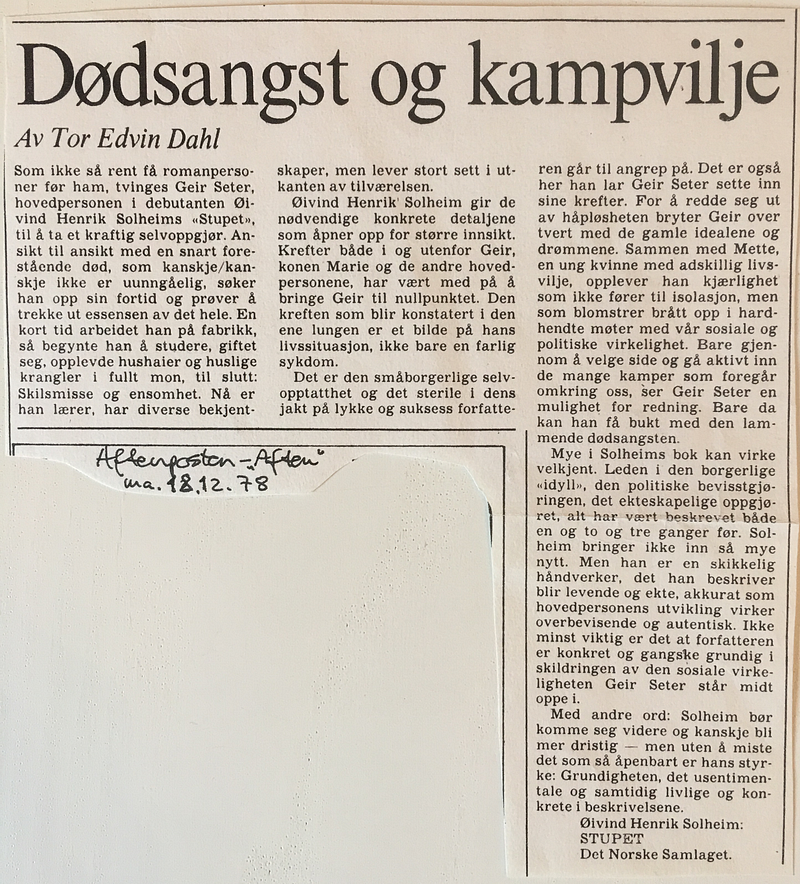
My five books were published over a very long period in my life. The first one, «Stupet» (The Precipice), was published in 1978, the short story «Mariken Mustang» appeared in 1981, and my second novel, «Tellus 89», came in the year of 1982.
Then I had a very long pause, until I published the third novel, «Fabrikken» (The Factory) in 2008. Then I had another pause from publishing books. But two years ago I published the experimental novel «Den andre» (The Other One), and in 2017 came my first collection of poems, «Hjartet blir aldri fullt» (The Heart Never Becomes Full).
My first three books and the short story were published in periods of my life when I was working full time as a teacher in Upper Secondary School. First I was a teacher, then secretly in the shadows and during the nights, writer and novelist, creator of stories and poems. I felt that writing and publishing these novels were kind of extra bonuses for me. I just had to do it! But I have never thought of writing and publishing these books as a kind of special achievement or that I was especially clever or was doing something uncommon or exceptional.
Now, at the age of 70, having ended my career as a teacher, I can look back. I can try to take a proper look at it, and I can see myself from a different perspective: during this period of 40 years I was first of all a teacher working full time teaching at school and preparing for teaching at home. Secondly I was a mostly secret fiction writer, bearing inside me for all those years the urge to create and write down the stories from the hidden universes of the children, women and men that I carried inside me.
Now my vision and focus have changed, and — very important! — I have more time than ever before to cultivate my favorite activity: thinking, imagining situations, realities, conflicts and lives with love, indifference and hatred. I have got the time to create with words the characters, stories, atmospheres and moods that live inside me.
When I think back to the first period, some 35 to 40 years ago, when I published my first two novels, I remember that I felt a strong drive inside me that forced me and encouraged me to write. I simply had to sit down with the typewriter, and I remember that there were nights when I tried to persuade myself to believe that I could make it without sleeping through a night or two. That was of course a stupid idea, but I confess, I manipulated myself to believe in it, and I tried, yes I really tried hard to work through a night or two with the typewriter on the table in front of me, without sleeping!
I gave my first novel the title «Stupet» (The Precipice). It was written based on the existential anxiety that I experienced at the time. On the back cover of «Stupet» the publishing house wrote:
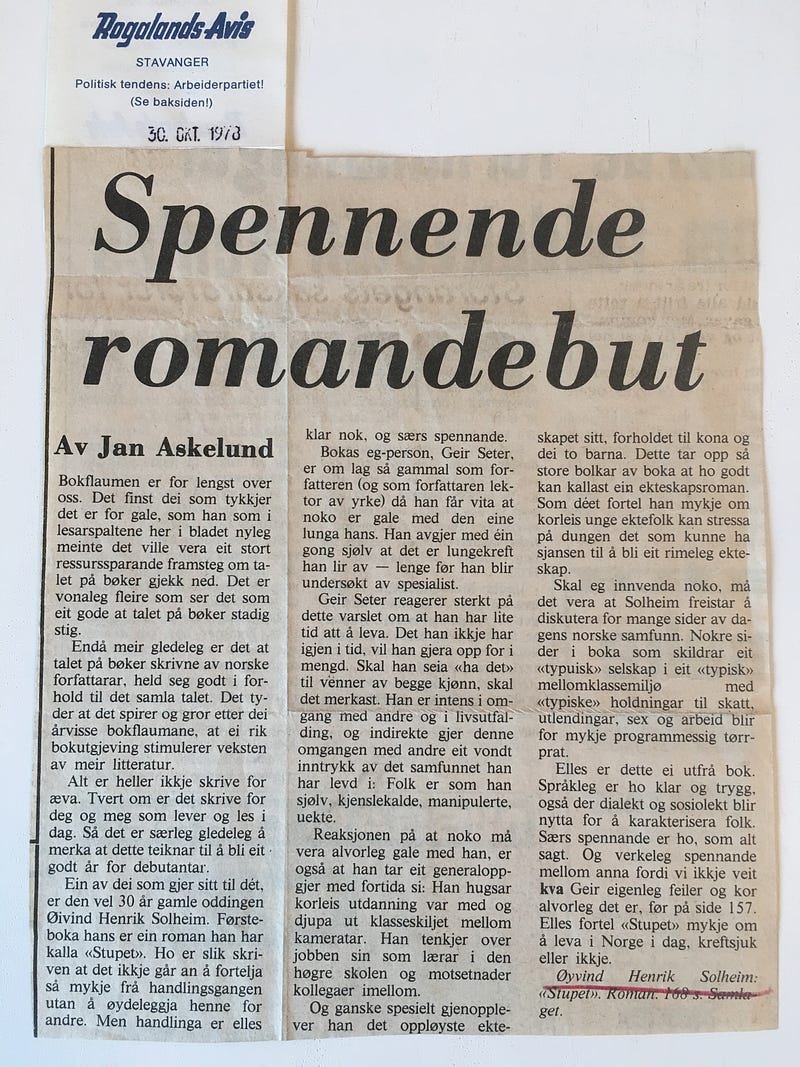
The young man in this novel is both really and imagined ill, and tries in many ways to take a powerful goodbye with life. Thus, he comes closer to other human beings, and his introvert speculations turn into sharp observations. Humans in society are like himself cold, manipulative, without the will to distinguish between the true and the false. The situation has become serious for everyone. The confusing diagnoses of the young man are ultimately put out of power, because the decisive Precipice turns out to be something else than what the doctors and he himself had expected.
Four years later I published «Tellus 89», a novel that can be characterized as a dystopy. On the back cover of «Tellus 89» the publisher wrote:
This is Øivind H. Solheim’s first novel after the debut with “Stupet” in 1978. Here the author presents a highly current material: arms race, peace movement and nuclear war. The book is a future novel that predicts that the mass-destructive disaster happens at the end of this decade.

Some years after the publication of these two novels, I sent to a publisher a draft for a novel, but it was unsuccessful. The publisher wrote back to me that the project was not good enough for publishing. At present I have almost forgotten what this novel project was about, and I am not going to try to reanimate it. That is a lesson that I have learned. What is done, is done. What is gone, is gone.
25 years after the publication of «Tellus 89» I started the huge work of writing a 365 pages long novel. In fact, during all those years I never completely stopped writing fiction. Then — as well as now — I almost daily get new writing ideas. I write them down, and then I later take a look at them to see if they are interesting. Most often it ends there.
But a few times I persevere, like I did when I wrote «Fabrikken». This is a story that is told over a period of 45 years. The characters and the action are from the town where I was born and grew up, Odda (Norway). The factory (the smelter) was my father’s work place for a period of 35 years, and it had a dominant place in the town, both physically and in all other ways. The smelter was the main work place in Odda, it was very polluting, and it lived it’s secret life behind it’s fences, producing smoke and warmth, lights, noises and lightnings. The product outcome was carbide.
The Dream: Success or Failure?
It would be easy to classify all of my published book as failures. None of them got fabulous reviews, none of them sold more than a small number of copies, except from the 1000 copies of each of my three first novels, which were selected by the National Purchasing Program for distribution to the libraries all over the country.
The two first novels got a big number of reviews, and many of them were fairly good. The number of reviews declined for each new book. I got radically fewer reviews for my third novel, and I know that this is partly due to the general decline in the number of book reviews, which is due to the internet taking over the market after the millennium.
My preliminary conclusion is for these reasons that
- my writing experience was no success, nor was it a failure.
- my writing experience is something else
My writing experience has taught me a few positive lessons:
- It is possible for me to write stories and poems and enjoy doing it, knowing that readers will read what I write if I publish them.
- It is possible to do this for one reason: that I go fully with all my power and all my resources into the project and that I go ahead just like I would carry a baby child carefully in my arms towards the light and the warmth.
- I can publish my fiction through a publishing house if I write good enough and if I meet with a need or a trend in the market and in the world of books.
- Self-publishing: I can publish my books myself, and I have experienced that it does not take too much resources, energy and work to do so.
- Selling books: I can easily get my books out to the bookstores in the city where I live (and also to bookstores in other places with a few additional efforts to do so).
- I can sell books directly to potential readers, like friends and contacts
- Even without the support of the Libraries’ National Purchasing Program I can manage to sell a sufficient number of books to cover my expenses.
- Nothing is impossible, big success is rare, but I can succeed on a modest level if I am willing to put the necessary energy into it.
I am confident: The dream will always live on, if I do the necessary to nourish it.
Part 3
FUTURE
Do We Need to Believe in Angels?
Is There Hope for the Future of Mankind?
Chosen for further distribution. Published on November 6, 2021 in ILLUMINATION · 9 min read
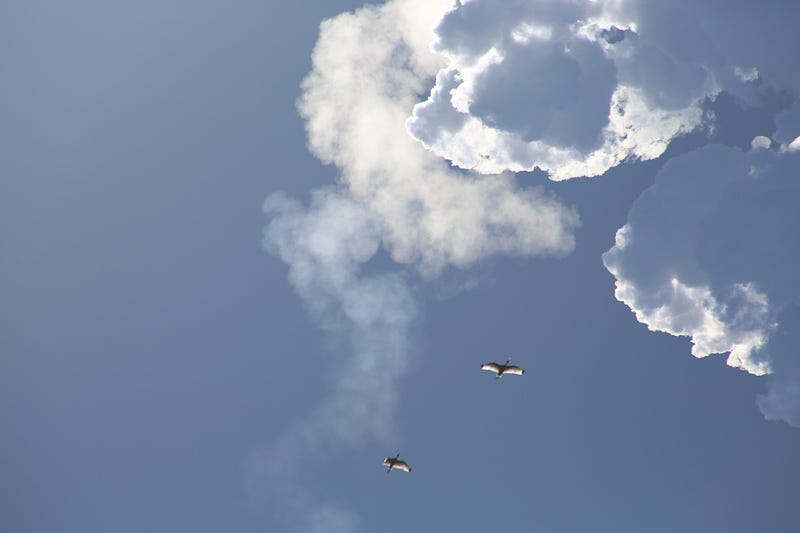
Angels — do they exist?
One often goes uphill. You see me, I’m going uphill. I see you; you’re going uphill. You’re having a hard time, I’m having a hard time, but we are not giving up. We must think positively, we must try to help the world move forward, small steps forward.
It is man who creates the future, we own the future. We stand on the shoulders of the generations before us, and thousands of generations come after us. We will deliver what is needed, positive energy is what we get, people who support you; man, who gives without conditions.
There are people who affect you negatively and who suck energy and power out of you. On the other hand, there are people who you experience give you energy and who strengthen you in the belief that it works, there are positive forces. The positive is something that can occur unexpectedly, and it is something that can grow and become strong, become something that makes your life richer.
What promotes the positive between human beings and helps us to achieve positive goals?
Some call it karma, the fact that actions I take against others have consequences for myself, and that there is a close connection between an action and the result of an action; others call it angels or good helpers.
For me, it’s about thinking positively, thinking about possibilities, good thoughts about good things.
Good thoughts that are followed up by good actions are what promise man forward.
We must acknowledge and accept the fact that we influence others. We can influence others positively or negatively. We can give energy to others, or we can steal energy from other people. How we do this and how we act in different situations is crucial both for our own well-being and life and for others’ well-being and life.
Is it the case that the consciousness of a human being can live on after one has died?
Does man have a soul? If so, does the soul die with the body, or does the soul live on in one way or another?
Or does not the soul exist? Does man not have a soul, but instead a consciousness, and a life of feelings and thoughts, which is found in man as long as one lives?
To think this way about man, that everything is time-limited and nothing lives after death — to settle down with this is known to most people as unsatisfactory.
Is it conceivable that what we say, what we do today, lives on independently of us, as a force, as a context, or as words and meaning content that can continue to influence other people when we ourselves are dead?
What is consciousness?
Can an animal have consciousness, or is this reserved for man?
Man’s consciousness can be something else, something more than what is connected to us sensing and experiencing cold and heat, light and darkness, joy or irritation, fear, and anger, etc.
Man’s consciousness is also linked to thought life, to conceptual activity, to interpret and process emotions, to develop reasoning, to describe, to tell stories, and much more. Man’s consciousness is linked to many other such qualities and cognitive skills that man has, and which most other living creatures probably do not have.
Where can we look for evidence — or at least a sign — that man’s consciousness exists independently of man? We know that man’s consciousness exists in the time when man lives. We also know that we can develop a higher level of consciousness that includes, for example, intuition, insight, and compassion. We know that man can express this consciousness, this intuition, this insight, and compassion — all this we can let come forth and become visible to other human beings. We know that we can express this through words, through speech, through writing, and not least through different art forms.
Art provides many good examples of how people can express themselves and can convey things that are not purely conceptual. However, there is no scientific evidence that consciousness exists independently of man. We do not know that human consciousness can be “stored” and conveyed outside of human consciousness. Of course, we can store texts in books and we can create visual and plastic works of art that express something that man (the artist) has experienced, felt, thought.
Man’s consciousness is part of being human. Consciousness arises and exists in man, and we have become accustomed to thinking that consciousness dies when a man dies. We have become accustomed to thinking that when life is over, it is as if a light is being blown out. Everything goes out.
When we light candles for the dead in the graveyard, and when we light candles in the living room, it is an expression of something of the same. I know someone who lights small candles inside the rooms in the house every afternoon when darkness comes. She has, like so many others, experienced the loss of close relatives due to a serious illness so far too soon. I’ve seen the candles she lights and I’ve always thought it’s a nice activity to do. But I have not reflected so much on it. I have known that burning candles have to do with the dead. I have thought that lighting such small, vulnerable candles that flicker and shine — affects our mind, it is something nice and beautiful, even if it only exists in her thoughts and feelings and in me.
Those who have lived before us
I think that the phrase “There is more between heaven and earth than we see” is an expression of something that is real; it really is. If we want to understand the world and ourselves — if we want to understand life and what our possibilities are, then we must not reject the intuitive tool that we have in our senses and in our power of thought.
Life and the world — all this is very complex. I am tempted to try to turn some stones and look at the relationships I have had with some of my closest ones. For example, has the relationship I had with my father had anything to say to me my life, and if so, what has my father had to say to me in my life — what have I after my father?
My father was an industrial worker. He had his youth in the early 1930s, and he never received an education due to social conditions at the time and the Second World War. My mother always spoke positively about my father, so I was encouraged to look at him in a positive way. I think back to my youth when I spent a lot of time with my father out at sea in a boat. Dad and I set fishing nets and rowed out again the next day and pulled up nets where there was usually some fish, which my father could sell in addition to the meager factory worker salary.
My father thought and acted positively to solve the tasks he faced, which was to provide income and food on the family table. When I think back to my father, I think of a man who stood near me. He was a faithful toil, a patient worker who went into the challenges with his whole being, and I know that it cost him a lot in the form of poor health in the last years of life. He was a man with a positive approach to the challenges and he was enterprising and fearless, as I remember him. And maybe this is part of that legacy, the consciousness that lives on after him. If we see it this way, we will be left with, if not my father’s consciousness, then at least the memory of him. His reputation, the words he said, the thoughts he shared that live inside me and in the others who knew my father well. This is perhaps the closest I come to the fact that the consciousness of a human being lives on after death.
The digital age
But there are also other things that live on after man in our time. Especially today, in the time we live in, it is possible for everyone to leave traces behind and let words and actions live on. We can write and publish on digital platforms and websites that are freely available. In return for paying a small sum, we can even get a sum of money back, and we can publish and even make money on what we write.
Similarly, we can publish audio recordings (podcasts) and videos with the content we may wish to pass on to the generations that come after us. This provides good opportunities to pass on something personal to posterity. But it also provides huge amounts of material that is stored digitally and thus made available to future generations. We do not know today whether in the future, with the enormous amounts of data that are posted, it will still be possible to store safely and to easily find the texts, audio files, and video recordings that we post
We do not know what the future will be like, but what we can think of today is that people are facing some important choices and some challenges. Scientists who have looked closely at what the future may be, have come to the conclusion that man can come to live his life on earth as long as the earth exists about as the globe is now, that is to say maybe 1 million years ahead if we do not destroy everything in the next ten years.
According to the same scientists, the probability that the earth will be destroyed by an asteroid is disappearing small. The future can also be ruined for other reasons, such as a nuclear war where all life is wiped out. According to the researchers, the chance of this is very small.
The future for humans looks good, as long as we tackle some important challenges, including climate challenges, in a good way in the coming ten years.
For more insight into these issues, I recommend Sam Harris’ podcasts, such as one or more of these:
#257 — THE STATE OF THE WORLD A Conversation with Dambisa Moyo
#259 — THE RECKONING TO COME A Conversation with Balaji Srinivasan
#264 — CONSCIOUSNESS AND SELF (REBROADCAST) A Conversation with Anil Seth
(Other relevant episodes: # 238, # 252, # 255)
Closing words
It is very exciting, very challenging to be present in life and to take in all that life and the world have to offer. Human life can be a static state, but also a journey or an activity, for example, a struggle between different forces that will pull man in one or the other direction.
Human life and the world are filled with positive and negative forces. This is how it has always been. Man has seen goodness and evil come and go; positive and good forces, and the opposite, the negative forces. Negative and evil forces have always existed, and man has always had to live with this duality, these opposites. Many have pointed out that it is necessary to have a set of values and norms in their lives and build on these to promote the positive.
One can often have the feeling that there is pretty little the individual can do to save the world. But it helps, in any case, to try to think positively about possibilities that involve limiting the spread of evil and harmful actions.
Everyone can, from where they stand, work for peace between people close to them and between people. We can all take responsibility for promoting positive development of social conditions that provide all the rights and the material and intangible benefits that everyone is entitled to.
I wrote this essay after reading Why Do I Believe in Angels? written by Dr Mehmet Yildiz. Thank you for the inspiration!
I also owe a lot of thanks to Sam Harris and his podcast, Making Sense, Making Sense is a podcast that is definitely worth listening to for those who are interested in finding out about important issues in our time.
Part 4
LIFE
Oceans of Time
Published on March 15, 2018, in Ascent Publication · 5 min read
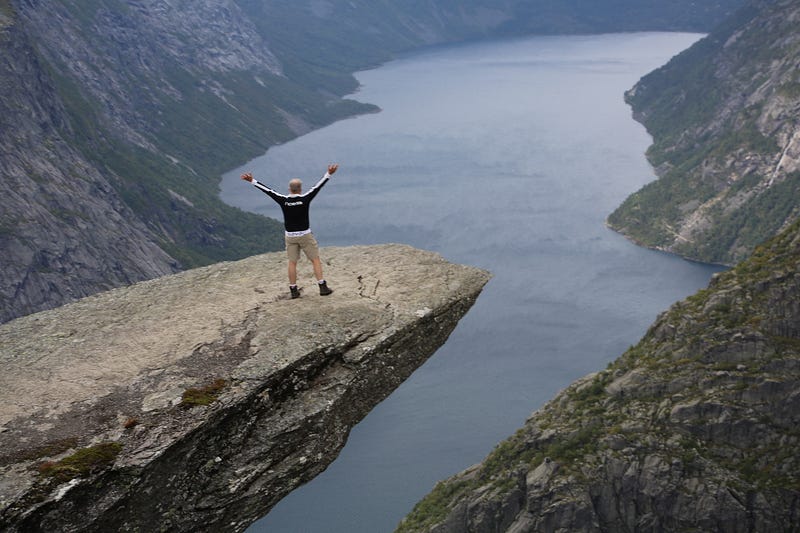
Did something special happen in my life when I reached the retirement age in Norway, 67? I mean — did something fundamental, ground-breaking happen to me?
- Was there a changeover to something totally new and different in my life?
- Or was it simply that life only continued, a bit different, but the same life, mostly in the same tracks?
Almost all my life I have spent my time working, more or less systematic and targeted. First about 20 years of education (school and university studies to qualify for work), and then paid work for about 40 years, from 1974 to 2014.
Being in full employment meant to me like to everyone that I have given away a lot of my time for doing the work for my employer, who has “owned” me during this time. In my case, the work I did was teaching, most of the years as a lecturer in Upper Secondary, 7.5 hours a day, five days a week.
And then this happened just a little more than three years ago — I quit working.
I cannot say this came unexpectedly, it was rather planned and expected. But almost over the night the limits of my life changed significantly. I was all of a sudden able to decide over my time myself. All the time, every day, every hour of the day I could decide how to use alone, I could spend my time for the private and family-oriented purposes that I myself wished to prioritize.
This new, unfamiliar liberty! — This huge change!
I’ve got it a bit at a distance now, but in the beginning I think I was a little numb, slightly knocked out. — What would I do with all this time, with this newly won liberty?
It took some time for me to get into this new state. Took some time to find out. — Was life almost ended now? Finished in the work life, done with so much in life?
The first period was a bit unusual. Days that were unstructured, where I was looking for what I wanted to do with these days, all this time I had suddenly gotten up in my lap.
I took it quite softly, a little backward, layback. I wanted to see what was to come.
The first period after I had finished working I was a bit like in a fog. I had of course seen it coming, but I can not say that I had made me a strategy for how I should handle it.
The first weeks after I retired, I experienced somehow a little fluid. This word — retired — was a word inside of me that I, in the unconscious, shovelled away. And this was probably a symptom, an indicator that not everything was all right about me.
The first weeks after I quit working, I usually slept in the morning. It was like a mountain of sleep that I needed to climb and take in possession.
Occasionally I thought about it. This would be my life hereafter, without any workplace to go to, and all this time that I would have to my disposal! What should I fill this time with, this undefined empty space?
There was basically no big drama attached to this. Nothing was unforeseen, nothing came truly unexpected on me. I could offer myself the rare luxury of cooling it all down, just let time flow and let the mind and body flow in time, just the way it suited me.
In the morning I could wake up, maybe I heard that the others stood up and got ready to meet the new day, at work or school.
I could lay in bed, sleep on there, let me slip into the mild and mellow morning sleep. I could take a book from the bedside table and read on from the night before. Or I could pick up my phone or computer and check news heads and emails.
There was no sudden transition. In fact, it was a slow process, this transition to a living in new time frames.
I could stand up, put on a training suit and walk or run for a trip. Or I could ride the bike to Hordvikneset and over the bridge. I could take the car and drive somewhere, find something stupid or something new to do. Like walking in the mountains near the town together with likes in the local touring association, like driving to the mall and trolling a cart unintentionally between the racks inside the big supermarket and finally going through the cashier to the car with shopping bags heavy of drinks and food.
It took some time to get used to this new life. In the morning I was the only one in the house. For many hours, the house was empty of those who usually give life there, except for me, who no longer had something to go to, like work or school.
I will admit that there were a few hours that can seem like a waste. I could walk from room to room, I looked over the fjord, saw the gray skylight over the land further north, I saw that there was some snow on the mountain tops. I sat down in the kitchen, made me coffee, some morning food. Yes, I admit it, I was on the verge of boredom, I did not have meaningful alternatives to scrolling down and up on webpages looking for the latest news.
It took some time before I saw it clearly. I had come to a stage, to a place in life where the framework had significantly changed, and where perhaps the biggest and most noticeable change was time.
And I made an interesting discovery:
- I noticed that time was there for me, and that things were not as urgent as before.
- I realized that I had oceans of time ahead of me and around me.
- I actually had come to a point of life or a state of existence where I simply was privileged!
Have a nice day! :)
Part 5
Is There Still Hope?
Or is the world on a dangerous rail towards destruction?
Published on May 3, 2018 in The Writing Cooperative · 6 min read
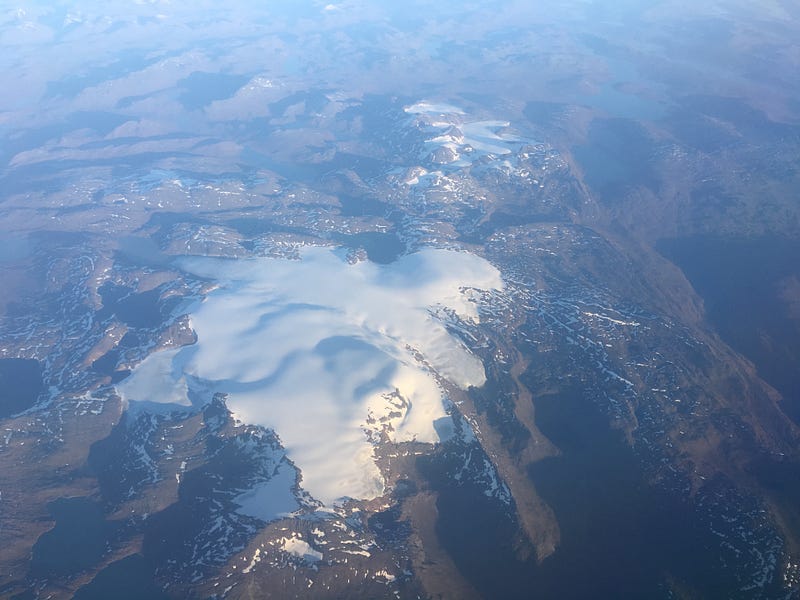
I would answer that second question quickly by saying NO! Clearly not! The world is not on a dangerous rail towards destruction. Of course not!
I am confident. Although it can sometimes be felt like that. Like the world is on a wrong rail.
Hope is an optimistic state of mind that is based on an expectation of positive outcomes with respect to events and circumstances in one’s life or the world at large.
I feel clearly that there is hope. There is still much hope for a positive development of the humanity on this planet Earth.
The world has recently experienced lots of negative events, right!
The world population has suffered wars, terrorist attacks performed by confused individuals as well as fanatic terror groups. There has been bombing, mass murderings. For decades we have lived with a meaningless arms race, we worry about climate changes, a world wide pollution of the soil, the waters and the air.
We live on a planet Earth that is threatened in many fields, and we see people everywhere who let themselves nourish intellectually and emotionally with this negative nurture.
It is so easy today to think like a pessimist!
But are we really leaving to our children a world that is in a worse shape than when we started our journey?
I mean — is there hope for the world, is there hope for us?
I am certain, there is hope!
There is hope as long as we, the human beings on Earth, stand up for ourselves and for each other. As long as we believe in our abilities to meet with and resolve the challenges, such as social and economic injustice, peace/war issues, famine, lack of drinking water, climate change, pollution, etc., etc.
There is always hope, as long as we believe in our abilities to cope with disagreements with our closest, neighbor conflicts, differences of opinions in politics, disagreements regarding all the small and big issues we daily have to deal with.
There is always hope, as long as there is space for dialogue, for two way communication!
With hope on board I believe that we will again feel optimism and confidence in the future.
The actual political evolution in many countries does not inspire confidence and optimism. Not at a first glance. I feel sad when I observe the characters of persons who get access to the power in many countries. These individuals are power-seeking, self-centered and selfish men, self-established nation and world savers who present themselves as the nation’s best option for leadership in the years to come.
Of course they are not. Everyone knows that basic fact. Every human being, every political leader, every state leader can be replaced, and as a fact: In very many cases these leaders should. Be replaced!
I admit that we recently have seen many negative signs in the political development in many countries all over the world. The lowest point is of course watching the rise of the man who was elected president of the USA from 2017, a man who does not have the generally appreciated qualities of a leader at that level. A man whose ability to persuade and collect supporters tricked the voters and the Establishment to a degree that the latter still has not recovered from the shock, one and a half years later!
I await with curiosity, from competent people, the complete and clarifying analysis of how it was possible for Mr. T. to be elected president of the USA. As far as I know this analysis has not yet been published. — A relevant challenge for a team of very competent writing women and men, I suppose?
We can choose to look upon this recent development in the world as a transition. A period of hard times before we reach better times.
The reason I say this is that I can see positive signs, positive developments in so many fields.
There are competent voices who speak. Voices who tell about what it’s like to be where they are. People. Individuals. Mothers and fathers, who have daughters and sons, young couples who have small children — our future.
These people speak in a broad variety of channels. Medium is one of them. In fact Medium is one of the most interesting, because of it’s structure and it’s openness. The fact that Medium lets all writers write and publish without any intermediary link, makes it the most democratic general communication channel I know of.
Medium lets me write what I write, and I believe that as long as I in my writing respect normal content and expression guidelines, I can publish whatever I want on Medium. And I can know that I will be read by readers. Not necessary many readers, but although readers all over the world, readers who sometimes let me know that they have read by «clapping» one or more times, and through writing a comment. I appreciate both kinds of feedbacks very much!
On Medium I can read any writer from all over the world, and I can easily connect with her or him and show my interest and support.
What is so good on Medium is also the absence of rubbish, like harsh comments, insults and empty flattering phrases. Medium is a conversation room for normal people who talk with each other on whatever subject they want.
Medium can be seen as a gigantesque education and communication project.
Worldwide individuals can read and express themselves through discussing the issues of their choice on Medium. And everyone can contribute writing on topics of their own choice, speaking with their own voice.
Medium is a low-threshold, easy accessible place for me as world citizen to find important information, relevant ideas and thoughts. And Medium is a low-threshold, easy accessible place to publish my writings. The same goes for you.
I see Medium as one of several important channels to express, share and spread ideas.
Medium’s world wide extension makes it interesting in our common, never stopping project to build and leave behind us a better world.
Call to action:
Write!
Speak up and write.
Speak with anyone who is near you — or far away.
Write in the contexts where your words are seen and read.
Write and speak in the situations where your voice is heard and listened to!
There is so much space for dialogue and for action!
No one has to sit isolated and think negative thoughts.
There is space for all of us!
There are readers for all of us!
What are our most important challenges today and tomorrow?
Do you see other priorities? Write. Discuss.
Do you want more? Follow me. Want to reach me? Write me at [email protected]
May 2018 Øivind
Øivind H. Solheim is a novel author and a nature photographer from Norway who loves writing fiction, poetry, essays, and articles helping others understand life, other humans, and themselves. He has published six novels, two non-fiction books, and a poetry book.
Visit Øivind H. Solheim’s profile
Become a Medium member, read thousands of writers and support my writing.
“Make Your Dream Be Your Future”