
How to Learn Skills Faster
How taking short breaks may help our brains learn new skills faster.
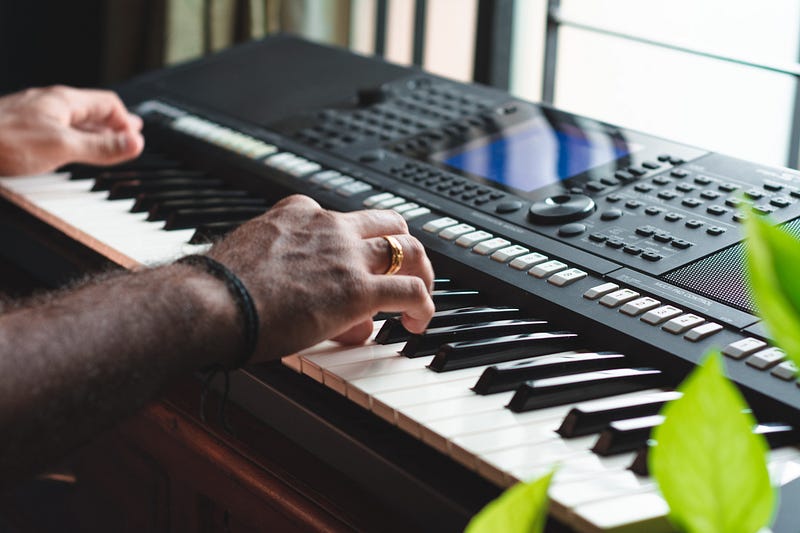
“Practice makes perfect” is a popular phrase used to emphasize the importance of practice in acquiring and perfecting skills. During distributed practices — cycles of alternating practice and rest periods — consolidation of skill is greater than when the same total amount of practice is performed over longer continuous blocks (massed practice).
So we can say that “much, if not all” skill learning occurs offline during rest rather than during actual practice. This rapid form of skill memory consolidation, micro-offline gains, suggests that it develops over a much shorter timescale than previously thought. It is even roughly 4-fold greater in magnitude than studied overnight skill consolidation required sleep.
To further study these findings, researchers from the National Institutes of Health have discovered why taking short breaks from practice is a key to learning by mapping out the brain activity that flows when we learn a new skill.
Leonardo G. Cohen, M.D., senior investigator at the NIH’s National Institute of Neurological Disorders and Stroke (NINDS) and the senior author of the study published in Cell Reports said:
“Our results support the idea that wakeful rest plays just as important a role as practice in learning a new skill. It appears to be the period when our brains compress and consolidate memories of what we just practiced,”
Dr. Cohen’s team recorded the brain waves of 33 healthy, right-handed volunteers as they learned to type a five-digit test code “41234” with their left hands. The brain waves were recorded using a highly sensitive scanning technique called magnetoencephalography.
The experiment started when a subject was shown the test code “41234” and had to type it out as many times as possible for 10 seconds and then take a 10-second break. This alternating cycle of practice and wakeful rest has been repeated a total of 35 times.
The speed at which the code was correctly typed increased rapidly and then leveled off around the 11th cycle. Furthermore, a decrease in the size of brain waves called beta rhythms, correlated with greater gains of the skill than those after a night’s sleep.
To study the mechanisms behind memory strengthening seen during wakeful rest, Dr. Buch, a staff scientist on Dr. Cohen’s team and leader of the study, developed a computer program to break down the brain wave activity associated with typing each number in the test code.
They discovered a much faster version — roughly 20 times — of the brain activity seen during typing was replayed during rest periods. The compacted versions of the activity were replayed about 25 times per rest period during the first eleven alternating cycles of practice and rest. This was two to three times more often than the activity seen during later rest periods or after the experiments had ended.
Moreover, the researchers found that they could predict memory strengthening by looking at the frequency of replay during rest. In other words, greater jumps in performance after each trial were seen in subjects whose brains replayed the typing activity more often than those who replayed it less often during rest.
Dr. Buch stated:
“During the early part of the learning curve we saw that wakeful rest replay was compressed in time, frequent, and a good predictor of variability in learning a new skill across individuals. This suggests that during wakeful rest the brain binds together the memories required to learn a new skill.”
Research from the last decade has shown that the trained sequence of neurons that were involved in accumulating the skill is played forward in time during sleep. However, data from this study showed that right after practice the trained sequence of motor neurons is played backward in time, provided you don’t bring additional sensory stimulants.
Interestingly, the brain only replays the sequence of the correct pattern of movement backward in time, therefore, eliminating the incorrect patterns of motor sequences. Why the brain replays this sequence backward in time is still unclear.
The authors of this study stated:
“While forward replay of this trained sequence could support retrieval of information obtained during previous practice relevant for planning and guiding action in the next practice period, reverse replay could contribute to the evaluation of recent practice outcomes.”
So how can the findings of this study help you to learn motor skills faster?
Well, after you finish your training session of a motor skill, for instance, learning a new song on the piano, or improving your golf swing or tennis serve, and just sit there for 5 to 10 minutes or even just ONE minute the brain starts to replay the motor sequence of the corresponding correct pattern of movement backward in time.
Right after skill learning, without any additional sensory stimuli, sitting down quietly with the eyes closed for a short period of time is the most important thing. This allows the brain to replay the sequence in a way that appears important for the more rapid consolidation of the motor sequence, therefore, accelerating the learning process.
Thank you for your interest in science! Feel free to put questions, comments, and suggestions for future articles in the comment section.
If you want to support:
- If you are not a Medium member yet, you can my referral link so I can get a part of your fees from Medium, you don’t pay any extra.
- Subscribe to my Newsletter to get best tutorials, research, education, and scientific-based tools for everyday life directly in your email inbox.
While you’re here, check out one of my other articles.