
How to Keep Setbacks from Setting You Back
Setbacks are inevitable, but giving up is not.

Gymnastics has always been one of the things that makes me most happy in life, and when I became a mother of two, I didn’t want that to change. So I decided I would return to an adult gymnastics class as a place to reach my fitness goals. I have, but not without my fair share of obstacles.
The first day I went to an adult gymnastics class, the instructor pulled me aside and asked me what my goals were. I told him, mostly centered around getting back my old skills, and, try as he might, his face couldn’t keep his face neutral. My goals were light-years from my capabilities at that point.
But putting my body through having two kids was a setback I was determined to overcome. I knew I had to start where I was, not at what was once my best. And with his help, I started to make progress.
That coach left the gym for bigger and better things two years later. On his final day, I completed the last of the goals I’d set at my first class. My timeline to complete them was relatively slow, but I got there, and the techniques I used have helped me with myriad goals — inside and outside of the gym — since.
I moved on to wanting a skill I’d never had, even as a competitive gymnast: a press handstand. By early 2019, I felt so close. My incremental work on this notoriously difficult skill was paying off.
Then in November 2019, I injured my back and was out of commission until mid-January. A few weeks back into practice after that, and I was suddenly the sickest I’d ever been in my life. Sure, I was over the fever in a few days, but it was a month before I could walk up and down the stairs without feeling winded. That month of sickness ended on March 13, 2020. I went back to the gym twice between injuring my back and the world shutting down.
By summer 2022, after a year back in the gym, I was getting stronger again. That’s when I snapped something in my wrist and couldn’t put weight on it for seven months.
Two steps forward, three steps back.
I started writing this article a little over a week ago, excited to frame this conversation around my wrist injury recovery and how I didn’t let my limitations keep me from a sport I love. I still want to. But last Friday I got up from my desk, turned off the light to my office, and walked directly into the edge of the door. I gave myself a black eye and a mild concussion.
Last Tuesday, I was thrilled that the setback phase of my wrist injury was over. Friday, I got a new setback I’m still recovering from. So this article doesn’t come to you from a place of “I dealt with a problem and now it’s gone forever.” Instead, it comes from a very real understanding that setbacks are cyclical and inevitable, and yet we can still move forward — understanding both the setback and the recovery are temporary.
Below are the four ways I roll with setbacks that keep me from giving up entirely.
Pivot
Sometimes, the setback you receive makes it clear you can’t pursue this goal right now. When I hurt my back, doing gymnastics at all was out of the question. So I threw myself into writing that fall, rather than pursuing my physical goals. People are complex, with dreams that don’t fit neatly into a single box. When one of your boxes gets taken off the table, you can wait for it by taking the time to progress at something else.
When I got a concussion, I needed to focus my attention on keeping my hands occupied without working my brain too hard. So I picked up an embroidery project and taught myself the beginnings of a new skill. Sometimes all you get from a setback is time to pursue something else. That’s okay.
Get Creative
My wrist injury was different than my back injury. What gymnasts call “basics” were off the table. I couldn’t do somersaults, handstands, back handsprings, or cartwheels. But I could condition, and I could flip. In some ways I pivoted my gymnastics goals — I couldn’t do much press handstand work, but my aerials and back flips got a lot better.
But even more importantly, I would ask myself “what parts of getting a press handstand can I work on when I can’t bear weight on my hands?”
The answer was a lot of core work, flexibility, and leg strength.
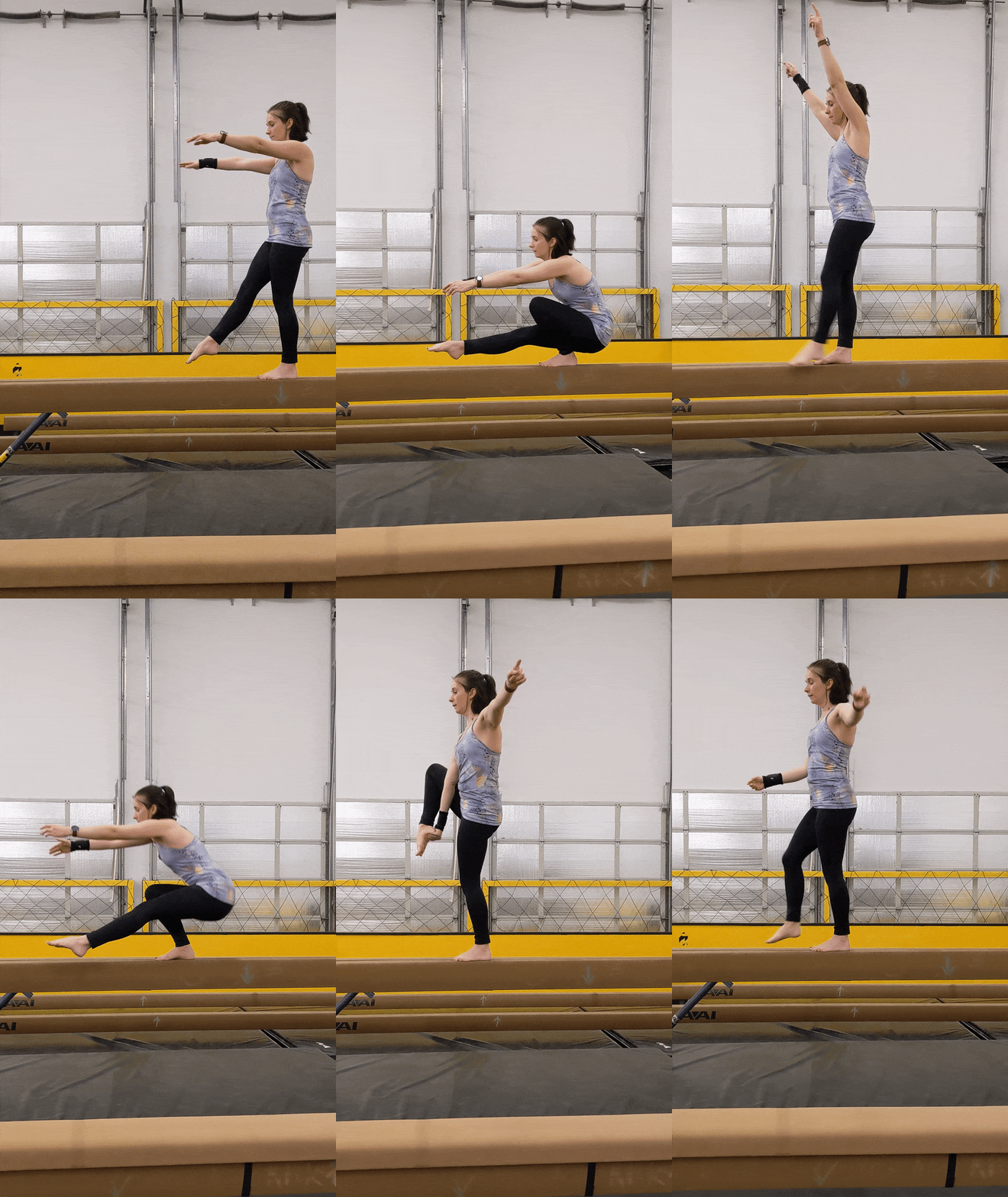
For returning to back handsprings, I knew I needed to work on my shoulder mobility — since a lack of it was what hurt me in the first place — so I isolated that, as well as focused on massage and PT for my shoulder and wrist.
Last Tuesday, I did my first back handspring in almost a year… and it looked better than it used to. I’m certain this is because I found creative ways to pursue what mattered to me — despite an injury.
Take Your Goals to MARS
I know the rage is all about SMART goals, but sometimes the idea of “Time-Bound” leads me to sabotage myself. Once it becomes clear I won’t finish something by a self-imposed deadline, I stop trying. If I’m going to miss a goal of 50,000 words in November, and it becomes clear I’ll, say, only get 40,000 words, it can be easy for me to decide that goal doesn’t matter at all and throw out the baby with the bathwater.
To avoid this, I can create specific, measurable, achievable, and relevant goals… and rather than time-bind the result, I create a different kind of time-bound-ness: allotting a certain amount of time per day, week, or month to working on that goal.
It’s the difference between “I’m going to get a press handstand in one year” and “I’m going to work on my press handstand drills three times a week for at least fifteen minutes.” I might not get there in a year, but when setbacks come — and they will — I’ll still be able to pivot creatively to keep myself moving in the direction of my dreams.
Leave a Paper Trail
It’s a cliché for a reason that we don’t know how far we’ve come until we look back. Because I’m consistently inconsistent, I prefer to have several methods with which I could document my progress. With gymnastics, it’s often videos. With writing, there are word count goals, time spent goals, time spent learning, and simply keeping old writing that I can re-read and see my improvement that way.
Other ways to document include spreadsheets (of workouts completed or words written or cold calls made or milestones reached) and habit trackers. What matters here is finding something to track that will encourage you to continue even when you’re derailed in some way. For myself, that means not comparing it to a goal of where you’d be with consistent effort, since I don’t do consistency so much as bursts of productivity and times of rest. But that inconsistently consistent effort still provides me with results — and seeing them motivates me to keep showing up.
Conclusion
Small steps add up, even if they aren’t the steps you originally intended to take. It would have been easy to decide that wrist-less gymnastics wasn’t worth it and I needed to heal first, but instead I decided to find a way to make wrist-less gymnastics be my healing.
I didn’t have a goal of getting really good at beam complexes in the last year, but they were what I was capable of with a hurt wrist. And beam complexes — working on dance skills on the beam with a focus on form — are great, it turns out, for core work, shoulder strength and flexibility, and leg conditioning.
When I got to return to the flippier forms of gymnastics, the work I’d done in my setback era absolutely contributed to where I ended up. The mental break I took with a concussion gave me clarity about what I want to be doing, and as a bonus I learned a new skill — or at least got to practice being a beginner.
The next time you’re faced with a setback, which honestly will probably be soon, I hope you’ll have what you need to make even setbacks a way you get stronger and closer to your goals.


