
MIND
How to GLADly Meditate and be Happy?
It Can Help Quieten Your Inner Mind.

Most of us have a sense that if we were allowed to pursue our inner desires, it’d make us happy. However, we often struggle with knowing what our deepest desires are, or even what it would be like to feel happy.
What if we had it all wrong!
What if inner peace is the missing link in the happiness equation. Getting our inner mind to calm down allows us to know ourselves better. To perhaps understand our innermost desires and pursue our passions, and it MAYBE the happiness we yearn.
Let me explain.
Making Sense of Our World
We are born new to every aspect of worldly experience. We slowly learn to make sense of the world around us via an interplay of our thoughts, feelings, and actions. We become aware of how we feel, and if the feeling is strong enough, we act on it automatically. Based on the outcome of our actions, we receive feedback — from our environment and internally. Through a series of these feedback cycles, we develop a sense of the world around us.

The human brain likes predictability and tries to match predictable patterns to situations. Sometimes, we are accurate, and sometimes we make mistakes. For the most part, this system works reasonably well with sufficient built-in redundancy to provide resilience and make us adapt to changes in our environment.
Sometimes the system breaks down. For instance, when we face discomfort, our brain assumes imminent danger and triggers a fight or flight response. Perhaps a lousy experience from a previous situation keeps us from trying something new.
Understanding ourselves — what we want?
Our mind builds a knowledge base about ourselves and our place in this world. Through both active and implicit learning, we come to set up expectations and test them. For instance, we learn that when we pull on our mother’s hand, she will respond. Or If we cry, we can get attention, and that if we feel anxious, it often indicates that something terrible could happen.

Over time, we develop an intuitive sense of who we are, and it guides most of what we do. We internalize a strong sense of an inner judge, always on the job, guiding our actions and stopping us when an internal rule gets crossed. For example, from hard experiences, we may come to expect:
“It’s unsafe to stand out” or “Don’t be vulnerable, you’ll just get hurt” or “You’re not a creative person,” “No one cares how hard you work,” or “You can’t handle too much stress.” Sometimes our parents casually verbalize warnings that, as children, we take literally. “Don’t talk about how well you did in school; you’ll make your brother (who has a learning disability) feel terrible by comparison.”
We convince ourselves that somehow pursuing our cherished goals might end up injuring us, or hurting a loved one, so we drop them. Maybe as kids, being outspoken or assertive was unacceptable or against the rules for your family or a violation of norms of your culture.
Maybe acting confident and assertive was considered selfish or rude by one or both of your parents or your teachers. Or, perhaps in your family of origin, disagreeing with your parents was deemed to be rude and inappropriate. So we adapt, convincing ourselves to avoid being assertive or disagreeing with authorities, and convince ourselves not to be assertive or disagree with authority.
Even as we grow up, we may find that situations that require us to be confident or need us to stand up for our differing opinions make us anxious. Beyond our conscious awareness, we might be avoiding taking on more leadership roles and remain stuck in roles that stifle our creativity and independence. Instead, we might be blaming ourselves for not being smart enough, brave enough, or strong enough.
What does all of this have to do with finding happiness and pursuing inner desires?
Your Inner Mind
Our mind is the basis for understanding who we are, and it primarily consists of a knowledge base acquired by an interplay of our thoughts, feelings, and actions. To understand what we most desire, it might help to look at our thoughts and the influence they have on our sense of self and our understanding of our wants and needs.
According to the research of Dr. Fred Luskin of Stanford University, an average human being has approximately 60,000 thoughts per day. Most of them are repetitive and, a significant percentage of those repetitive thoughts are laden with negative content — negative images, memories, and expectations. With consistent repetition, an idea or thought may develop into an automatic reflex and has the potential to become an unconscious inner voice.
Therefore, it is these negative thoughts over time that are the ones that keep us from knowing our deepest desires and get in the way of our happiness.
It is reasonable to hypothesize that to know what makes us happy, we have to learn to ignore this negative inner voice. Or at least we need to learn to minimize the impact these beliefs have on our actions. We can learn to avoid initiating another vicious cycle. Once we quiet the negative internal messaging, perhaps we will get more precise in knowing our inner passions and what keeps us from pursuing them.
Quietening Our Mind might Hold the Clues to Happiness.
If you take enlightenment as a form of embodied happiness, we get some clues on how to quiet our negative inner voice. For many, Meditation may offer a path. There are several methods to get started in Meditation, and you might have to try several ways to find the one that resonates with you.
It is worth noting that a wide range of experiences is possible when engaging in the meditative process and that it may not be the right approach for everyone. I found it helpful to have support from a teacher experienced with Meditation, to guide me as I started exploring Meditation as a means for self-exploration. A meditation group or a meditation circle might also be helpful.
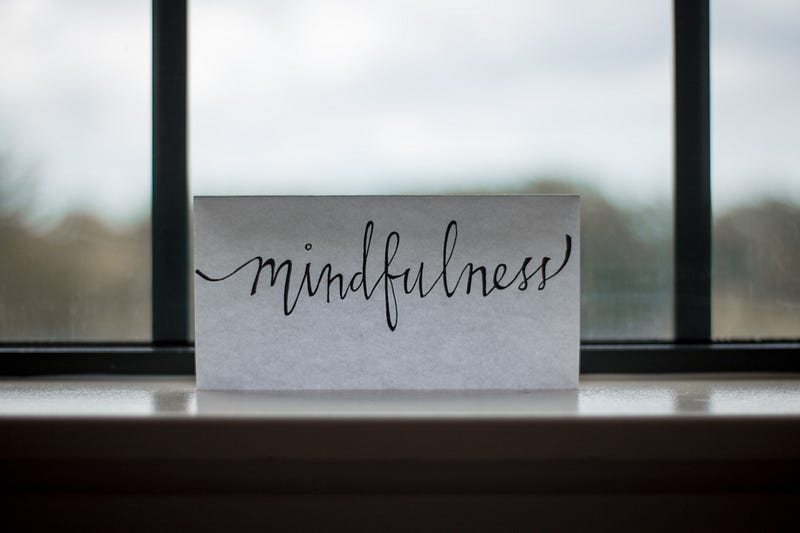
Research has started to support this idea of using Meditation as a way to control one’s mind. More specifically, Meditation may help us become better at bringing our attention to intention. In other words, Meditation may help strengthen the mind “muscle” that helps us become better at non-judgementally, observing, naming, and letting- go of thoughts without direct engagement with its content. With enough practice, it may even get us closer to finding out our passions and keeping us from pursuing our inner desires.
What if we GLAD-ly Meditate!
So, I tried the following experiment: For seven days, I set out to meditate for 15 min in my day. I did this by sitting in a quiet place, noticing my breath, inhaling for the count of 5, holding for three, and exhaling for 7. After a few rounds of controlling the breathing movement in the described manner, I let go of the count and focused on noticing my breath — in and out.
In this process, my mind undoubtedly wanders. When this happens, I gently acknowledge that it’s happening, “ there my mind goes again, flooding my brain with thoughts”; “there goes an anxious thought”; “ there goes a happy thought.”
I try to stay with just the naming without needing to change anything else- no list generation, no catching the worry train, no calling the taskmaster in you. This process of simple observation is not easy, and I tried it each day for the past seven days. It does get more comfortable with each practice.

Finally, I finished my sitting meditation each day by journaling for a few minutes. I use the GLAD technique for this. It involves writing down one thing I feel grateful for (G), one thing I learned (L), one thing I accomplished (A), and one thing that brought me delight (D) that day.
These don’t need to be big things; For instance, on Tuesday, I noted that I learned I don’t like soy milk in my coffee. On Thursday, I felt grateful for having electric toothbrushes( life-changing!), and on Friday, that last piece of chocolate was the delight of my day.
Does GLADly Meditating work?
After doing this exercise for seven days, nothing materially changed in my life. I did find my ability to slow down and experience the moment increased. Being mindful and present does set it up, so I find myself looking for things to be grateful for or find delight in — I count that as a positive change.
Overall, I feel calmer. I can stay in the present longer and find increased motivation to do things.
Am I closer to knowing what makes me happy, and what are my inner desires? I am not sure, but this experiment has given me enough positive preliminary results that I have decided to keep going for another week.


