
How to Become a Happy Person
Unexpected, a Buddhist teacher makes it simple
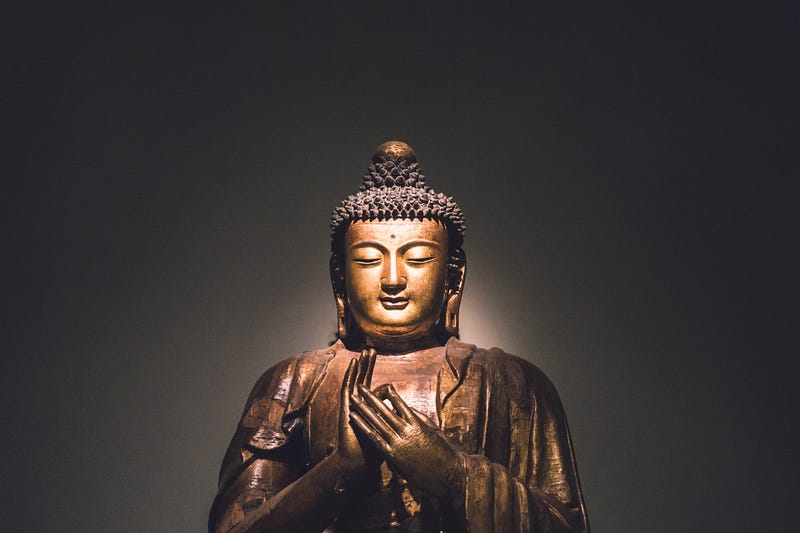
Sometimes things happen unexpectedly. Late in the evening, getting ready to sleep, I often watch the local news followed by random documentaries on YouTube. Ignoring the warnings — “Turn off electronics an hour before bedtime,” often too tired even to read, I turn my fuzzed-out attention to whatever YouTube has chosen for me.
Last night, without meaning to hear anything meaningful, I stopped at a documentary of a young man interviewing a Buddhist monk — sitting on the grass together, outside of a monastery, somewhere near Sidney. I didn’t expect to stay but for a minute. Instead, I ended up watching the whole thing, and I think I heard some clear instructions on how to become a happy person.
Honestly, I’m a clinical and evolutionary psychologist by training, I’ve been teaching doctoral students how to do psychotherapy for decades, and there’s nothing simple about it. But in an hour-long interview, I was captured by the words of an Australian monk, who began telling his own story while presenting a simplified summary of Buddhism. Quietly, informally, he passed along a lesson on how to be a happy person. We could all use some of that.
I don’t know who the Monk was, but after I’ve finished telling the story of what I can remember, I’ll retrace my steps and find out. Please note — what follows is not an exact replica — it’s this story remade in accord with what I remember, filtered through the sleepy haze of evening.
The interviewer looked to be maybe 25 or 26; he was seeking new experiences and hoping to travel sometime. He thought he might get a “change in perspective” if only he could go somewhere new and exotic. Meanwhile, he was interviewing people he thought might be interesting, and who might offer some adventure without leaving home. He’d heard about an interesting Buddhist teacher living in a Monastery, just outside of Sidney.
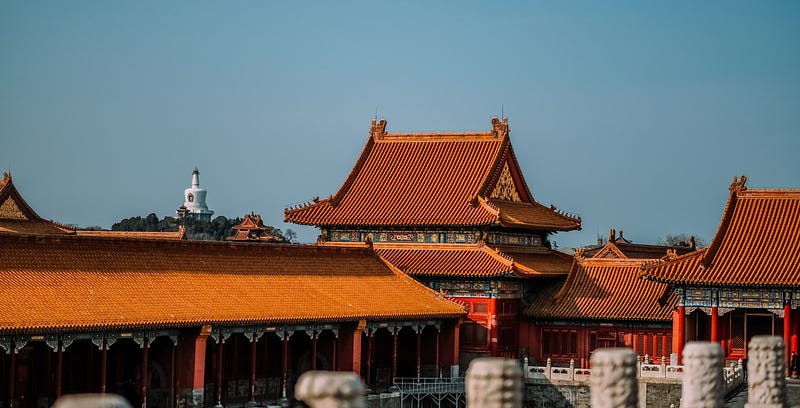
Without so much as a phone call, the young man showed up at the Monastery, and sure enough, found a Monk there who said he’d be happy to talk to him.
They sat down together, the young man asking:
“Do you mind if I record this? I might want to listen to it later.”
“Not at all,” the Monk said; he seemed to be smiling — just slightly — when he spoke. They settled in, the Monk leaning against a tree, while his listener sat cross-legged on the grass, monk-style. the Monk started to talk softly, his words crystal clear.
“You know when you think you really want something — it could be a new computer, a fancy car, a great pair of handmade shoes, a house plant that promises to grow into a tree. It could be anything. But imagine it’s something as simple as a piece of chocolate cake; most of us know what it’s like to be craving a piece of chocolate cake.
If you don’t really like cake, it’s not your thing, no matter. The same thing happens, no matter what it that you’re craving. Before you get it, the thing you think you want, you feel good — just from the excitement, the expectation of the pleasure you’ll feel. Psychologists call it “anticipatory pleasure.” You go out to the bakery, and you buy a slice of your favorite chocolate cake. Pleasure is mounting — only it’s not exactly a pleasure, it’s the anticipatory expectation of pleasure. It feels good, just thinking about how wonderful it will be to tale that first taste of chocolate.
You take a bite, and for a half-second, you feel the pleasure of tasting chocolate. Before you know it, you’re finishing the chocolate cake — and if you’ve eaten too much, or too quickly, you may feel sick to your stomach. But one way or the other, it’s over.
Instead of pleasure, you’re face to face with the misery of loss. So where’s the pleasure?
The same thing happens no matter what it is; you might think you’re praying for. The pleasure is just in the expectation, it’s never quite there, it’s so fleeting, and after you’ve succeeded in getting this thing you so badly wanted, the sensation of loss is lingering. It goes on. Craving inevitably ends up a source of depression, anxiety, and loss.
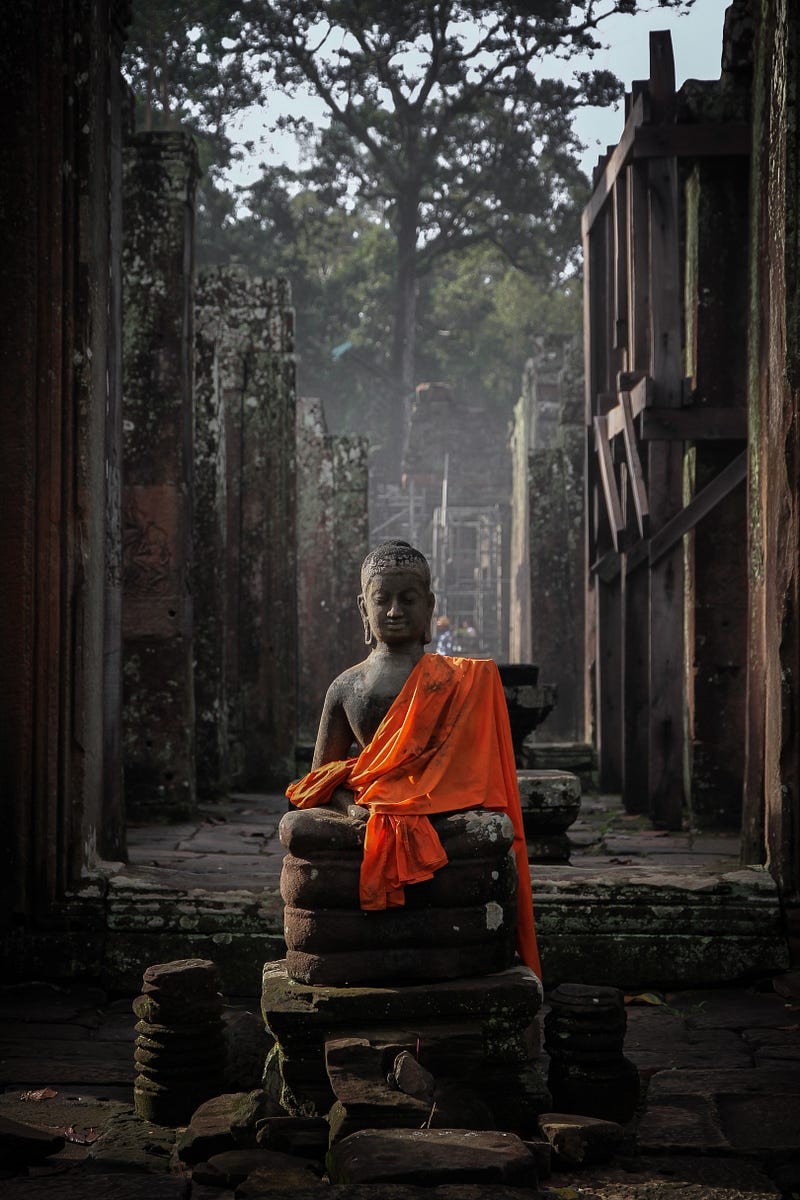
It’s impossible to find long-lasting pleasure derived from any external object — be that a perfect person you think you want to marry (or partner up with, or spend a night with), winning the lottery, or sitting down to a great meal. All you can get is that anticipatory excitement, the promise of pleasure to come, but it isn’t quite there — and then it’s gone as you wade through many longer-lasting feelings of loss.
Pleasure comes from something internal, it’s never from something external.
The Monk pauses, giving the young man some time to reflect upon what he’s been saying.
The Monk took a deep breath and started talking again:
“We all know we’re going to die, but not really. It’s intellectual; we know it up here” The monk taps on his head. In our hearts, we think:
“It won’t be today, I’m not going to die today, I have plenty of time ahead of me. Oh, maybe in 10 or 20 years, I’ll start worrying about dying, but no reason to do that now.”
But no one knows; you don’t know you’re not going to die today. I don’t know I’m not going to die today. We forget that. I try not to.
When I first wake up I meditate. I think about my death — don’t look sorry about it, it’s so helpful. I imagine: “This is my last day on our planet.” It changes absolutely everything.
Think about the couples you know who are always fighting. Every morning One them charges out of their apartment first, on route to work. They’re shouting unfriendly things at one another as the first partner takes off. The other follows some time later. I can hear the nasty echos they’ve left one another with. And they don’t really mean it. Think how different it would be if, upon awakening, they remembered: “I just might die today.” They’re so tender with one another when they leave for work in the morning…”
The young interviewer nods his head, only vaguely understanding what it’s like to listen to couples who argue constantly, and then — almost weekly — come back to ask the Monk again, to help them stop. He tells stories, he offers suggestions, but sure enough, they’re back the next week, arguing. The young man hears his own parents arguing once in a while, but not all the time. So the story doesn’t capture him 100%
“I know what you mean about travel, changing your perspective,” the Monk said to the young man, referring back to their earlier conversation when the young man mentioned he wanted to travel.
The Monk went on:
“Somehow, talking to all the people who stop by here to pray, or meditate, or talk about their problems keeps my own perspective skipping around. Look at it this way,” he said, not finishing his sentence.
The Monk goes on, getting just a little dreamy-eyed, as begins to tell his story.
He started talking about his life when he was in his early 20s, when he was in business, employed as a successful young techie working his way up the ladder. At some point, facing his feelings of dissatisfaction despite having made a pile of money, he decided to step back, he wanted to travel, to see a bit of the world. And he had plenty of money, so he could do it. He traveled to Asia seeking something — “I guess I was looking for transformation” he said. Failing to find it in Asia, he returned to the city, to work…
Sitting quietly on the grass together, the Monk continued talking:
“When I returned from my travels, still dissatisfied, I settled into another job as a techie at a big financial firm. Again I was making lots of money — but I found myself stuck with an impossibly moody, mean-spirited boss. I decided to ask a monk who lived in my neighborhood. I couldn’t hurt, right?
He arrived at the monastery and found the Monk, always like he was waiting for him. He asked the Monk: “Could I speak to you? I’m having a problem.”
“Of course,” the Monk said, “Of course. Here, sit down with me,” and he motioned to a few seats, outside the main prayer hall.
“What should I do?” I asked him, explaining, “My life would be perfect if only I could get rid of this new boss, maybe get myself reassigned to another department.“ I thought that’s what he might suggest that I do.
“No, that won’t work” the monk responded, much to my surprise.
“Here’s what you should do.”
I listened, half thinking he was going to tell me to get off my ass and start looking for another job. But no. Instead here’s what he said:
“Think of someone you really really love.” He paused for a moment, as I conjured up the image of my older brother, who I absolutely adore, I almost worship him. He sat silently, watching me as I brought some of the best memories to mind.
“When you go to work tomorrow, every time you have to interact with your boss, imagine your brother’s face super-imposed on your boss’ face.”
Really surprised, and frankly disbelieving, I thanked him for his help, and left, forgetting about the whole thing until later that evening, when I was getting ready for bed, I thought, well, maybe I’ll try it, and I decided to follow his directions. When I saw my boss as he walked by me the next morning, I imagined my brother’s face, superimposed upon his. It was not easy. Every time I saw the man, or heard him rolling his chair up to my desk, I imagined my brother, his face on top of the form, instead of my boss.
I continued doing this — I don’t know how long it had been going on, but something happened. First, instead of growling at me, I saw my boss actually smile when he passed me in the morning. A few weeks later, he was telling me jokes when he rolled up to my desk, and after another few weeks passed, we’d become friends. I could hardly believe it, the way he’d changed.
One morning soon thereafter, I went back to see the monk, relieved to see he was still there at the monastery.
“It worked! I told him. I don’t know how it worked, but somehow, I did what you said, and in just over a month, my boss has changed completely. It’s hard to believe, but we’ve become friends.”
The monk smiled.
“It’s not your boss who’s changed.” He was smiling: “It’s you, who’s changed.”
The monk had won the young techie business man’s heart and suggested he come back to the Monastery that Friday night for guided meditation practice. “I don’t know how to meditate,” the young tech worker said. “No problem, I’ll teach you” the monk responded.
I decided to take him up on his offer. I went back to the Monastery and began to meditate. After a few months I began to relax and the peace I felt in meditation surrounded me . Another few months later, I joined the Monastery,” the Monk said. And here I am, telling you this story.
He smiled at the young man, sweetly.
By now, the young man interviewing the Monk was completely enthralled. He’d almost forgotten the Monk had been telling him his personal story. He sighed, stretched his legs, then raising his eyes, to meet the monks, he said:
“Do you think you could show me how to meditate?”

Turning off the recorder, the interview was over.
Looking up from my computer, I was amazed to see over an hour had flown by. I hadn’t been listening to this on purpose. I hadn’t been looking for a teaching; I wasn’t seeking something “spiritual.” I’d thought I’d probably watch the news. I didn’t take notes, and I’ve not yet retraced my steps to find out: “Who was that teacher, anyway? Was that a famous teacher?”
I may have told this story all wrong; I might have put the stories in the wrong order, perhaps I made some of it up.
But when I awoke this morning, as I was preparing to meditate, it crossed my mind, just for a moment: “I might die today.”
Remembering to set my intention, “May I be of benefit to others,” as I slipped into a meditative state.


