
How to Remove the Major Finance Burner in Less Than a Week of Tracking
Focussing on one area at a time is effective than going all-in
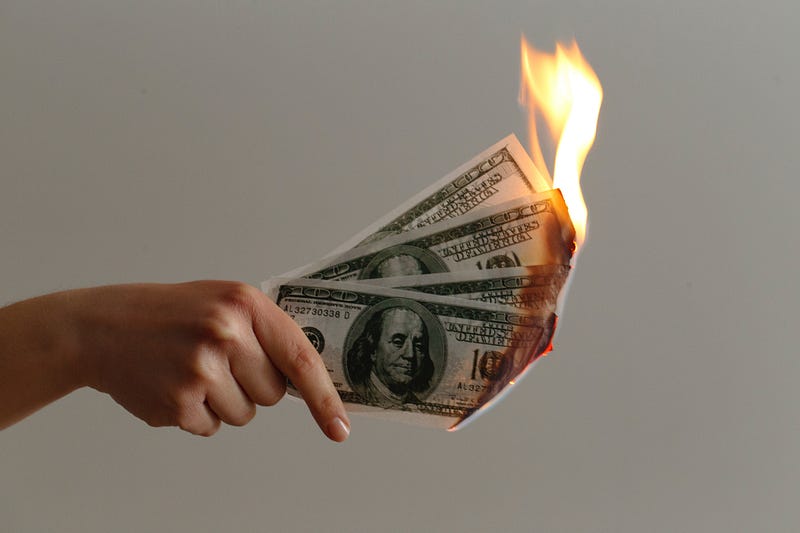
The only time you think of managing your finances seriously is when you start earning yourself. It is a practical approach and works best because your hands are in the mud now.
I started my job precisely one year ago. It has been a hell of a rough ride, financially. I knew I would face this adventure, but I was not ready for it.
You have to admit your finances are unhealthy if you wait for the salary at the end of every month. It is the first step in living a frugal life that you enjoy.
No more living on the edge.
In the last 12 months, I have ended around four months with a 2-digit bank balance. That means a restricted expense and depending on close friends for money related problems.
I am glad I have such people who are ready to pitch in anytime I am at the cusp of financial breakdown. But my inner-self was telling me to muster up and become 100% financially free. It is the best life you can have with your money.
Minimalism is contagious
Say no more, minimalism to rescue. It was a hard pill. It took more than six months to practice it, and I sucked severely in the starting.
But with time I grew with it. I knew I had to. Those who are staunch practitioners of minimalism know how effective it is to appreciate the “power of less”.
The contagion of minimalism is that you show it in every walk of life. It is not just a way to save finances. It becomes a lifestyle choice.
The traditional way of finance journaling
When you manually write expenses, you start to see patterns. Kakeibo is a mindful Japanese budgeting system that can help you manage your spending by maintaining a finance journal.
I won’t go deep into how it works because I found the fix before even practising it thoroughly. I am just wondering about what would have happened if I had followed it sincerely!
I will follow it seriously sometime in the future because circumstances change. If there is a proven working system, why not try it? I did it 10% for now. It has worked wonders!
Analyse the highest spender
Our mind can focus on one thing at a time. The more specific you are, the easier it is to stick to the plan.
Just thinking about “saving money” is a generalist approach and won’t work unless you severely cap the threshold in certain areas you feel could use some monitoring.
To me, it was online shopping. Be it food, fashion, electronics, personal care, etc. I am still missing some categories, but you got the genre here. I will shoot down every area gradually.
Even in the pandemic time, I did not stop ordering food online. Addiction is real!
Give time to remove the junk.
When I started manually writing every expense in a diary, I found a pattern within one week. I planned to remove the burner first and then think of any other useless liability. The category was online food ordering.
I wanted to pose healthy restrictions by uninstalling all the apps like Swiggy, Zomato, Faasos, Box8, etc. But no, I went with another smart way. I moved the apps in such a location that it became tedious to navigate and open them.
I wanted to use laziness creatively, and it did work. Wow! You could also try. You’ll be putting in less effort for more savings.
Takeaways
Managing your personal finance goes uncontrolled only when you decide to go all-in at once without an effective plan. You also need to know whether your strategy is working. Otherwise, why would you even stick to it, right?
When I found online food ordering as one of the useless areas, I immediately posed healthy restriction so that I order food only when it is the last option. And guess what? I order once in two weeks now. For my dad, it is still a high number, LOL!
I have stopped the tracking for now because I understood our mind could focus on one task at a time, i.e., zero down online foods.
Once I have completely mastered to avoid online foods, I will analyse the next highest spender in my finances. Then kick it because that’s how it works: the more trust you develop in a process by tracking it for a fixed period, the more confident you are in applying it to other areas.
Give it time before you see effective results. And if you are sincere enough, you will eventually see more than satisfying ( I want to say exceptional ) results.
This blog belongs to a series of posts I am publishing in this 100-days streak. Today is day 78. Navigate to the end of article 22, for the references from day 23 onwards. If you would like to read the ones before day 22, here is the first one that documents them in the end.
~ Sanjeev


