
How To Fight Poison Ivy of the Mind
The only thing I hate more than invasive plants is invasive thoughts.
Poison Ivy is an undesirable plant that easily spreads to unwanted places. Like negative thoughts and emotions, it can ruin beautiful things and change something breathtaking into a wasteland of toxins. Here’s how to fight poison ivy, both in your lawn and in your mind.
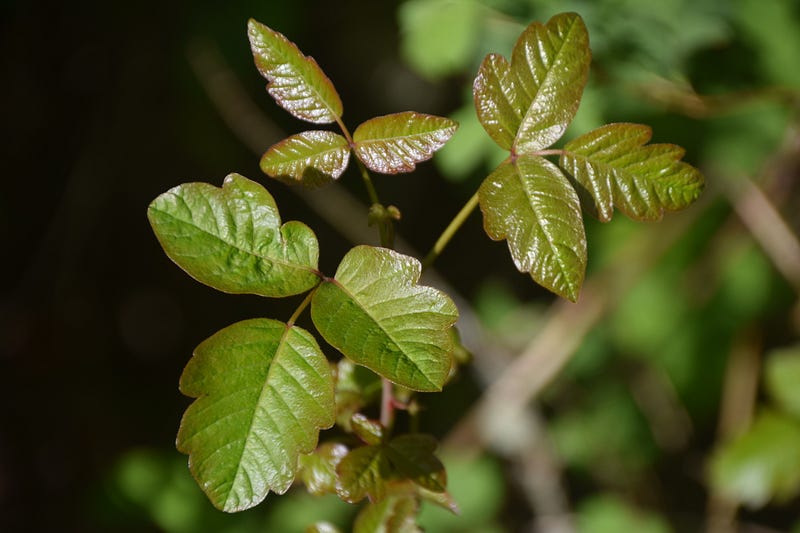
They say everyone is born with a gift. Some people are talented singers or fast runners. I’ve come to accept that my gift is the ability to spot poison ivy anywhere in any setting.
Poison ivy is a plant that grows almost everywhere in the eastern half of the United States. If you touch it, you will get blisters and rashes that will swell and burst and leave you itchy and uncomfortable for weeks.
It is a hardy and adaptable plant that can withstand almost any conditions. It can spread invisibly underground. It can climb trees, cross roads and change its shape depending on the climate. You can try to kill it by spraying chemicals on it, but it won’t do any good. The vast underground root system will send up new stems and leaves that are bigger and stronger than the ones you tried to kill.
I visited my friend’s house today and I noticed a new patch of poison ivy creeping its way closer to her kids’ play area.
Remembering my special gift, I demanded a trash bag. I put on gloves and set out to remove the poison ivy — roots and all — so that it wouldn’t overtake her yard and send her kids to the hospital with the anaphylactic reactions that can sometimes occur with severe exposure.
As I was ripping and pulling, I noticed how the thicker roots send out smaller trailing roots in all directions. The smaller roots send up shoots through the soil every few feet, methodically testing conditions, looking for the spots with the best access to sunlight, moisture.
If a tiny poison ivy shoot pokes up into a desirable area, it grows more leaves and more shoots. The new leaves store energy from the sun that the plant then uses to send out more underground roots. An MIT engineer couldn’t design a more brilliant strategy for spreading quickly and taking over the world.
If you want answers, look to Nature, not Google
Spending time outdoors often reminds me that nature is the best teacher, and it struck me that poison ivy has a lot in common with the negative thoughts and emotions that have been popping up in my head lately. Like poison ivy, they are unwelcome and seem to come out of nowhere. They spread quickly and in all directions. And they often leave me feeling itchy and uncomfortable.
One morning, I’ll wake up with a little seed of doubt in my head as I feed my kids sugar cereal for breakfast and let them wear pajamas all day. That little bit of doubt in my ability to parent will find its way through my mind to my ability to take care of myself, clean my house, do my job or string words together to form a sentence.
Fear works the same way. One little fear, like worrying about running out of toilet paper, can travel and connect to other fears. Little fear runners travel underground and make you afraid of running out of food and water. From there, fear travels to the big picture and makes you wonder if we are on the verge of chaos and collapse and the end of life as we know it.
Maybe we are, but living in a mess of knotted fear vines won’t do one thing to help.
Disruption as opportunity
Poison ivy takes over areas of land that have recently been disturbed. An old growth forest that hasn’t been logged is unlikely to have a lot of poison ivy. But anywhere the earth has been tossed and turned by a bulldozer or a shovel will be infested with poison ivy before you can say photosynthesis.
Just like negative feelings, poison ivy is opportunistic. It will capitalize on an opening and use it to gain an almost-irreversible stronghold.
We’re a living, breathing metaphor for disturbed soil right now. We’ve been tossed and turned by a virus, not a bulldozer, but nothing about our lives looks the same as it did a few months ago.
Uncertainty, hate, distrust and anger are reaching out, sending their little tendril roots out in all directions, looking for a place to sink in deep roots. Without quick action, they will ruin the resilience, optimism, faith and kindness that we’ve spent a lifetime trying to grow.
Sometimes the Work is the Shortcut
I’m a firm believe that everyone should know what poison ivy looks like. Once you can identify it, you’ll have a much better shot at avoiding it. If you can’t avoid it, you might find yourself wanting to remove it.
The easiest way to remove poison ivy is to put on gloves and painstakingly dig it up, root by shoot by leaf. You can pull it, snip it, dig more, rip it and snap it, but you’ve got to do your best to remove it all. Then put it in a trash bag and send it away. Even so, it will likely grow back. When it does, you need to repeat the process. With vigilance and persistence, you will mostly win the fight.
Or, you can waste a lot of time trying out sprays or clippers or looking the other way. But while you do, your poison ivy is spreading in all directions, making your job much harder when you finally decide to dig in and do the real work.
Once you’ve taken the trouble to remove poison ivy from the ground, your best bet is to plant something you like in it’s place. That way when the new poison ivy runners poke up into the sunlight, they’ll see an inhospitable home and will go elsewhere.
I’m not a therapist or a counselor, but I do believe poison ivy offers a lesson in how to deal with negative thoughts and emotions.
First, you need to know how to identify them. Figure out how fear is different from excitement or curiosity is different from anxiety.
Once you have identified them, isolate them so they don’t spread. Don’t let anxiety about your job takeover your relationship or how much you love your new haircut.
When I’m upset about something, I like to write it down. I use a #2 Ticonderoga pencil and I just jot a few sentences in a red leather journal I keep on my desk. It’s my way of bagging them up in a trash bag. But you could also talk about them, paint, draw, sing, or do a thousand other things to push them out of your system. Whatever you do, do something. There’s no gimmick, app or sleight of mind that can turn bad feelings into good. You have to work at it with good, honest, intention.
Once you’ve take the steps to eradicate your unwanted thoughts, put something good in their place. Plant a rhododendron. I mean that literally and metaphorically. Find a hobby that you love to think about — gardening, for example.
The Fight is Never Over
Poison ivy will always come back, no matter how carefully you try to remove it all. Knowing that it’s a long term fight will help you feel less disappointed when you see those glossy reddish leaves poking up through the soil again.
Similarly, you’re never going to rid yourself of unwanted thoughts. You’ll have to stay vigilant and keep tending them.
Taking care of both your mind and your lawn are worth it though. Nobody wants to feel bad all the time and nobody wants to get a rash from taking a walk outdoors.
If you like to think about nature as a good teacher, you might like this:


