In a World of Birches, Be an Oak
The birches may look good, but it’s the oaks that survive.
I think about trees. A lot. Where most people see a bunch of trunks and some leaves, I see strategic battles for resources and brutal competition in a world of genetic variation due to sexual selection. When I hear someone say “knock on wood,” I want to know if they mean cherry, chestnut or mahogany.
Even if you don’t think about trees as much as I do, you can learn a lot from the woods. Especially if you’re one of the many people exploring your local hiking trails and town forests now that everything else in the world has closed.
While you’re out and about take a closer look at the trees around you. Ask a friend or download an app to help you identify some of them. Your walk will be much more interesting when you know what you’re surrounded by.
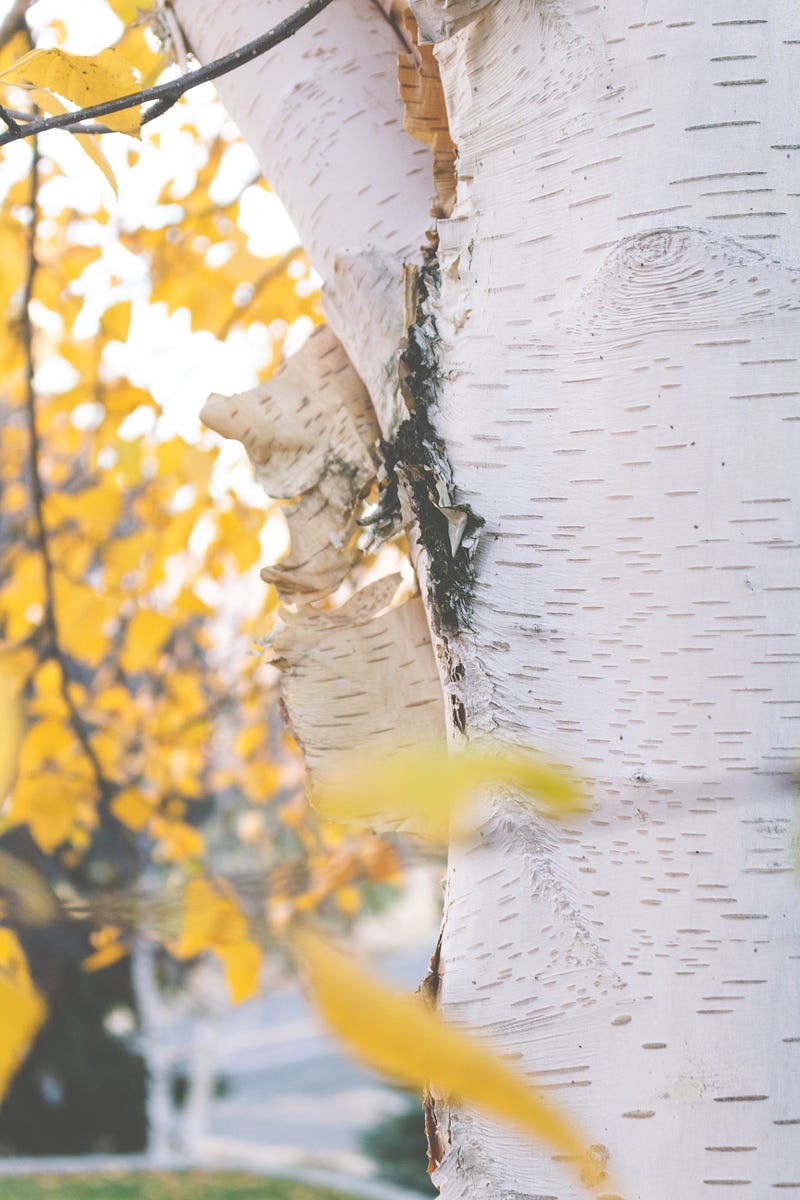
If you live in North America, there’s a good chance you’ll see a few paper birch trees. These are easily identifiable by their snowy white bark that is tightly wrapped around their smooth trunks. I won’t go so far as to say trees are sexy, but if they were, paper birches might be the sexiest.
Last week, I was in the woods with my kids and we encountered a fast flowing stream. I challenged them to build a bridge so the many people on the trail that day would have an easier time crossing it. We scoured the ground looking for branches and limbs to lay out across the muddy water.
As we did, I noticed something. The ground was littered with paper birch trunks. When we went to pick them up and drag them to the bridge, they almost collapsed under their own weight. Like sponges, they squished down to nothing and were useless to us in our quest to keep everyones’ shoes clean.
While my kids were bummed out by this, it didn’t surprise me a bit. After a piece of land is cleared, either by machines or fire, paper birches are some of the first trees to repopulated it. They grow quickly, sending out large root systems to hold the soil in place. They grow tall and fast, often dominating the landscape of a new forest.
“Live fast, die young.”
That’s the only phrase in the world that makes me think of both M.I.A. and the grad school professor I had that taught me about the biology and life cycle of paper birch trees.
Birches sprout up quickly, using energy from the sun to grow feet taller every year. But in the long term, they don’t last. After just a handful of decades, they die and fall to the ground. They aren’t used to make furniture or for firewood and even my kids gave up on them as a resource to use in our hobnob bridge project.
Here’s how this is relevant to today. Life as we know it has been wiped away by this virus. Only time will tell what it will look like in the wake of the crisis. And as we figure it out, there will be writers, businesses and opportunists springing up like birch trees, telling and selling ideas and products that are designed to help us piece our lives back together.
There will be books and subscription boxes about preparing for the next pandemic. There will be hacks and cures and products to clean your bathrooms. There will be gyms and bars designed for social distancing. Even as you read this, people are looking for ways to capitalize on the fear and uncertainty that this crisis has created.
And guess what? Like birch trees, they will look good at first. They are flashy and shiny, with their marketing and packaging wrapped around them like tight white bark.
Do not be one of these people. Do not start one of these companies. They are the birch trees that will not last.
One of the markers of a climax forest is its mature oak trees. Oak trees are planted by forgetful squirrels. It’s true, squirrels hide nuts away all fall but burying them in the dirt. And since they have small brains, the survival strategy they have evolved is to hide more nuts than they need since they’ll forget where most of them are.
A forgotten acorn sprouts into a tree, sending it’s first leaf up into the air as a “Hello World!” flag and also a solar collector that it uses to harvest the energy it needs to make its second, third and three thousandth leaf.
Oak trees grow slowly. Unless you’re a tree enthusiast like me, their bark is unremarkable. It’s brown and bumpy with slight variations depending on the specific oak species you’re looking at.
And they don’t grow under just any conditions. After land is disturbed, it can take a hundred years for oak trees to start growing. And when the they do, oak trees rely on soil nutrients from the rotting leaves and wood from other trees that have already grown, died and fallen on that same spot.
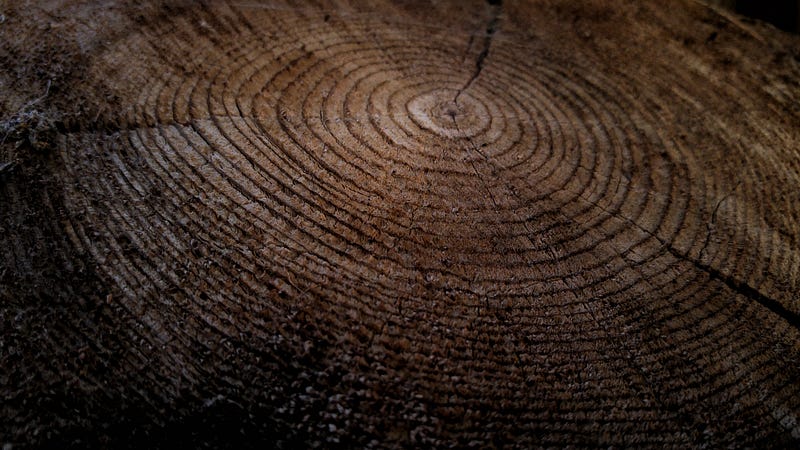
As oak trees grow, they lay down tight, dense growth rings year after year. The live a long time. Hundreds of years. So while you’re freaking out that you haven’t been to the gym in almost a month, that oak tree in your neighborhood is like, “Hey, remember James Madison? He was an OK president.”
Oaks are valued for lumber, shade, habitat and firewood. They can tolerate hot years and cold years. They can survive high levels of pollution and salt.
Oak trees don’t bring the hype or excitement of a birch tree. They are a sign of a stable, healthy forest. They provide food and habitat for other animals and stabilize the soil to prevent erosion.
And when oak trees die, they don’t just rot to nothing. Oak is a useful wood. I have an oak rocking chair that was my great-grandmothers and some really heavy people sit in it regularly and all it does is creak in an endearing, old-fashioned way that reminds me of my grandparents.
Here’s how this is relevant today. As we struggle to put our lives back together after months out of work or school, we will need long term solutions to problems like inadequate supplies of medical equipment, community disease transmission and grocery chain shortages.
We don’t need an emergency toilet paper bunker, we need freely flowing information prevents us from panic buying supplies based on rumor and hysteria. We don’t need another youtube PE class, we need a well-designed public health curriculum that teaches high school students about responsible ways to react in a future pandemic. We don’t need a billion stockpiled X, Y or Z supplies, we need a responsive production system that can shift its output depending on need.
We need businesses, writers and politicians that — like the oak tree — give back to the community in the long term. We need people who take small steps, everyday to make our lives better. These are the people who will last. These are the ideas that will last.
Like oak trees, these ideas, products and businesses will take time. The will be carefully planned and thoughtfully designed. They will serve multiple purposes and will outlast their founders.
So in the coming months, when you need to clear your head and get some fresh air, head to the forest. When you do, notice the birch trees. Sure, they look good now, but they’ll be dead in a decade.
Don’t live your life like that.
Instead, live like the oak trees. Live for the long term. Slow down. Observe. Give back. Make slow, steady progress. When you start something new, make sure it is something good, that will make life better. Wait. Pause. Let the birch trees die out. Learn from their mistakes.
Then grow.
And if you do a really good job, maybe someone will make you into a creaky rocking chair some day. It’s better than rotting to nothing on the forest floor.