
A Vegan Guide to France
How to Eat More Than Baguette and Salad
France is not exactly known as a paradise for a cuisine free of animal products — you might think of cheese, snakes, frogs and other so-called local “delicacies”. Well, what can I say. I’ve been vegan since 2013, so my “adaptation phase” to the plant-based diet was long over when I spent almost two years in France between 2016 and 2019. I was fluent in French and prepared for a culinary challenge!
It is true that the vegan trend in the country of the Eiffel Tower has not yet experienced as much of an upswing as my home country Germany (with Berlin being the “vegan capital” of Europe). However, companies and restaurants are discovering a new profitable target group and oh oui, that’s promising. Therefore: Bon appétit and have a good read!
Metropolitan regions vs. rural regions
In metropolitan areas such as Paris, Marseille, or Lyon (the three main cities), it’s almost a piece of cake to find purely vegan restaurants and cafés. I particularly recommend the app or website “HappyCow”, which lists all vegan gastronomic addresses in the world — just enter the desired city and all vegan, vegetarian, or even vegan-friendly restaurants will be displayed (tadaa!). In Paris, you will currently find more than 70 purely vegan restaurants.
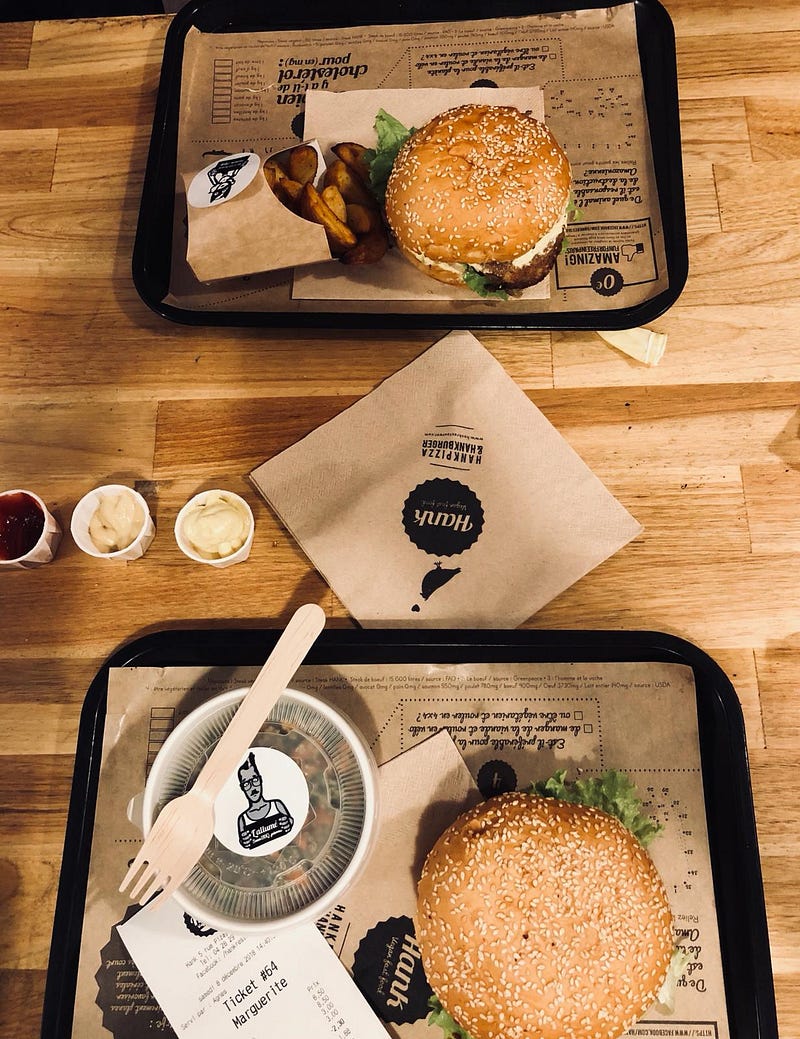
If you live in the French capital, you can even visit the purely vegan supermarket “Un Monde Vegan” where you will find everything your heart desires — from false fish sticks and soy cream to vegan snickers and bounties. When I lived in Lyon for a year and a half, new vegan restaurants opened regularly, be it from the fast food or the high cuisine sectors.
Smaller towns and rural areas in France are unfortunately far from being as vegan-friendly as the big cities. In these parts of the country, you will find numerous restaurants that are dedicated to the traditional French gastronomy (which, by the way, is officially declared an Intangible World Heritage). They might offer nothing but French fries or salad for vegans (if anything). Dear vegans, please also avoid the so-called bouchons — don’t pretend that I didn’t warn you. In these restaurants, which are common in the old town of Lyon but can be found all over the country, the smell of processed meat and fish unfolds more than anywhere else— and even vegetarians don’t really get their money’s worth when they opt for the only overpriced salad on the menu.
No to cheese and wine?!
An essential part of the French way of life is of course cheese (fromage). Let me just mention that I spend two months in Normandy Northern France in 2016 where I did a lot of hitchhiking to discover new places. No matter where I was, I was constantly reminded to check out the local cheese museums and the different cheese specialties of every town. Crazy!
The French are so fond of their cheese that they make every effort to create authentic plant-based alternatives.
In Paris, for example, there is a cheese factory that makes plant-based fauxmage (a neologism with faux for “false”) to replace cheese: “Jay&Joy”. Based on cashew nuts or almonds, these round creations mature for several days, so that fermentation takes place, as with animal cheese. Cheese-like products can also be based on coconut oil, soy or similar. Such cheese alternatives are mainly found in organic food stores.
You might wonder if the same goes for foie gras, fatty goose liver traditionally served during Christmas time. Yes, there are vegan alternatives and one company even called its product joie gras (fatty joy) — French vegans really like their little word twists with a wink.
There is more good news ahead: The delicious vin français is also available in the purely vegan version. As you might know, commercially available wine gets clarified with animal gelatin without the manufacturers having to declare it. I know that not all vegans care much about their alcohol being vegan, but if you are one of us and would like to buy nothing but vegan alcohol, you should check out the website “Barnivore”. It will tell you if the respective brand of alcohol or your desired drink is vegan. By the way, most beers in France are vegan, so you are on the safe side. This is unfortunately different with traditional wine made from grapes or cider.
In the supermarket: check the ingredients!
During my three semesters of study in Lyon, I had enough time to figure out which supermarkets would offer vegan chocolate, cookies, margarine (without added butter), plant-based milk, pesto and more. I would even write down the name of the supermarket where I had found great biscuits, margarine, etc. on my phone and would make a small detour to get a product that I enjoyed.
The bigger the supermarket, the higher the chances of success: a giant hypermarché is therefore more practical than a standard supermarché.
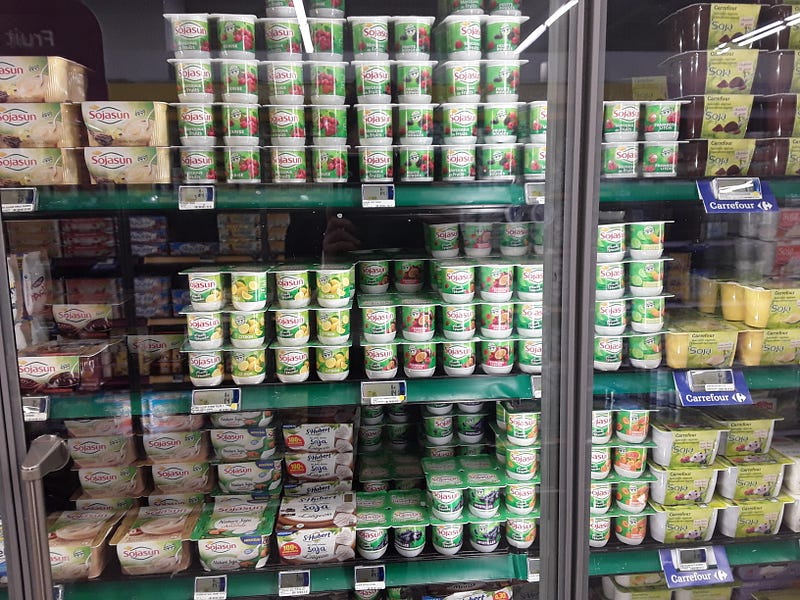
What impressed me in France is the huge selection of chilled vegan desserts, from pudding to yoghurt to mousse au chocolat. Most of them are soy-based, so it’s a really good idea to look for the soy assortment in the refrigerator. In the meantime, there are more and more types of ice cream as well as (chocolate) croissants without ingredients derived from animals, even if not freshly baked (yaay!).
Not all products are labelled vegan in France, so it’s worth taking a look at the ingredients. A few important words are lait (milk), œuf (egg), gélatine (gelatin), cire d’abeille (beeswax), miel (honey), carmine (red dye from female lice) and of course viande (meat) and poisson (fish). Just like English speakers, the French distinguish between vegan/végan for the “complete” vegan lifestyle and végétalien for the plant-based nutrition.
Vegan Holidays at the Atlantic Coast
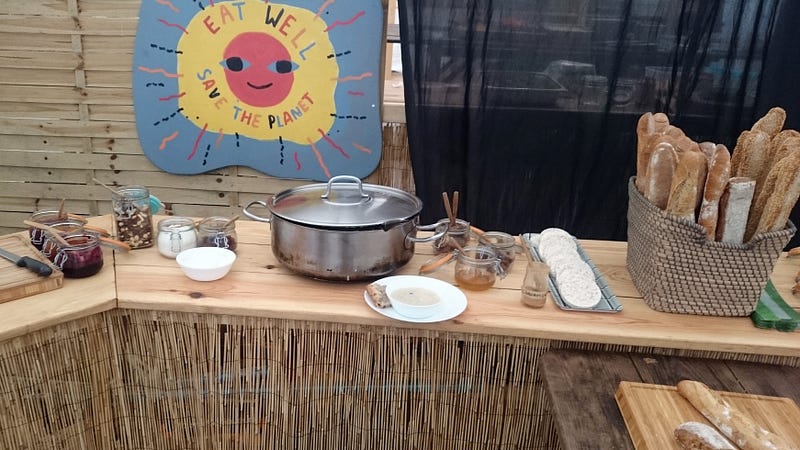
For holidays in France (see cover picture) I can only warmly recommend the fantastic “Vegan Surf Camp” in Moliets-et-Maa in the south of France. It’s part of the large campsite “La Cigale” in walking distance to the Atlantic Ocean. I spent four weeks there as a volunteer in the summer of 2019, so I was able to stay in a tent for free, take part in several yoga classes a day, go surfing anytime and help myself to the huge vegan buffet. Never have I had such a diversity of vegan food all at once.
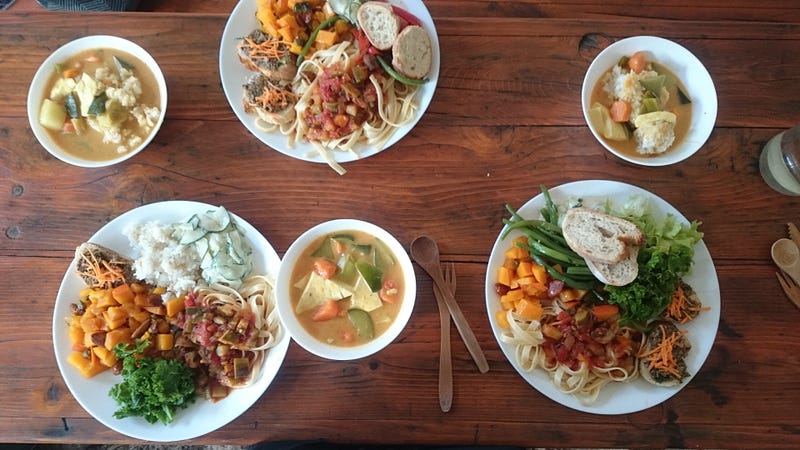
In return, volunteers are asked to spend a few hours a day cutting vegetables, doing the dishes, looking after the reception or bar, and cleaning up once in a while — but usually you are working alongside other volunteers, listening to loud music and having nice chats. These holidays free of cost are definitely worth the while! After all, every day is long enough to not only work, but play beach volleyball, relax, do yoga and (learn how to) surf. I got along very well with all the other volunteers and some of them became good friends. Even among the guests of the camp paying for their stay who usually stay only one week and often arrive alone, friendships form very quickly (Oh nice, you are my tent neigbour? Let’s sit next to each other for dinner!).
Fresh and precooked
You intend to live in France? Then be prepared to buy fresh food at one of the numerous weekly markets — it could hardly be any cheaper. In Lyon, I went to the weekly market near my residence almost every Saturday or Wednesday to stock up with all kinds of salads, vegetables, and fruit for one or two weeks for about 15 euros (17 US-dollars). I recommend bringing your own cloth bags and pouches, otherwise you will get a plastic bag at every stand. However, most of the food there does not come from organic farming.
For organic vegan purchases, organic shops like “La Vie Claire”, “Biocoop” or “Naturalia” offer an immense selection. Organic shops are always a good address for various types of tofu, vegetable milk and similar alternative products as well as healthy foods such as nuts and seeds. Asian shops are also supposed to be a good alternative for tofu; however, I never tried them out.
In French student canteens called “Resto’U”, there might be a small selection of plant-based salads — but main courses? Forget it, we’re still in France!
I personally only ate there once during my three semesters in Lyon. After all, precooking saves a lot of money and all my German fellow students also prepped their lunch at home.
Finding like-minded people
If you are planning a longer stay in the so-called “Grande nation”, you might be interested in meeting some fellow vegans, animal rights activists or you might just want eat your way through plant-based picnics (legit). In Lyon, I got to know many of my French friends through organizations, events or associations with an animal welfare or veganism background. It’s worth looking up Facebook groups that exist for many cities — for example “Vegan Lyon”, where you can ask for advice, see event announcements and learn about new openings or new products.
During my time in Lyon, I took part in vegan picnics and aperitifs, discovered street activism for myself, got involved in the animal welfare education association at my university and stood behind information stands of the Association Végétarienne de France to answer people’s questions. Not only can you make contacts, but you can also ask for regional tips. If you enjoy activism, you can get involved with the associations “L214” or “269 Life”, among others.
© Annika Erika 2020
You liked this article? Then you might enjoy these ones!