
HOW TO DRAW
How to Draw a Robin
Still a brown and red blob, but with a few more bits

Even if you end up with a brown and red blob — that the onlooker sees as a robin — it’s still good to know what actually goes into it. Knowing how things work makes anything more believable even if you don’t draw in all the details.

For example, a robin’s claws are formed with three toes in front and one behind. This is because robins belong to a group of birds known as ‘perching birds’. Their feet are made in this way to help them perch on thin twigs. Each foot connects with the perch at four different points.
You don’t really need to know all that but it’s pretty interesting. What you do need to know is the three in front, one behind formation. Even if you’re only drawing in three lines in front and one line behind, rather than trying to draw actual birds’ toes, getting the lines right makes all the difference to the authenticity of your drawing.
Remember that when a bird is perched on a branch, the branch is round (sort-of), so the toes curl around it, rather than being straight. See above.
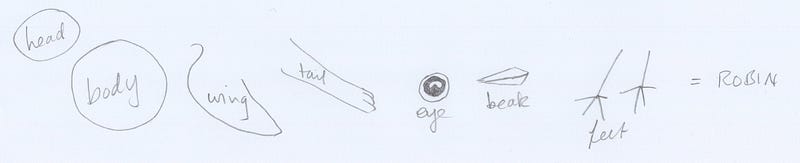
Most drawings can start with a circle. A robin is no different. Two circles. Smooth them out for the ‘neck’ bit, add a wing and a tail, legs, beak and an eye. To get the eye in the right place, remember it is usually on the same line as the beak.
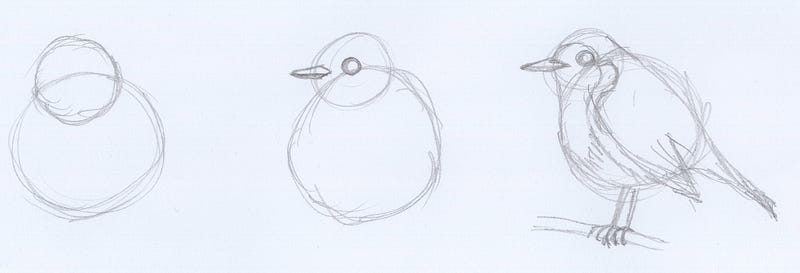
The legs I’ve put on that bird above are too straight — they would usually be at more of an angle.
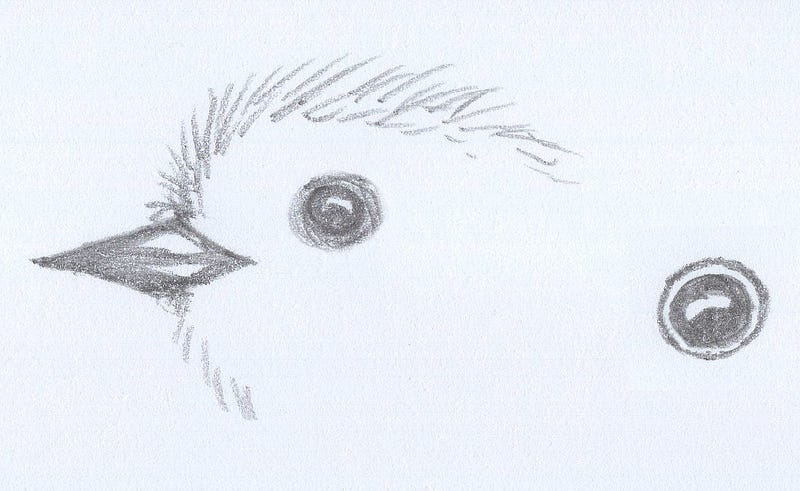
See also diagram above — a beak isn’t stuck onto a bird’s face — it’s part of the bird’s face. The eye is simply a circle with a white highlight. There is usually a ring around it.
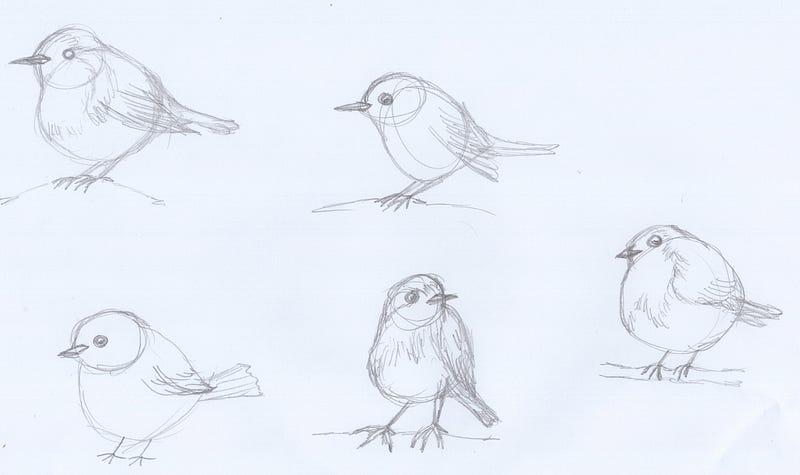
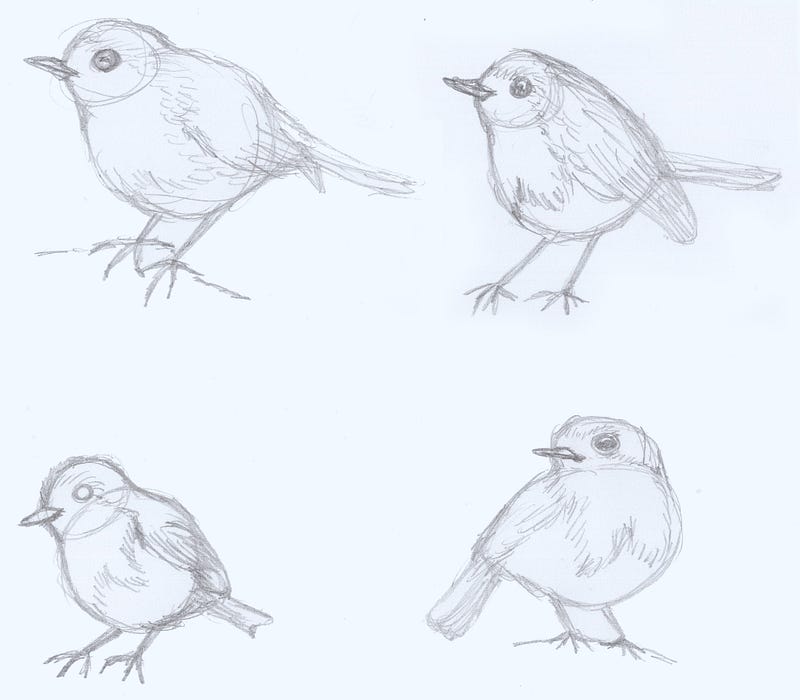
All these sketches take very little time to do. I tend to do quite a few on scrap paper just to build confidence, even if I end up just painting a red and brown blob with legs and a beak and an eye.
I like the pose of the last one.
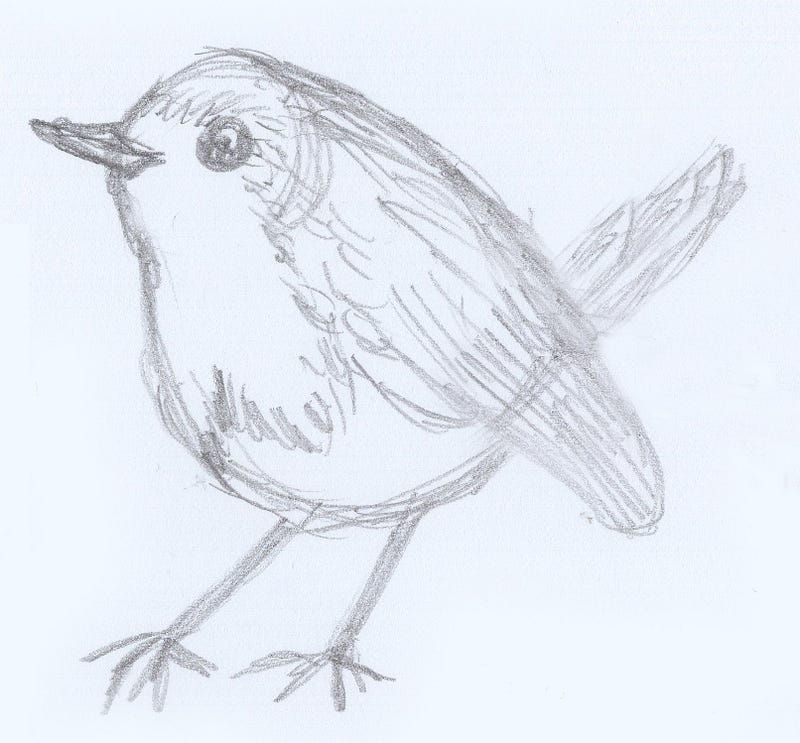
Another characteristic about a robin is the downward slope of its tail. If its tail is sticking upwards rather than downwards then it’s obviously pretending to be a wren.
But then its red breast would give it away.
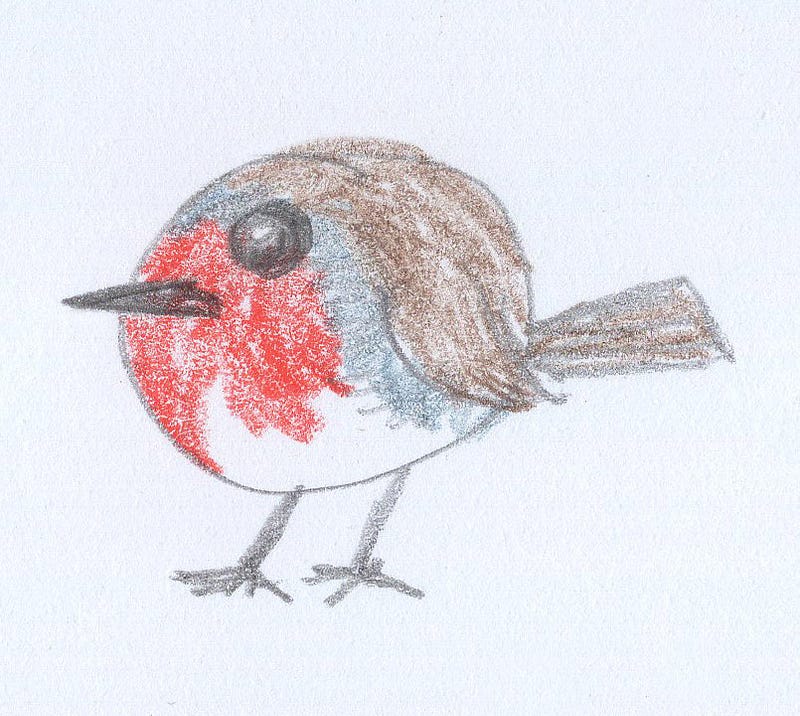
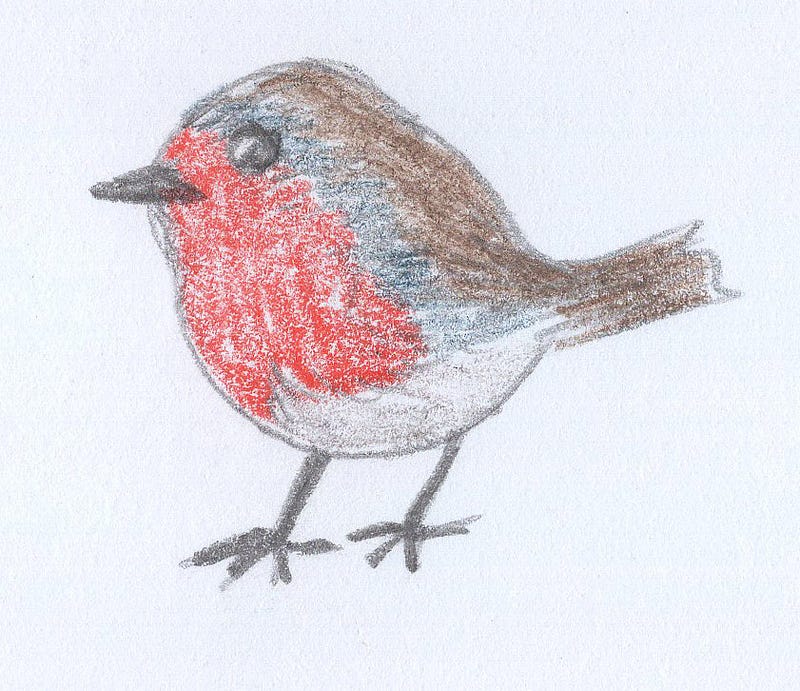
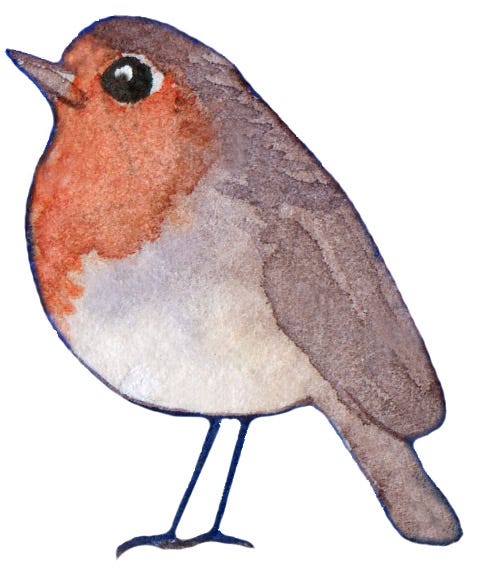
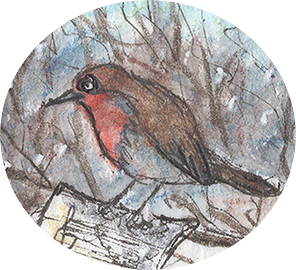
Above — a red and brown blob robin, and a slightly less blobby robin, and a more formed robin. They’d all be recognised as robins in a picture.
When you come to use colour to designate a bird as a robin the important thing is that you use the right colour. For a robin it’s more of a yellowy, orangey red than a dark pinky red.
Robins are usually a small part of a picture — unless you’re drawing a robin’s portrait. As long as your drawing makes sense, in terms of how a robin works, it will look like a robin.
This is useful before drawing anything: ‘How to Make a Blob Look Like a Robin’.
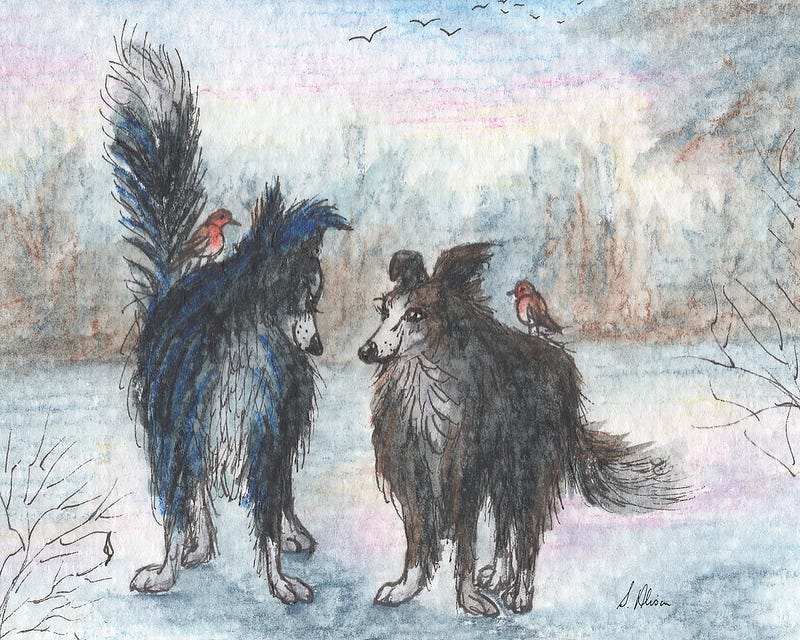
All drawings and paintings are by Susan Alison 2021.
Susan’s Amazon Page / Susan’s Etsy Store / Susan’s newsletter sign-up
Read more from me: © Susan Alison 2021


