
Geography and Consciousness
How to Create a “Global Sense of Place”
We need to appreciate and honor the human and non-human diversity of our planet.
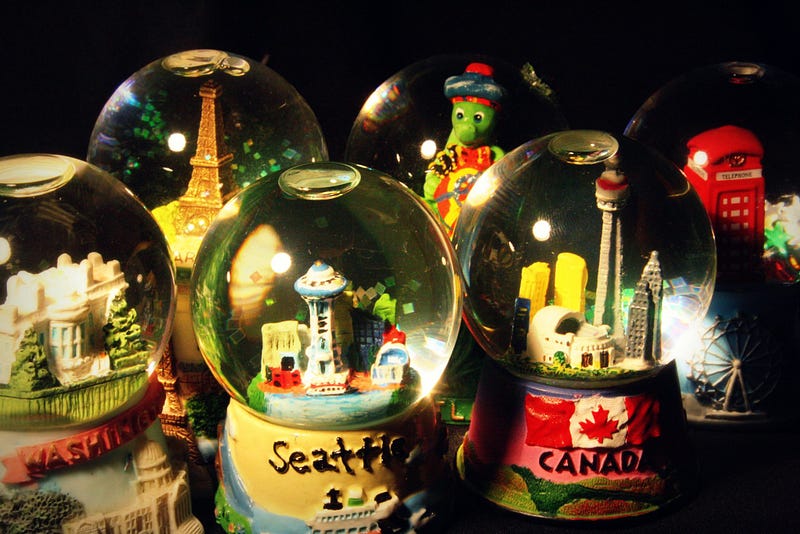
BACK in the days when I taught world geography classes at the university, one of the concepts that I really wanted student to understand was “sense of place”.
To me, “sense of place” is what makes a place unique and special. And that, to me again, is the basis of understanding how our entire world is unique and special.
The challenge is that “sense of place” is more than what we SEE in the physical environment — such as buildings, people and street life. It is something that we FEEL about everything that we see, hear, smell, touch, taste, and communicate with in our physical environment.
Definitions of ‘Sense of Place’
It was easy to teach my students about a “personal sense of place” — what makes a particular place unique and special to them as an individual. The easiest examples, for most of them, were the place or places where they grew up and knew the best.
Much harder was teaching them about a “collective sense of place” — what makes a place unique and special to larger levels of society. What makes one place stand out for those living in a neighborhood, a city, a state/province, or a country?
Our “collective sense of place” is hard because what we believe and feel about most places comes from our subconscious. Our feelings about places, other than our home, come from what we have picked up from news sources, by word of mouth, in movies and books, and from multiple other sources.
Unfortunately, these are often generalized stereotypes of the real world. And we are seldom taught or encouraged to think about our subconscious beliefs about the world we live in.
Sense of place has been variously defined as the characteristics of place that:
- Make it special or unique — this can be positive (such as places of celebration) or negative (such as places of war, death and danger).
- Make it authentic or real — however, that might be defined by the individual having the experience.
- Make it feel like home — feelings of belonging and attachment, whether one is an “insider” / “local”, or an “outsider” / “visitor”
- Make it feel welcoming, comfortable, safe and fun — this is what urban planners, designers, and architects try to create in our cities
There is also the concept of “placelessness” — which describes a place that is not unique and special. These are places that, when you are in the middle of them, you could be almost anywhere in the world and not know where you are. (A lot of shopping centers are like that.)
Global Sense of Place
I was recently asked what a “global sense of place” would be (see link to video below). Apparently, I had written that term in an academic paper once, and someone wanted to know more about what I meant. I think I just wrote in passing, without thinking much about what it might mean at the time.
After thinking about it, if “sense of place” means appreciating how:
- a place is special or unique, is authentic or real, feels like home, and is welcoming, comfortable, safe and fun
Then, a “global sense of place” means appreciating how:
- Our World is Special, Unique, Authentic, and Real. Each place in our world is special and unique, as is our world itself. Each place and each person in our world is being the best authentic and most real expression that they are capable of at this point in time. Knowing that, we can take joy in understanding, honoring, and experiencing the incredible and creative diversity of people and places that our planet has to offer.
- Our World is Our Home. All of us, equally, belong here on this planet, otherwise we would not be here. That applies to every person, animal, plant, mountain, and river. Each of these, and each of us ,has a reason and purpose for existing. Each has a role and responsibility to play in creating the best planet that we can.
- Our World can be Welcoming, Comfortable, Safe, and Fun. It is up to us to make it that way, for ourselves and for all the other beings that we collectively share this planet with.
In short, a global sense of place is appreciating and honoring the diversity of everything on our planet. We really do have an amazingly diverse planet!
Expanding a Global Sense of Place
Elsewhere, I have argued that travel and tourism is one of the single best ways to expand our global consciousness — even though Spring Break college students may give one that opposite impression.
This is because travel takes you both physically and mentally into the world in a way that nothing else can. And I suggest that this is why we (or at least most of us) love to travel:
Expanding our global consciousness or awareness has the same essential impact as expanding our global sense of place. “Consciousness” is an even more vague term that “sense of place”, but they both point to the same idea — an appreciation of our planet’s diversity.
On the other hand, the opposite of travel can do the same thing. Staying home, gardening, working around one’s house, walking around one’s neighborhood — these are all ways to engage the world. And they all expand our global awareness, consciousness and sense of place, as I have suggested here:
We can go to the opposite end of the planet to experience our wonder for the world. Or we can stay home, falling in love with the tremendous diversity and complexity in a simple garden .
Creating a Global Sense of Place
Either way, as our appreciation for the planet grows, we also become more sensitive to how our lives reflect the planet that we have created. Like the Spring Break college kids, this may be hard to see in everyone, but a growing sense of oneness with our world is emerging and will only become stronger in the future.
And this has actually been one of the benefits of COVID-19 pandemic:
That sense of oneness between us and our world, built on an appreciation of or Planet Earth, will lead us to create places that are increasingly more special, unique, authentic, real, welcoming, and fun.
And as we do that, the entire planet will become increasingly more special, unique, authentic, real, welcoming, and fun. That is how we not only expand our personal appreciation of a global sense of place, but we also physically create a more interesting and awe-inspiring planet for everyone.
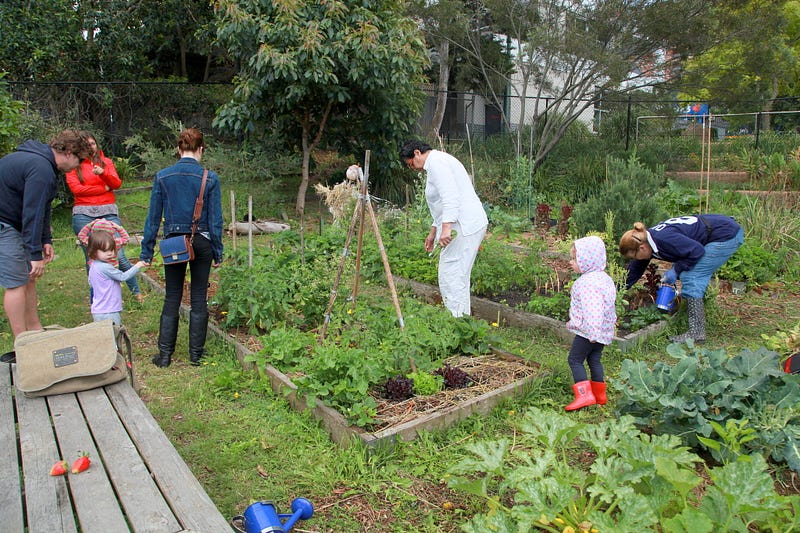
How that is done will vary from one person to the next. Some will work on their own, personal, little world by planting flowers in their yard for others to see, for example. This is what the geographer, Yifu Tuan, referred to as “fields of care”.
Others will be active in groups that foster a greater appreciation and respect for our planet, both in its human and non-human forms. This is the opposite of our human tendency to try to make everything the same. A global sense of place, or global consciousness, is needed to change that tendency.
In this way, our personal sense of place contributes to our collective sense of place, which in turn creates a global sense of place.
Related
- ⬇️ I was interviewed for the 2021 Seatrade Cruise Conference on the topic of “Why Do We Travel”, in which the question of “Global Sense of Place” came up. That, in turn, prompted me to write this article.
- For more on Travel & Tourism Futures, see this collection of articles:
- Note that the articles in that collection are behind the Medium paywall. For paywall-free access to my articles, go to www.AlanLew.com, linked below.
Contact
- I am not financially affiliated with any of the people or products discussed in this article.
- I appreciate comments, questions, and typo corrections. - See the About link in my Medium profile for contact information and related articles.
- Written in collaboration with my Energy Group/Higher Self. This is our perspective of the truth and not the whole truth of reality.
My Medium writings are available “paywall free” at www.AlanLew.com:
- follow my Facebook page linked to my Medium writings
- subscribe to My Medium Writings
- become a Medium member to support my writings
Visit and Follow New Earth Consciousness (NEC) for More Articles like this.
- subscribe to New Earth Consciousness NEWS, the occasional newsletter for NEC
- …and join our New Earth Consciousness Group on Facebook


