
How to Cope With Burnout When You’re Too Burnt Out to Cope
All the coping strategies in the world can’t help when you don’t want to do them.
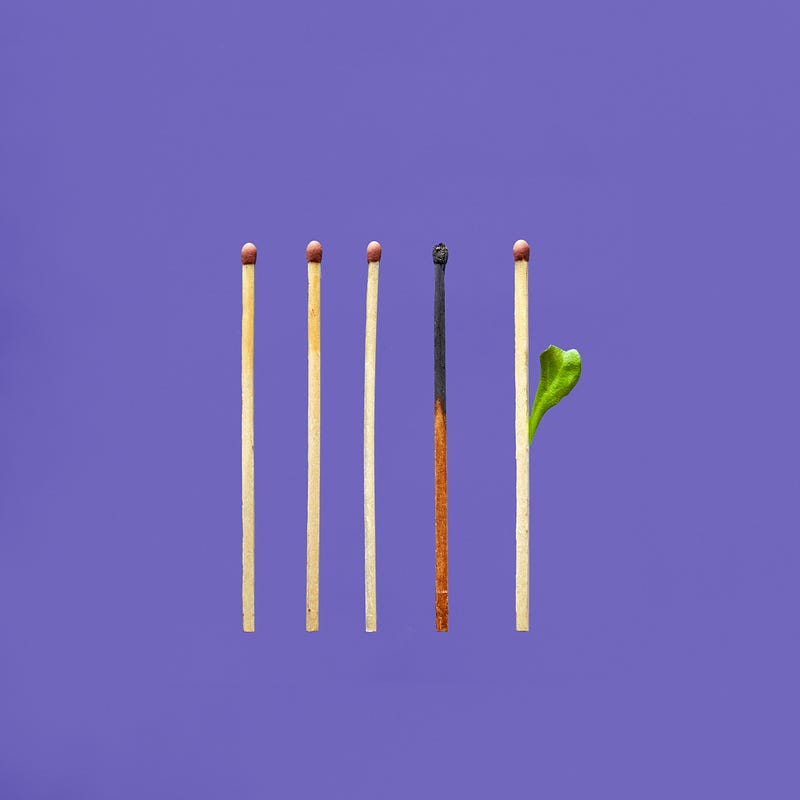
I was talking on the phone with a friend yesterday, and she asked how I was doing. In response, I proceeded to verbal vomit all over her about how stressed out I was about work. I think I spent about 15 minutes just dumping my feelings of stress and anxiety onto her while she valiantly tried to comfort and reassure me.
(Me being me, when I was done I apologized profusely for having done so since I don’t want to be “that friend.” She assured me that I am not.)
So, as it turns out, I’m pretty burnt out from work among other things. What’s worse, I feel like I shouldn’t be, since I just had a vacation a few weeks ago where I was able to get away to a nice hotel room and not worry about anything. I had taken active steps to rest my body and mind, and yet it felt like I was immediately stressed out once I got back to work the following Monday.
However, the fact of the matter is that it’s been a busy year. My job is very deadline-driven, and since those deadlines are set by outside forces, they are not movable. And, with everything going on, there have been many, many deadlines this year.
As a result, it seems reasonable that I would continue to be stressed out after getting back from a week of vacation only to face an immediate deadline that Friday. And, with the continuing march of deadlines through the end of October, my stress levels have been quite high. The stress of continuous deadlines isn’t going to magically vanish after one week off.
As a result, I’m currently stuck in a state of burnout for the foreseeable future. My workplace is doing everything they can to support me right now, so there’s not much else I can do with that. My partner continues to be my rock, but she’s got her own stressors. My friends are usually available to chat, but I don’t want to burden them too much.
So, I’m stuck with what coping mechanisms I have right now. Unfortunately, my coping mechanisms are starting to fail because of the extreme burnout. My current self-care mechanisms are either falling away or not as effective as they’ve been. I’m also slipping into bad habits — particularly eating unhealthy foods, which are a major vice of mine.
What, then, am I supposed to do to de-stress and practice self-care? Well, I’m going to go through some of the things that I will be doing in the coming weeks to help me try to kick this burnout (or at least manage my anxiety from it).
First off, I’m doing my best to eat some halfway-decent foods. Last night I was very stressed about cooking dinner. We’ve had takeout twice this week, and while I didn’t want to cook, I didn’t want to eat more takeout because (a) it’s expensive and (b) it’s generally unhealthy. I had pulled some chicken from the freezer to thaw, but I didn’t like any of the options my partner had presented.
However, as we were talking to our friend, I remembered a recipe that I used to make that I really enjoy. It actually got me a bit excited to cook, not least of which was because it was an easy dish with no prep. After the call, I whipped it up with my partner’s permission, and it was incredibly good and satisfying.
When you’re burnt out, daily tasks feel like a burden. Nobody told me that, as an adult, the hardest decision that I would have to make was what to eat for dinner every day for the rest of my life. Normally I enjoy cooking, but in my present state, it feels like such a chore.
However, thinking of that recipe that sounded good was a motivator for me. The prospect of something good, homemade, and easy to put together gave me the strength to actually make it. I was so excited to eat this meal that I had no trouble actually cooking it.
Finding healthy self-care techniques that excite you can be helpful in actually getting them done. If you are excited by exercise but feel like your typical routine is dull and uninteresting, look into something new. If you like cooking but it has become burdensome, look for meals that excite you, whether it’s new things or old favorites.
This also goes for other forms of self-care. I’ve gotten a lot of comfort from video games during the pandemic, particularly Animal Crossing. However, I’ve also been enjoying playing other things throughout the past 18 months, including Legend of Zelda: Breath of the Wild and Hollow Knight. I also recently pre-ordered Metroid Dread, which is a favorite series of mine. Playing new things has helped me keep up my mood, since discovering new games and exploring new worlds is incredibly fun to me.
It also helps to cut back on things you know are unhealthy for you if you can. I have a somewhat unhealthy love for Ben and Jerry’s, but thanks to some level of discipline, I have managed to reduce my consumption to no more than half a pint per sitting. This means that I can get two or three desserts out of a single pint, which saves me both money and inches on my waistline.
I’m also doing a mild detox from social media. I don’t check it as obsessively as I have in the past, although I still do check it once or twice a day for a few minutes. I’ve found that the endless scrolling tends to mess with my moods, so cutting back has helped. I also try not to read too much news, which is often depressing because of the way the 24-hour news cycle works. It bothers me because I like being informed about the world, but my mental health is more important right now.
Unfortunately, when you’re burnt out, everything feels like a massive effort. As a result, chores often get skipped. One suggestion I’ve seen for this is to do them in segments. If you feel the need to clean your room, start by putting all of the clutter in one place. You don’t have to put everything away right away — by putting it in one place, you can start going through it later when you’ve got the energy.
Same with laundry or dishes. If you’ve got an in-house laundry machine, bring everything there first. You don’t have to do it all right now, but if it’s all in front of the machine, you can sort it later when you have more energy and run a load at a time. Same with the dishes. Collecting them and putting them all in the sink is one step. Emptying the dishwasher is another. You can load all of the plates first, and if you have the energy, you can do silverware next. This doesn’t have to be one massive energy investment — if all you can manage is cleaning bowls right now, that’s fine.
Finding things that excite you, doing things that you enjoy, and taking things in bite-sized pieces are just three strategies to help you survive burnout. However, and this is important: if all you can do is survive, that’s also fine. Sometimes, you don’t have the energy to do proper self-care, and that’s okay. As long as you make it through, that’s what matters.
Give yourself permission to not be okay. We are often so focused on soldiering through that we refuse to acknowledge that we aren’t okay, and that can be harmful. You can’t fix a problem that you’re not acknowledging as a problem. Depression and burnout happen to lots of people, especially in today’s hustle culture. It’s okay to not be okay.
Most of all, be kind to yourself. Beating yourself up for being burnt out is counterproductive. Once you acknowledge that you’re burnt out, the next step is to not beat yourself up. Being burnt out is often beyond our control, so there’s often nobody in particular at fault. Being kind to yourself and allowing yourself to feel stressed out without judgment is encouraged. Being mean to yourself is harmful and counterproductive.
Part of being kind to yourself is doing good things for yourself. If you have PTO, use it. If you work a side hustle, put it down for a bit. Spend some money on a thing that makes you happy. Pick up a craft you’ve been meaning to learn, or one you put down a while ago. Do something kind to yourself. Random acts of kindness can also include yourself.
Remember, it’s okay to be burnt out, and it’s okay to not be okay. Take care of yourself, find self-care mechanisms that work for you, do things that make you happy, acknowledge that it’s okay to not be okay, and most of all, be kind to yourself. You can get through this. I believe in you.
If you liked this, please subscribe to my publication, Thing a Day. I publish something every day on a variety of topics, so you never know what you’re going to see!
Here are some other things I’ve written:


