
How To Change Your Life In 1 Year, According To Science
What no one tells you about goal-setting lists (a.k.a. “self-deception” lists)— and what to do instead.
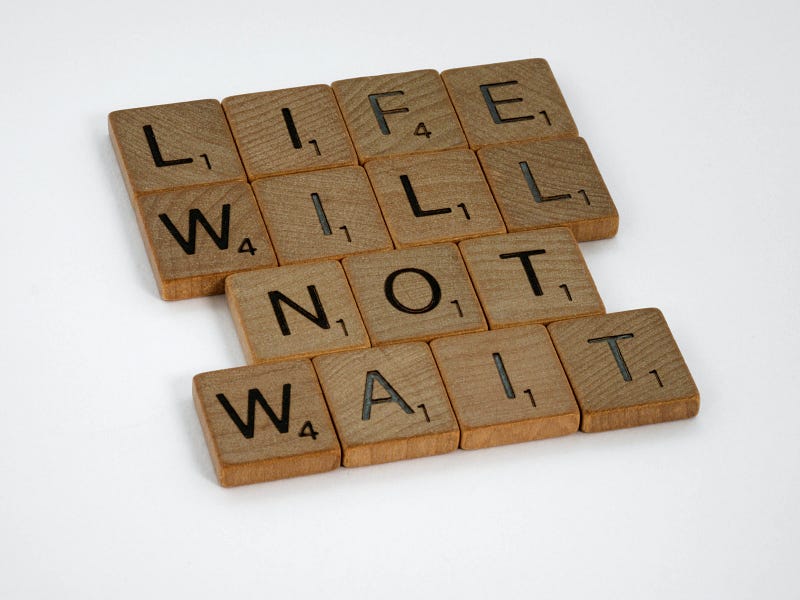
Allow me to start today’s article with a question: Are you living several years in your life, or are you just living the same year, over and over again?
The last few years were a complete rollercoaster in our lives. It seems time has passed at a swift pace, but, at the same time, very slowly.
Through it all, you probably didn’t accomplish many of the things you wanted to.
However, the truth is this is not exclusive to these complex times we have been living in. Unfortunately, most people go through life exactly like this: living the same year over and over again, repeating behavioral patterns that make no sense in their lives, promising they will change ‘tomorrow’, and even planning and making lists of goals for those changes, but without getting anything out of the paper.
Who hasn’t promised to start a new diet and fitness program on January 1st, and then, while watching Netflix on a comfy couch and eating a tasty snack, has thought (like so many times before): “I’ll start next Monday”?
At that moment you truly believe you will start next Monday, but that’s just a lie you tell yourself — and in the meantime, it’s already February.
That’s what science calls ‘self-deception’.
Why does this happen?
Believing you’ll start next Monday, next week, or next month while looking at your list of goals, doesn’t spend energy — and our brains are designed to save energy, as Neuroscience taught us, and I’ve explained in a previous article.
I’ve had the privilege of spending a few months in a Buddhist monastery as a guest, and one of the things I’ve learned (and science backs this up) is that “our mind is a wonderful servant, but a very bad master”.
Our wantings are treacherous, and we tend to want to do things that save energy while bringing an immediate reward such as rest, pleasure, and comfort: believing we will start a diet next week doesn’t spend energy and it’s comfortable.
On the other hand, to get out of that comfy couch and act NOW to change things, requires energy: it requires you to face the natural discomfort present in all processes that lead to change.
The human mind is very biased: it makes us accept beliefs that paralyze and harm our lives. Have you ever noticed how many buzzwords exist to feed our self-deception? — “Life starts at 40; diet starts next week; I’ll start reading that book next month; I’ll quit my soul-crushing job and start my own business in 6 months; I’ll do this and that one day…”
… Until there are no more days.
These types of buzzwords only feed the insane belief that we will start ‘someday’ what we could be building and savoring today.
To live requires effort, consistency, and focus, so it’s easier to live comfortably in the shadow of a lie.
It’s painful to think that so many people get to the end of their lives without having actually lived the life they wanted and deserved— but those same people did not have the courage to get out of their couches while they were alive and while looking at those intentions in their never-ending (and never fulfilled) ‘goal-setting lists’.

STOP! Promising for tomorrow. GET UP! And start now.
Stop believing that intentions will change anything — you need to add action to it and start moving:
> Don’t promise to read that book next week: visualize yourself reading it and start by reading 10 pages today. > Don’t promise to lose 10 kg next month: visualize yourself and start walking for 30 minutes today. > Don’t promise to start your business in 6 months: visualize yourself acquiring the knowledge you need to start your business, and start today.
Repeat tomorrow, and the day after, and so on and so forth. You will start seeing real long-lasting results.
You might be fearful, and that’s ok: fear is important to help us avoid unnecessary risks. However, there are necessary risks you must take if you truly want to change anything in your life.
Courage is not the absence of fear: courage is the intelligence to choose what fears you must face if you want to build a meaningful and purposeful life.
Start by having clarity about these 2 questions:
📌 1. What habits, projects, and relationships are keeping you stuck in a life you do not want anymore? 📌 2. What do you need to let go of, in order to conquer the life you deserve?
Make a list of those first; it will be impossible for you to navigate in other oceans until you say goodbye to the anchors that are keeping you stuck to a life that makes no sense.
True growth is when you become more complete than the person you are today, but to accomplish that, first, you need to say goodbye to the person you were yesterday — to that version of you that doesn’t make sense anymore. This requires courage, but it’s absolutely necessary if you truly want to change your life and develop your full potential.
After doing this, you’ll be ready for the next step.
How To Take Control Of Your Life & Develop Your True Potential
I’m not going to give you a ‘21-days’ formula — human life is complex, and no simplified answer can solve something as complex as human existence.
If you’re looking for quick fixes and formulas, feel free to look for other articles, profiles, and channels. When you realize those ‘quick fixes’ fail to give you long-lasting results (and they will fail), come back here.
If you’re ready to acquire tools and knowledge with depth, courage, and commitment to face the complexity of life, come with me.

“He who has a why to live for can bear almost any how.” — Friedrich Nietzsche
✅ Have a Purpose & a Plan
It all starts here: when you have a clear Purpose, your mindset starts shifting, and you bear any difficulties you might encounter in order to fulfill that Purpose.
But how can one find that purpose? Better yet: what does life must have so you can fulfill the full potential you have inside of you?
Since ancient Greece — the crib of occidental knowledge —, all great philosophers have tried to answer these questions: “What must life have to make living worthwhile?” “What’s the best way to live alongside other human beings on this planet?”
More recently, with the development of science, mankind was finally able to put to the test those philosophical answers, to find out which hypothesis represents a life worth living while fulfilling your full potential — and the conclusion is very clear:
The type of life-changing projects that work and last, are the changes that you make focusing on the WHO you wish to be (your desired Identity, your Purpose in life), not on WHAT you wish to have.
In a previous post, I shared 3 practical tools to effectively change habits and implement new ones, and this is one of those tools: identifying your desired identity and making it a life project.
Short-term goals such as “I want to lose 5 kg to have a beach body” doesn’t work: they don’t last long because they are based on momentary excitement and on the desire of having something (in this example, a ‘beach body’).
Even when they do work, they don’t last. The person loses 5 kgs with some kind of ‘21-day diet’, and then the weight comes back (and then some) once the diet stops.
Bottom line: when you do something solely for the trophy, the probability of long-lasting success is smaller — and the effort along the way will become unbearable at times because it doesn’t resonate with your Soul.
Instead of wanting to lose 5 kgs to go to the beach, chose to say to yourself: “I want to be a healthy person, a person who chooses to be healthy in every daily choice I make and I’m proud of it, a person that does not accept to be guided by the momentary gratification. I want to be a person that looks in the mirror and is proud of his/her body NOT in the eyes of others, but in my own eyes because my body is a result of my own choices. I want beauty as a mirror of my health, not as an empty superficial goal.”
See the difference?
WHO is the person you wish to be? You’re reading my content, so chances are you wish to become a healthier, happier, more fulfilled human being with a meaningful and purposeful life.
If you always have this in mind, you’ll be motivated at a different level, you’ll start making different and more conscious choices, and the chances of defeating procrastination and keeping consistency over time are much bigger.
Make no mistake: life, growth, and transformation, are continuous processes, not a finish line.
However, you might feel you have security and survival needs that need to be attended to first. If this is you, I invite you to apply the “Sailboat Metaphor” to your life.
✅ The Sailboat Metaphor
You probably already heard about Abraham Maslow’s hierarchy of needs: it has inspired a pyramid, but the truth is Maslow never created such a pyramid: it was a simplification made by corporations to show to their employees, but Maslow never intended that because life, as psychologist Scott Barry Kaufman points out, is not a video game with levels to unlock:
“The familiar pyramid shape suggests that once we complete each step, we’re done dealing with that need forever. As if life were a video game, and once we complete each level, we unlock the next, with no looking back. It’s an appealing concept. It’s also a gross misrepresentation of the humanistic vision that propelled Maslow’s work.” (…) “The human condition isn’t a competition; it’s an experience”. — Scott Barry Kaufman
With this in mind, Kaufman proposes a very interesting allegory regarding human needs, based on the most recent scientific research— the Sailboat Metaphor (to read the metaphor proposed by Kaufman, click here).

To help you apply Kaufman’s Metaphor to your own life, I’m going to add to it my own spin, adding a few more layers to make it a bit more comprehensive.
Imagine you have a sailboat: if there’s a hole somewhere in your boat, it will not take you where you want to go. The same goes for your needs: if there’s no equilibrium between them, your life will not be able to navigate at its full power, and you will not be able to accomplish your full potential.
This is a good metaphor because life is an ocean filled with uncertainties, possibilities, and storms.
That same ocean has the potential to take you to incredible harbors or to make you fall into a storm and even get lost. And this is a great lesson for us all: in the ocean, you will always have highs and lows, sunny days and stormy days; in life, you will have wins and also defeats, and you will encounter difficulties in your path — absolutely necessary for you (and any of us) to become the person you are today, and the person you will be tomorrow. It’s the lessons learned from those difficulties that make us better humans and better professionals.
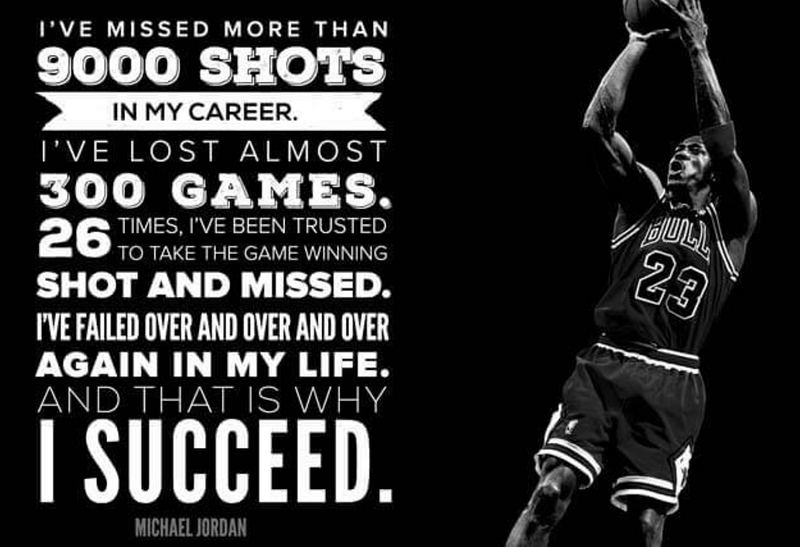
I’m sure you already know Michael Jordan’s story. It’s an excellent example that we need failures in order to succeed: it’s in the storms that we learn the most about how to navigate better each day in the ocean of life.
The ones who strive in life are the ones who, in the face of defeat, refuse failure, because instead of subduing themselves to that defeat, they learn from it, searching to understand what can be improved — and thus becoming stronger and wiser.
But the sailboat metaphor is excellent for another reason: its 2 elements, the hull below, and the sail above. I’ll be dividing them into layers (and giving them my personal spin) but keep in mind these are not ‘levels’ to unlock and then forget all about the previous ones: they all coexist throughout your life, and if there’s a problem with one of them, it will affect them all.
Let’s talk about the hull of the sailboat: these are the security needs, to make sure your boat doesn’t sink. I’ll divide them into 4 layers:
📌 First: Survival Needs
Statistically, children who starve and/or lack proper shelter, sanitation conditions, and a social network, will grow up with a deficit in their IQ compared to children who had these basic needs attended to.
We have to recognize here that there are, in fact, basic needs necessary to make it possible for any human being to live with dignity and quality, and fulfill their full potential.
We also know that children who have traumas, were victims of emotional and/or physical abuse, are at risk of developing neuropsychiatric disorders, with cognitive and emotional impairments in their adult life — with serious consequences for themselves and those around them.
We need security to survive with dignity so that the hull of our little ship can navigate in the oceans of life, filled with difficulties, storms, highs, and lows.
📌 Second: Vitality
Historically, we tend to have a very wrong idea of what being healthy means. Martin Seligman, the father of positive psychology, talks about this all the time: having a healthy life is not just not being sick — that’s the basic, but to have a healthy life is more than that: it’s to have a life where you can achieve your full potential.
What I’m trying to say is: as a society, we need to make sure people have the necessary needs attended to survive, but, more than this, we also need to attend to our needs beyond the basic.
We need to make sure our life is not just a life where we survive, but where we strive, where our bodies in general, and our brains in particular, work at their full capacity.
To make sure you have vitality, there are a few non-negotiable pillars:
#1st Pillar: Quality Sleep, For The Right Amount of Time If you don’t have good sleep quality, or you’re not sleeping enough, you are destroying your brain and overall health.
It’s during your sleep that the brain gets rid of toxins and the garbage that accumulates during the day, and reorganizes memory processes so you can learn — without a good night’s sleep, you don’t consolidate your memory.
During sleep, there’s also another very interesting process that occurs: your brain gets ready to learn more the day after. It also organizes emotional processes to prevent you from suffering from anxiety, and depression, among other disorders.
If you don’t sleep with quality, you won’t be able to focus, you’ll get sluggish, you will have libido and fertility problems, and your body won’t be able to fulfill fundamental immunologic processes increasing the risk of infections and several types of cancer.
Let that sink in.
#2nd Pillar: Healthy Nutrition I’ll be posting an in-depth article about this soon with key information about foods that are damaging to your brain, but for now, you need to know that some foods are killing you, while others potentiate your brain and body function. Your body is like a machine, and food is fuel: if you eat crap, your machine will work like crap. Period.
#3rd Pillar: Exercise Regularly If you are sedentary, chances are you already know (and even suffer) from a few health conditions. And if you tend to just exercise during the weekend, be aware: this increases the risk of a heart attack and cardiovascular problems in general because you were sedentary all week, and then added a stress pike in one day.
Exercising regularly means doing it 3 to 6 times per week, combining aerobics (swimming, running, etc.) with resistance exercises to develop your muscles (bodybuilding, pilates, etc.).
There’s no brain working at its full potential in a sedentary body.
#4th Pillar: Reduce Stress Usually, stress is a bit outside our control in our lives, and we need to focus on what we can control. But to the best of your ability, remove yourself from stressful situations, and learn to meditate in order to get through when removing yourself is not possible.
📌 Third: Connections
We are social beings: we need relationships in order to live well. A brain does not evolve if it’s isolated. But not all relationships are made equal: we need to surround ourselves with people who care about us, who we can trust, and who help us evolve.
The number and intensity of the connections depend on a few personality traits, such as extroversion and introversion, but generally speaking, we all need connections. The human being is the only animal that needs others to survive and grow. Social isolation is a huge enemy, much like toxic connections.
There’s another very important connection we must have: the one with ourselves, and the world around us.
📌 Fourth: Self-confidence
This is a plunge in the connection you have with yourself: when you don’t have confidence, you can’t see your own worth, or when you don’t have confidence in your own capabilities and self-efficiency (the realization that you can do things), your boat’s hull will have a big hole, and it will be very hard for you to navigate efficiently because you will be doubting yourself every step of the way.

If the hull of your boat is incorruptible, now you can hoist the sail. Let’s divide it into 3 layers:
📌 First: Exploration
If you have your hull taken care of, you’re confident and secure, but you don’t hoist the sail because you’re afraid, you will remain still. The sail will allow you to start navigating in the oceans of life, and here is where growth happens.
However, when “hoisting the sail”, keep in mind you need to use your own map to navigate— it’s useless for you to keep looking into other people’s maps: the life that it’s going to make you happy is not the life of that influencer you saw on Instagram or someone else whose life you might admire. Be careful with that: when you start comparing yourself to others, you’re using someone else’s map to navigate in your life.
Doesn’t make much sense, does it? You can learn from that person, but use that knowledge to grow, not to compare yourself to him/her. Compare yourself only to who YOU were yesterday: that’s your true measure of growth.
You might encounter storms, that’s part of the journey, but those are also necessary for you to evolve and learn how to do it better. It’s through storms that we realize what we don’t want, so we can start finding things that enchant us.
📌 Second: Love
I’m using this concept in a wider range, as a feeling of joy for something or someone’s existence. You can love projects, experiences, a professional career, etc., and — of course —, people.
📌 Third: Have a Purpose
Although this would be the final ‘layer’ of the sailboat (right before ‘transcending ourselves’— something I’ll be addressing in a future article), it’s where we stop surviving and start living: when your hull and sails are incorruptible, you are ready to choose your Purpose in life and navigate through different waters.
To live a life of Purpose is the most fulfilling experience: you’ll feel you are capable of facing any challenge life brings you, and you get out of bed every day with energy, a smile on your face, and a driven Mindset — instead of dreading Mondays and only be ‘happy’ on weekends. (By the way, if this is what’s happening to you, your life needs a serious and profound reflection. You deserve more.)
In the meantime, I strongly advise you to practice Meditation, Visualization, and Journaling on a daily basis, as this will clear and unclutter your mind, improving several mental and even physical processes while propelling you to start moving — I’ve addressed this in great length in my previous post.

Final Thoughts…
If you’re not happy with your current life, your career, or your business, don’t fall into self-deception traps that are no more than intentions based on momentary excitement and the desire of having something.
If you truly want to live a happy, fulfilling, and meaningful life, stop focusing on the trophies and start focusing on the process:
Stop thinking about WHAT you want to have, and instead start thinking about WHO you wish to be (your desired identity, your purpose in life, from a place of love and service to others). Scientific studies show this is the only way you will have an efficient long-term habit change, with real results.
There’s a gap between where you are right now and where you wish to be— and to fill that gap you need to make sure you take some time every day to dedicate yourself to self-knowledge and development: your life is a long-term commitment.
🧠 Join my VIP List to access Exclusive Content. To learn more and subscribe, click here (it’s free).
Thank you for reading. With ♡ Sally _
Recommendation:
📚 Transcend: The new science of self-actualization, by Scott Barry Kaufman To read a full summary and check the price, click here. _


