
How to Bring Your Children Onboard for Their Unschooling
By helping them expand their identities beyond school
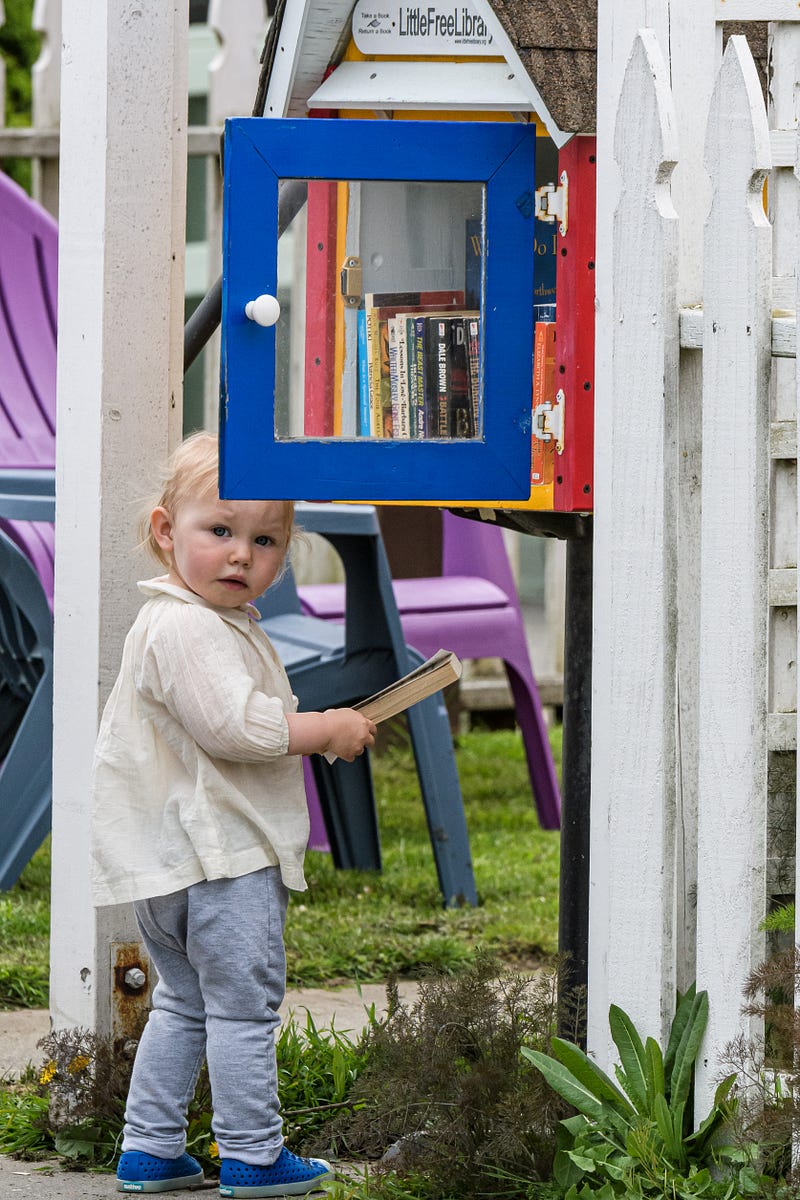
Unschooling works when we help our children recognise their larger self-identities, much beyond school. The cookie-cutter approach taken by many (but not all) public schools in North America does not help holistic development. But for children to see that and to allow them to take charge of their education, they must first be able to see themselves holistically. And we, as parents and educators, must help them do that.
School is an “Anchor” experience
Every week, I participate in a Zoom meeting of experienced educators and parents. Unschooling School founded by educator and parent Heather McTaggart, is a group of people who have come together to drive the cause of embedding self-directed learning, within the public school system and beyond. Now, you would imagine that putting a learner in-charge of her own learning so that her needs are primary would be welcome, especially by our children. They seem to be wanting to call the shots on everything, anyway!
Apparently, not. I was surprised to hear the predicament of an educator and parent who is trying to raise awareness in her daughter’s school around self-directed learning and is trying to designate her child as a “free-learner”. However, every time she speaks to her daughter’s teacher to allow her more autonomy, her daughter cringes. She insists that her mother do nothing that will visibly set her apart from her peers. Her daughter is a teenager, an age when it is so important for the child emotionally, to “fit in” and “be liked”.
Heather shared another example of her niece who is a musician who regularly performs in ensembles and symphony orchestras around Toronto. Yet she would not entertain Heather’s idea of exempting herself out of the mandatory music class in her high school. Not only does the cookie-cutter curriculum require her to take that class, but she also does not want to risk standing out from her peers as different or worse, special. Shining with your own light is uncomfortable, and for a teenager, potentially lonely.
Not just teenagers, but I see this reverence for the school with my kindergartener and pre-schooler too. School is an anchor experience for my girls. In our wonder-led learning model that we developed while travel unschooling our daughters, an anchor experience is one that you could have only in a particular city, town or environment. It cannot be replicated elsewhere. A particular school and a particular set of friends very quickly becomes an anchor experience for children, and until they see the wider world and understand their place in it, school becomes the reason why they are here at all. It is all of their social life, their academic life, their extra curricular life and their entire identity. Is it any surprise that they would not wish for their parents to jeopardise this sense of belonging?
In our conversations around how we would drive change in the parent community, the schools and the education system in general, did we overlook the fact that perhaps, a source of resistance to the ideas of unschooling school would come from our own backyards — from our children? And how do we first bring our own children on board before we can speak with the schools to allow “free-learning”?
Harnessing the power of “Ambient” experiences
Given this is true, it is crucial to make our children see that their identities can be much larger than just their school experience. That the school is a part of their experiences, and not their raison d’être. An effective way to do so, is to build on ambient experiences which extend their reality. Ambient experiences are much more powerful than we imagine. They run in the background but shape our kids’ minds profoundly.
When we visited the Green School in Bali last year, I noticed that every child in that school has a broader sense of being than just being a Green School student (although that is a proud part of their identities, too). Environmental awareness as the cornerstone of student life is an ambient experience for anyone who attends the Green School. Their students have an environmental agenda, even at the personal level.
Recently, I had an opportunity to speak with Green School alumna Melati Wijsen and hear how as a young teenager, she started a campaign to end the use of single-use plastic bags in Bali. Her sister and Melati eventually took this project global sparking an anti-plastics movement amongst international youth. For a child with such a large purpose, making changes to her school schedule to accomodate her own self-directed learning agenda would not seem out of the ordinary.
The beauty of such ambient experiences is that these are always available locally, no matter where we are. I live in a town where the person next in line at the grocery store may be an Olympic skiier. Skiing is such a core part of the fabric in this alpine ski resort. For children in Whistler, Canada, learning to be a skier can be as much a source of purpose as their day-to-day life. For them, school, peers and the ordinary childhood experience is still very important, but it is not the only part of their identity. As a result, it is common for families to take Fridays or Mondays off from school to enrol their kids in skiing lessons during the season. Chances are children growing up with ambient pursuits like these, will be open to making changes to their school program to facilitate their other aspirations.
Seeing school as a tool in their journey to learn
So, does every child now need to pursue a hobby that is expensive and/or glamorous? Not, really. Although chances are that when they pursue the activities that bring them intrinsic joy, they will excel at them and shine anyway. Yet, seemingly unglamorous but joyful activities when pursued consistently, such as babysitting all your little cousins every weekend, volunteering for the local newspaper, or putting up a puppet show for extended family are all valid ideas.
Any such pursuit which is meaningful to them and helps them see that their identity is much larger than their school, will allow them to step outside of their perception of being the student of Class X, School Y. Perhaps then, they would begin to see school as a tool in their own journey. Perhaps then, they would be open to modifying how they engage with their school. Perhaps then, we can build on this shift in their mindset to bring them onboard for their own learning journey.
A note from the author:
In this context, when I refer to unschooling “school”, I’m writing about the cookie-cutter approach taken by many public schools in North America. However, I acknowledge that there are some enlightened schools, educators and pedagogies, which have already taken these ideas into account. In the interest of full disclosure, my daughters are enrolled full-time in a Waldorf School, where the holistic development of the child is the central focus.