
How To Be Soft in a World That Sharpens Your Edges
Soft doesn’t mean weak, it means safe.
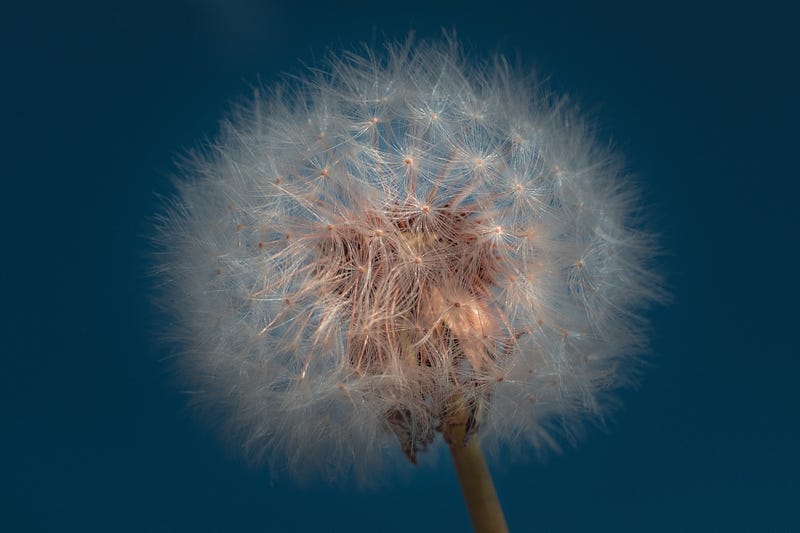
I don’t know why people often say “soft” like it’s a bad thing. It implies weakness, but people love soft things. Beds, clothing, blankets, stuffed animals … we don’t crave sharp edges. We crave comfort.
But as human beings, we’re expected to be hard. To be tough. To develop a thicker skin and learn not to cry when life hurts. And life does, inevitably, hurt.
The world will sharpen our edges. It’s certainly sharpened mine. I was a people-pleaser who hated confrontation, and I watched that quality taken advantage of time and time again. My lack of boundaries was seen as softness, so I got tougher. I turned them into sharp edges. I learned to hit back.
How to Be Softer
I’ve reached my forties now, and I’ve run out of f*cks to give. I’ve spent a lifetime pushing back against misogyny and hate of every kind. It can be easy to jump to conclusions and rush to judgment, but for all the f*cks I’ve lost along the way, I seem to have picked up a little more compassion. I don’t want to be made up of sharp edges. I want to learn to be soft as I move through this life — a comfort to others, not something others have to heal from encountering.
Give the Benefit of the Doubt
I was once in a relationship where I was rarely given the benefit of the doubt. It hurt to know that every single thing that came out of my mouth would be interpreted with negative intentions. My best intentions were constantly spun into an ulterior motive. If I’m honest, it caused quite a bit of damage to be treated this way.
I’ve learned to extend the benefit of the doubt whenever possible. Instead of assuming negative intentions, I allow room for misunderstandings to exist — and to be cleared up. I don’t just jump right to conclusions. I ask questions and gain clarity. I’m careful not to assume harmful intent when it’s simply a matter of miscommunication. We all deserve to have the benefit of the doubt extended to us from time to time. Impact might matter more than intentions, but intentions do matter.
Locate Positive Memories
I’m also careful with my personal narratives. For instance, I’ve had a lot of bad relationships in my life. It would be easy to dwell on the negative aspects of them. There were, after all, more negatives than positives. But I choose to pull out good memories.
I’m not rewriting history or putting a new, more positive spin on old pain, but I am choosing to remember that there were good times, or else I never would have entered those relationships. It helps to provide perspective. The good times don’t cancel out the bad, but they can coexist in our memories.
Teach Comfort and Be a Safe Space for Feelings
We all need comforting, safe spaces where we can be ourselves and feel our feelings. I’m trying to make my home that place for my children. Adults can forget that children have powerful, perfectly valid emotional experiences. Too often, we want them to tone them down for our comfort, but I’m trying to teach them that it’s okay to feel what we feel. It’s okay to have days when we need to self-soothe and just sit with our feelings even when we don’t like them.
I’m not teaching my kids to ignore how they feel or to let their feelings drive all their responses to life. What I am doing is creating a space where we can be honest about our feelings and see that vulnerability as a strength rather than a downfall. My children understand that adults cry, too, and that it’s okay. I’m hoping that by making this space in my household for feelings to exist freely I’m teaching my kids how to truly live in this world without letting it turn them hard.
Look for the Good
A little light doom scrolling will show us that the world is a dark and miserable place where scary things happen. It’s easy to find that narrative because it’s everywhere. It’s what drives us toward consumerism as a coping mechanism. But we can just as easily find the good if we’re looking for it. Didn’t Mr. Rogers say we should look for helpers when bad things are happening? There’s good to be found in the world, but whatever we look for, we’ll find. People who want to believe that the world is bad and scary will keep confirming their bias. But if we want to feel good and have that confirmed, we have to actually look for it.
Kindness is everywhere. It’s surprising how often we’ll see it if we’re paying attention. It’s easy to take for granted. We might not notice the person who held the door or who offered a smile, but we certainly notice the people who shut the doors in our faces and glared at us. I’m teaching myself to look for and focus on the positive things so that I don’t allow myself to believe the world is all bad. This can also empower us to do good where we can and contribute to the world being a better place.
Be Curious, Not Judgmental
Ted Lasso brought this phrase firmly into our consciousness: Be curious, not judgmental. It’s a good rule of thumb to guide our lives. When we’re curious, we have questions. We want to know about things. When we’re judgmental, we think we know already and have made character assumptions with that knowledge. Curiosity keeps us interested. Judgment just makes us feel superior by making others feel inferior.
I try to center my curiosity and not take everything so personally. When I don’t hit it off with someone, I don’t assume they’re a bad person or that they think I am. I just realized that I’m not for everyone, and I’m not supposed to be. It helps keep things in perspective and avoids judgment.
It certainly helps where online dating is concerned. I know that making fun of dating profiles is practically a national pastime, but I’ve decided to focus on the fact that everyone wants to be loved and accepted. People show up the best that they can, and it’s easier to be curious about that than to judge them — even if there are one too many photos of fish involved in online dating.
Soft, Softer, Softest
I won’t lie. My humor has a dark, sharp edge. My trauma has certainly made me funnier. But I don’t have to let it make me harder or meaner. I can sink into softness and allow myself to be a little more human.
Being softer is making me kinder. I find more compassion for others every day. In fact, I was recently engaged in some petty road rage behavior when my friend offered a different perspective. What if I didn’t let the car behind me impact the way I drove? What if I ignored them and continued on my journey without judging theirs? Sure, they were riding my bumper so close I could practically feel them breathing down my neck, but that’s not about me at all.
In fact, they could be rushing home to deal with an emergency. They could be new drivers who don’t realize how close they’re getting to the car in front of them. They could be dealing with a mental health crisis. Any number of things could be happening in their lives, and slowing down to add more frustration to their day didn’t make anything better. It might have given me petty satisfaction, but at what cost?
The next time a driver tailgated me, I decided to opt for compassion. I didn’t enter the petty realm and try to make them as mad as they were making me. I chose to stop taking it personally. When I had a chance, I pulled off the road and let them continue their madcap journey to wherever they needed to go. I didn’t have to get mad about it. I stopped taking it personally and made room for a little human compassion. I tried to remember that I have, occasionally, pulled out in front of someone on accident or failed to allow space between vehicles. We’re human, and that’s okay. No need to get mad about it.
After all the challenges I’ve survived, I know that I’m anything but weak. I don’t have to prove my strength to anyone. I know it well. But I know that I can be soft, too. I can be a comfort and safe space for other people. I can become the kind of person who makes someone’s day better instead of worse. I can choose to be good and do good even when it seems like the world is tearing itself apart.
Soft isn’t a weakness. In this world of chaos and warmongering, it’s a relief to find softness and safety. So, I lean a little more into it. I choose a lighter touch, a kinder word, a better thought. Today, I don’t let the world sharpen my edges. Today, I do what I can so that someone’s edges aren’t sharpened on mine.


