
SELF
How to Avoid the Machiavellianism That Derails Careers
What’s in it for me?
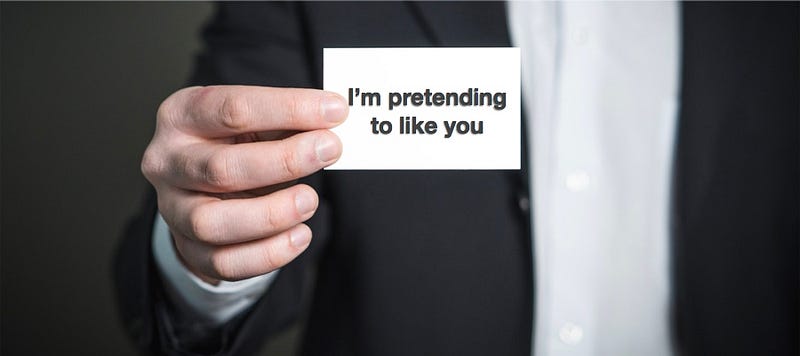
Machiavellianism is one of the four “dark personality traits,” and I would guess that all of you have encountered at least one person in your career who exhibits this behavior. If you’ve been in a corporate career for decades, you’ve probably encountered dozens of these people.
My concern isn’t for the hardcore Machiavellians in the world. They have probably behaved this way since early childhood, and there isn’t much that I can write in an article that would convince such an adult to behave otherwise.
“Men are so simple and so much inclined to obey immediate needs that a deceiver will never lack victims for his deceptions.” — Niccolo Machiavelli
No. My concern is for the average career-minded individuals who somehow believe that this type of behavior will help them be more successful in the workplace. The coworker who flatters important people, hides his true intentions, and uses charm to get what he wants. The boss who suppresses her empathy, manipulates the team, and is only friendly when it is useful.
The short-term gains from these behaviors are far outweighed by the costs. While the big boss may not recognize it, the colleagues who spend more time with such a person know exactly what is going on. No one enjoys being manipulated or “used.”
If you make the fatal mistake of falsely befriending people for favors later, you’re screwed. Sooner or later, it will catch up with you.
If you are that type of person, know that we all recognize you. We all talk about you. We warn others about you.
You think you’re smarter than everyone else and that no one can tell that you’re only being nice because you want something. Sorry to burst your bubble. We see what you are doing.
So, if this isn’t really who you are, then it’s time to stop. If you read about these manipulative strategies in some book, it’s time to put the book down. It’s in your best interests to actually be genuinely friendly, authentic, and honest.
Why bother with being genuinely “nice”?
Well, first, because it’s the right way to behave in this world.
We’ve all heard that “nice guys finish last,” but I don’t believe that has to be the case at all. There is mounting evidence that nice people can “finish first” and that some of the best leaders aren’t afraid to be nice. But, to be clear, being a good and decent person in the workplace doesn’t mean being a pushover.
“Don’t mistake my kindness for weakness. I am kind to everyone, but when someone is unkind to me, weak is not what you are going to remember about me.” ― Al Capone
I used to think that I had to be an aggressive, hard-driving, ruthless leader. But, that wasn’t true to my nature and left me feeling very dissatisfied with where my career was taking me. I became much more fulfilled in my career when I changed my leadership style to be aligned with my natural personality.
Silicon Valley has historically rewarded the aggressive leaders who did what it took to win at all costs. It didn’t matter who was hurt in the process. But, in recent months there has been a backlash against these types of leaders and others who have abused their power.
Second, when you put good energy into the people around you, it becomes a virtuous cycle that positively ripples throughout your organization.
Great coworkers have a positive effect on their colleague’s attitudes, behavior, and performance. Humane leaders are ultimately more effective and their teams are happier, more productive, and easier to retain.
It isn’t just nice to be nice to the nice.
Finally, if you only kiss up to the obviously powerful, you clearly don’t understand how things really work.
It’s quiet, competent people who are the gatekeepers. They control access to the key decision-makers and get things done behind the scenes.
But know this: they interact with thousands of people who are constantly vying for the attention of the decision-makers (e.g., senior execs). They will smell a Machiavellian a mile away. False flattery, fake charm, and manipulation will get you nowhere, except the secret blacklist.
I’m reminded of the executive assistant who worked with Jeff Weiner (now the CEO of Linkedin). She was amazing and fiercely protective of Jeff’s time, but she was also just a really nice person. There were times that I would show up early for a meeting with him (or his previous meeting would be running late), and I would sit and talk with her. It came naturally. Later, she helped me out a number of times and I am certain that wouldn’t have happened if I hadn’t been a genuine friend.
I’m also reminded of my own wonderful assistant, Karen. To this day, she’s still the best EA I’ve ever had. She was also protective of my time and she knew who the Machiavellians were in the office. Their typical strategies were ineffective with her.
It’s quite simple
Be polite, honest, and genuinely kind with all people. Don’t manage up. Don’t flatter the powerful. Don’t be friends with someone just because you need a favor.
It’s not a sustainably effective career strategy. In the long run, it doesn’t work. People will learn to avoid you, work around you, and never work for or with you again.
Let the other manipulative players have their quick wins. A lifetime career is a long game. The long-term winners are the good people who do great work with integrity and compassion.
FYI, if you’re curious about your own machiavellian tendencies, you can take this test:
Check out my Invincible Career newsletter where you can receive more stories and advice that help you plan your own invincible career and life! You can also learn more about my services on Brilliant Forge.
Larry Cornett is a Leadership Coach and Career Advisor. He lives in Northern California near Lake Tahoe with his wife and children, two Great Danes, two chickens, and a stubborn old cat. He does his best to share advice that can help others take full control of their work and life. He’s also on Twitter and Instagram @cornett.
If you’d like to support my writing, you can buy me a coffee. Thanks!
You may be interested in a few of my other articles too: