
Men Without Women (Short Stories) by Haruki Murakami
How to Avoid Being a Man Without Women
YOUR CATFISH FRIEND BOOK REVIEWS #1
No Time to Hurt
Amazing how the person of your dreams comes along when you’re in the abyss of loneliness. I didn’t know how sad I was until you were here. All that loneliness has given you actual momentum. You’re thrilled to not be alone, to have exciting conversations with a beautiful person, a person who also agrees to join you in bed.
Then to friends: I mean, she might talk a lot, but she’s so well-traveled... He’s grouchy sometimes, but he works out almost every day.
In the euphoria, in the non-loneliness, you overlook unhealthy patterns on repeat. You just want someone to listen to you without all the suggestions… They can do whatever they want, you just want them around more often… and so on. You’re not getting what you need. Then the eventual breakup.
Can’t say it hasn’t happened to me a time or two (and that I’m the King of Understatement). And I don’t ever immediately go from one relationship to another. Leaving someone to date somebody else gives you even less time to think.
No. I brood. I justify the breakup with a few friends. I stay busy and move on with my life, carrying the hurt around as I try to rebuild some semblance of a new path.
Doesn’t Add Up
What’s missing from this equation?
What’s often missing is the deep-dive into what went wrong in the relationship and what that says: OK, that breakup was tough. No, it was really sad, even tragic. What could I have done differently? Was it all or even mostly or even a little their fault? Or no one’s? WHAT DO I REALLY WANT, DAMMIT!
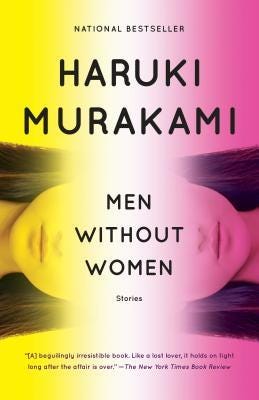
“Men Without Women”, a book of short fiction by bestselling author Haruki Murakami, is one of the best sad-in-a-good-way titles I’ve read in long while. It’s made me think about the people I’ve been with and ponder what I really want out of relationships.
It’s made me think about holding on too long. Or too desperately.
Obsession
It’s another symptom of the same problem. Obsession happens. If taken too far, it can be another way to lose yourself and not see the things that don’t fit.
In the story “An Independent Organ”, Murakami writes about a man who becomes so obsessed over his relationship with a married woman that he starts to let his work as a doctor deteriorate. Our protagonist is desperate to have her for himself that no one can console him or help him get any sort of perspective. [Spoiler alert] When the woman leaves both her husband and him for another man-there’s a surprise third option-the doctor is so devastated that he stops taking care of himself. He stops eating altogether.
One of his friends is jealous that the protagonist is in love with someone so thoroughly, so desperately. Talk about a wry twist. But it’s also devastating. As the reader, I got to think about whether that level of obsession would be worth it. Would I want to become so obsessed that I can’t think of anything else or see potential warning signs? Is losing myself that much ever worth it?
It’s good to ponder this before an unhealthy obsession starts.
I’ve thought about some of my past relationships for far too long. That’s another type of obsession. It’s taken effort to carry these heavy feelings around-wandering, keeping to myself. It has taken effort-YouTube sessions, sitting in judgement of others-to distract myself from the mental work I need to do or the painful truths I need to face. And it has taken away focus and initiative from the ‘now’ of my life.
Whenever I’m able to process feelings like this and accept that things are the way they are, no matter how slow the process, my step eventually lightens. It’s an excruciating but necessary path. Once you open that can of emotional worms, you don’t know where the sadness will end. But there’s no way around it sometimes.
Mulling over past relationships isn’t the only kind of sadness that can keep you out of the moment, keep you from looking for healthy relationships and other pursuits.
Grief in Its Many Forms
In its poised yet melancholic tone, with characters going through tough phases in their lives, “Men Without Women” made me realize that I’ve only just begun to mourn the death of my Dad, who passed on a little less than three years ago.
Grief is different for everyone. Its scope and timing are unpredictable. But it needs to find its way through you, however that looks, without getting stuck. Otherwise, there will be more to bear later on, no matter what you tell yourself.
On a long drive to visit a friend, I had a sudden, unexpected cry over my dad. As I drove on I-5, I heard a sad song coming from the speakers. It hit on some vulnerability inside and my eyes welled up. The cars ahead of me turned into one big blur. I pulled off to the side, wondering where he was, where his spirit had taken him. But I knew he was all around. I wondered if I had been a good enough son and a good enough friend. I thought about a society that had taught me not to cry and said Fuck It. More tears.
A few quiet moments after the song ended, I turned on my blinker and merged into traffic. Luckily, I stayed on the road.
I’ve learned that pain ignored doesn’t just go away. There might be a lot more grief over his passing. If so, I have to find ways to allow it to happen. In times like this, we must somehow hold on to the steering wheel of our lives.
Books Can Be Good Friends
This is a theme I’ll come back to. But in “Men Without Women”, Murakami lets the emotions in. A character in one of the stories goes through a betrayal and divorce, but quickly moves on with his life.
Sounds familiar.
When his ex keeps apologizing, more and more emphatically, he realizes he’s becoming an empty shell of himself in an effort to forget the pain. Another gentle nudge from Murakami to look at our own lives.
The End
The title story-and the last one-is a crusher. It brought home one of the main themes from “Men Without Women”-once you’ve instigated a big breakup or two, it can set you up for more, for that pattern. If you don’t process your pain and learn more about what truly makes you happy, you might be inviting more heartbreak down the line.
You might become one of the “Men Without Women”.
Behind a wry, conversational facade, Murakami’s book becomes a cautionary tale.
But even though this article is about relationships, it all comes down to this-no one’s going to do it for you. No one’s going to feel that pain. No one lives inside you and knows what you truly want.
And everyone around you has homework of their own, their own upbringings to reckon with, their own baggage to claim. No one’s perfect, after all.
That’s what makes this unassuming book of short stories a great read. You’ve got to do all the work on your own before you turn the page.
See the introduction to the series here, my review of Joshua Samuel Brown’s Buddhist travel farce or my travelogue through the country that influenced my favorite book of all time.


