
How to Adjust Your Goals for Maximum Impact?
Aim, track, adapt
How often has someone advised you not to work hard but to work smart?
We have heard this advice millions of times from our teachers, parents, gurus, peers, etc.
But how do you know if you are working hard or smart?
You need to be able to measure your productivity by the work you do.
Sometimes, I set goals and take action but eventually gave up without seeing results or feeling successful.
I realized the need to understand the art of setting, tracking, and adjusting goals to increase productivity.
While setting goals is essential, the need to adjust them needs to be talked about more.
Life throws us balls.
You might aim to get fit, but then you break your ankle.
Or you want to start a business, and then a global pandemic breaks out.
Does that mean you give up?
Not at all!
It means that you adapt and change.
Why set goals?
Now, you might be thinking: “Why set goals? I’ve heard that a million times before.”
Well, it’s quite simple: They give you a clear goal and a path to follow.
Without them, we’re like ships without a rudder drifting aimlessly.
Imagine you’re planting a garden.
You decide what to grow, plant the seeds, and then look after them.
In the same way, goals ensure that we focus on the essentials and align our actions accordingly.
Have you ever noticed how excited you get when working towards something you want?
These are goals at work.
They motivate us and keep us focused.
They also help us measure how far we have come and still have to go.
Whether you’re a student, professional, entrepreneur, or someone trying to make the most of your life, goals are just as important as taking action.
Short-term vs. long-term goals
Short-term goals are like the small successes that keep you going.
For example, at the end of the year, you want to reach a certain number of followers and make a certain amount of money through blogging.
You set a manageable goal of writing at least 1 or 2 quality posts per week and consistently stick to that plan.
Before you know it, you’ll have written a collection of posts, and your blog will be gaining traction.
Long-term goals, however, are your end goal, such as a six-figure income by the end of the year or turning your blog into a full-time business.
It takes patience and short-term goals to make it happen.
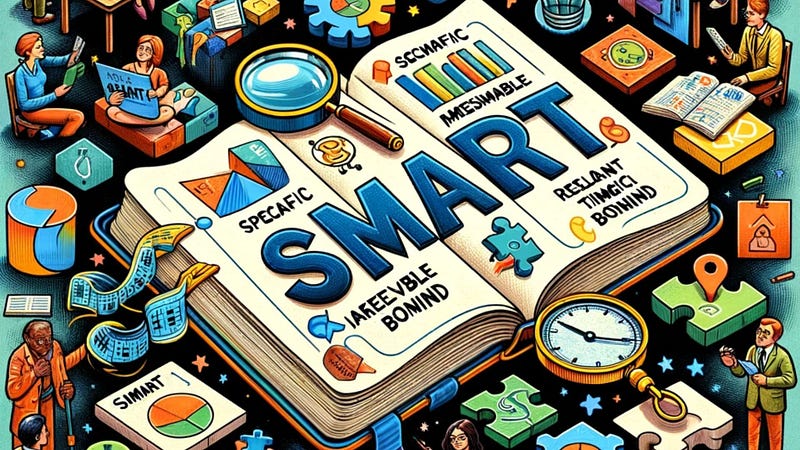
The SMART goals
In my previous post, I discussed starting a new year with SMART goals.
It’s not just about setting SMART goals; tracking and adapting to them is equally important.
Let me break this down:
- Specific: Be clear about what you want to achieve. For example: “I want to increase the number of visitors to my blog to 1000 visitors per month.”
- Measurable: How will you know that you have achieved the goal? e.g., Logging into Google Search Console and Search Analytics.
- Achievable: set goals that challenge you but are still achievable, e.g., write 1–2 high-quality blog posts weekly.
- Relevant: Your goals should align with your life plans. Your goal of increasing traffic to your blog should align with your goal of turning your blog into a business.
- Time-bound: Set yourself a deadline. e.g., I want to reach my readership goal in one year.
Stick to your goals, know where you want to go, plan how to get there, and take one step at a time.
If you need help to define the right goals for your personal and professional goals, then take the help of the right books or tools.
I use Todoist to manage my goals and organize them into lists.
It’s very helpful to visualize your progress.
I am a big fan of the book “Atomic Habits” by James Clear, which helps to understand how small daily habits can lead to achieving big goals.
The “Full Focus Planner” journal by Michael Hyatt is also wonderful for setting and tracking both short and long-term goals.
The art of tracking goals
Let’s dive into one of the most exciting parts of goal setting: tracking your progress.
Every step you track brings you closer to your goal.
But with life’s distractions, it’s easy to lose focus.
That’s where tracking came into play.
“What gets measured gets managed.” — Peter Drucker
Peter Drucker’s words sum up the importance of pursuing progress.
They remind us that paying attention to our progress is the key to effectively managing our goals.
Imagine you want to be fit but need more consistency.
You start using a fitness tracker for your daily activities — steps, workouts, sleep, etc.
This little device became your companion for achieving your fitness goals.
You could see the progress each day, pushing you to do more.
You go from barely walking a few hundred steps to running your first marathon!
Trello is great at creating boards for different goals and moving tasks as you progress.
It’s satisfying and keeps you organized.
Use any project management tool you like.
It’s incredibly motivating to see your progress visually.
It was a constant reminder of how far we had come and how close we were to our goals.
Journaling is the way to go for those who love the feel of pen on paper.
In a classic Moleskine journal, you can jot down every issue.
This writing practice will make you more aware of your habits over time.
Not only will you save a significant amount of time and energy, but you will also develop discipline.
Whether you’re digital or love the traditional pen-and-paper method, stick with it and find what works.
Celebrate your progress, no matter how small it may seem.
Recognizing when to adjust goals
Life is full of surprises that don’t always align with our plans.
Knowing when and how to adjust our goals is an important step toward achieving them.
It’s okay to change your goals.
Adjusting goals can be mentally difficult.
It feels like taking a step back.
But in reality, you’re just taking a detour.
“It is not the strongest of the species that survive, nor the most intelligent, but the one most responsive to change.” — Charles Darwin
Although Darwin’s insight goes back to natural selection, it can be wonderfully applied to goal adaptation.
It underlines the importance of adaptability for success.
The path to success isn’t a straight line.
It’s full of twists and turns.
Use mind-mapping tools like MindMeister if you need to change your strategy and struggle to find a way forward.
Mind mapping helps you draw a map of possibilities, brainstorm, and visualize different paths to your goal.
The book “Who Moved My Cheese” by Spencer Johnson is a short, simple read full of wisdom and deals with changes in work and life.
Read books like this to realign your projects, tasks, and goals.
Adjusting your goals doesn’t mean you’ve lost your way.
It means you’re flexible and smart enough to overcome unexpected challenges.
Keep an open mind, be prepared to change your plans, and keep moving forward.
Strategies for effective goal adjustment
We should be willing to tweak our strategies to adjust our goals and ensure they remain relevant and achievable.
Adjusting your goals is not a step back but a strategic step forward.
It’s about being smart, flexible, and resilient.
“Success is not a straight line, it’s much more of a dance and being open to possibilities.” — Arianna Huffington
Arianna Huffington’s quote fits this section perfectly, as it emphasizes the non-linear nature of success and the need to be open to adjustments along the way.
The first lesson I have learned is not to let setbacks get in the way.
I have launched three products that I was certain would be a success.
Spoiler alert: it wasn’t.
It was disappointing, but I saw it as an opportunity to learn from it.
What went wrong?
What could I do better?
I learned much from this setback and refined my product development and marketing approach.
Every setback is a step forward if you learn from it.
Next is getting feedback from our readers, clients, or customers.
When I started writing on Medium, I thought I knew what my readers wanted.
But when I started asking for feedback, I realized there were other topics they were interested in.
This feedback was crucial in adjusting my content strategy.
Again, you can use MindMeister to brainstorm and realign the strategy.
You can visualize your goals and the steps to achieve them.
If you enjoy reading books, “Mindset: The New Psychology of Success” by Carol S. Dweck is fantastic.
The book is about the growth mindset needed to align your goals.
Integrating goal adjustment into the daily routine
If you want to integrate goal adjustment into your daily life, you need to get into the habit of flexibility.
It’s about regularly making small adjustments instead of big, overwhelming changes.
With this approach, you can stay flexible and respond to whatever life throws.
“Flexibility is the key to stability.” — John Wooden
John Wooden’s words underline the importance of flexibility, which is essential for maintaining stability and productivity in changing circumstances.
I take a few minutes every morning over coffee to review my goals.
This routine isn’t just about sticking to the plan but also about being open to change.
Some mornings, I realize that a goal I set last week no longer makes sense, and that’s okay.
It’s about being proactive, not just reactive.
Sunday mornings are my time to reflect.
I sit down with my diary and look back on the week.
What worked? What did not work?
Last week, for example, I realized that I was spending too much time on tasks that didn’t contribute much to my primary goals.
So, I adjusted my schedule to focus more on the essentials.
This regular review allows me to focus on my goals and make quick adjustments if necessary.
Adjusting goals can sometimes be a setback, but I’ve learned to see it as a step forward.
Every change brings you closer to a better version of your goal.
You can use any journal like Panda Planner, an excellent tool for daily planning to organize your day and think about your goals.
To stay motivated, you can consider reading the book “The Obstacle is the Way” by Ryan Vacation.
It will teach you how to turn challenges into opportunities — an important mindset when adjusting goals.
Final thoughts
Tony Robbins once said,
“Setting goals is the first step in turning the invisible into the visible.”
This quote from Tony Robbins sums up the essence of goal setting.
It underlines the power of goals in turning our desires into reality.
This journey begins with the courage to set goals and write down these dreams and aspirations in our hearts and minds.
Our goals are not just goals; they lead us to personal growth and success.
Enjoyed the story? Don’t miss out on future stories — Subscribe Now!
Did the story resonate with you? Join my free email newsletter for bite-sized wisdom and insightful productivity tips.
Inspired or moved? Show your support — Buy me a coffee and make my day!
Originally published at my blog: https://hardikraval.com


