
How To Add Text Links to Paragraphs/Headings Within a Medium Article
An easy and simple step-by-step guide for the non-coders out there!

When your Medium article is a long one, having a list of go-to links for the different sub-headings within the article, is a great help. It also serves as a List of Contents and for the reader, this is perfect!
It might seem a bit difficult but once you get the hang of the three simple steps, this is going to be life-changing! And I am going to give you an example as to how it looks, while I write this how-to article!
Contents
Step 2: Finding the specific identifier (with Inspect)
Advanced level: Adding Pictures as Links
You can also check out this story I wrote, to see it in the completed format!
Step 1: Create Headings
The first step is simply to create the headings for the different paragraphs. The headings are like flags that help to represent the whole section (paragraph in this case).
As for formatting, simply write a heading of your choice, and then select it. From the Medium toolbar that appears, click on the big ‘T’ to convert the heading into Title case.
A tip, while we’re talking about headings: Always make sure to create attractive and compelling ones. They should also not completely reveal what the thing you will be talking about is. In short, the heading should be attractive and should hide enough, to make the reader intrigued to read on and find out what the paragraph is about.
Step 2: Finding the specific identifier (with Inspect)
I am going to simplify this as much as I can.
- Select the heading to the paragraph, that you want to add a shortcut to, in the Contents List at the beginning.
- In our case, the “Step 1”/“Step 2”/“Step 3" lines in the section headings are the portions to which we want the Contents List to lead.
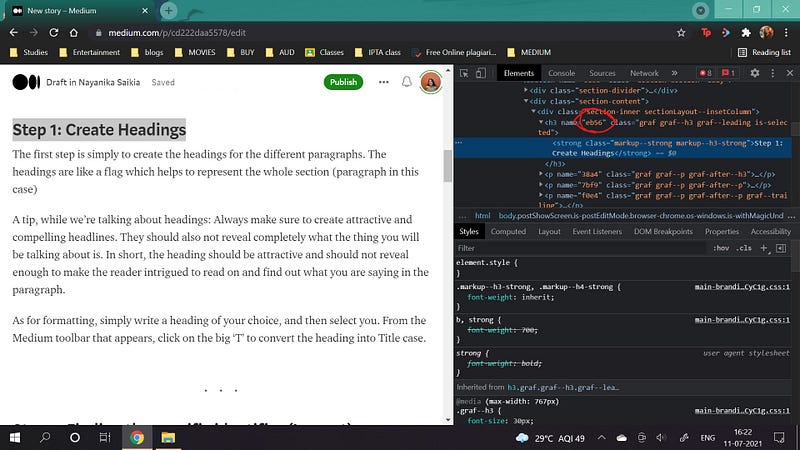
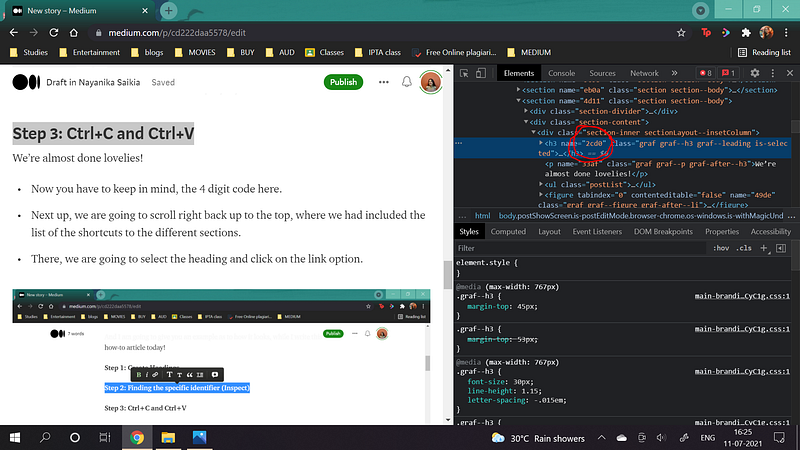
- So what we are going to do now, is select the heading over the paragraph and then right-click on it.
- In the drop-down menu that appears, we will select ‘Inspect’, at its very end.
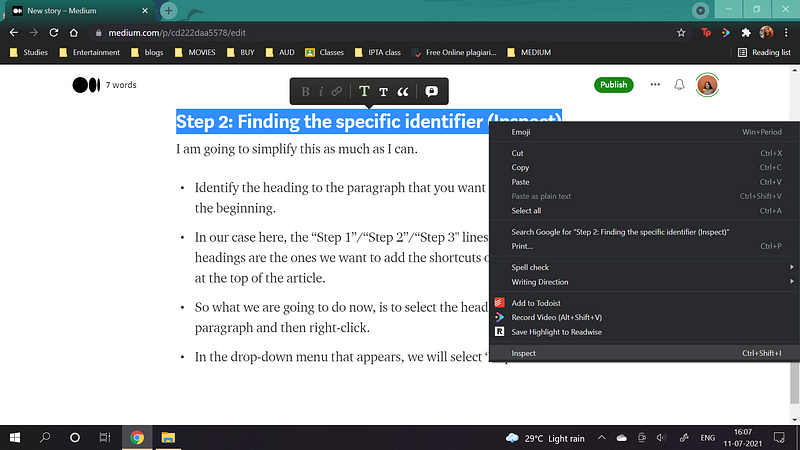
This will lead to the opening up of the code window on the right side. Now, don’t be intimidated, and just keep following the steps below.
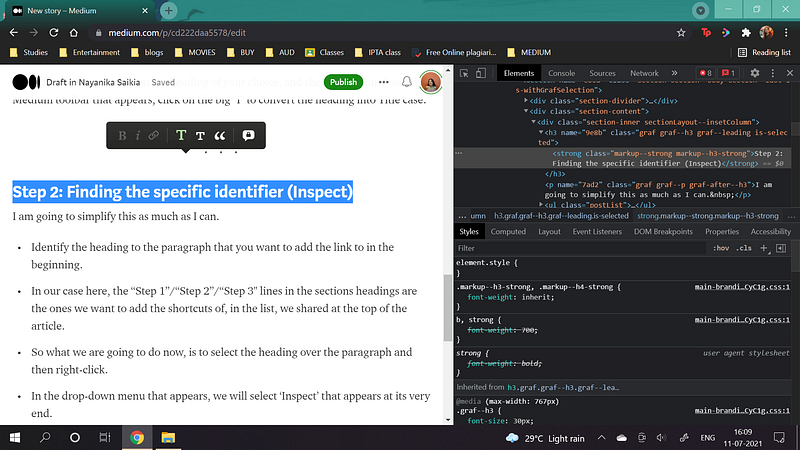
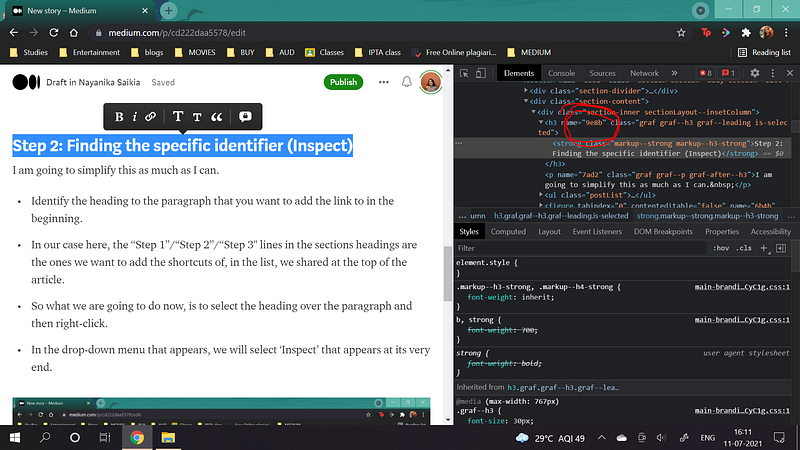
- The next step is to figure out THE code (or identifier as my non-coder self likes to call it)which makes this whole linking process all the easier for you!
- And in our case, it is “9e8b”.
Step 3: Ctrl+C and Ctrl+V
We’re almost done lovelies!
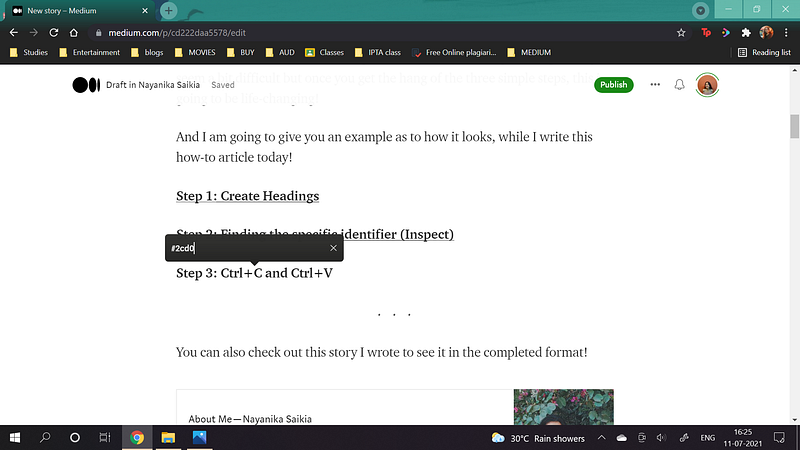
- Now you have to keep in mind, the 4-digit identifier/code we just saw in the code window. Keeping that in mind (or you just simply Ctrl+C it), close the code window by clicking on the “x” on the right corner.
- Next up, we are going to scroll right back up to the top, where we have the Contents List, which serves as the list of shortcuts to the different sections.
- There, we are going to select the respective heading and click on the link option.
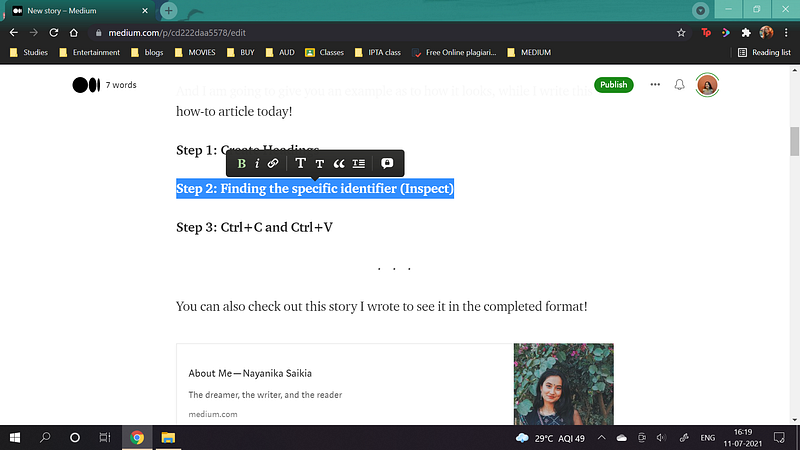
- In the blank space that then appears, where we generally add the links, we are going to type in “#9e8b” and then press enter.
- DO NOT FORGET THE “#”.
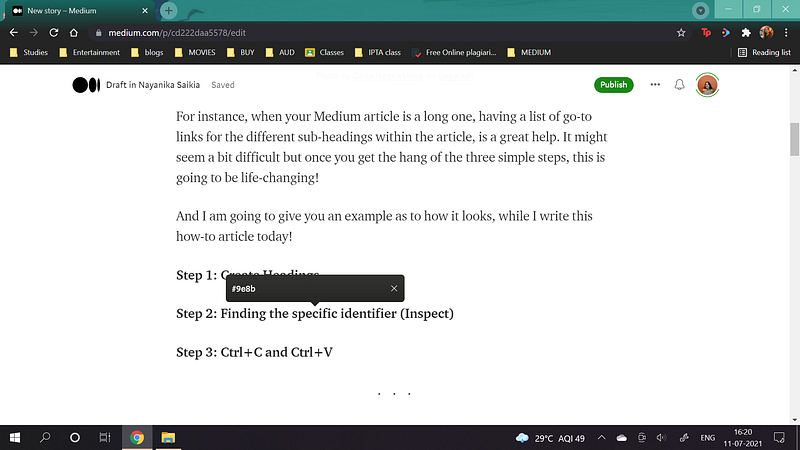
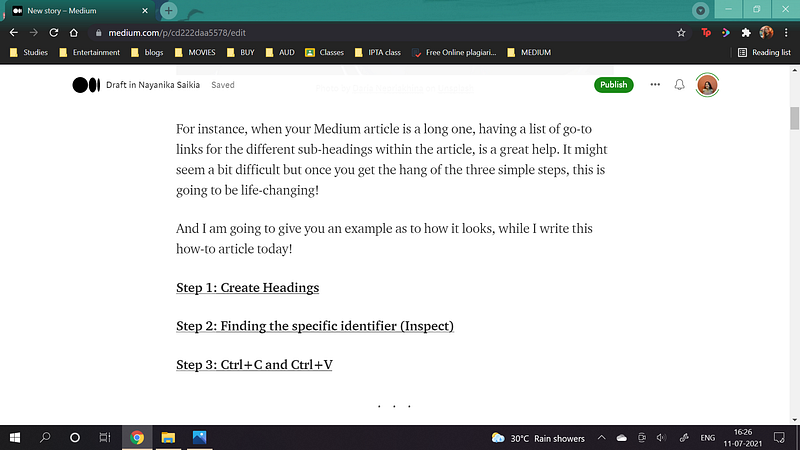
And you’re done! This is how it will appear now. The dotted line under it indicates that it is linked!
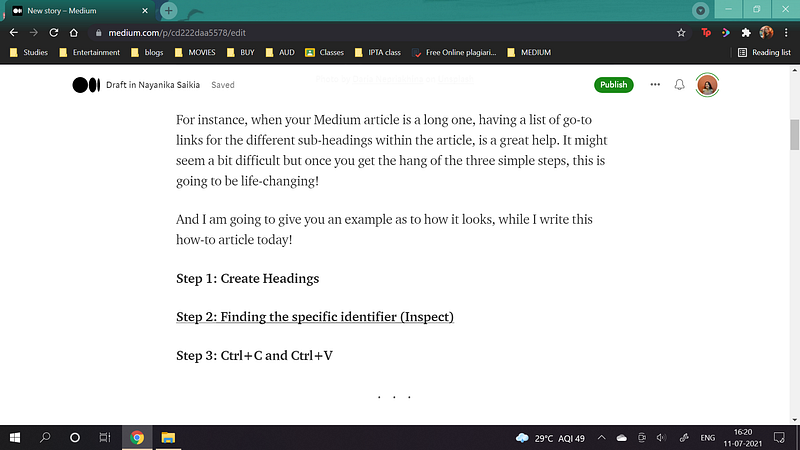
More examples
I am including pictures of how it looks for the other two headings also, for your convenience. If you have already understood the process, feel free to skip this bit!
For the first heading:
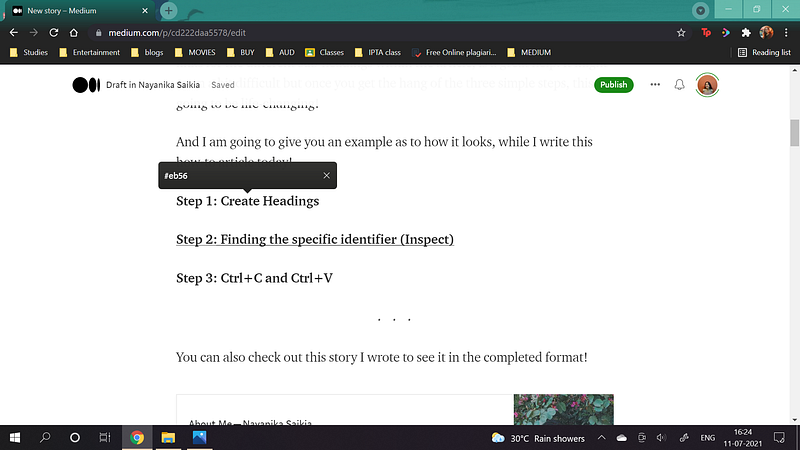
For the third heading:
How it finally looks:
So that’s it, guys! I hope you found this useful and easy. Don’t forget to let me know what you thought in the comments below!
Advanced level: Adding Pictures as Links
If you want to go one step further and now use Pictures as links instead of mere text, you might want to check out the next-level article on this! It’s pretty much the same, with the addition of only ONE more step!
Nayanika Saikia graduated summa cum laude with a Bachelor’s degree in English Literature and was also a Dean’s List student. She is currently pursuing her Master’s degree. At the moment, she is working as a Booktuber, blogger, and reviewer with various national and international publishers. She can often be found on her Instagram account Pretty Little Bibliophile.


