
How to Actually do “Colorblind” Storytelling
The example ‘Bridgerton’ should have learned from.
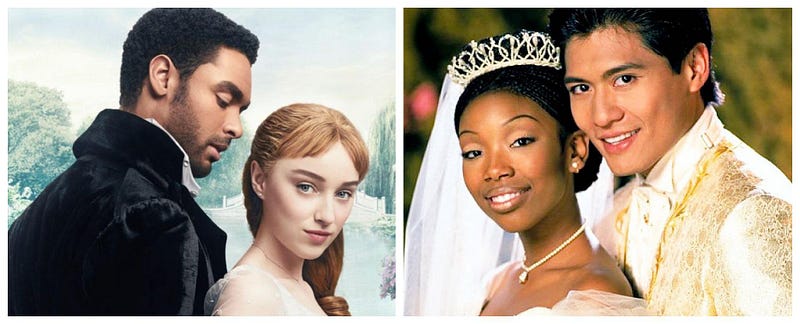
The web is abuzz with Bridgerton hot takes these days, and I could not pass up my opportunity to chime in. Having seen opinions touting the show as everything from a diversity beacon to a demoralizing failure, here are a few spoiler-free thoughts on where the show really falls flat and how it could’ve done better.
For those who haven’t heard, Bridgerton is Netflix’s current hot period drama that dropped this past Christmas. The twist? Black people get to wear fancy clothes in this one. If you enjoy over-the-top sex scenes set amid fancy tea-sipping aristocratic ballrooms, this show is right up your alley — and you’ll probably be willing to overlook a lot of its shortcomings. However, if you’re a Black woman of a somewhat darker complexion, like myself, a lot of those shortcomings will feel more like glaring ruins as you come face-to-face with one of Hollywood’s favorite pastimes: Colorism.
It seems like Bridgerton’s casting choices were made using the brown paper bag test.
The titular family of the show are a mostly well-adjusted household whose children have good relationships with each other and were brought up by loving parents. They are well-respected, rich, and for seemingly no particular reason, they have the favor of the queen. They are also the whitest people you’ve ever seen.
When we look beyond the white characters, the few Black ones with storylines enjoy all the fun of wayward children from broken homes. To top it off, it seems like Bridgerton’s casting choices were made using the brown paper bag test. The hierarchy is more or less as follows:
Light-skinned men and women = main and supporting characters
Dark-skinned men = minor background characters
Dark-skinned women = silent set pieces
Apart from a few darker Black women (and possibly an Asian woman if you freeze on the right frames and squint?) who helped fill out the crowds in the ballrooms and stand quietly in the queen’s entourage, what we end up with is a mostly white cast, with more than the average (where the average is abysmally low) number of light-skinned and biracial Black people. Little to no meaningful representation for people with dark skin or any other racial backgrounds.
If you want to see a Black queen, interracial couple, and overall casting choices that give absolutely no fucks about race, go back and watch the 1997 Cinderella movie.
Although the show claims colorblindness was never the goal, I have decided to emphatically call bullshit on that. While a single lackluster scene was included in which race was acknowledged, the show goes well and truly out of its way to avoid giving race any bearing on the characters’ lives. The sad part is that if it had been done correctly this wouldn’t be a bad thing.
Colorblind storytelling can be done in a way that works well — if you want to see a Black queen, interracial couple, and overall casting choices that give absolutely no fucks about race, go back and watch the 1997 Cinderella movie starring Brandy and Whitney Houston. The movie features a wonderful blend of diverse characters and makes absolutely no attempts to explain or justify anyone’s racial background. We have a dark-skinned Black female protagonist that glides around being the epitome of grace and beauty. Much like Bridgerton, we have a Black and white royal couple — who somehow have a Filipino son. And perhaps best of all, we get a romance that doesn’t center whiteness by virtue of simply not involving white people.
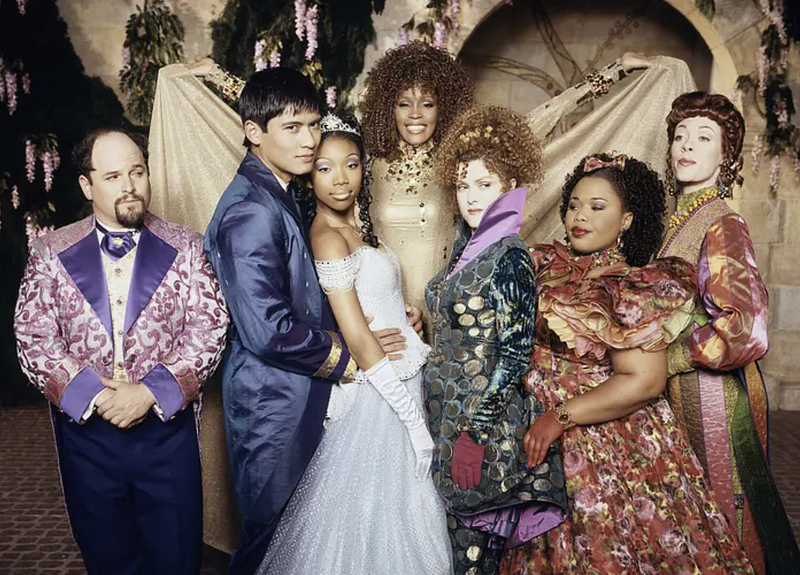
Unlike Bridgerton, which hammers home petite white femininity as the most desirable form of womanhood, Cinderella tells us that Black truly is beautiful and doesn’t need the validation of white people to make it so. (Enjoy some Microbraids+Ballgowns aesthetic and then you will understand the depth of Bridgerton’s underwhelming display.)
Perhaps the most disappointing thing about Bridgerton is that I had initially hoped for at least a little of the Cinderella magic. What attracted me to Bridgerton in the first place was the idea of being able to see fancy Black people free of the weight of race and racism. As Simone Samuels pointed out in her essay “Bridgerton is a Welcome Respite From Racial Trauma,” the show offers some much needed escapism from the relentless barrage of real-life racism we’re forced to contend with. Like Samuels, I’m tired of seeing Black suffering on screen. I deeply, desperately crave storytelling with Black characters that isn’t about racism. I just wish that storytelling had room for characters who look more like me.
But I guess at least the sex scenes are pretty good.
More from me:
Sign-up for my newsletter if you’d like to get more of my stories.