How these 5 simple tasks boosted my Mental Health
Mental health has been receiving more attention lately, and it’s also obvious why.
The number of people suffering from depression has skyrocketed, and it has become a cause for concern.
I’m no exception. A couple of years ago, my mental health was in a slump.
I would start feeling anxious for no reason in the middle of the day and would have many depressive thoughts.
It did not bode well for my dating life either. Being an anxiously attached person, the highs and lows of a relationship got to me, adding to the already significant burden of things.
After a while, I said to myself, “Enough is enough,” and I set out on a journey to figure out how I could fix this issue. I read books, scoured the internet for as much advice as I could find, and finally managed to get some answers. So, here is my journey.
1. Meditation
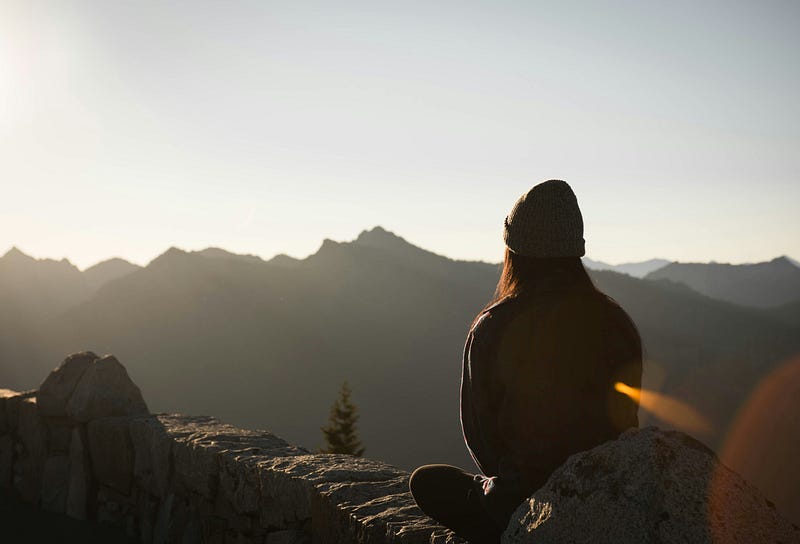
Honestly, at first, I was skeptical. The idea of just sitting there for 10–15 minutes a day, closing your eyes, and just breathing, listening to your breath seemed boring.
But, I knew I needed to change something, and I decided to put in the effort.
The first few sessions were boring. But then, something clicked. As I sat there, trying to focus on my breath, I finally noticed all the thoughts that were racing through my mind. After a few minutes, I forgot that I was meditating because of all the other things that I was thinking about.
Yep, my monkey brain was huge. It refers to a state where one’s mind is restless and full of different thoughts, hindering you from focusing on what is present.
It’s the voice in your head that prevents you from moving forward with tasks or even passions that you might have, holding you back and making you think twice about whether what you’re doing is right or wrong.
Meditation was one of the solutions for this. It helps to ground you and focus on what you’re thinking about. You notice the thoughts that come through in your path.
Acknowledge that these are mere thoughts and they do not define who you are. Then, you carry on again with your meditation, focusing on your breath.
I have been meditating on and off for almost two years now, and it has changed me tremendously.
There is a sense of calm that you get after each session, and I look forward to doing it almost every day without fail.
One cool thing that I’ve noticed after meditating for a while is having more focus on my thoughts. When those anxious thoughts start creeping in again, I notice them with more clarity as opposed to before when the thoughts would just flood me, and I would feel helpless.
Having more clarity now gives you a better realization that this is just a thought and that this does not define who you are.
It’s still a process, but the point is to keep working at it.
I use an app called Medito, and it is completely free. I love their bold statements about how they feel that meditation is transformational for people and no one should have to pay for it. The app comes with courses and many different kinds of meditations, like something to even help fall asleep! You might want to check it out :)
2. Walk
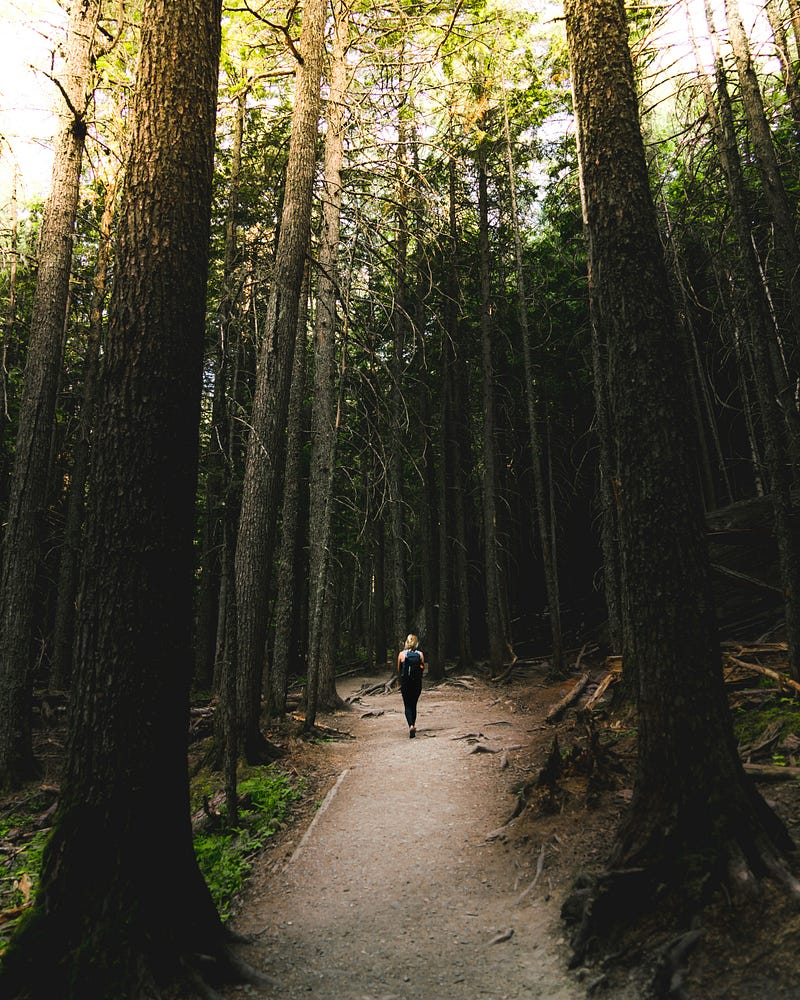
Okay, I don’t say this lightly. When I say walk, I mean walk, with no distractions. I never bring my phone along during my walks, and all I focus on is my breath and the surroundings.
To me, this feels like another form of meditation because the aim here is to be present in the moment. I look around, see what people are doing, and notice the trees, the colors, the sights, the sounds. As cliché or strange as it sounds, it makes a difference just being there as you walk.
Sometimes when I’m feeling down for whatever reason or am feeling overwhelmed, I tend to just go out for a walk in the park. As someone who loves nature, I enjoy these moments of quiet.
I don’t need to remind you of the numerous health benefits of keeping your body moving, but some of them include improved cardiovascular health, improved balance, and better management of conditions like hypertension, among others.
To me the point of walking is find another avenue for me to be in the present moment.
So the next time you decide to go for a walk, leave your phone at home and see what happens. Everyone is glued to their screens nowadays, so it's a good idea to lift your head and look around for a change.
3. Working out

No surprise that exercise would be on the list. Yet again, this provides another avenue for meditation in a sense.
There are countless benefits with exercising, such as the release of ‘feel-good’ chemicals like endorphins and serotonin that help to improve your mood, improvement of general fitness, which is always a good plus, and again, another avenue for focusing on the present moment (I think you’re seeing a general pattern here.)
Most of the time when you step into the gym, you see people doing one set and then using their phone, not knowing how much time passes by before they hop on to their next step.
There is a correct way to exercise.
Make a plan and stick to it. Stick to your rest times, don’t get distracted. The problem with everything nowadays is distractions. Even when exercising. You see the main point of exercising is to do well.. exercise. So remember to focus on every single rep that you are doing to the best of your ability.
An app that I use is called Hevy, where you can set the rest times for each exercise, and so it gives you a quick beep once it's time to get back into it again.
If you need a guide on how to get started in the gym you can check my article where I bought a YouTuber’s program to understand a good workout program.
With a good plan and being focused each time when you exercise, you are once again focusing on the present moment and this was probably one of the best ways that I improved my mental health.
Looking better and feeling better boosted my confidence and self-esteem.
4. Cook

Yes, food. The surmounting number of reports saying that food can affect mental health has grown. The rise of ultra-processed foods has been increasing year by year, and I can’t draw a correlation directly, but there seems to be some evidence that it has been affecting the rising trends of depression and poor mental health.
And it makes sense!
With foods that are high in both sugar and fats, the body will suffer from a lot of inflammation. This will cause many problems with the gut, and as a result, the brain too, slowly leading to more cases of anxiety and depression.
It’s a vicious cycle.
I’m a huge advocate of cooking healthy food and taking care of your body. Needless to say, cooking gave me an avenue to sometimes get creative, but most importantly, it allowed me to take control of what I put in my body.
As with the other three methods, it also provided me an avenue to concentrate on something, another form of meditation. I wrote an article recently about the kind of foods I eat, and you can check that out too!
Just remember that you are what you eat. Include some healthy options and give cooking a try. I promise you won't regret it.
5. Gratitude journalling
During the Covid period when everyone was stuck at home and looking around for things to do, I came across an interesting course on Coursera known as the science of well being.
And it's completely free too! It's a course that’s about living a happy life. One of the key takeaways for me in that course was about practicing gratitude.
There is this term called hedonic adaptation, which means how we quickly adapt to new circumstances, either good or bad.
Let’s say that you recently got a job promotion. You’re super happy because you’ve been working super hard for this. You then get this temporary boost of happiness. But after this, we quickly adapt and move on with these new circumstances and then return to that baseline of happiness. And so, in this case, we see spikes, up and down in our ‘happiness’ levels. This then leads us to go chase again for that next spike, and sometimes this could prove detrimental, as it might lower our baseline as a result.
What we could do instead is to practice gratitude. By doing so, we are focusing on the positives and can appreciate them more fully.
By doing this each time, we are increasing our happiness baseline. Ever since finding out about this, I have been doing gratitude journaling. So at the end of each day, I write three things that I am grateful for the day. It can be anything, like…
I am grateful for medium for providing me an avenue to share my stories with people
Closing thoughts
I have made these my 5 commandments moving forward in life and i have seen such a drastic improvement in my mental health. That’s not to say that I don’t feel anxiety anymore.
Of course, I still have anxious and disruptive thoughts. No one can truly escape it, but how you manage it becomes the next big thing.
A book that helped me with my journey recently talked about these 4 main tips that I think will be helpful in your journey too.
Healing is a daily event. It requires Daily Commitment to doing the work.
Many things are beyond your control. So grab the ones that are within your control.
Your throughts and brain will pull you back to the fmailiar vices form the past. But daily resistance to these and acknowledgement of it happening is the key.
Taking responsibility of your mental health can be empowering.
I wish you well in your journey and I hope this guide gives a good starting point for that.
Dev