
How The Modern Lifestyle F*cks Our Health.
These numbers are shocking

In the last decades, our world has changed a lot. New technologies came on the market and have extremely changed our lives and habits.
Besides an incredible number of positive effects, this also has its downsides, such as the fact that children move significantly less than they did a few decades ago.
But don’t listen to my opinion, but to the hard numbers I will present in this article.

More And More People Are Obese
One look at the World Health Organization site is enough to see how bad this problem is:
Worldwide obesity has nearly tripled since 1975.
In 2016, more than 1.9 billion adults, 18 years and older, were overweight. Of these over 650 million were obese.
39% of adults aged 18 years and over were overweight in 2016, and 13% were obese.
Most of the world’s population live in countries where overweight and obesity kills more people than underweight.
39 million children under the age of 5 were overweight or obese in 2020.
Over 340 million children and adolescents aged 5–19 were overweight or obese in 2016.
Obesity is preventable.
At what point are you considered obese?
The key indicator to judge who is overweight is the Body Mass Index (BMI).
The key indicator for judging who is overweight is the Body Mass Index (BMI). The formula of the BMI is as follows: Divide your weight in kg by the square of your height in meters.
BMI= kg/m²
The WHO has defined the following threshold values:
- Above a BMI of 25, you are considered overweight.
- Above a BMI of 30, you are considered obese.
However, the BMI is overrated in my opinion. It should be looked at together with other variables such as body fat percentage.
Health risks of obesity
No matter how body positive you are and no matter what supporters of the fat acceptance movement say, it is a scientific fact that being overweight is extremely unhealthy.
The WHO lists cardiovascular diseases (mainly heart disease and stroke), musculoskeletal disorders, and various types of cancer as possible consequences of obesity.
What causes overweight?
If you eat more calories than you burn, you gain weight. Those who burn more calories than they eat lose weight. It is that simple. Obesity results from a long-term imbalance between calories consumed and calories burned.
On a global level, the WHO cites these two reasons for the increase in obesity:
an increased intake of energy-dense foods that are high in fat and sugars; and
an increase in physical inactivity due to the increasingly sedentary nature of many forms of work, changing modes of transportation, and increasing urbanization.

Testosterone Levels In A Nosedive
A study published in the Journal of Clinical Endocrinology and Metabolism revealed a substantial drop in the testosterone levels of US American men since the 1980s.
Presumably, there is a strong correlation between increased obesity, inactivity, and low testosterone. In addition to these two things, an unhealthy diet, stress, alcohol, and drug use can lead to testosterone deficiency.
The health consequences can be devastating. These are some typical symptoms:
- low sex drive
- fatigue
- loss of muscle mass
- increased body fat
- decreased bone mass
- mood changes
Mental Health
In recent years, mental health has become more of a problem, especially among younger people, as evidenced by this article about research from the American Psychological Association.
The percentage of young Americans experiencing certain types of mental health disorders has risen significantly over the past decade, with no corresponding increase in older adults, according to research published by the American Psychological Association.
While in 2005, 8.7% of adolescents and 8.1% of young adults (ages 18–25) showed symptoms of major depression, by 2017, the rate had risen to 13.2% in both age groups, an increase of 52% and 63%, respectively.
The subsequent pandemic has probably worsened this situation considerably.

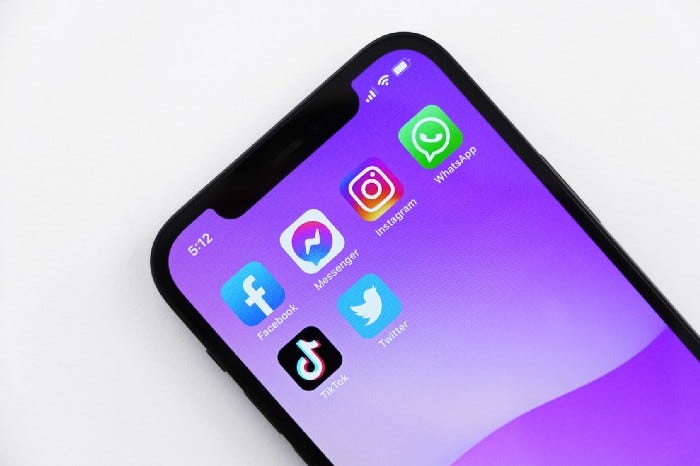
Social media plays a major role
Just about all young people are on social media these days.
I think Instagram in particular can cause mental problems. After all, everyone usually shows off their best side and appears much happier and often more attractive than in real life. This can lead to people comparing themselves with others and having the impression that everyone else is better, more beautiful, and having more fun.
Let’s be honest. It is no surprise that you feel bad about yourself when you see pictures of incredibly beautiful models, whose pictures are even edited, all day long.
This 2019 study shows a strong link between frequent social media use and mental health problems.
Adolescents who spend more than 3 hours per day using social media may be at heightened risk for mental health problems, particularly internalizing problems. Future research should determine whether setting limits on daily social media use, increasing media literacy, and redesigning social media platforms are effective means of reducing the burden of mental health problems in this population.
The Fitness Of Children Has Decreased Significantly
According to this Washington Post article, children in 2013 were already showing significantly worse fitness than children 30 years earlier. Most of them were probably significantly less fit than their parents at the same age. They took on average a whopping 90 seconds longer to run a mile than children 30 years earlier. I think that’s quite a lot…
The article provides the following explanation:
has declined 5 percent per decade since 1975 for children ages 9 to 17.
The American Heart Association, whose conference featured the research last week, says this is the first report that children’s fitness has declined worldwide over the past three decades.
“It makes sense. We have kids that are less active than before,” said Stephen Daniels, a University of Colorado pediatrician and spokesman for the Heart Association.
Health experts recommend that children age 6 and older get 60 minutes of moderately vigorous activity each day. Only one-third of American kids do now.
I would strongly assume that it hasn’t necessarily gotten better since 2013….

The Problem
In my opinion, healthy nutrition and sports should be promoted much more strongly in view of these developments.
I think the main problem is that the big companies like Mc Donalds, Coca-Cola, Netflix, all the companies behind the social networks and so many more are profiting so much from our unhealthy lifestyles. Even more: they are professionals in giving us the biggest dopamine kick possible, making us virtually addicted.
Unfortunately, the only thing that seems to be at the forefront is profit. Even when people’s health suffers so much.

Summary:
More and more people have become inactive in recent decades. This is very noticeable in the health and fitness status of the population. However, technological development has not only made us lazier and more inactive but has also caused severe mental problems in the form of social media. Some frightening developments that can be observed in large parts of the population are these:
- More and more people are overweight or even obese, which poses significant health risks.
- Many men have low testosterone levels. The average testosterone level is significantly lower than in past decades.
- Many young people suffer from mental problems such as depression as a result of social media use.
- Children are significantly less fit than children were a few decades ago.
Thanks for reading!
Wait a second. You should get my articles in your inbox. Subscribe here. Maybe you also want to start writing on Medium yourself and make money. I made $2300 in my second month! You only need a membership for $5 a month. If you sign up with my link, you support me with a part of your fee without additional costs.
I think you will also like these articles: