
How The Eastern Concept of “Flow” Can Help You Live a Calmer Life
With flexibility comes grace.
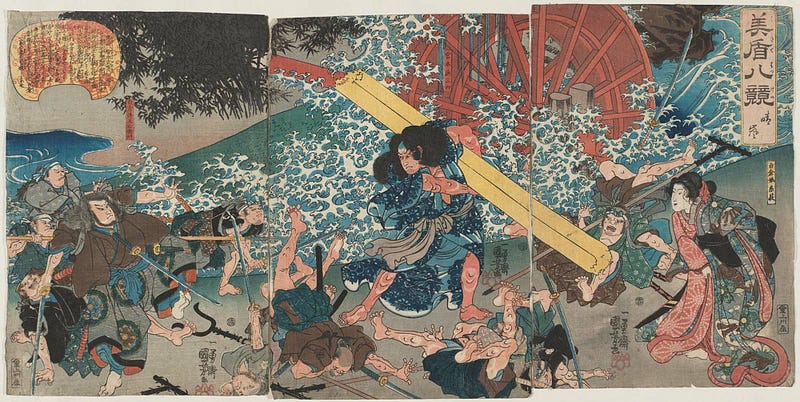
“Empty your mind, be formless. Shapeless, like water. If you put water into a cup, it becomes the cup. You put water into a bottle and it becomes the bottle. You put it in a teapot, it becomes the teapot. Now, water can flow or it can crash. Be water, my friend.”
— Bruce Lee
Eastern philosophers have been fascinated by the movement of water for centuries. Bruce Lee uttered the now-famous quote in a 1971 interview, the Chinese sage Lao Tzu used water as an example to teach many parables, and even the legendary samurai Miyamoto Musashi christened his style of swordplay “Niten Ichi-ryū” (二天一流), which directly translates to “Two heavens, one flow.”
In this article, we’ll take a look at what the concept of flow really means, and more to the point, how we can use it to win gracefully at life.
Living In A State Of Flow Prevents Needless Worry
According to large population-based surveys, up to 33.7% of the population will be affected by an anxiety disorder in their lifetime. In the 21st century, we possess wealth and technological marvels beyond our ancestor’s wildest dreams — but like all powerful things, this comes with a price; that of over-analyzation and worry.
Thankfully, there is a simple mental shift we can adopt to put a stop to this self-inflicted torture; and that is to focus on what we can control, and let what is out of our hands play out however it may. The psychologists of the present call this locus of control. The ancients called it by many names, one of which is flow. Lao Tzu wrote,
“Life is a series of natural and spontaneous changes. Don’t resist them; that only creates sorrow. Let reality be reality. Let things flow naturally forward in whatever way they like.”
To fret about things outside of your power is like trying to whip back the tides or yell back a typhoon. An exercise in futility. Far better to disregard events that are very real but are ultimately beyond our control, and use the saved time and effort to double down on happenings we can actually influence instead. Some examples are:
- Helping out at your local homeless charity every Sunday instead of binge-reading reports on world poverty.
- Encouraging your family to stay fit via morning runs and healthy snacks rather than fretting about your country’s rising obesity levels.
- Moving out of the way of a hurricane instead of bemoaning the fact that they exist.
Dictate what you can, and develop the strength to let the rest unfold according to the whims of Providence. This is easier said than done — it is only human to fret and want and worry, but remember that at the end of the day, all we mortals can do is our best. So as long as you’ve done all you can, be content.
Practise letting things go. Practise letting things flow. This is how you live a life free of undue worry.
Take The Path of Least Resistance
We oftentimes choose to confront our problems head-on for no better reason than to bolster our egos. This is folly at its finest. There is no cause to kick down a locked door if there is an open one nearby, and there is little reason to clear your own path if better men before you have paved the way. Bruce Lee said,
“Be like water making its way through cracks. Do not be assertive, but adjust to the object, and you shall find a way around or through it.”
The magic of water lies in its flexibility. If there is no way across, water will find a way around. If there is no way around, water will find a way through. If there is no way through, water will wait, for aeons if need be, all-encompassing and ever-patient.
Keep this concept in mind the next time you encounter a seemingly unsolvable problem. Instead of beating yourself to death approaching it head-on, try taking a break and a step back. Look at things from a broad and creative viewpoint.
Keep in mind that thousands of brave Greeks died in vain trying to storm the tall walls of Troy, but all it took was wily Ulysses one night with a wooden horse to burn the city to the ground. Another great example would be this: If you ask a high-level martial artist what his favourite punch is, he will likely answer, “The one that connects.”
If your opponent is blocking his head you should go to his body, and if he’s blocking his body you should shoot for the head. To batter yourself blindly against a strong defence is senseless. This is true for both fighting and life.
Remember that the most direct method is not necessarily the best. Water always flows along the path of least resistance; it goes along with gravity instead of against it, and whenever possible, moves smoothly around obstacles instead of grinding through them.
However, the keyword is whenever possible. Flexibility means you should avoid unneeded hardship, but it doesn’t mean that you should be a pushover. This means that you should…
Be Forceful When Needed
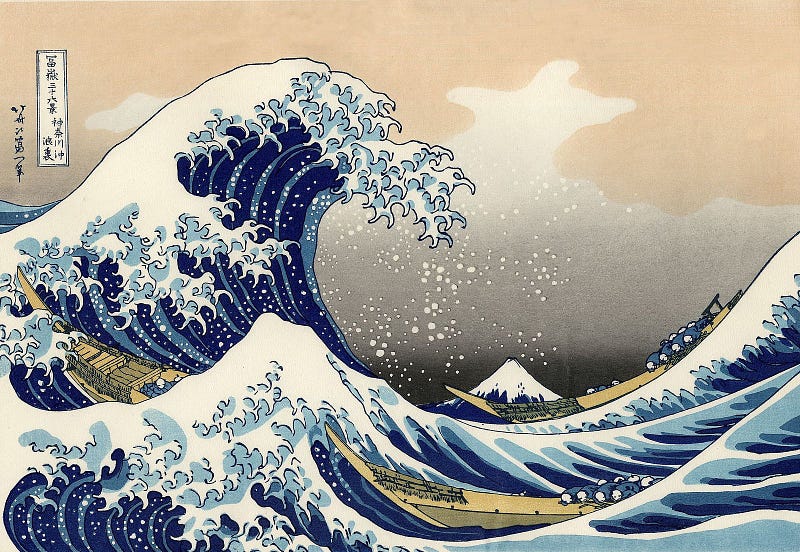
The magic of water lies in its flexibility, yes, but keep in mind that water is not just flexible; it is transmutable. The very meaning of the word “flow” means an ever-changing state of things.
Water can be warm liquid one moment, a cold core of ice the next. The sea can be tranquil, but seasoned sailors know that the placidity is a thin veneer; the ocean can boil and roil without warning, like a scorned woman, white-tipped tsunamis at her breast.
Research indicates that people who are too agreeable end up less financially successful in the long run. On the flip side, psychological studies also indicate that people who are too disagreeable end up with fewer friends and weaker social ties, impeding their quality of life.
Thus, to succeed in life, it is necessary to engage in a delicate, ever-shifting balancing act. It is unwise to seek out needless conflict, but at the same time, you must not be afraid to be firm — even harsh, when needed. In short, to get ahead, you must be able to harness both the gentle and destructive natures of your personality. Keep in mind that yes, water can flow…but water can also crash.
Seek to master both movements. That is how you win in all situations.
In Summary
“The river is everywhere.” ― Herman Hesse, Siddhartha
Long before the term flow state was coined by Mihály Csíkszentmihályi in 1975, Eastern philosophers have been studying the concept.
They were fascinated by how water is humble, always seeking lower ground. They were fascinated by how water can lap its way gently into the tiniest opening, and if there aren’t any, how it will carve a way in over time, like a waterfall voraciously eating the land, or waves smashing million-year-old cliffs into so much dust in the surf.
More than anything, they were fascinated by how men can apply the concept of water’s flow in our everyday lives; finding creative loopholes past difficult situations, at times crashing to seize a decisive victory, all the while flowing gracefully through the impermanence of life.
So if you’re ever in a tight and panicky spot in your life, remember what the ancients had to say about water, my friend. Be more like it. Be flexible. Flow. That is how you can find your way around — and to the top, in all circumstances.
Mind Cafe’s Reset Your Mind: A Free 10-Day Email Course
We’re offering a free course to all of our new subscribers as a thank you for your continued support. When you sign up using this link, we’ll send you tips on how to boost mental clarity and focus every two days.


