
HUMANITARIAN HEROES
How Sir Nicholas Winton, a Quiet Hero, Secretly Saved the Lives of 669 Children
The story of a person who took extraordinary action to rescue vulnerable children — not for fame but because it was the right thing to do
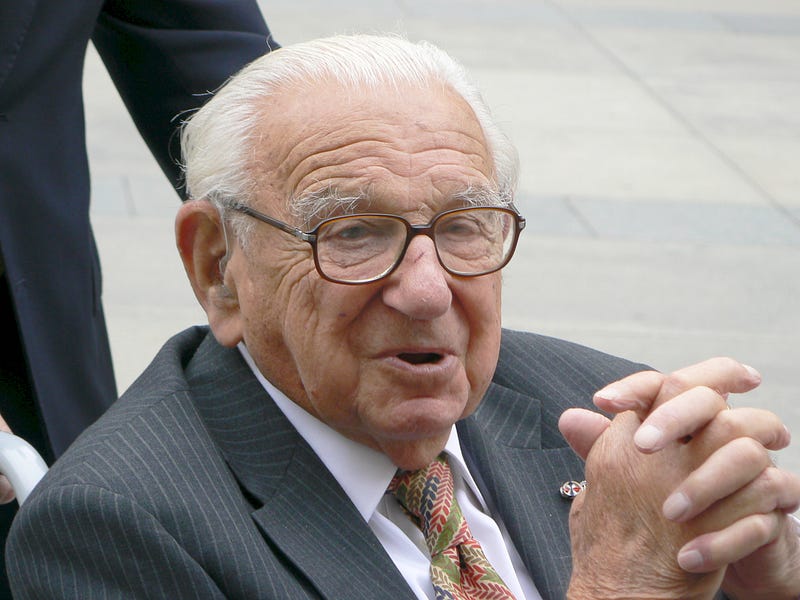
Nicholas Winton, also known as the “British Schindler,” was a humanitarian who saved the lives of over 669 Czech Jewish children doomed to death in German-occupied Czechoslovakia during the Holocaust of World War 2.
Background
In 1938, Winton was a 29-year-old stockbroker living in London. Shortly before a Christmas skiing holiday in the Swiss Alps, his friend Martin Blake, working for the British Committee for Refugees from Czechoslovakia, urged Nicholas to join him in Prague.
Blake said he desperately needed his help with Jewish welfare work.
When he arrived in Prague, Nicholas was horrified by the persecution of Jewish people under Nazi rule. After the Kristallnacht of 1938, when the Nazis destroyed Jewish stores, synagogues and homes, tens of thousands of German Jews fled to neighbouring Czechoslovakia.
Soon Hitler’s Nazis would occupy Czechoslovakia as well.
Deciding to help
After visiting some of the refugee camps and being shocked by the conditions of the people living in them, Winton decided to take action.
He was particularly concerned to discover the British committee for refugees from Czechoslovakia was not assisting children but instead focusing on the elderly and disabled, whom they considered more vulnerable.
One day, Winton found a brother and sister, about seven years old, on the street. The children were lost and couldn’t find their parents, so Winton took them to a shelter, which was already full.
That day he decided his mission was to rescue children, as nobody else seemed to be doing it.
Rescue Efforts
Winton set up a makeshift office in a hotel room in Prague. Alongside other volunteers from Britain and Canada, he worked with the Czechoslovak Refugee Committee in organizing help for children from Jewish families at risk from the Nazis.
He set up a program to take Jewish children out of Czechoslovakia, arranging for them to be placed on trains and transported to safety in Great Britain. Winton recorded the children’s names in a notebook and collected their photographs.
Within a few days, there were long lineups outside his office. Parents desperate to save their children came to him, and Winton worked tirelessly to obtain permits, organize transport, and find foster homes for their children.
He registered about 900 children who urgently needed to be taken out of the country.
It is unimaginable what the parents must have endured. The decision to entrust their precious children to total strangers, knowing they would likely never see their little ones again.
Their only consolation was hope that their actions would save their children’s lives.
The Nazis soon became aware of Winton’s activities and began to shadow him. He had to resort to bribing them to give himself more time to get the children out of the country to safety. He arranged for his father to transfer his savings to Prague to assist his efforts.
Returning to London
In January 1939, Winton left Prague, leaving two friends in charge of the operation there. He returned to London, England, to arrange for foster care for the arriving refugee children and raise funds to support their efforts. Together with friends and his mother, he set up the British Committee for Refugees from Czechoslovakia — the children’s section.
Foster families and fundraising
By law, the foster families had to agree they would care for each child until they were seventeen. They also had to pay a bond of £50.00 in case the child had to be returned to their homeland.
Winton posted newspaper ads and contacted organizations for donations. Hundreds of families agreed to foster and adopt the children, and he received many generous donations. Winton made up the difference with his own money.
After raising funds, Winton approached the U.K. Home Office about getting entry visas for the children. The office took a long time to reply, and there was no time to wait for answers and deal with red tape.
With war about to break out, Winton ended up forging visas for the children. As it turned out, he did this just in time.
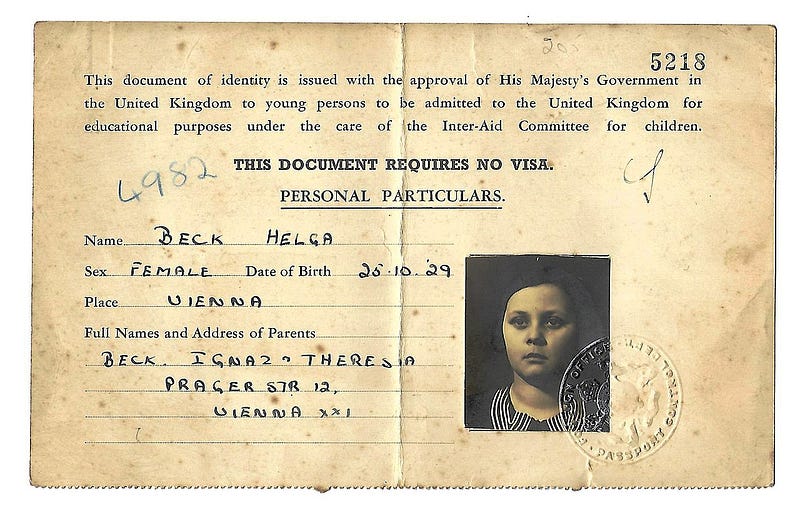
Rescue Trains “Kindertransport”
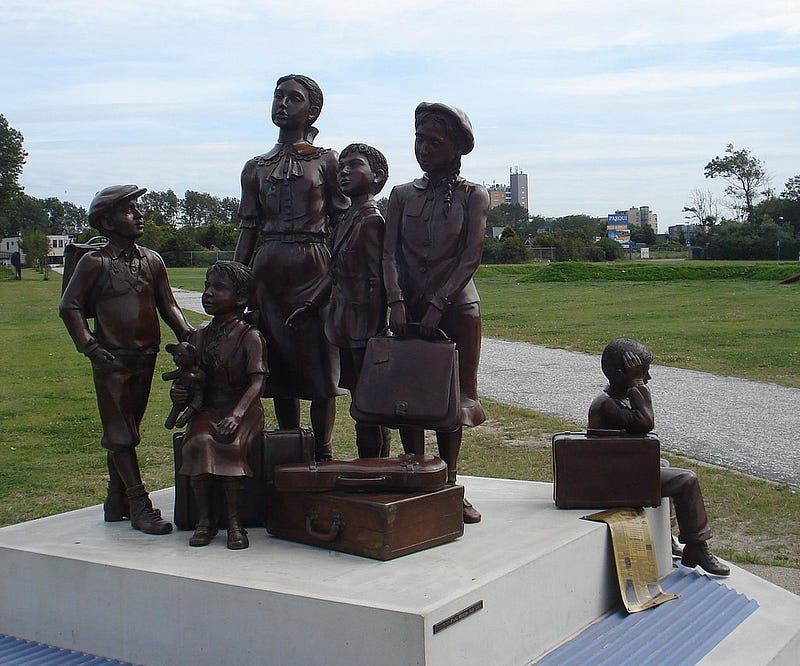
Winton helped organize eight trains which brought 669 children, most of them Jewish, to safety in the United Kingdom.
His contacts in Prague had to bribe Gestapo officials, so higher-ranking officials and Czech railway authorities would let the trains carrying the children complete their journey.
By March 14, 1939, a few hours before Hitler invaded Czechoslovakia, the first train with twenty children left Prague. Heartbroken parents put frightened, sobbing children on trains, not knowing if they’d ever see them again, and sadly, most wouldn’t.
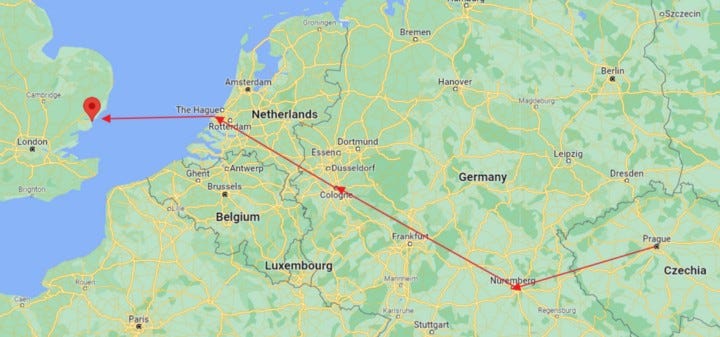
The trains travelled through Nuremberg and Cologne to the Hook of Holland. The children then travelled by ferry across the North sea to Harwich. They then boarded a train to London, where the foster families met them.
Each child had a label sewn onto their clothes or on a piece of string around their necks. They arrived stateless, penniless, traumatized and most without a word of English.
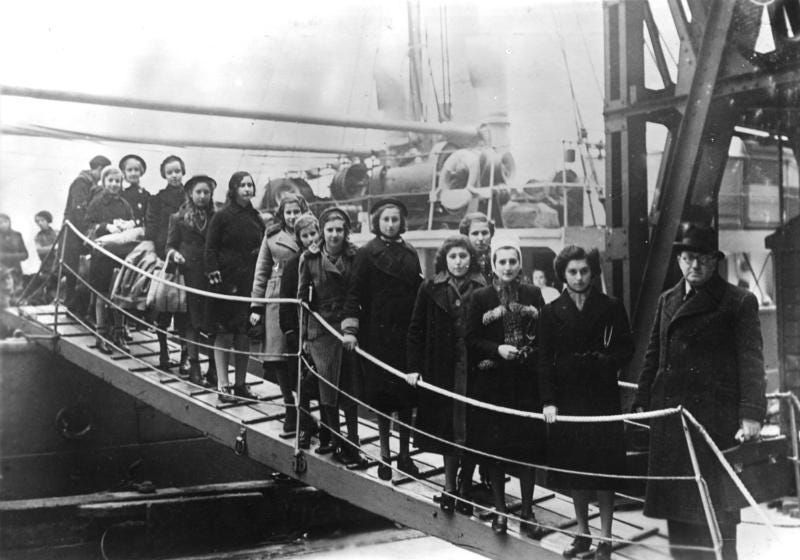
Tragically, the last group of children, which left Prague on September 3, 1939, was turned back because the Nazis had invaded Poland — the beginning of the Second World War.
Of the 250 children scheduled to leave on that train, only two survived the war.
Winton’s Children
The children Winton saved escaped the Holocaust. However, most of the children’s parents perished in concentration camps leaving the children orphans.
After the war, many of the children remained in Britain. Most returned to their homeland or immigrated to Australia, Israel or the USA. These children call themselves Winton’s Children.
Why did Winton Keep his actions a secret?
For fifty years, Winton never spoke of his actions during the war to his family or friends. Even his wife knew nothing of his work.
While organizing the Kindertransport, Winton was working under the radar, trying to avoid drawing the attention of the authorities. After the war, he continued to work as if nothing had happened.
Winton didn’t want recognition for what he’d done. He saw his actions as a simple moral duty, not something to celebrate. He also believed it was essential to move forward and not dwell on the past.
His actions went largely unrecognized for many years.
A hero who stays out of the limelight is still a hero and is often the truest embodiment of the title.
How the world found out about Nicholas Winton
In 1988, Winton’s wife Grete found a scrapbook in the attic containing lists of the children he had saved and the addresses of English families who had adopted the children.
She sent letters to all the addresses and managed to locate about 80 of the children.
In 1988 the story of Winton’s heroism came to light when a BBC television program, That’s Life, revealed his deeds, and the full extent of his efforts became known.
When the BBC invited Winton to be a member of the audience on That’s Life, he had no idea what would happen there.
The host, Esther Rantzen, told his story to millions watching.
Winton gets the surprise of his life
After giving some background to the story, Rantzen showed the audience Winton’s scrapbook and explained what he had done.
She called for anybody in the audience who owed their lives to Winton to stand.
Half of the audience surrounding Winton rose from their seats and applauded. These people had been able to grow up safely, have a good life and start their own families because of Nicholas Winton.
Next, Rantzen asked if anyone in the audience was a child or grandchild of a person Winton saved.
The rest of the audience stood.
Nicholas Winton was overcome with emotion on seeing the impact of his life-saving actions during the war.
The true impact of Winton’s Legacy
Estimates suggest there are approximately 6,000 descendants of the children Nicholas Winton saved. It’s impossible to watch the video below without tears.
Honours
Gradually, Winton’s story became more widely known. In recognition of his efforts, Winton received a letter of thanks from Israel’s president and was awarded the Order of Tomáš Garrigue Masaryk by the Czech government. In 2003 Queen Elizabeth II knighted Winton for services to Humanity.
In 2014 at 105, the Czech Republic awarded him their highest state honour — the Order of the White Lion. At the award ceremony, Winton met some of the people he rescued 75 years earlier, themselves in their 80s.
Anything that is not actually impossible, can be done, if one really sets one’s mind to do it and is determined that it shall be done.”
— Nicolas Winton, 1909–2015
Nicholas Winton was an ordinary person who sacrificed his time and money, risked his life and took extraordinary action to save the lives of vulnerable children. He did it not for fame but because it was the right thing to do.
© Gill McCulloch, January 2023
References:
Winton, Nicholas. (1988). The Power of Good: Nicholas Winton and the Rescuing of Children from Nazi Occupied Czechoslovakia. Prague: Knižní klub
BBC News (2002), “Schindler of the children: the story of Sir Nicholas Winton” https://www.bbc.co.uk/news/magazine-17582921
Wikipedia
Nicholas Winton and the Rescued Generation by Muriel Emanuel & Vera Gissing
Holocaust Memorial Day Trust (2021), “Sir Nicholas Winton: The British Schindler” https://www.hmd.org.uk/resources/sir-nicholas-winton-the-british-schindler/
Thanks for reading! If you’d like to get an email when I publish, please subscribe here. You can find a full list of my stories here.


