
Business
How Really Good People Become Really Bad Managers
A business parable with sea otters and mollusks
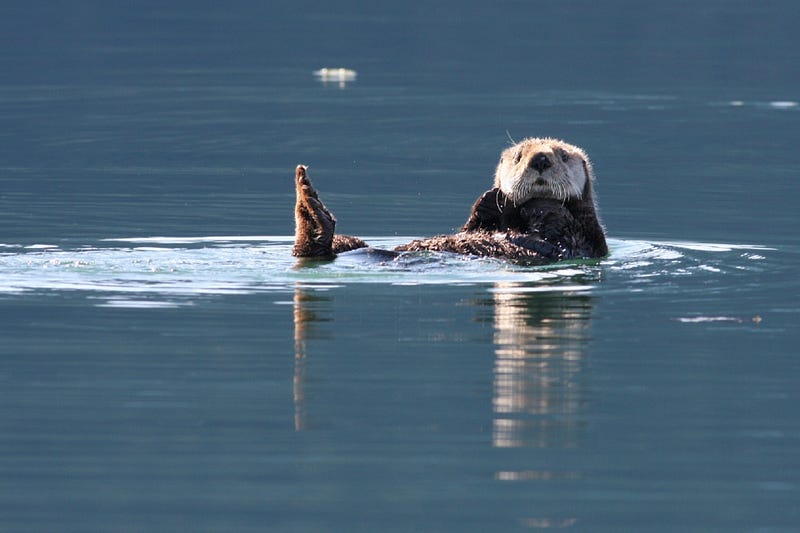
Sammy the sea otter slipped silently along the sea bottom looking for oysters. Sammy was excellent at finding oyster and mussel beds and was especially skilled at using pieces of rock or shell fragments to leverage open the tasty morsels.
You might think this is the case for all sea otters, but Sammy was by far the best at finding, collecting and opening mollusks, crabs and the other sea creatures that sea otters love to eat. In fact, he often shared with his friends as they worked together to find food.
One of the sea otters always stayed on alert for predators, scanned for new possible places to find food, kept the group organized and even offered tips for the various members of the otter crew to help them get better at finding and harvesting food.
The otters referred to this position as the crew chief (although no one could remember why) and the other otters always shared their take of the food bounty with the crew chief.
Today was a special day. Sally, the otter crew chief for Sammy’s crew was retiring. She had only a week left on the job, then was headed to a life of luxury at a nearby sea otter resort. You see, not only did the otters share food with the crew chiefs and other leaders of the otter community, they also collected enough to share with those that were sick as well as for otters that had retired.
Once an otter had put in enough years, they could relax and play with the younger otters in the kelp beds, tying up the youngsters that were too buoyant to dive below the surface to the kelp and watching them bob about. The tradition of the working otters sharing food with the retired otters was something they called a defined benefit pension. No one knew why they called it that, but it seemed like as good a name as any.
Today, in honor of Sally’s retirement, the head otter Sean was coming by to congratulate her. When he arrived, he talked with Sally for a while, then unexpectedly called Sammy over to join them.
Imaging Sammy’s surprise when the head otter said to him, “Sammy, I would like for you to be crew chief now that Sally is retiring.” Sammy was shocked, but Sean further explained, “You are the best mollusk hunter and are the quickest at getting the shells open. Plus, everyone loves you. You are the perfect fit for crew chief.”
Sammy wasn’t completely sure that he had all the requisite skills needed for the crew chief job. After all, the role was very different from hunting and opening clams and mussels. He had no idea how to predict clam bed harvest counts, nor did he know entirely what kind of predators might want to eat an otter, and he especially did not know how to counsel other otters on their mollusk gathering production rate.
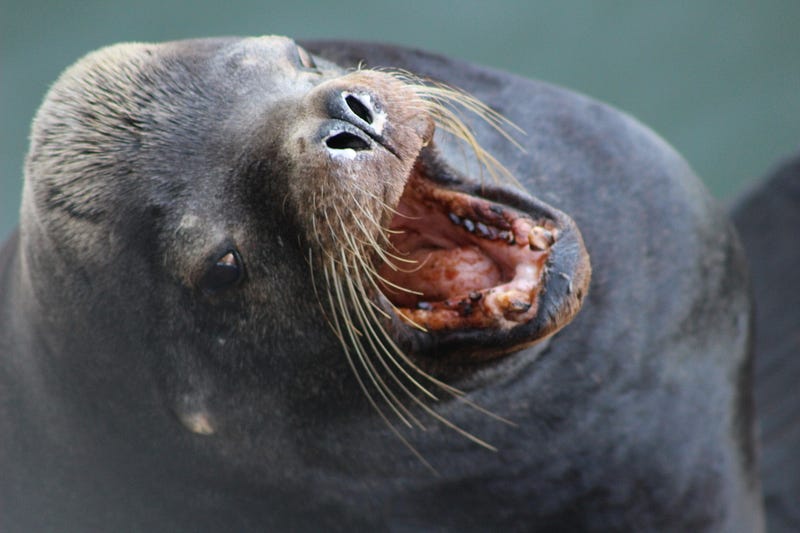
Nevertheless, the promotion was a done deal and Sammy’s friends took him out to the local sports bar for shrimp cocktails after work. They happened to run into some of their sea lion friends there, Paulette, Penelope, Phil, Patrick and Parker were all in a booth in back barking loudly about their day.
Sea lions are notoriously loud and clumsy, but also quite kindhearted. They were all happy to hear about Sammy’s promotion and were sure to tell anyone within 5 nautical miles of his new role.
Sammy started the next day job-shadowing Sally. At first, some of the new tasks he would be doing didn’t seem like they might be too hard. He began to sort of get the hang of reading currents and the way the kelp beds swayed and could reasonably predict where a good stash of mussels might be found.
But the job shadow only lasted a few days, and Sally took her leave and headed off to retirement. Sammy did okay for a bit, but soon began to doubt he would ever get the hang of some of the things an otter crew chief had to do each day. Sally called them soft skills. Sammy had no idea what that meant; all he knew was that his role was much different than the one he was used to.
Each time he had to counsel one of the sea otters about their work, Sammy sputtered and stuttered and couldn’t find the right words to communicate. One time he got so frustrated that he just jumped in front of Simon to show him how to open a difficult clam shell. Simon’s feelings were hurt, and he began to cry. Sammy had no idea what to do and just swam off.
Sammy couldn’t get the hang of watching for predators either. Three times now he had sent the otters shooting in all directions after seeing a shadow on the sea floor and getting spooked. All of the otters in the crew were on edge, and none more so than Sammy. How did Sally make it look so easy?

Sammy thought about how stress-free and fun his life was before. He sometimes thought about talking to the head otter about finding someone else for the role, but everyone now knew about Sammy’s big promotion. Those loud sea lions had made sure every animal on sea and land knew about Sammy and there was a lot of social and organizational pressure that made it difficult to consider stepping down. After all, he didn’t want to be the embarrassment of the otter community.
So, Sammy remained silent. His otter crew was jumpy and tense, morale was low, and they were much less productive than they were before Sammy took the crew chief role. But no one ever said anything about it. Everyone liked Sammy, even if they didn’t respect his leadership. Besides, what could anyone even do besides just continue on and hope things got better?
After four months had passed, things had gotten slightly better, but morale and productivity were both still significantly lower than in the past. Sammy had gotten into a groove, even though he still wasn’t great at finding the best clam digging sites and hadn’t figured out a good way to communicate with his crew.
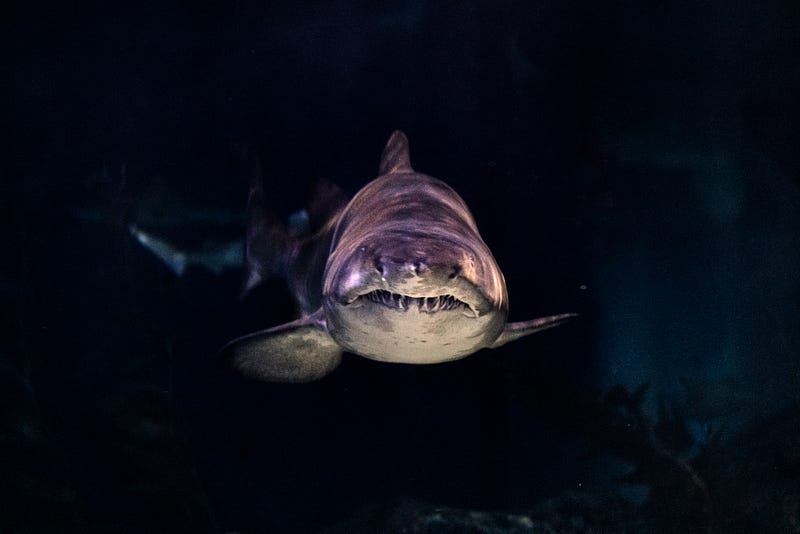
Sammy’s head was buried in tide charts, TPI reports and a pile of annual reviews. That is probably why he didn’t see the shark until it was too late.
It was chaos. The otters scattered; the predator lunged. Sebastian lost part of a paw; Samantha ended up with a long scar across her back. Steven was scraped and Skyler nearly was devoured whole, but dodged left as the shark bit right, and managed to escape entirely.
Aside from the few minor injuries, the otter crew largely emerged unscathed physically, but it was a massively frightening event. An event that was the turning point for Sammy. He realized that not only was he not doing himself any favors by remaining in the crew chief role, he was also endangering his friends.
Sammy went to the head otter and explained why he wanted to step down. One of the redeeming happenstances of Sammy being in the role was the fact that he got to observe the other otters while they worked. It was because of this that he noticed that one of the younger otters, Sabina, was not only a great communicator, but also had a keen eye for not only finding good spots for mollusk harvesting, but for spotting predators as well.
Sabina had a good handle on what amounted to, as Sally would have explained it, “soft skills”. So, while Sammy was a bit ashamed that he couldn’t do well as a crew chief, he was pleased that he could recommend someone to fill that role in a much better fashion to the head otter.
Things were immediately better for Sammy and the rest of the otter crew. Sabina proved to be an excellent communicator and time manager. Crew productivity and morale rose, in part because Sammy was back doing what he did best. But also, because Sammy had the integrity and intuitiveness to recognize that he wasn’t a good fit in the crew chief role.
Coming to the realization that he had promoted past his level of competence and then being bold enough to do something about it made Sammy something of a star in that part of the ocean.
His friends wanted to name the concept of promoting past your abilities after Sammy to commemorate it. They suggested, “The Sammy Principle”.
Sammy was far too modest and didn’t want the notoriety, so he suggested that they instead name it after one of the more loud and boisterous sea lions. Peter perhaps?
The Moral of the Story:
It is okay, and even brave and admirable to admit when you have promoted past your capabilities.
Being highly functional in employing hard skills does not indicate that a person will be good at taking on soft skills such as communication, emotional intelligence, problem solving, teamwork or adaptability.
Using hard skill mastery as a prerequisite or weighted consideration for management roles is never a good idea. Mastery of one never indicates mastery of the other, nor does it indicate inability to do both. A person can be excellent at one, both or neither. They are not interdependent.
Managers should be selected for their capacity for using and learning soft skills.
It is okay to admit that a person has promoted into a role where they do not perform well. Companies should be ready for this eventuality and be prepared to offer a path to another, better-suited role for the employee. Often if the employee has been a star performer in the past, reversion to the prior role is probably the best fit.
Promote managers because of their anticipated ability to manage effectively. Offer a graceful exit if the predicted abilities don’t mesh with reality.
Bad managers destroy companies and good workers. Don’t let bad managers languish in their roles because of social or organizational pressures.
If you liked this article, you may also like:
Timothy Key spent over 26 years in the fire service as a firefighter/paramedic and various fire chief management roles. He firmly believes that bad managers destroy more than companies, and good managers create a passion that is contagious. Compassion, grace and gratitude drive the world; or at least they should. Follow me on Instagram, Facebook, and Twitter, and join the mail list.


