avatarDr. Erlijn van Genuchten

Free AI web copilot to create summaries, insights and extended knowledge, download it at here

4595

Abstract

name=YouTube&url=https%3A%2F%2Fwww.youtube.com%2Fwatch%3Fv%3DtW7bbrJMWI8&image=https%3A%2F%2Fi.ytimg.com%2Fvi%2FtW7bbrJMWI8%2Fhqdefault.jpg&key=a19fcc184b9711e1b4764040d3dc5c07&type=text%2Fhtml&schema=youtube" allowfullscreen="" frameborder="0" height="480" width="854"> </div> </div> </figure></iframe></div></div></figure><ul><li>Closed-loop recycling means that the same product is created from the recycled materials. When recycling old clothes, it is possible to use the fibers to create new threads. These threads can be used for weaving new garments. In contrast to open-loop products, closed-loop products can be recycled again and again. In this video, you can see how old clothes are used for creating new clothes (0:56–2:24):</li></ul> <figure id="f535"> <div> <div> <img class="ratio" src="http://placehold.it/16x9"> <iframe class="" src="https://cdn.embedly.com/widgets/media.html?src=https%3A%2F%2Fwww.youtube.com%2Fembed%2F7i0QMnz4ExY%3Ffeature%3Doembed%26start%3D56&amp;display_name=YouTube&amp;url=https%3A%2F%2Fwww.youtube.com%2Fwatch%3Fv%3D7i0QMnz4ExY&amp;image=https%3A%2F%2Fi.ytimg.com%2Fvi%2F7i0QMnz4ExY%2Fhqdefault.jpg&amp;key=a19fcc184b9711e1b4764040d3dc5c07&amp;type=text%2Fhtml&amp;schema=youtube" allowfullscreen="" frameborder="0" height="480" width="854"> </div> </div> </figure></iframe></div></div></figure><p id="fbbd">As mechanical recycling shortens the textile fibers, the result is of lower quality and are less strong than the original material. That is why recycled fibers are often combined with new fibers to improve the quality.</p><figure id="31c8"><img src="https://cdn-images-1.readmedium.com/v2/resize:fit:800/1*TSPy2zSOcWpIHCBaCBIdLw.jpeg"><figcaption>Mechanically recycled textiles are often combined with new material to improve the quality (© Erlijn van Genuchten)</figcaption></figure><h2 id="5a93">3. Reconversing</h2><p id="e3c6">The tertiary way to recycle clothes is reconversing the fabric fibers. This is called chemical recycling and means that the repetitive molecular structure of fibers are broken down into single molecules. This is like breaking down a brick wall into its single bricks. These single bricks, or single molecules, can then be used to build different buildings, or in this case materials.</p><p id="22f0">Breaking down the wall, or textile, is done by using chemical reactions. Several methods can be used, including:</p><ul><li>Glycolysis can for example be used to recycle polyethylene fibers. It converts the large textile molecules into small molecules by boiling old clothes in an ethylene glycol solution under high pressure. Ethylene glycol is a colorless, thick liquid that is also used as antifreeze. Metals are added to speed up the process, so that it only takes an hour. The advantage of this method is that it uses minimal energy.</li><li>Pyrolysis can be used for many different kinds of textiles, including hemp, cotton, polyethylene, and polyester. It converts the large textile molecules into small molecules by heating the textile to very high temperatures (600–800°C / 1112–1472°F) without using oxygen. The output of this method are different raw materials in solid, liquid, and gas form. The advantage is that it is a relatively simple process and the old clothes don’t require pretreatment.</li><li>Gasification is like pyrolysis performed under high temperatures (400–1000°C / 752–1832°F) without using oxygen. But in this case, a lot more gas is produced, as this is the desired end product. This gas is called synthesis gas, as it includes different gases such as hydrogen (H2), carbon dioxide (CO2), carbon monoxide (CO), and methane (CH4). It can be used to for example produce alcohols or used to generate electricity.</li><li>The hydrothermal method can be used to convert textiles into powder at high temperatures and under high pressure. Depending on the temperature, for example the particle size of the powder changes. This process needs water and organic acids for the chemical reaction. The advantage is that this process also doesn’t require pretreatment of old clothes and works already at low temperatures (280°C / 536°F).</li><li>Enzymatic hydrolysis is a biological method that uses microorganisms, environmentally friendly solvents and chemicals, and a lot of water to recycle textiles. This process can only be used for organic materials such as cotton and hemp, as the cellulose is extracted. Cellulose is the main substa

Options

nce in plant cell walls. But as other materials such as polyethylene can be separated during the process, clothes consistent of different types of materials can be recycled completely. In this video is explained and shown how enzymatic hydrolysis works and looks like (start at 0:54–4:05):</li></ul> <figure id="001a"> <div> <div> <img class="ratio" src="http://placehold.it/16x9"> <iframe class="" src="https://cdn.embedly.com/widgets/media.html?src=https%3A%2F%2Fwww.youtube.com%2Fembed%2FPfLQdC4VqWg%3Ffeature%3Doembed%26start%3D54&amp;display_name=YouTube&amp;url=https%3A%2F%2Fwww.youtube.com%2Fwatch%3Fv%3DPfLQdC4VqWg&amp;image=https%3A%2F%2Fi.ytimg.com%2Fvi%2FPfLQdC4VqWg%2Fhqdefault.jpg&amp;key=a19fcc184b9711e1b4764040d3dc5c07&amp;type=text%2Fhtml&amp;schema=youtube" allowfullscreen="" frameborder="0" height="480" width="854"> </div> </div> </figure></iframe></div></div></figure><h2 id="85a4">4. Burning</h2><p id="3990">The quaternary way to recycle clothes is burning the fabric fibers. This is the least desirable solution, as important resources will be lost. Considering that fossil fuels are limited, for example cotton needs a lot of land and water to grow, and burning causes pollution, reusing the fibers is more environmentally friendly.</p><p id="100c">When burning is nevertheless used to recycle old textiles, the heat that is generated during the incineration process can be used to heat for example buildings. Also, the steam that is produced can be used to spin turbines to generate electricity.</p><h2 id="d5e8">Conclusion</h2><p id="84d8">So, clothes can be recycled by reusing the textile, by treating them mechanically and them for respinning, by treating them chemically and converting fibers into new materials, or by burning them and using the resulting energy.</p><h2 id="4fca">How we can take action</h2><p id="7629">Here are practical ideas of what you and I can do to support textile recycling:</p><ul><li>bringing old clothes to the clothes recycling deposit or to a second hand shop</li><li>buying high quality clothes that last a long time</li><li>repairing clothes instead of buying new ones</li><li>buying second hand clothes</li><li>using same sports equipment/cloths for different sports</li></ul><figure id="4425"><img src="https://cdn-images-1.readmedium.com/v2/resize:fit:800/1*Cax9k8SWVMfKTAMqr_husg.jpeg"><figcaption>Using same trousers, t-shirt, and helmet for inline skating and cycling (© Erlijn van Genuchten)</figcaption></figure><ul><li>using old textile scraps to create new products, such as a pillow case</li><li>saving elastics from worn out clothing to make other clothing fit better</li><li>washing clothes inside out so they wear of less quickly</li><li>refraining from buying new clothes when we have enough</li><li>making cloths smaller after losing weight instead of buying new clothes</li><li>drying clothes on a laundry rack instead of using drier (clothes not only wear off less quickly, this also saves energy and money; more ways to<a href="https://readmedium.com/how-to-reduce-the-impact-of-increasing-energy-prices-79ef853f4c5"> save money by saving energy</a>)</li></ul><p id="dfb3">Do you have further ideas of what you and I could do? Thank you in advance for leaving them in a comment to this question for us all to get inspired.</p><h2 id="6267">Related articles</h2><p id="eec2"><a href="https://www.erlijn.nl/link/scicomm.php?l=96eddc544e">How Excavated Waste Can Become Tomorrow’s Resource</a></p><p id="d355">You can find all recycling related articles on my <a href="https://medium.com/@ErlijnG/list/recycling-6d50ca8d131d">recycling reading list</a>.</p><h2 id="d0c6">Credit</h2><p id="f147">This article is based on:</p><p id="6866"><a href="https://www.mdpi.com/2073-4360/13/21/3834">Damayanti, D., Wulandari, L. A., Bagaskoro, A., Rianjanu, A., & Wu, H. S. (2021). Possibility Routes for Textile Recycling Technology. <i>Polymers</i>, <i>13</i>(21), 3834.</a></p><p id="1381"><a href="https://www.mdpi.com/2073-4360/13/1/134">Patti, A., Cicala, G., & Acierno, D. (2020). Eco-sustainability of the textile production: Waste recovery and current recycling in the composites world. <i>Polymers</i>, <i>13</i>(1), 134.</a></p><p id="196c"><a href="https://www.mdpi.com/2071-1050/13/24/13732">Xie, X., Hong, Y., Zeng, X., Dai, X., & Wagner, M. (2021). A Systematic Literature Review for the Recycling and Reuse of Wasted Clothing. <i>Sustainability</i>, <i>13</i>(24), 13732.</a></p></article></body>

How Old Clothes Can Be Recycled And Put To Good Use Again

4 methods to reduce the environmental impact of the fashion industry
(credit: Igisheva Maria on Shutterstock)

Credit: This article is based on three scientific articles by Antonella Patti, Damayanti Damayanti, and Xiufen Xie and their colleagues. (Full citations and link available at the end of the article)

One of the industries that currently significantly contributes to environmental issues is the fashion industry. This industry causes more than 8% of the global greenhouse gas emissions and 20% of wastewater every year. Also, because of the fast fashion trend, huge amounts of clothes are produced, which requires a lot of earthly resources including fossil fuels and cotton. The fast fashion business model involves mass production of inexpensive clothes in response to the latest fashion trends.

When trends are over and clothes are disposed of, most of them end up on landfills or are burned. Less than 1% of the material is recycled into new clothing. This means that a lot of these valuable earthly resources are lost.

The best way to reduce the amount of required resources and make this industry more environmental friendly is by producing fewer clothes in the first place. What also helps is extending the lifetime of clothes and fabrics through recycling. When recycling clothes, not only materials can be reused, the costs are also lowered, as a large part of the costs in clothing production is spent on the fabric. This is how clothes can be recycled:

1. Reusing

The primary way to recycle clothes is using the fabric in its original form to create new clothes or other products. This is the easiest method, as little steps need to be taken. For example, here you can see the result of using scraps in a pillow case. I first cut fabric into squares, stuck and pinned the pieces between two layers of vlieseline solufleece, sowed a grid over these three layers, and washed away the fleece.
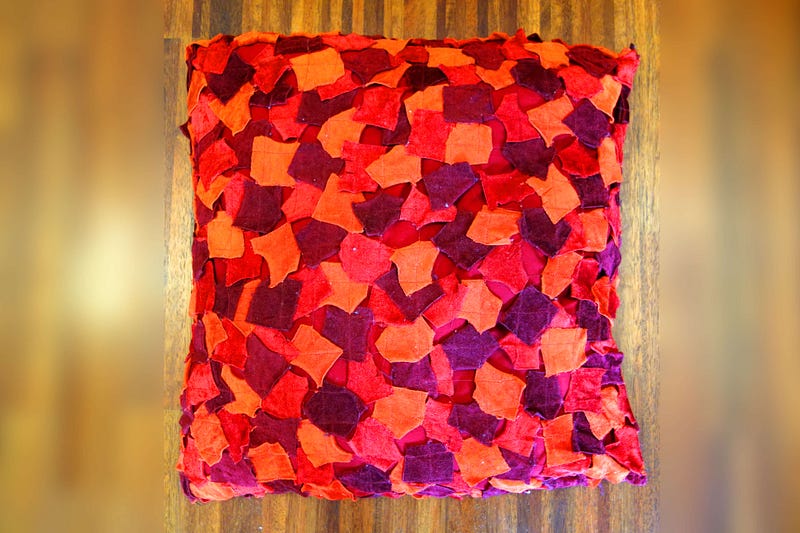
Example of how old fabric can be reused (© Erlijn van Genuchten)

2. Respinning

The secondary way to recycle clothes is respinning the fabric fibers. This is called mechanical recycling and can be applied to different materials, including polyester, nylon, cotton, and wool. But only when one material is used: when textiles contain more than one material, mechanical recycling is ineffective.

The mechanical recycling process consists of several steps:

  1. Scraps are collected, separated, and cleaned, so that the fabric is pure and does not contain any other materials.
  2. The scraps are reduced into smaller pieces by crushing, grinding, shredding, and pulling them.
  3. These smaller scraps are melted and put into a new shape by pressing the material in a mold in case of synthetic materials such as polyester; in case of organic materials such as cotton, the material is disentangled and spun or blended into new threads.
  4. The result is used as input in the fabric manufacturing process.

When performing these steps, the resulting new material can differ. Based on this difference, mechanical recycling can be categorized into two methods: open-loop and closed-loop recycling:

  • Open-loop recycling means that a different product is created from the recycled materials. When recycling old clothes, it is possible to create new materials by turning them back into fibers and use these fibers for non-woven fabrics. Examples are insulating materials for buildings, mattresses, and sound absorption. In this video, you can see how old jeans are turned into insulation materials (1:37–3:33):
  • Closed-loop recycling means that the same product is created from the recycled materials. When recycling old clothes, it is possible to use the fibers to create new threads. These threads can be used for weaving new garments. In contrast to open-loop products, closed-loop products can be recycled again and again. In this video, you can see how old clothes are used for creating new clothes (0:56–2:24):

As mechanical recycling shortens the textile fibers, the result is of lower quality and are less strong than the original material. That is why recycled fibers are often combined with new fibers to improve the quality.
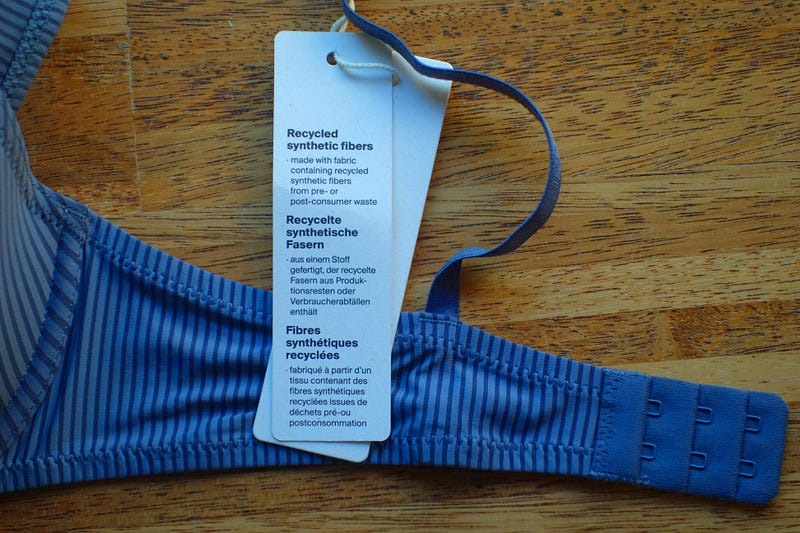
Mechanically recycled textiles are often combined with new material to improve the quality (© Erlijn van Genuchten)

3. Reconversing

The tertiary way to recycle clothes is reconversing the fabric fibers. This is called chemical recycling and means that the repetitive molecular structure of fibers are broken down into single molecules. This is like breaking down a brick wall into its single bricks. These single bricks, or single molecules, can then be used to build different buildings, or in this case materials.

Breaking down the wall, or textile, is done by using chemical reactions. Several methods can be used, including:

  • Glycolysis can for example be used to recycle polyethylene fibers. It converts the large textile molecules into small molecules by boiling old clothes in an ethylene glycol solution under high pressure. Ethylene glycol is a colorless, thick liquid that is also used as antifreeze. Metals are added to speed up the process, so that it only takes an hour. The advantage of this method is that it uses minimal energy.
  • Pyrolysis can be used for many different kinds of textiles, including hemp, cotton, polyethylene, and polyester. It converts the large textile molecules into small molecules by heating the textile to very high temperatures (600–800°C / 1112–1472°F) without using oxygen. The output of this method are different raw materials in solid, liquid, and gas form. The advantage is that it is a relatively simple process and the old clothes don’t require pretreatment.
  • Gasification is like pyrolysis performed under high temperatures (400–1000°C / 752–1832°F) without using oxygen. But in this case, a lot more gas is produced, as this is the desired end product. This gas is called synthesis gas, as it includes different gases such as hydrogen (H2), carbon dioxide (CO2), carbon monoxide (CO), and methane (CH4). It can be used to for example produce alcohols or used to generate electricity.
  • The hydrothermal method can be used to convert textiles into powder at high temperatures and under high pressure. Depending on the temperature, for example the particle size of the powder changes. This process needs water and organic acids for the chemical reaction. The advantage is that this process also doesn’t require pretreatment of old clothes and works already at low temperatures (280°C / 536°F).
  • Enzymatic hydrolysis is a biological method that uses microorganisms, environmentally friendly solvents and chemicals, and a lot of water to recycle textiles. This process can only be used for organic materials such as cotton and hemp, as the cellulose is extracted. Cellulose is the main substance in plant cell walls. But as other materials such as polyethylene can be separated during the process, clothes consistent of different types of materials can be recycled completely. In this video is explained and shown how enzymatic hydrolysis works and looks like (start at 0:54–4:05):

4. Burning

The quaternary way to recycle clothes is burning the fabric fibers. This is the least desirable solution, as important resources will be lost. Considering that fossil fuels are limited, for example cotton needs a lot of land and water to grow, and burning causes pollution, reusing the fibers is more environmentally friendly.

When burning is nevertheless used to recycle old textiles, the heat that is generated during the incineration process can be used to heat for example buildings. Also, the steam that is produced can be used to spin turbines to generate electricity.

Conclusion

So, clothes can be recycled by reusing the textile, by treating them mechanically and them for respinning, by treating them chemically and converting fibers into new materials, or by burning them and using the resulting energy.

How we can take action

Here are practical ideas of what you and I can do to support textile recycling:

  • bringing old clothes to the clothes recycling deposit or to a second hand shop
  • buying high quality clothes that last a long time
  • repairing clothes instead of buying new ones
  • buying second hand clothes
  • using same sports equipment/cloths for different sports

Using same trousers, t-shirt, and helmet for inline skating and cycling (© Erlijn van Genuchten)
  • using old textile scraps to create new products, such as a pillow case
  • saving elastics from worn out clothing to make other clothing fit better
  • washing clothes inside out so they wear of less quickly
  • refraining from buying new clothes when we have enough
  • making cloths smaller after losing weight instead of buying new clothes
  • drying clothes on a laundry rack instead of using drier (clothes not only wear off less quickly, this also saves energy and money; more ways to save money by saving energy)

Do you have further ideas of what you and I could do? Thank you in advance for leaving them in a comment to this question for us all to get inspired.

Related articles

How Excavated Waste Can Become Tomorrow’s Resource

You can find all recycling related articles on my recycling reading list.

Credit

This article is based on:

Damayanti, D., Wulandari, L. A., Bagaskoro, A., Rianjanu, A., & Wu, H. S. (2021). Possibility Routes for Textile Recycling Technology. Polymers, 13(21), 3834.

Patti, A., Cicala, G., & Acierno, D. (2020). Eco-sustainability of the textile production: Waste recovery and current recycling in the composites world. Polymers, 13(1), 134.

Xie, X., Hong, Y., Zeng, X., Dai, X., & Wagner, M. (2021). A Systematic Literature Review for the Recycling and Reuse of Wasted Clothing. Sustainability, 13(24), 13732.

Science
Recycling
Clothes
Waste Management
Environment
Recommended from ReadMedium