avatarVicki Larson

Free AI web copilot to create summaries, insights and extended knowledge, download it at here

2801

Abstract

addresses the concept of Other Significant Others (OSOs), a term developed by psychologist and <i>The All-Or-Nothing Marriage </i>author Eli Finkel based on research that found that relying on different people for various needs leads to happier relationships. It’s too onerous for one person, your romantic partner, to meet all your needs, an idea <i>The New I Do </i>also <a href="https://omgchronicles.medium.com/your-partner-shouldnt-fulfill-all-your-needs-really-2ebfbdf15ca8">addresses</a>.</p><p id="824f">Which is something Logan discovered when her husband was told he had to live in the hospital during six cycles of chemotherapy and two surgeries, and she had to head back to their place, alone. As she writes in her essay:</p><blockquote id="349c"><p>I looked into the future and saw night after night of coming home to an empty apartment, numbing myself with pizza and Netflix, and thought: We can’t do this by ourselves.</p></blockquote><p id="3a4c">And so they moved into a co-living community, which she says “felt like turning on the lights after months of living in the dark.” They were no longer facing all this hardship on their own— they had a village of OSOs.</p><p id="1900">Romantic partners tend to spend a lot of time focusing on each other and their world together. It’s understandable. We so often idealize romantic partnerships, marriage and the <a href="https://omgchronicles.medium.com/alloparenting-the-answer-to-our-child-care-crisis-1f28ba2f640e">nuclear family</a> that we forget how isolating they can be and how important non-romantic love is, whether from friends or family or both. Or maybe we don’t forget; we just don’t give it the time or make it a priority. And because of that, all of us are suffering — now, in the midst of a pandemic, more than ever.</p><p id="3244">There are numerous studies linking friendships to well-being as we age, and as New York Times health writer Jane Brody <a href="https://well.blogs.nytimes.com/2016/06/27/the-challenges-of-male-friendships/?partner=rss&amp;emc=rss">writes</a>, “family relationships had little if any impact on longevity, but friendships increased life expectancy by as much as 22 percent.”</p><p id="9d22">As someone who has been married and divorced twice, I could not have made it through the hard and good times without my village, whom I call the <a href="https://www.washingtonpost.com/news/soloish/wp/2018/04/04/if-youre-single-who-is-your-person/">Lovelies</a>. While the pandemic has impacted the ways and how often we can get together, we still do that — outside, masked and distanced — as well as check in with each other by text or phone frequently. And we talk of creating our own co-living community so we can care for each other as we age.</p><p id="1639">I have no doubt that Logan’s book (y

Options

ou can pre-order it <a href="https://www.simonandschuster.com/books/How-to-Not-Die-Alone/Logan-Ury/9781982120627">here</a>) will help many singles who want a romantic partner find one for the long haul. But perhaps the biggest takeaway from her book, one she’s now discovered firsthand, is that finding and nurturing OSOs is just as important — perhaps even more important.</p><p id="3f9e"><i>Hey, I’m working on a book on changing the narrative about middle-aged and older women. Interested? Follow me here, on <a href="https://medium.com/@OMGchronicles">Medium</a>, and on <a href="https://twitter.com/OMGchronicles">Twitter</a>, <a href="https://www.facebook.com/vlarson">Facebook</a> or <a href="https://www.instagram.com/omgchronicles/">Instagram</a>, and let’s do this. Want to learn how to create a marriage based on your values and goals? (Of course you do!) Read <a href="http://thenewidobook.com/">The New I Do: Reshaping Marriage for Skeptics, Realists and Rebels</a> (Seal Press). You can support your local indie bookstore (please do) or order it on <a href="http://www.amazon.com/The-New-Do-Reshaping-Marriage/dp/1580055451">Amazon</a></i>. <i>And we’re now on <a href="https://www.audible.com/pd/The-New-I-Do-Audiobook/1549152815">Audible</a>.</i></p><p id="2ed5"><i>For more of the good stuff, follow <a href="https://medium.com/fourth-wave">Fourth Wave</a>, where we’re changing the world for the better, one story at a time.</i></p><p id="00c7"><i>For more by this author, try:</i></p><div id="0d47" class="link-block"> <a href="https://readmedium.com/women-marriage-is-not-a-financial-plan-f2379d207b4b"> <div> <div> <h2>Women, Marriage Is Not A Financial Plan</h2> <div><h3>And please don’t leave the financial decisions to your spouse</h3></div> <div><p>medium.com</p></div> </div> <div> <div style="background-image: url(https://miro.readmedium.com/v2/resize:fit:320/1*L1iNtYU4-OsHJGJBvc1fCA.jpeg)"></div> </div> </div> </a> </div><div id="5de5" class="link-block"> <a href="https://readmedium.com/stop-telling-older-women-that-theyre-invisible-9e7315e1ba58"> <div> <div> <h2>Stop Telling Older Women That They’re Invisible</h2> <div><h3>It’s damaging to women’s physical, emotional, financial, romantic and sexual health</h3></div> <div><p>medium.com</p></div> </div> <div> <div style="background-image: url(https://miro.readmedium.com/v2/resize:fit:320/1*slcDH4b5NhlYuFfJ2mdnsg.jpeg)"></div> </div> </div> </a> </div></article></body>

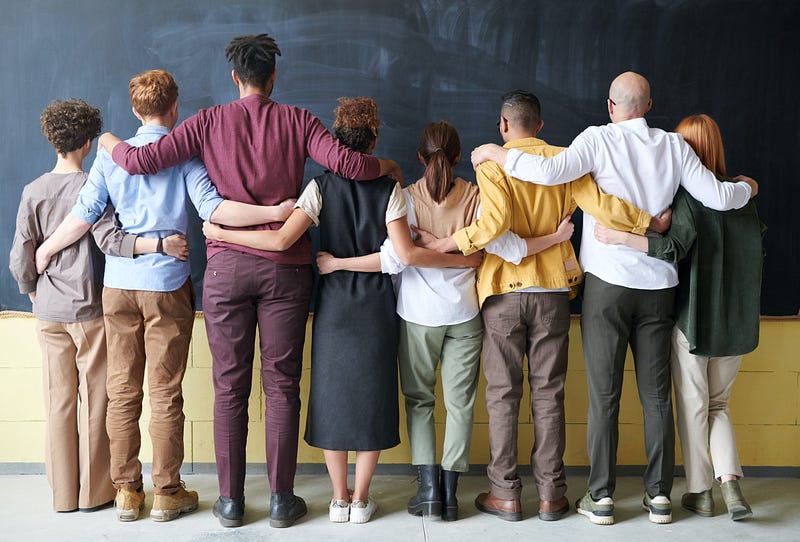
Fauxels/Pexels

How Not To Die Alone — Forget Marriage, Create Community

While there’s much to be said about having a romantic partner, we all need more than one person to care about us and care for

How to Not Die Alone: The Surprising Science That Will Help You Find Love, the first book by behavioral scientist turned dating coach Logan Ury, will be published early in the month many of us associate with love — February.

I met Logan a few years ago, when she and her friend Hannah Hughes led a workshop using design concepts to create a more conscious way of coupling. One of the first things they discussed was relationship contracts — a way for couples to be more intentional about their relationship and a concept my co-author and I propose in our book, The New I Do: Reshaping Marriage for Skeptics, Realists and Rebels.

In How to Not Die Alone, Logan walks want-to-be-partnered people through ways to be more intentional about finding a long-term romantic partner, whether to wed or not. Someone who’ll have your back, and vice versa, for the long haul.

It’s a smart, data-driven book that will be helpful for anyone who wants that. I’ll admit that I hate the title — the idea of dying alone is something that often causes people to act out of fear and get into or stay in unhealthy relationships. And while it may seem more likely that people who are married or live together may have their loved one nearby at the moment when their life changes, there’s no guarantee, evidenced by the fact that the very married former Supreme Court Justice Antonin Scalia died far from home, alone, despite having a wife of 56 years, nine children and 36 grandchildren.

Rather than fear dying alone and expecting a romantic partner to save you from that, it’s more important to create a life that isn’t lonely, which means having more than just a romantic partner; it means having community. And that’s something Logan learned this past year, when her fiance developed a rare form of bone cancer that led to a quicker-than-desired wedding just days before his foot amputation, a story she shares in a recent heartfelt Modern Love essay.

In her book, Logan addresses the concept of Other Significant Others (OSOs), a term developed by psychologist and The All-Or-Nothing Marriage author Eli Finkel based on research that found that relying on different people for various needs leads to happier relationships. It’s too onerous for one person, your romantic partner, to meet all your needs, an idea The New I Do also addresses.

Which is something Logan discovered when her husband was told he had to live in the hospital during six cycles of chemotherapy and two surgeries, and she had to head back to their place, alone. As she writes in her essay:

I looked into the future and saw night after night of coming home to an empty apartment, numbing myself with pizza and Netflix, and thought: We can’t do this by ourselves.

And so they moved into a co-living community, which she says “felt like turning on the lights after months of living in the dark.” They were no longer facing all this hardship on their own— they had a village of OSOs.

Romantic partners tend to spend a lot of time focusing on each other and their world together. It’s understandable. We so often idealize romantic partnerships, marriage and the nuclear family that we forget how isolating they can be and how important non-romantic love is, whether from friends or family or both. Or maybe we don’t forget; we just don’t give it the time or make it a priority. And because of that, all of us are suffering — now, in the midst of a pandemic, more than ever.

There are numerous studies linking friendships to well-being as we age, and as New York Times health writer Jane Brody writes, “family relationships had little if any impact on longevity, but friendships increased life expectancy by as much as 22 percent.”

As someone who has been married and divorced twice, I could not have made it through the hard and good times without my village, whom I call the Lovelies. While the pandemic has impacted the ways and how often we can get together, we still do that — outside, masked and distanced — as well as check in with each other by text or phone frequently. And we talk of creating our own co-living community so we can care for each other as we age.

I have no doubt that Logan’s book (you can pre-order it here) will help many singles who want a romantic partner find one for the long haul. But perhaps the biggest takeaway from her book, one she’s now discovered firsthand, is that finding and nurturing OSOs is just as important — perhaps even more important.

Hey, I’m working on a book on changing the narrative about middle-aged and older women. Interested? Follow me here, on Medium, and on Twitter, Facebook or Instagram, and let’s do this. Want to learn how to create a marriage based on your values and goals? (Of course you do!) Read The New I Do: Reshaping Marriage for Skeptics, Realists and Rebels (Seal Press). You can support your local indie bookstore (please do) or order it on Amazon. And we’re now on Audible.

For more of the good stuff, follow Fourth Wave, where we’re changing the world for the better, one story at a time.

For more by this author, try:

Love
Relationships
Friendship
Community
Relationships Love Dating
Recommended from ReadMedium