avatarJanice Macdonald

Free AI web copilot to create summaries, insights and extended knowledge, download it at here

3319

Abstract

e the more anodyne stories about French food or village life.</p><p id="bc23">All the messy complicated personal stuff, captured in diaries that I keep for my eyes only, clamouring to be part of the things I write about — but meeting continued resistance.</p><figure id="ed93"><img src="https://cdn-images-1.readmedium.com/v2/resize:fit:800/1*uh6gCVPISOw8kwDloSEtqg.jpeg"><figcaption>My messy office as a metaphor for my life (author’s photo)</figcaption></figure><p id="7d4d">If I didn’t write, the messy parts wouldn’t matter. I could say nothing about certain things and leave it at that. But I write to sort out my feelings, articulate struggles and gain insight and perspective. I write to connect with others. When something I’ve written on Medium strikes a responsive chord with readers, it’s incredibly gratifying to know that I’ve helped or inspired in some small way. As a reader, I find the stories I’m most drawn to are those with emotional depth, stories that give me the feeling that I <i>know</i> the writer on more than a superficial level.</p><p id="5d2b">Memoirist and author Mary Karr urges a deep emotional dive into the experiences we write about. The goal is to take the reader along with you. “This means being very open and exposed, and vulnerable,” she writes. “If you cannot go into the memory to write about it then you are not ready to write it yet.”</p><p id="2ce3">But I find it more than a little intimidating to write about life’s messier parts. <a href="undefined">Kristina God</a>, who has also written on the topic, is probably right that these parts make for powerful reading, but it also feels like a gamble. How will readers react? What if they disapprove of these revelations, or worse still, find them boring and self-indulgent?</p><p id="440a">French Writer & Filmmaker Emmanuel Carrère writes about all kinds of people — a murderer, a Russian fascist, his mother, her father and the women in his romantic life. He also writes novels that walk a fine line between fact and fiction. The central character in one bears such a striking similarity to his ex-wife that the ex accused him of writing about her without her consent.</p><p id="ab93">This gave him second thoughts. “To write bad things about yourself is one thing. You can write whatever your want about yourself, but when you write about others, there’s a huge responsibility.”</p><p id="eafe">But when we write about ourselves, aren’t we also inevitably writing about others?</p><figure id="53c6"><img src="https://cdn-images-1.readmedium.com/v2/resize:fit:800/1*XmA-moyasa0NFhk_ra5L0g.jpeg"><figcaption>(author’s photo) How much light do you shed?</figcaption></figure><p id="a082">And that’s my dilemma. On the one hand, I’m happy to write stories about the lighter side of life — France offers a wealth of subject matter, I can’t imagine ever exhausting it, but . . . there’s this little voice urging me to write about the messy parts. Meanwhile, on the opposing side are the people in my life who may wish I’d write nothing at all about the messy parts.</p><p id="25d4">Showing my age here, but remember Ricky Nelson’s song <b>Garden Party?</b> The lyrics were based on his personal experience. He’d played all the familiar hits, the crowd pleasers that the audience expected of him. Then he launched into somet

Options

hing new and unexpected and the crowd booed.</p><p id="e748">The last lines of the song show his conclusion.</p><blockquote id="1a3e"><p>You see, you can’t please everyone So you got to please yourself- <i>Rick Nelson</i></p></blockquote><p id="e99a">What are your thoughts on this? I’d love to hear from you — especially if you’re writing a memoir and struggle, or have struggled, with similar issues.</p><p id="38c9">Some links to other Medium stories:</p><div id="c6fb" class="link-block"> <a href="https://readmedium.com/walking-on-eggshells-or-marcher-sur-des-oeufs-8f50bc1f0b63"> <div> <div> <h2>Walking On Eggshells or Marcher Sur Des Oeufs</h2> <div><h3>Literally or figuratively, egg shells are easily crushed</h3></div> <div><p>medium.com</p></div> </div> <div> <div style="background-image: url(https://miro.readmedium.com/v2/resize:fit:320/1*HR94wLBIQt_jLt0wPfRaVg.jpeg)"></div> </div> </div> </a> </div><div id="40ac" class="link-block"> <a href="https://readmedium.com/jean-paul-sartre-and-simone-de-beauvoir-had-a-weird-but-intriguing-relationship-694f9530de5c"> <div> <div> <h2>Jean-Paul Sartre and Simone de Beauvoir Had A Weird But Intriguing Relationship .</h2> <div><h3>A profound, but absurd question.</h3></div> <div><p>medium.com</p></div> </div> <div> <div style="background-image: url(https://miro.readmedium.com/v2/resize:fit:320/1*5c82NU74Zada-FNYwYq_UA.png)"></div> </div> </div> </a> </div><div id="2fa6" class="link-block"> <a href="https://readmedium.com/as-the-first-year-of-my-french-adventure-wound-down-a-couple-of-things-to-accomplish-before-my-310a7d696b6a"> <div> <div> <h2>As The First Year Of My French Adventure Wound Down, A Couple Of Things To Accomplish Before I…</h2> <div><h3>And an unexpected distraction (number 9,998)threw me off course. . .</h3></div> <div><p>medium.com</p></div> </div> <div> <div style="background-image: url(https://miro.readmedium.com/v2/resize:fit:320/1*FrwxlG_tB8nokIVnXJO9zw.jpeg)"></div> </div> </div> </a> </div><p id="f541">If you’d like to take me along on your walk, or wherever you’d like to go. Just press the listen button at the top of the story to hear it read aloud.</p><div id="2861" class="link-block"> <a href="undefined"> <div> <div> <h2>Join Medium with my referral link — Janice Macdonald</h2> <div><h3>As a Medium member, a portion of your membership fee goes to writers you read, and you get full access to every story…</h3></div> <div><p>janicemacdonald.medium.com</p></div> </div> <div> <div style="background-image: url(https://miro.readmedium.com/v2/resize:fit:320/0*27V-9IU9BDCOe45D)"></div> </div> </div> </a> </div></article></body>

WRITING & SELF DISCLOSURE

How Much Of The Messier Side of Life Do We Reveal In Our Writing?

Is the desire to let it all hang out a courageous effort to gain deeper understanding, or self-indulgent, inconsiderate, maybe even boring?
(author’s photo)

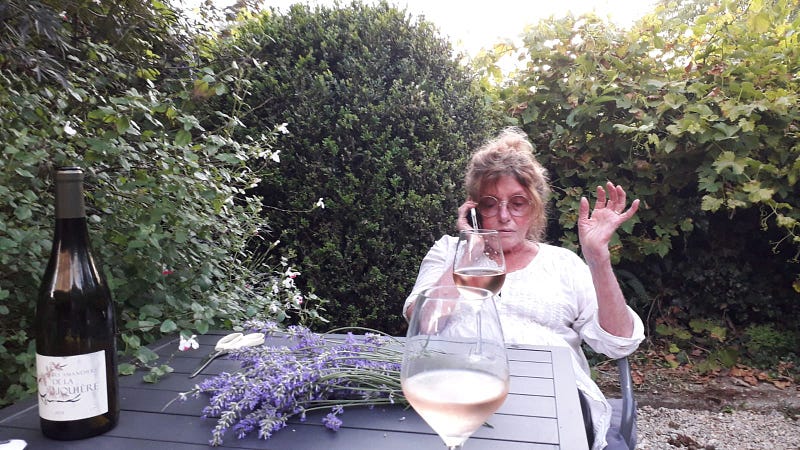
Earlier this year, as part of a series, A New Start At 60, the Guardian published an article about my decision to move to France at 68, alone and knowing no one in the country. In the Zoom interview, I talked about wanting to prove to myself that I wasn’t too old to try something completely different, the various obstacles I’d encountered and my day-to-day life in France — much like the subject matter I write about here on Medium.

Then the writer moved on to a more personal matter — since I’d come to France alone, was I still alone? In a relationship? Was I looking? I hesitated. Everything else up to that point had been easy to answer. Now we were moving into more difficult territory. I thought for a moment, then to avoid dropping bombshells said nothing about various personal relationships that constitute an important part of my life here in France.

I also said nothing about my estranged husband — who accompanied me to France for a few weeks, then returned to the US where he went on with his life sending me nightly texts about his restless leg syndrome and the various broken and penniless women he’d moved into the house we once shared, thus rescuing them from drugs, alcohol and probably the streets. And nothing about my five-year relationship with a much younger man, which seemed at first a casual fling but became far more significant and life-affirming than I could have ever imagined.

Not only did I not share any of that with the Guardian, I didn’t, and still don’t, share details of my personal life with my estranged husband — including the four-year relationship I’m now in. Perhaps the details of why, after a couple of decades of living in different states and now on different continents, we’re not divorced would be an interesting read, but I don’t write about that either.

While I have described the relationship I enjoy with my daughter, I have written nothing about the difficult and painful relationship (or lack of) with my son. But it’s all there in the back of my mind each time I write the more anodyne stories about French food or village life.

All the messy complicated personal stuff, captured in diaries that I keep for my eyes only, clamouring to be part of the things I write about — but meeting continued resistance.
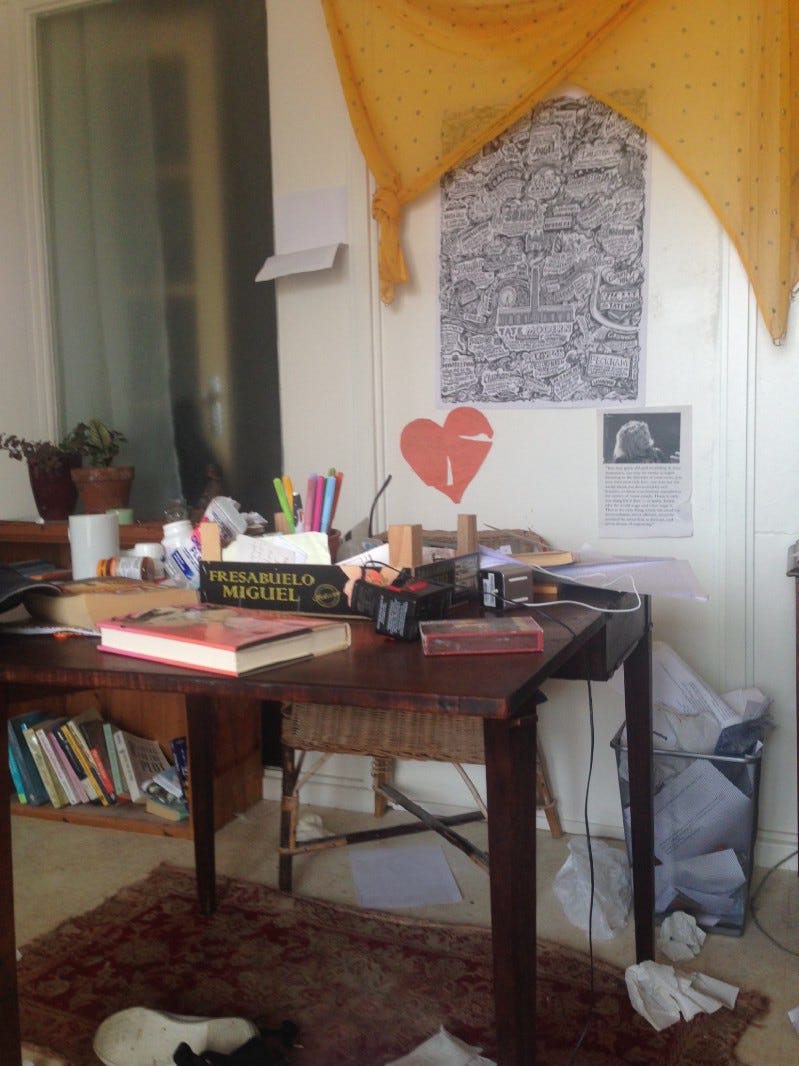
My messy office as a metaphor for my life (author’s photo)

If I didn’t write, the messy parts wouldn’t matter. I could say nothing about certain things and leave it at that. But I write to sort out my feelings, articulate struggles and gain insight and perspective. I write to connect with others. When something I’ve written on Medium strikes a responsive chord with readers, it’s incredibly gratifying to know that I’ve helped or inspired in some small way. As a reader, I find the stories I’m most drawn to are those with emotional depth, stories that give me the feeling that I know the writer on more than a superficial level.

Memoirist and author Mary Karr urges a deep emotional dive into the experiences we write about. The goal is to take the reader along with you. “This means being very open and exposed, and vulnerable,” she writes. “If you cannot go into the memory to write about it then you are not ready to write it yet.”

But I find it more than a little intimidating to write about life’s messier parts. Kristina God, who has also written on the topic, is probably right that these parts make for powerful reading, but it also feels like a gamble. How will readers react? What if they disapprove of these revelations, or worse still, find them boring and self-indulgent?

French Writer & Filmmaker Emmanuel Carrère writes about all kinds of people — a murderer, a Russian fascist, his mother, her father and the women in his romantic life. He also writes novels that walk a fine line between fact and fiction. The central character in one bears such a striking similarity to his ex-wife that the ex accused him of writing about her without her consent.

This gave him second thoughts. “To write bad things about yourself is one thing. You can write whatever your want about yourself, but when you write about others, there’s a huge responsibility.”

But when we write about ourselves, aren’t we also inevitably writing about others?
(author’s photo) How much light do you shed?

And that’s my dilemma. On the one hand, I’m happy to write stories about the lighter side of life — France offers a wealth of subject matter, I can’t imagine ever exhausting it, but . . . there’s this little voice urging me to write about the messy parts. Meanwhile, on the opposing side are the people in my life who may wish I’d write nothing at all about the messy parts.

Showing my age here, but remember Ricky Nelson’s song Garden Party? The lyrics were based on his personal experience. He’d played all the familiar hits, the crowd pleasers that the audience expected of him. Then he launched into something new and unexpected and the crowd booed.

The last lines of the song show his conclusion.

You see, you can’t please everyone So you got to please yourself- Rick Nelson

What are your thoughts on this? I’d love to hear from you — especially if you’re writing a memoir and struggle, or have struggled, with similar issues.

Some links to other Medium stories:

If you’d like to take me along on your walk, or wherever you’d like to go. Just press the listen button at the top of the story to hear it read aloud.

Writing
Memoir
Mary Karr
Life Lessons
Truth
Recommended from ReadMedium