
ALL NEW 2024 EDITION
How Much Do Publishers Pay You For A Fiction Or Nonfiction Book?
Learn how much money went to authors from Britney Spears and Wimpy Kid’s creator to a Nobel laureate
Last week a journalist friend had the kind of conversation with a literary agent that writers dream of.
One of my friend’s sources, an eminent lawyer, wanted her to ghostwrite his memoir, and another reporter had put her in touch with his agent. The agent spoke with the would-be authors, loved their idea, and offered to represent them.
My friend was game. But she knew the project could take months and wondered if I could answer a question before she signed a contract with the agency: “How much of an advance does a non-fiction book typically get?”
I told my friend an updated version of what I’d said in my 2023 story, “What Do Publishers Really Pay You for a Book?” The answer involves a dizzying array of variables that makes predictions risky.
My friend is a wonderful writer who could paper a bathroom wall with her journalism awards. But when it comes to how much publishers will pay, “How good is the book?” typically matters less than, “How much of a market exists for this book?”
You can write a brilliant memoir, but if publishers believe the market for it consists mainly of the 67 third cousins who attend your annual family barbecue in Dead Lake, Utah, you may be cooked along with the Beanie Weenies.
Still, there’s a perverse comfort in knowing what other writers have — or haven’t — received as advances.
If you can’t sell your book, isn’t it reassuring to know that Stephen Crane couldn’t get up-front money for The Red Badge of Courage because his publisher thought he didn’t have enough of a reputation to justify it?
In that spirit, I’ve updated my 2023 list of what publishers pay as advances to authors.
Like the original, it isn’t intended to be definitive or comprehensive. It’s a list of amounts I’ve learned of in the past year that mainstream publishers paid to living or dead authors, and it includes background on those figures that I found credible after covering publishing for a daily newspaper. I’ve converted pounds to dollars but not yesterday’s dollars to today’s.
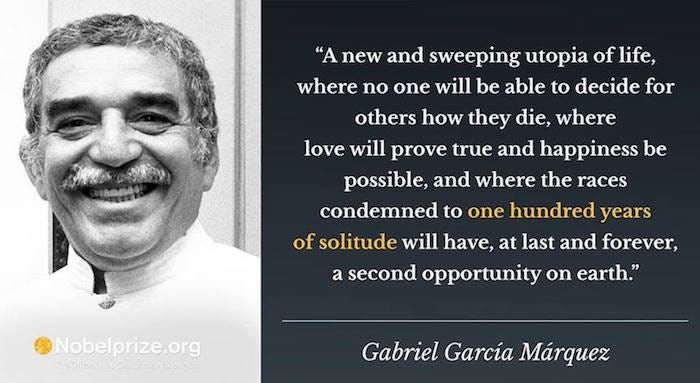
Gabriel García Márquez, ‘One Hundred Years of Solitude’ — $5,000
Gabriel García Márquez had to sell his car to support his family while writing the masterwork that would help him win the Nobel Prize, One Hundred Years of Solitude. His wife had to ask their butcher and baker for food on credit.
By that standard, he hit jackpot when Harper & Row offered $5,000 for the American edition of One Hundred Years of Solitude, “having paid $1,000 for the four previous books,” according to an in interview in Vanity Fair’s Writers on Writing. The book sold more than 50 million copies worldwide and rightly became known as one of the greatest novels of the second half of the 20th century.
Mick Jagger, unpublished memoir — £2 million ($2,536,330)
You often read about the blockbuster advances that go to literary supernovas, such as the reported $100–$150 million that Hachette offered to James Patterson for seven future books. Less common are reports of authors who gave their up-front money back after a deal went awry.
Thomas Hardin writes of a fiasco involving Mick Jagger in his 2023 biography of the eminent British publisher George Weidenfeld, the co-founder of Weidenfeld & Nicolson. Apparently Jagger’s planned, autobiography didn’t make it into print after being pre-sold worldwide.
A critic summed up the disaster in a review:
“The manuscript wasn’t fit to publish, said both W&N and the American firm, Bantam. Jagger’s response was: ‘I just said I can’t be bothered with this, and gave the money back.’ ”
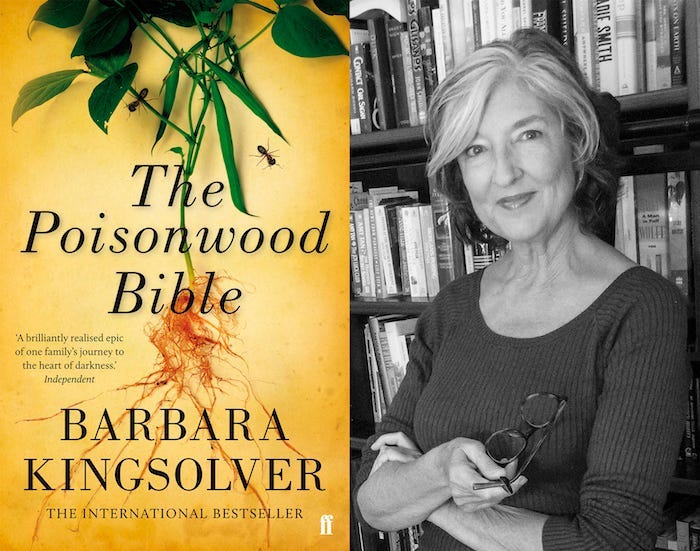
Barbara Kingsolver, ‘The Poisonwood Bible’ — $1 million
After several books, Barbara Kingsolver was still scraping by as a writer when her 1993 novel Pigs in Heaven became a New York Times bestseller.
Her next novel, The Poisonwood Bible, came out five years later after it sold for a reported $1 million advance. That figure sounds suspiciously round, but the money — whatever the exact amount — helped Kingsolver establish and fund the Bellwether Prize, a cash award of $25,000 for a work of fiction that deals with social-justice issues. In 2023 she won the Pulitzer Prize for fiction for Demon Copperhead, a novel inspired by David Copperfield.
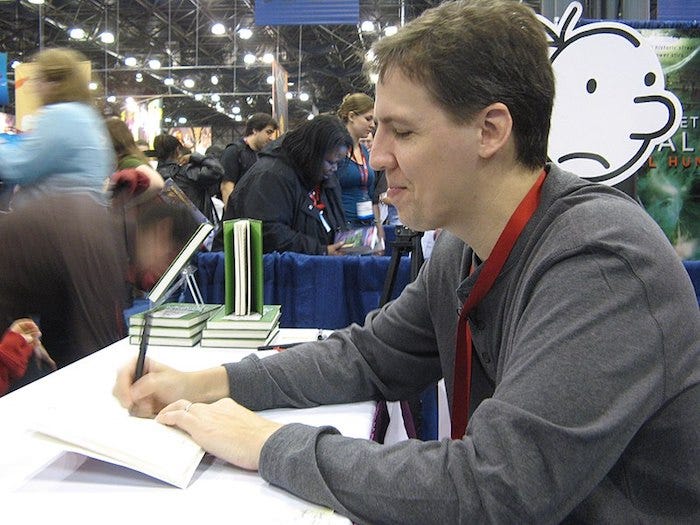
Jeff Kinney, ‘Diary of a Wimpy Kid’ — $1,000+
Cartoonist Jeff Kinney has endeared himself to middle school weaklings worldwide with his books about a boy who tells illustrated stories of his life in the Diary of a Wimpy Kid books.
But neither gawky adolescents nor publishers seemed at first to realize that the series could become a global phenomenon that involved book tours of China, Australia, and beyond.
The first bookstore signings for Diary of a Wimpy Kid drew “half a person” on average, Kinney told Publishers Weekly: “Sometimes there would be one; sometimes there would be nobody.”
Even finding a publisher took legwork, the cartoonist said:
“Kinney roamed the aisles of New York Comic-Con with his sketchbook in hand, hoping to find an editor who would publish the diary he had written and illustrated in the voice of a middle-school misfit named Greg Heffley. Abrams took it on — cautiously.”
Kinney recalled that the book had “a four-figure advance” and a modest 15,000 first printing: “And a quarter of that was for the Junior Literary Guild.”
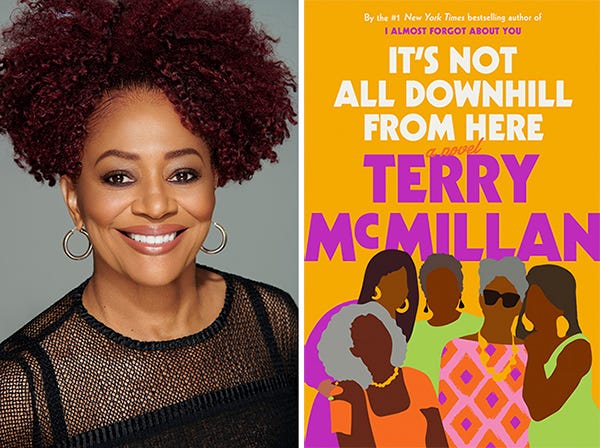
Terry McMillan, ‘How Stella Got Her Groove Back’ — $6 million
Terry McMillan was working as a night typist at law firm when her first novel, Mama, came out 1987 and the publisher wouldn’t spring for the splashy book tour she wanted.
Instead of folding her tents, McMillan used a word processor at her firm to write a geyser of letters to places that attracted black readers — bookstores, news media, and groups at historically black colleges and universities — urging them to promote her novel and to ask her speak to them.
Aided by that campaign, the first printing of Mama sold out quickly. McMillan built on that momentum with her hit novel Waiting to Exhale, which had Whitney Houston as a star of its movie version. Alpine sales figures helped McMillan land a $6 million deal for her fourth novel, How Stella Got Her Groove Back, and write future books like It’s Not All Downhill From Here.
Rasheed Newson, ‘My Government Means to Kill Me’ — $250,000
Novels with queer themes or characters once struggled to find publishers, let alone earn six-figures. But recent deals suggest the tide is turning.
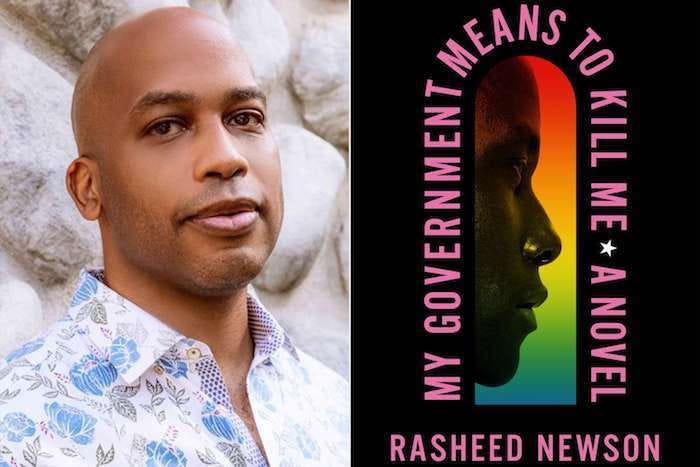
A case in point: Rasheed Newson’s My Government Means to Kill Me, a coming-of-age novel about a gay, black man in the 1980s.
Newson’s 2022 book sold for $250,000 to the Flatiron imprint of Macmillan and, among other honors, became a Lambda Literary Award finalist. Newson is also making his mark in television as an executive producer of the Peacock original series “Bel-Air.”
Chuck Palahniuk, ‘Fight Club’ — $7,000
Chuck Palahniuk earned a $7,000 advance for his 1996 Fight Club, the first novel he published but the second he wrote, published by the venerable New York firm of W.W. Norton.
He might have been lucky to receive any of its subsequent proceeds. He later became the victim of an embezzlement scheme by a bookkeeper at his former literary agency. Publishers Weekly wrote of the disaster:
“Forensic accounting to determine the full extent of the crime only went back five or six years, according to Palahniuk; ‘In that time they figured out I was owed well over a million dollars,” he says.’ ”
Palahniuk reflects on some of his experiences as a writer in his 2020 memoir, Consider This.
Britney Spears, ‘The Woman in Me’ — $12–$15 million
Britney Spears sold her memoir quickly after a court ended a 13-year-conservatorship that gave her father heavy control over her affairs.
Simon & Schuster bought her The Woman in Me for an estimated $12–15 million, a near-record sum even for a global pop star. A $15 million deal would have tied with Bill Clinton’s advance for My Life as the highest paid by a U.S. publisher for a single title.
Bob Woodward and Carl Bernstein, ‘All the President’s Men’ — $55,000
Bob Woodward and Carl Bernstein were depressed when they met with Dick Snyder, then an executive vice-president of Simon & Schuster, at a Washington hotel on a rainy day in 1972.
They had learned of a conspicuous error in their latest story about the Watergate break-in for the Washington Post.
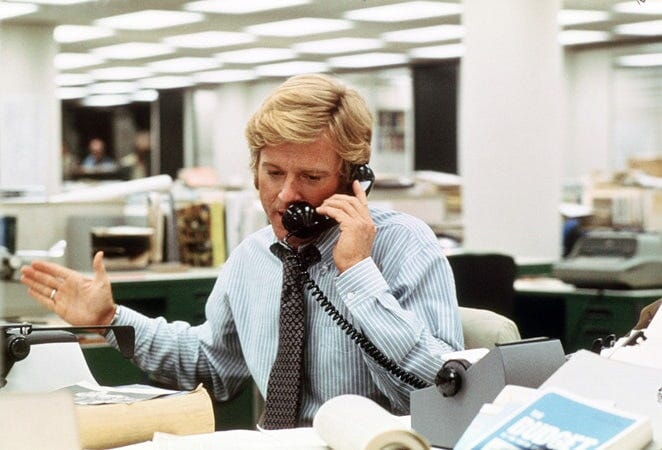
Given that mistake, another publisher might have reconsidered his $55,000 bid for the young reporters’ book, All the President’s Men, a journalism landmark that became a movie with Robert Redford as Woodward.
“But Dick looked us straight in the eye and he was very direct and I felt we’d get his total backing,” Woodward told Roger Cohen of the New York Times. “I was right. If he’d ever ducked, or flinched or blinked, I’d say so. But he never has. He’s brave. He cares. He always does what he says he’ll do. And he’s tough, tough, tough.”
Jan is an award-winning critic and journalist who has been the book columnist for Glamour and the book editor of a large daily newspaper. She has spoken at many writers’ conferences and sold three books to mainstream publishers for amounts ranging from $10,000 to $25,000.
You might like my 2023 story about what publishers pay you, which lists more than 60 additional advances not covered in this 2024 edition, or another of mine that describes the habits that led to some of that up-front money:


