
How Lynching is Related to Sexism
And why Ida B. Wells is my new hero
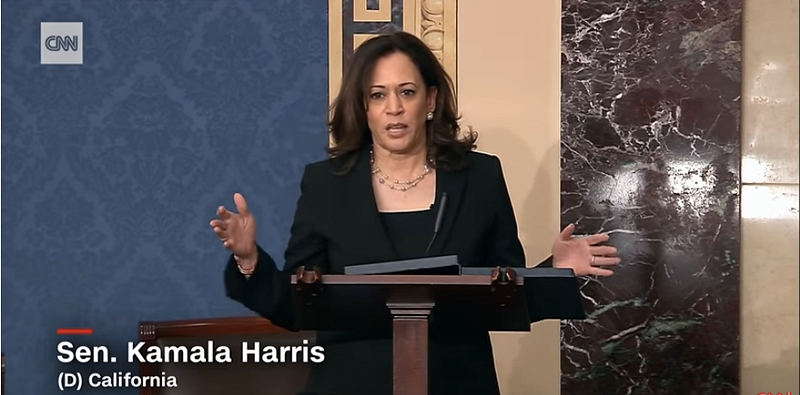
When I read that Senator Rand Paul obstructed a bill making lynching illegal while complaining that it included minor injury in the definition, I had to ask myself, what does the word “lynching” mean?
As an older white woman with a California public school education, I was never directly taught much about black history, but I absorbed the understanding that lynching means illegal hanging of a black person by vigilantes. I associated the hangman’s noose with the verb “lynch.” Turns out, that’s not correct.
Merriam-Webster defines lynch as “to put to death (as by hanging) by mob action without legal approval or permission.” So any murder by a mob is a lynching — not just a hanging, and not just a murder of a black person. But federal law is different than the English language.
What’s in the Antilynching Act
The proposed Emmet Till Antilynching Act “would add a new section called ‘lynching’ to the civil rights statute to deal with group violence meant to intimidate people of color or other protected groups,” according to the New York Times, which I went to for clarification about Rand Paul’s objection despite my despite my deep disappointment in the “paper of record” of late.
The offense would be classified as a conspiracy by two or more people to cause bodily harm in connection with a hate crime, with penalties up to life in prison if convicted.
The history of the Act is confusing. The Senate passed it unanimously last year, but the House changed its name, which sent it back to the Senate, where Paul had a change of heart. Black senators (all three of them: Democrats Kamala Harris and Cory Booker and Republican Tim Scott) hoped to pass the historic bill on the day of George Floyd’s funeral.
“It may not cure the ills so many are protesting about, but God, it could be a sign of hope,” Booker said in a moving response to Paul’s lone objection.
Congress has tried and failed more than 240 times in years past to pass anti-lynching legislation. Many thought this could be the year it succeeded. But so far, no.
How Lynching and Sexism are Related
I was trying to digest the bitter lynching “debate” when I stumbled on a piece by Vicki Larsen called Kellie Chauvin And The Problem With Benevolent Sexism. I was born a feminist, but haven’t studied it in school, and had never heard the term “benevolent sexism” before. As it turns out, there are two kinds of sexism: hostile sexism in which people believe women are inferior to men, and benevolent sexism in which they ascribe seemingly positive attributes to women which nonetheless contribute to gender inequality.
Somewhere in the story Larsen makes the point that lynching is connected to benevolent sexism, since Southern whites often claimed they were protecting white women while committing unspeakable acts of violence on the bodies of black men.
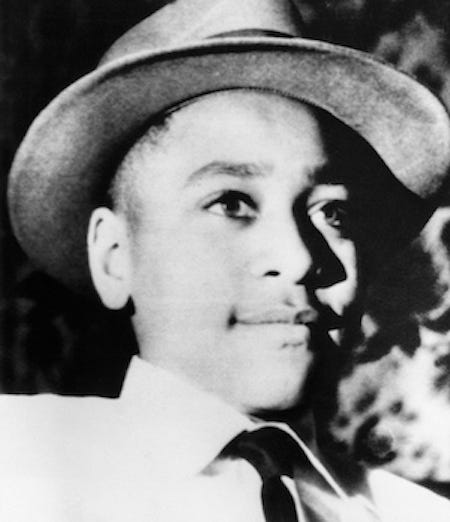
The story of Emmet Till, for whom the latest failed bill is named, is a perfect example of benevolent sexism. According to his cousin’s report in the classic Civil Rights documentary Eyes on the Prize, 14-year-old Till said “Bye, baby” to a white woman on a dare from a playmate when he was buying candy in a Mississippi store.
For that crime he was kidnapped, terrorized, beaten beyond recognition, tied to a heavy weight and dropped in the Tallahatchie River by the woman’s husband and brother-in-law, who fearlessly went to his uncle’s home to abduct the boy by gunpoint in the middle of the night, yet were acquitted of the murder by an all-white jury in that small town.
Later, they shamelessly sold the story of the murder to a magazine, knowing they were protected by the legal prohibition against “double jeopardy,” since they’d already been tried and acquitted of the crime.
There are two kinds of sexism: hostile sexism in which people believe women are inferior to men, and benevolent sexism in which they ascribe seemingly positive attributes to women which nonetheless contribute to gender inequality.
Sadly, I didn’t learn the story of Emmet Till until I became a high school English teacher and was looking for materials to support teaching To Kill a Mockingbird to my freshmen class. The first tape of the Eyes on the Prize series, called “Awakenings (1954–1956),” tells his story and that of Rosa Parks in riveting original news footage of both the Till trial and the Montgomery bus boycott and interviews with participants, including key players like Till’s beautiful and brave mother, tired and fed up Rosa Parks, and a fiery and heartbreaking young Martin Luther King, Jr. I can’t recommend the film enough.
The Amy Cooper connection
When I commented on Larsen’s story, thanking her for opening my eyes to the intersection of lynching and sexism, I got this erudite response from librarian Lakitha Tolbert.
The benevolent sexism of white men has been the impetus for many of the numerous lynchings that have occurred in American history.
White men’s belief in the innocence, and fragility, of white women, made white women’s claims of black male disrespect all the more believable, and what’s worst, plenty of white women knew this. There have been plenty of white women who understood that white men’s benevolent sexism would come to their defense, if they made accusations against black men.
You can see it best illustrated in the behavior of Amy Cooper, the lady from the park, who threatened to call the police on a Black birdwatcher. She is a good example of the interrelated nature of these two issues.Amy Cooper, the woman in New York’s Central Park who called 911 when a black man (a birdwatcher) asked her to leash her dog, weaponized benevolent sexism in an attempt to make herself more powerful. His video of her fabricated hysterics went viral in May.
I’ve noticed this kind of behavior in women before — or at least seen it in movies — but never really analyzed it. Yet even if benevolent sexism gives women power by proxy, it still hurts them by convincing them to use others rather than stand up for themselves — corrupting their integrity and reinforcing helplessness. It also promotes racism, as seen in both the Till and Cooper stories, which supports the hypothesis embraced by fourth wave feminism that all kinds of oppression intersect.
The Revolt Against Chivalry
Larsen’s story also mentioned Jessie Daniel Ames, a woman from Texas who led an anti-lynching campaign in the 1920s and ’30s. I was excited to learn about a new (to me) woman hero, after a lifetime of hearing stories about heroic men.
A book about Ames’ life called Revolt Against Chivalry gives a promising synopsis, saying she “fused the causes of social feminism and racial justice in the South” primarily through a group she founded called The Association of Southern Women for the Prevention of Lynching. Here’s their pledge.
We declare lynching is an indefensible crime, destructive of all principles of government, hateful and hostile to every ideal of religion and humanity, debasing and degrading to every person involved…[P]ublic opinion has accepted too easily the claim of lynchers and mobsters that they are acting solely in defense of womanhood. In light of the facts we dare no longer to permit this claim to pass unchallenged, nor allow those bent upon personal revenge and savagery to commit acts of violence and lawlessness in the name of women. We solemnly pledge ourselves to create a new public opinion in the South, which will not condone, for any reason whatever, acts of mobs or lynchers. We will teach our children at home, at school and at church a new interpretation of law and religion; we will assist all officials to uphold their oath of office; and finally, we will join with every minister, editor, school teacher and patriotic citizen in a program of education to eradicate lynchings and mobs forever from our land.
Sounds good! Right? But the group excluded African American women. How can you be anti-racist and also segregationist? I’m sure Ames had some kind of convoluted justification when she came up with that bylaw. But the truth is, you can’t. What’s more, she had the audacity to oppose the original attempt to pass a federal anti-lynching law — the Dyer Anti-Lynching Bill — which was supported by a (rival?) black women’s group. Ames advocated instead for state laws against lynching. Why? I don’t know or care, but I suspect it’s because she egotistically wanted to put her stamp on the law for the history books, much like Rand Paul is doing 100 years later.
Ida B. Wells is the true hero of the anti-lynching movement
Following links to articles about lynching, I finally, finally!, found a true feminist hero of the anti-lynching movement: Ida B. Wells.
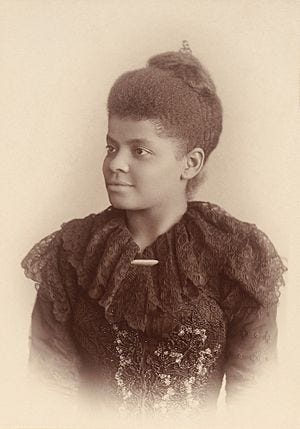
Born into slavery, orphaned at 16, Wells nevertheless led a remarkable life of service and influence, working to improve the status of blacks and women while also supporting four siblings, raising four children, marrying a like-minded crusader (and handsome attorney) at 33, and making enough money to achieve the middle class. She was an outspoken and fearless journalist, who refused to give up her seat on a train — much like Rosa Parks — and later sued the railroad company for her mistreatment; founded a newspaper; and bravely expressed her opinion even when it put her and her property in danger.
When she lost her teaching job in Memphis in 1891 for writing articles that criticized the conditions in black schools, she soldiered on. When friends were lynched in March of 1892 after a fight between two children resulted in a white boy being mildly hurt, she wrote an editorial in her newspaper urging blacks to leave town.
There is, therefore, only one thing left to do; save our money and leave a town which will neither protect our lives and property, nor give us a fair trial in the courts, but takes us out and murders us in cold blood when accused by white persons.
When in May of 1892, she published an editorial debunking “”that old threadbare lie that Negro men rape white women” and warning that “If Southern men are not careful, a conclusion might be reached which will be very damaging to the moral reputation of their women,” her newspaper office was burned down. But Wells was not deterred.
Six months later, she published a pamphlet containing the findings of her extensive research called Southern Horrors: Lynch Law in All its Phases, which concluded that lynchings blamed on rape of white women were actually motivated by desires to stop black economic competition and maintain white supremacy. She followed that up with The Red Record in 1895 which raised the alarm about the high rates of lynching which were largely unknown in the North.
Wikipedia summarizes one of the arguments in Wells’ later pamphlet.
She noted that whites frequently claimed that black men had “to be killed to avenge their assaults upon women”. She noted that white people assumed that any relationship between a white woman and a black man was a result of rape. But, given power relationships, it was much more common for white men to take sexual advantage of poor black women. She stated: “Nobody in this section of the country believes the old threadbare lie that black men rape white women.” Wells connected lynching to sexual violence, showing how the myth of the black man’s lust for white women led to murder of African-American men.
That makes so much sense.
It was white men who were raping black women throughout history, not the other way around! It is white people who have done and continue to do real and lasting damage to blacks via police brutality, mass incarceration, disenfranchisement, harassment, racism, redlining, and 1,000 other harms.
So where does the irrational white fear of black people come from? The fear or hatred that causes white people to call the police on blacks for birdwatching in a park, napping in a common room at college, barbecuing by a lake, selling water on a sidewalk — for no reason at all. What causes white people to make a call that literally puts black lives in danger?
It’s a twisted projection of white guilt.
Racism needs to come out of the closet
So what can we do about it? Like most psychological problems, racism would benefit from a good talk.
Here’s adorable South African host of The Daily Show Trevor Noah in “Eight Times America Surprised Trevor.” Number Five is “Racism Denial.”
In South Africa, people talk about racism, Noah says. “Maybe because of the Truth and Reconciliation Commission in our country we were forced to talk about it and we just talk about it. It’s painful, but we laugh about it and it’s out there. Whereas in America, I find there’s a lot of tension in and around that.”
It’s time to talk about racism in America. The George Floyd protests have made a start. It’s time to admit it. It’s time to apologize. It’s time to make amends. It’s time to pass a g-d federal anti-lynching bill. And it’s time to raise real heroes like Ida B. Wells up.
Maybe then, we can begin to change it. Maybe then, we can begin to heal.
For more stories about love and justice, follow Fourth Wave. For more by this author try:


