
How Jack Kerouac Made Me a Better Writer
He taught me how to type an entire blog post in under 25 minutes
Have you ever heard of Jack Kerouac? He’s the often forgotten beatnik author of the mid 1900’s. He was just a man looking for life’s true purpose. He spent his adulthood searching for the meaning behind it all.
When Kerouac wanted something, he went after it with his whole heart. In fact, he wrote his novel On the Road in under three weeks.
Today, it’s not unheard of to write a book in under a month. Self-published eBook writers do it all the time, but Kerouac was different.
He spent years traveling the United States, yet he dedicated less than 21 days to write about it. He locked himself in a room, and only came out when he needed to. He wrote like an absolute madman. While typing, he didn’t indent new paragraphs. He didn’t even separate the story by chapters. When he thought of a sentence, he wrote it down. He didn’t bother rearranging the structure of his stories. He tied in past and future events together. His style begs the reader to turn the page. There isn’t a single good place to stop reading for the day. Each page reveals another block of text. You become a part of Kerouac’s consciousness.
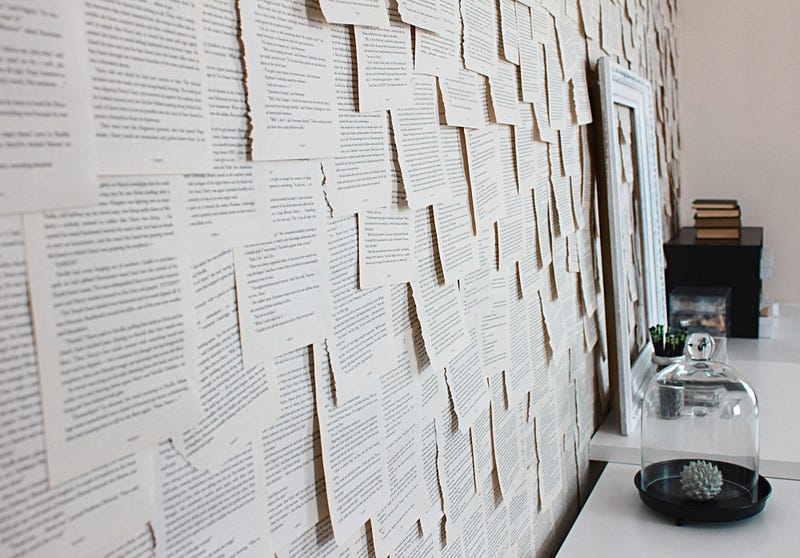
He’d type a page, put each page on the wall, and tape them together. When he finished, Kerouac’s story took the form of a 120-foot long scroll.
As bizarre as the process sounds, the amount of time it took him to do all this is even more impressive.
His initial draft was in the neighborhood of 90,000 words. That means he wrote upwards of 4,285 words a day, nonstop!
This unreal statistic has boggled writers and editors for decades. Kerouac must have found the secret sauce. How else could he have been so efficient?
Though he was often hopped up on benzedrine, he somehow accomplished this feat. His mind was a canister filled to the brim with stories of his life. He found a way to streamline his consciousness to paper.
If someone can write like the fate of the universe rests in their hands, then we can write one quick blog post right? It sure doesn’t always feel that way.
Before I discovered my own secret writing formula, I often found myself in the doldrums. I’d sit down in an attempt to write, but the words wouldn’t come out.
I knew something had to change. I couldn’t keep going on like this forever.
I’m sure you can relate. Neither of us wants to be in the writer’s doldrums. We need to find a way out of it. For me, I committed to a system. This system has allowed me to write faster than I could have ever imagined.
Kerouac showed me the way.
When I first started writing on Medium, I didn’t think I’d be able to publish more than two stories a week. Now I have to remind myself to slow down. It’s almost like I’m writing too many stories. I want to put quality over quantity.
The important thing is that I know I can publish a story every day if I wanted to. What’s nice is that I know I don’t need to.
You want the freedom to create better. Better content will open doors. It’ll get you more views. This is the formula that allows me to write entire stories with just one session.
Pitch your idea to yourself
Put yourself in the place of the reader. Change your perspective.
Would you read this if someone else wrote it?
Consider who you are writing for. Do you want to reach a mass audience? You may need to get published to make that happen. I have a free 5-day course just for you.
It’s okay if your idea isn’t a great one. Even if it isn’t the most amazing concept in the world, it’s still worth writing. You’ll gain priceless experience from the process.
You will become a more efficient writer. Over time, you’ll get better and better.
You’ll figure out which stories your readers like to read, and which ones they don’t. You don’t need a small test group to pitch your story to. It’s a one man job, and you’re the most qualified.
Should I outline my story before writing it?
You don’t need to create a separate outline, but you should think about the story before writing it in its entirety. Jot down your idea in a Medium document. It’s that easy. You can write it on a notebook, a Google Docs page, or any other program you like.
What matters is when you have an idea you must write it down. We are prone to forget. Whether your idea is a winner or a loser, writing down the story idea is good risk avoidance.
The last time I went camping, we had to be cautious of bears. We packed bear canisters with us and hung an ice chest from a tree. One of my colleagues hung a full ice chest right above my tent.
Though I knew the chest was unlikely to fall, I still worried about the small chance it did.
Why hang it above my tent if there are other branches on the tree? Why not avoid the 1% chance of disaster?
The same goes for your idea. You may as well write it down. It’s as simple as bringing out your phone and tapping “new story” on the Medium app.
Most stories are worth writing if you can come up with a few actionable takeaways.
Create 3 main points
What do you remember from high school English class? You might recall the long, boring novels you never read. Even if you don’t, there is one major part of class that I haven’t forgotten: the five paragraph essay.
At it’s core, the five paragraph essay is genius. There is an intro with a thesis, three topic sentences, and a conclusion. It’s so simple, a middle schooler could write one.
My honors English teachers were onto something, because that’s all I’m doing with my blog posts.
I run through a basic process. I type a hook to grab my readers’ attention. Then, I delve into my three main points. Finally, I wrap everything up with a nice conclusion.
I write a high school essay every other day.
These are the lessons I teach all my actual English students. It’s not that difficult to think of three things to talk about. Heck, I see articles with 50 or more main points in them.
Should I plan ahead?
Before you set out to write your entire blog post in under 25 minutes, you should plan the story first.
Come up with your three points beforehand. Not only will this save you time, but you’ll have already had some time to absorb your ideas. Your ideas will develop when you’re not even thinking about them.
Find your flow
Achieving the flow state is the most important step of the process. Without it, you’re doomed to fail the 25-minute challenge. You’ll be too distracted by your environment, and this will take you out of the correct head space.
Kerouac was the king of the flow state. He knew how to shut down every part of himself besides the right side of his brain.
The flow state is a circumstance in which one reaches complete immersion. When you reach your flow state, you reach peak performance.
You have to give into the flow state, and never look back. If you are in a flow state, you can write quick, and efficient prose. There are various ways to help you achieve this state of consciousness.
I write my stories this way, and I worry about editing later. Though speed is important, quality is of the upmost. You don’t want to write a bunch of gibberish your readers can’t read.
The thing is, if you are in a flow state, you can still write eloquently. Your thoughts transfer from your brain to the screen all the same. You might have a few more typos than usual.
In the flow state, you can find that you can type a thousand words faster than you ever would have been able to before. You don’t have to think too hard.
Final thoughts
Preparation and execution are the top priorities. If you want to write a quick story, you must keep these two factors in mind.
Again, it’s not about speed, I’m using 25 minutes as a benchmark timeframe for one writing session. I know don’t write all my stories in under 25 minutes. I can’t always write in the greatest environment.
You’ll find that an idea will pop into your head, and you’ll want to spill as many of your thoughts out then and there. That’s okay too. In this article, I had 150 words on paper before I started my first actual writing session on it.
I didn’t even write my intro until I sat down for my first editing session.
Here’s the thing. Though I wrote the whole post in 25 minutes, the editing still took longer than that. We’re not here to race to the finish line. We still want to write coherent sentences. We want to give our readers actionable takeaways.
The edit is the cherry on top of the process. Separate your editing sessions from your writing sessions. You’ll allow yourself a new perspective. You need to let your brain to slow down. Otherwise, you won’t see the little mistakes you made during your writing session.
It’s a process that works for me. I learn something new each time I write a blog. I keep track of the data. Put my strengths together, and I have a sure-fire way to create content.
What’s your process? How do you create your best content? I bet you might like my way.
Don’t miss another story — Vibe Check is my exclusive newsletter for those who want to take their content to the next level. Sign up and get my Free 5-Day publication and curation course. I made it just for you.