
How I Use the Anchor Effect To Slowly Improve All of My Relationships
A hidden psychological mechanism determines how we filter our perceptions
I first learned this technique in college from a rapping gangster grandma in shades.
She also happened to teach psychology 101. As she gyrated in front of the class to thumping music, she spat an admirably rhyming list of psychological terms.
A lightbulb went off in my head.
Crazily, the lightbulb moment converged years of personal study into what made successful relationships tick.
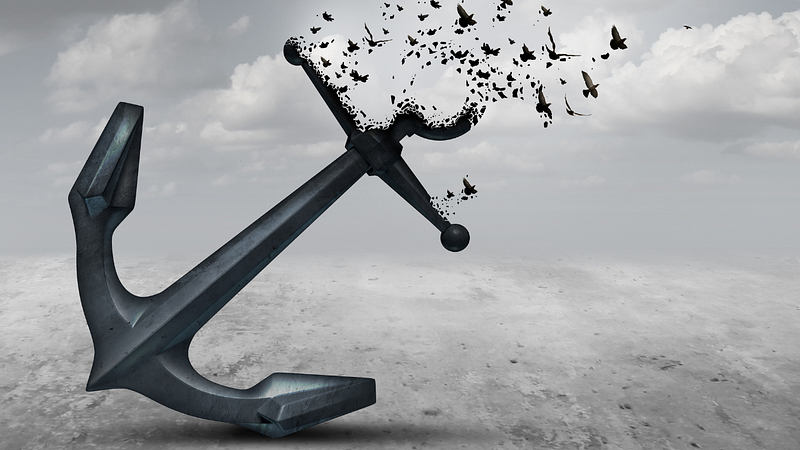
This article is about the insight that I call the “Anchor Effect.”
⚓️ A Light Bulb Insight Into Human Nature
We all have these little moments that change us forever. The first one that I can remember is learning that I was fast and could fight in elementary school.
Although I don’t recommend that elementary school-age kids throw down at recess, the insight was a pivotal moment for me.
That’s pretty much what happened in college, too.
During my lightbulb moment in the middle of psychology class, I scribbled down two words on my notepad. This was well before cell phones were ubiquitous.
I wrote down: anchor effect.
The Anchor Effect is that our first experience of someone (or something) frames all future interactions.
Whatever we say, do, or text first becomes the anchor point in the other person’s mental portrait of us. It’s the idea of the first impression on steroids.
In psychology circles, there is a concept called the “primacy effect in impression formation.” It’s related to the Anchoring Bias. Basically, human beings are hardwired to grant importance to whatever happens first.
A 2018 article in the Social Psychological and Personality Science journal explained a simple version of this phenomenon:
Individuals described as “fun, witty, and vicious” are typically rated more favorably than those described as “vicious, witty, and fun” despite the semantic equivalence of these statements. This is known as the primacy effect in impression formation.
Interestingly, a 2013 study in the International Journal of Psychology suggested that North Americans experience this effect more powerfully than East Asians.
But it goes even deeper.
Not only does the Anchor Effect impact the other person’s perspective of us, but it also fundamentally changes who we are with them.
⚓️ The Self-Fulfilling Spiral of the Anchor Effect
I find it fascinating that the anchoring effect is contagious. It works like a self-fulfilling spiral.
For example, I was a very shy kid.
However, I sometimes met new people in rare moments of confidence. Those people viewed me as a confident person. They treated me like a confident person.
Even though I was still shy around other people, I instantly became more confident as soon as I encountered these new friends.
In other words, I rose to meet their expectations of me which I myself created.
The reverse is also true.
I occasionally met people in moments of selfishness or rudeness.
Those strangers viewed me as rude and unkind. No matter how I acted in the future, their perspective of me would always be dimmed by that initial negative experience.
⚓️ A Girl in a Bar: Accidental Field Research
As I said, I was painfully shy growing up. I had no idea how to talk to girls. Most of my romantic relationships happened by happy accident.
Yet, one night in college everything changed (at least, temporarily).
I went to a bar to meet a girl we’ll call Nikki. Even though the bar was dark and crowded, I thought I spotted her toward the front door. Keep in mind that I had never met her in person before.
As I strolled up to this attractive girl, I said, “Are you, Nikki?”
She looked surprised, shook her head, and replied, “No, I’m Ginger.”
I told her that I was waiting to meet someone named Nikki and that I thought it might be her. She said that she was looking for her friends.
I replied, “I hope you find your friends,” and walked away.
At the time, I didn’t think anything of this interaction, but when I glanced back over her way a few moments later, she was staring at me. Not glancing, staring.
I think she was dumbfounded that I didn’t try to hit on her or stay and talk to her. She hadn’t moved an inch from where I had approached her.
A little bit later, Nikki still had not arrived, so I go back over to the girl and asked her if she ever found her friends.
She told me that she had and pointed to a group of people no more than about 15 ft away through the crowd. But she said that she had no one to walk her over to them.
Riding on a wave of high confidence, I extended my arm, which she took, and escorted her to her friends.
She excitedly introduced me to her group and rewarded me with a kiss on the cheek.
I returned the favor on her cheek, then told her to have a good night. After all, I was still waiting for Nikki, who did eventually show up.
⚓️ Unpacking That Drunken Night in College
For years, I couldn’t unravel exactly why that interaction with the girl in the bar went so well. I spent literal hours trying to reverse engineer exactly what went right.
I felt so confident and the girl responded better than I would have ever expected. I’m sure I could have had a fun night at the bar if I’d spent the whole time with her.
Who knows if it would have worked long-term because I was still pretty much a mess 90% of the time.
But on that night I felt like I could do nothing wrong.
So what exactly happened?
After a lot of reflection, I think it has mostly to do with the Anchor Effect — with a little pattern interrupt thrown in for good measure.
I definitely took her off guard when I asked her if she was some other person. I think that immediately dropped her defenses (which she might have raised for other guys who were just there to flirt with her).
After a brief chat, I walked away.
This was likely another interruption to a normal pattern that she has with guys at bars. It also showed a level of unintentional indifference and confidence on my part.
That initial interaction served as an anchor point for how she viewed me.
Based on her reaction, she probably viewed me as a nice-looking guy who was polite and confident.
When I came back to escort her to her friends, I showed an even higher level of confidence and flirtatiousness. Because I left once again, I also demonstrated that I’m not overly needy.
Most guys might have begged for her attention all night.
I don’t say any of this to brag about a single episode of social success 20 years ago. That would be silly.
Yet, I think this small slice of my life shows a simple example of the power of the Anchor Effect.
What happens first changes everything that happens after.
⚓️ How I Use the Anchor Effect To Slowly Improve My Relationships
You can apply the primacy effect to all of your relationships — both new and existing.
For new relationships, I put a lot of effort into creating a positive first impression. I want the other person to see me in the best light possible. This might mean smiling and being friendly, or wearing my nicest clothes.
I want them to associate me with positive things, words, visuals, and feelings.
If possible, I front-load their impression of me with positive words and images. That could be my profile on dating apps (when I was still on them), the words I use in my cover letter and resume, or positive references from other people.
When I first meet new people, I intentionally speak and act the way I want them to see me (whether that is relaxed, confident, smart, empathetic, or energetic).
By altering the initial way someone views me, I impact the future of our relationship.
Once someone develops a positive anchor bias, another psychological mechanism comes into play.
A confirmation bias is when we tend to look for and interpret information in a way that confirms our preconceptions. In other words, if someone has already formed a positive impression of you, they will automatically seek out more information that supports that initial impression.
For existing relationships, I try to keep the good vibes going. I don’t want anything to tarnish the connection.
If there is a hiccup, I try to quickly fix it and get back on track. I make an extra effort to pay attention and focus on the good times with them.
I become more mindful of how they see me (and what words or images come to mind when they think about me). To get top-of-mind good impressions, I rely on a related psychological concept known as the “recency effect.”
The recency effect is the idea that we remember the most recent things more vividly.
So, by spending extra time with them and focusing on the positive, I make sure the last impression they have of me is a good one.
⚓️ Practical Takeaways: How To Use The Anchor Effect
Here is a list of takeaways for applying the anchor effect to your own life:
- Focus on first words, first actions, first visuals, and first impressions.
- If you can arrange it, get someone to say a few nice words about you before you meet the other person.
- Whatever you want the other person to remember most, make that impression first (If you want to be seen as confident, act and speak confidently first, before also showing your shy side).
- When people don’t know you, they are more likely to judge you for things outside of your control. Once they know you (and have formed a positive image of you), they will cut you more slack.
- If you mess up, apologize, and immediately change your behavior. Repeat the positive behavior over time to slowly alter the other person’s negative impression of you.
Final Thoughts
By using the Anchor Effect, I slowly cultivate my relationships. It’s all about creating positive impressions early and often.
By front-loading other people’s impressions of me, I can set the tone for the future of our relationship. And by keeping the good vibes going, I make sure the last impression they have of me is also a good one.
Read this next: A Psychological Move to Subtly Turn an Enemy Into an Ally
If you want to support my writing, become a Medium member. If you do, I will get a small commission. Thanks!


