
How I Taught My Husband To Eat Better And Enjoy Food
Helping someone expand their palate is about more than just food.
“We all eat, and it would be a sad waste of opportunity to eat badly.”
-Anna Thomas
When I met my husband, his idea of the perfect steak was one cooked beyond recognition - a dark uniform grey right through. It didn’t matter if it was tough or tender. Color was king (or rather the absence thereof).
Nonetheless, he was my Prince Charming.
He even had the accent to prove it. But coming from a country that puts vinegar on food to make it taste better (his words, stolen from a comedian we can’t remember), made things a little challenging.
You see, I was a personal chef when we met, someone who’d been cooking in restaurants on and off since I was 17 and I liked good food.
I liked cooking it, and I loved eating it, and I wanted to share that with him.
Just before we met, I’d very briefly dated a man who separated the different foods on his plate.
During our one and only date, he cleared pathways between the various items and told me that he couldn’t let them touch. I thought this guy was pretty attractive when I first met him. After that, somehow, his looks didn’t matter anymore.
One of life’s purest and most basic pleasures is eating, and yet, it’s so much more.
We build our day around meals and our cultural identity around the food we cook. Recipes handed down through generations are the sacred scrolls that hold tribes together.
Grandma’s kitchen gives families an intimate, shared experience. When we think back wistfully on our childhood, it’s the tastes and smells that take us back.
Food is also the number one way we can take control of our health, and it’s accepted wisdom that the more different things you eat, the more likely you are to have a proper diet.
So being able to fully embrace food, enjoy it, and become open to new experiences is essential not only in terms of enjoyment but also in wellness.
So after falling hopelessly in love with an Englishman whose culinary challenges he openly admitted, I made it my mission to expand his palate. He wanted to challenge himself and I wanted to help him learn to enjoy food rather than just seeing eating as a necessary task.
It didn’t take me long to realize that he was going to be a challenge.
One of the earliest meals I cooked for him was a hot salad with steak and orange. He’d never seen anything like it before. So when I served him up a plate of meat and cooked peppers on a bed of lettuce and oranges, he had a hard time processing what the everloving F*ck was going on.
A warm salad was nothing new to me. I’d seen it in the restaurants I’d worked in for years. I assumed everybody knew what it was and would love to share one with me.
The lettuce wilts slightly in a warm salad, which gives it an aromatic quality you don’t get when it’s entirely cold and crunchy. The heated components are cooked in their own sauce and juices, adding a richness to the vinegary dressing on the lettuce. I find the combination of warm and cold plus savory and tangy, complex, and satisfying.
Warm salad is one of my favorite things. However, my new man was a bit freaked out, he couldn’t reconcile putting something hot on something cold. In his mind, there were only two heat settings to any meal, scorching and cold, and never the twain shall meet.
It was only much later that he confessed he thought that meal was an abomination and hated it. I had also cooked the steak medium-rare, which grossed him out.
When he confessed his culinary limitations and committed to expanding his horizons, I knew he was more than just a passing fancy. Anyone who actively works on their personal evolution is okay in my books. Someone who wants to enrich their eating habits is a superstar to me.
With his consent, we started on a journey to mature his tastes and evolve his palate.
I created a method to teach him to appreciate a wider variety of tastes and textures, which developed into a process I use for the toddlers at my daycare and a system for parents I write about in my book.
By helping my husband become a better eater, I’ve learned that with the right method, anyone can learn to tolerate a larger range of foods, at any age.
This is what I did: I took what my husband was comfortable with and reimagined it. I introduced new foods he was open to and incorporated those regularly into meals and implemented the one-bite rule.
Those three strategies, over time, completely transformed his palate.
First, by taking the things he was comfortable with and altering them slightly, he was able to stay grounded while also branching out.
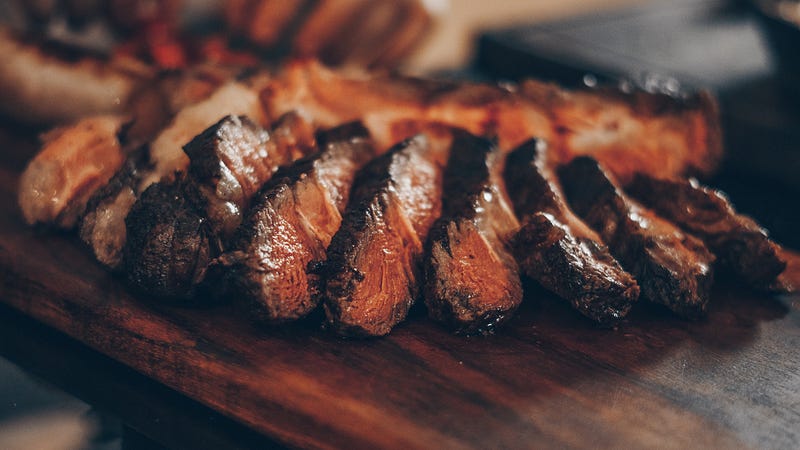
He regularly ate steak, but he didn’t love it and couldn’t understand why other people did. He’d only had it cooked very well done because he couldn’t stomach eating meat with any red in it at all.
He wanted to learn to like his meat a little rarer but needed to get past the mental block. So little by little, I’d make his steak a bit rarer.
I didn’t want to shock his sensibilities, so I’d cook it ever-so-slightly less, and eventually, he got used to it. He was used to meat being chewy and tasteless because that’s all he’d known. Dialing back the doneness has made steak something he really enjoys now. He’s become more discerning and can appreciate a good cut of meat, cooked properly.
When I’m working with a child, I find an element they like, such as a texture or flavor they enjoy and then build my plan for them around that. I find more foods with similar features and then add them in gradually alongside food they already like.
Sometimes it takes a while for them to warm up to the new menu. But if I keep offering it, they’ll eventually get used to seeing it and finally try it.
The idea is to start where you are and work from there instead of bringing something in from out of left field. In this case, slowly and gradually is the key to success.
The second thing I did was to build on the things he was willing to try.
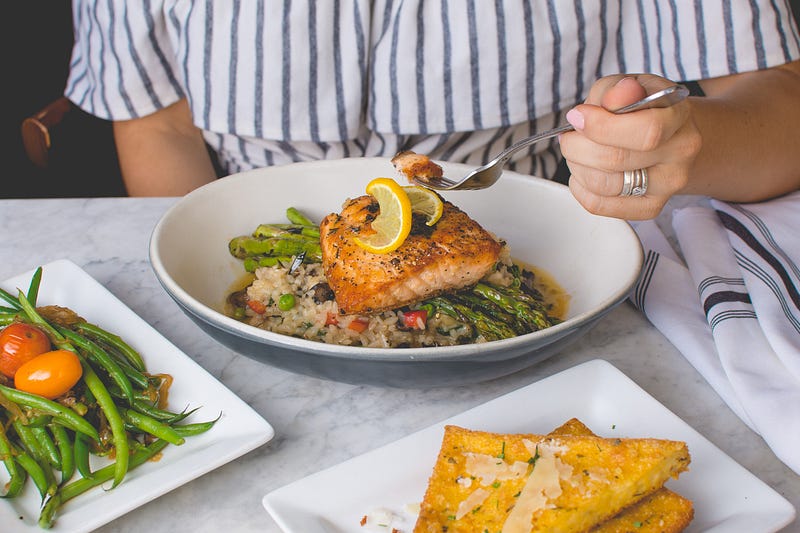
He wanted to learn to like fish a bit more, so I started by buying trout. It’s the same color and texture as salmon, but with a milder taste. After he got used to that, I started buying salmon. Over time he got used to it. He prefers salmon now and loves the taste.
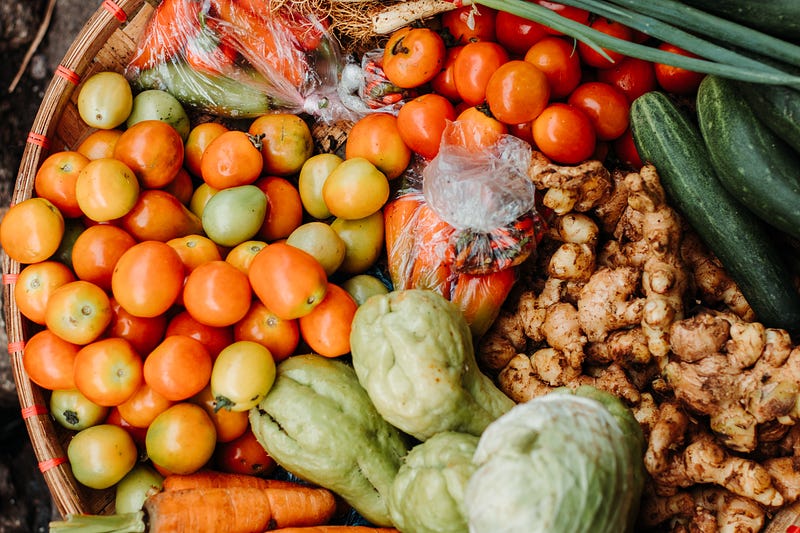
I did this with vegetables as well. I started buying a bigger assortment of vegetables, and we discovered some new favorites.
I introduced him to things like rapini, which is similar to broccoli. I cooked it with wine and garlic. For someone who grew up with boiled vegetables being a staple, trying different vegetables cooked in many ways was revolutionary. I don’t think he realized they could be so delicious.
Lastly, in my arsenal of approaches, there is the one-bite rule.
Even if you don’t’ want to eat the whole thing, just take one bite. That way, at least you’ve tried something. This is the most important thing of all when you are expanding your palate. Sometimes you don’t think you’ll like something until you try it.
This happens with the daycare kids all of the time. They see something new, and they won’t want to try it at all. But often, if I can just get them to have one bite, they realize they like it.
Sure, it’s easier to get an adult man who wants to expand his horizons to take that one bite than to get a toddler to do it. But the result is the same.
If someone tries something, they’ve broken a barrier, and they can build on that. Knowing what something tastes like is half the battle when getting someone to eat something.
I’ve been with my husband for 15 years, and he’s come a long way. He eats a much broader range of foods now. He’ll try most things at least once and enjoys eating more than he used to.
There are some foods he’ll never love, but that’s true for everybody. For the most part, he embraces eating in a much more open way now and is healthier and happier for it.
Helping someone expand their palate is about more than just the food. It’s about opening up to one of life’s greatest pleasures.
I helped my husband by taking an actionable approach that works for willing participants and stubborn actors alike.
Eating is not merely a material pleasure. Eating well gives a spectacular joy to life and contributes immensely to goodwill and happy companionship. It is of great importance to the morale - Elsa Schiaparelli
Thanks so much for reading!
If you’d like to check out my book: “How To Be Wise AF: A 30-day journalling adventure to your inner Guru” click here to find out more and enter to win a free book by signing up to my newsletter.
If you’d like to read more articles that uplift and enlighten, join us here on ILLUMINATION. Here are some more excellent writers to check out: George J. Ziogas, Madoc Maduka, Jessica Cote, Charles Roast, Chris Hedges, Roxanna Azimy, Bill Abbate. Why not write for us? Bring your talent, courage, and insight, share your story, and let’s do something great!
If you’d like to read some more stories by me, feel free to check these out:


