avatarJames Marinero, MSc, MBA

Free AI web copilot to create summaries, insights and extended knowledge, download it at here

4232

Abstract

to learn how to do it that way with more complexity then check out (budget warning):</p><div id="7a7a" class="link-block"> <a href="https://www.sailingkoinonia.com/post/reliable-high-speed-internet-for-liveaboard-cruisers"> <div> <div> <h2>Reliable high speed internet for liveaboard cruisers</h2> <div><h3>Without a doubt, one of the most frequent questions we get from fellow voyagers, cruisers, and aspiring sailors is…</h3></div> <div><p>www.sailingkoinonia.com</p></div> </div> <div> <div style="background-image: url(https://miro.readmedium.com/v2/resize:fit:320/0*x7ewMbJKBeMi1vfo)"></div> </div> </div> </a> </div><h2 id="a65a">Satellite phone</h2><p id="98a5">I bought a relatively cheap used Iridium 9555 handset and external aerial on eBay back in 2015. This is very expensive to use (US1.50 / minute) with a very low data rate of 4,800 bps. Yes, you read that correctly - 4,800 bits per second.</p><figure id="b781"><img src="https://cdn-images-1.readmedium.com/v2/resize:fit:800/1*J1d6MTjM4P3fK0KJ5XitWQ.jpeg"><figcaption>Author’s Iridium 9555 handset and external aerial</figcaption></figure><p id="4021">We use it mainly for downloading free GFS weather grib data files (typically 25 kb from saildocs.com, free) and urgent family emails when at sea, connected to a <a href="http://www.mailasail.com/Communication/Red-Box">Mailasail Redbox</a> router on the boat.</p><figure id="8ba4"><img src="https://cdn-images-1.readmedium.com/v2/resize:fit:800/0*dO6TaJqN451BRMow.jpg"><figcaption>Author pic Mailasail Redbox</figcaption></figure><p id="7255">The Mailasail Redbox filters (at the remote Mailasail mailserver) offer a variety of internet connection ‘gateways’ when hooked to the satphone. It also compresses data, saving on connection costs and time.</p><p id="558d">As an aside the Redbox runs an internal network on my boat and hooks together various instrument systems. It will also bridge between networks.</p><p id="4a21">Cost about £300 (~US350).</p><figure id="dfcf"><img src="https://cdn-images-1.readmedium.com/v2/resize:fit:800/1*GwrIxFbdITBAt4Kp1gI7CQ.png"><figcaption>Mailasail Redbox internet connection options</figcaption></figure><p id="34bf">It’s been a good system (7 years old now) and it’s comforting to be able to get weather forecasts when I’m a thousand miles from anywhere. A newer version is available.</p><p id="04fb">The Iridium satphone/Redbox set-up worked well in a storm near Pitcairn Island in the South Pacific — we saw the forecast and realised we’d never reach Pitcairn, so we headed off to the Gambier Islands.</p><div id="7e5f" class="link-block"> <a href="https://readmedium.com/pitcairn-island-so-near-yet-so-far-1fd56e0fc598"> <div> <div> <h2>Pitcairn Island — So Near Yet So Far</h2> <div><h3>A tale of what might have been at one of Darwin’s islands brought an unexpected delight somewhere</h3></div> <div><p>medium.com</p></div> </div> <div> <div style="background-image: url(https://miro.readmedium.com/v2/resize:fit:320/1*VHnM4w9gbYxUL1LacR2T1Q.jpeg)"></div> </div> </div> </a> </div><p id="ce15">The Iridium set-up can also receive website text pages from <a href="http://saildocs.com/">saildocs.com</a> via the Mailasail server. I just send an email to [email protected] e.g. ‘send www.bbc.co.uk/news’.</p><p id="8d8a">That’s how I learned that Trump got elected…</p><p id="da88">As an aside, voice weather forecast and weather faxes are available using SSB radio — I have an old receiver for this — but I prefer the grib versions as they are on-demand. I tend to miss radio skeds — stuff needs doing at the wrong time…</p><p id="48b2">Of course, we also use the satphone for occasional voicecalls as well, when it’s a family birthday, say. We can also send texts via the satphone, Redbox not required for either.</p><h2 id="9a4a">DeLorme (now Garmin) InReach Explorer SE</h2><p id="f8f7">It was inexpensive to buy and p

Options

ocket-sized, and used mainly by the First Mate. It has a fiddly abc keypad but is otherwise simple to use.</p><p id="7e65">It connects to the Iridium satellite network. There is a modest annual subscription fee plus 15 a month which can be suspended when not in use, with some free texts and an SOS capability. It has no voice capability.</p><figure id="22a4"><img src="https://cdn-images-1.readmedium.com/v2/resize:fit:800/1*hUAl4UkTTFvKIMWLfMZPzg.jpeg"><figcaption>DeLorme/Garmin InReach SE. Author Pic.</figcaption></figure><p id="6ddd">We activate it for long sailing passages or when we have no internet at an anchorage and pressing business ‘back home’ to deal with. Wherever home is.</p><p id="83c5">It’s a good satphone backup, just in case.</p><h1 id="1649">Stress or no stress?</h1><p id="0b3d">In the modern world, being disconnected can lead to stress. When we are on a long ocean crossing we just cannot afford to have internet access (and at 4,800 bps through the Iridium handset forget it).</p><p id="6992">On arrival in a new country after maybe a couple of weeks at sea I have to clear up a few hundred regular emails and work through my social media (thankfully I only use a couple of platforms with low engagement). And then respond to my Medium readers. The stress builds up.</p><p id="34b5">Higher bandwidth marine systems are available, but they cost a fortune to run.</p><p id="ed37">Elon Musk’s Starlink offers hope for the future but at present costs it’s not even a pipe-dream for us. And then again, maritime coverage areas are still relatively sparse.</p><figure id="ff08"><img src="https://cdn-images-1.readmedium.com/v2/resize:fit:800/0*8loVCgW5sjxc-QJs.png"><figcaption>Image source: <a href="https://api.starlink.com/public-files/maritime-coverage-map.pdf">https://api.starlink.com/public-files/maritime-coverage-map.pdf</a> as of December 2022</figcaption></figure><p id="e84f"><a href="https://www.starlinkhardware.com/starlink-launches-maritime-service-tier/">Starlink Maritime</a> has an upfront hardware cost of 10,000 in addition to a monthly cost of 5,000/month. The hardware cost includes two high-performance Starlink terminals and two pipe-mount adapters.</p><p id="1868">I guess it’s OK for A-listers with superyachts in fancy places, but at least the terrestrial version works well in Ukraine.</p><p id="b081">So, that’s how we keep in touch when at sea or at an anchorage.</p><p id="993b">I hope some of you have found the information useful.</p><p id="5ec0"><i>About me: If you follow me I guarantee variety in your inbox with some unusual perspectives! I write on a wide range of topics including humor, tech, space, geopolitics and travel, together with daily news events and the minutiae of my daily life living on a boat. Yes, I really do live on a boat (some readers don’t believe that). I also write about…</i></p><p id="bf1e"><b>…low bandwidth connections in far away places</b></p><p id="7b5a"><i>If you appreciate stories like these and want to support other writers and me, consider signing up to become a Medium member. It’s only 5 a month, giving you unlimited access to incredible stories on Medium. If you sign up using my link below, I’ll earn a small commission at no extra cost to you.</i></p><div id="8c18" class="link-block"> <a href="https://james-marinero.medium.com/membership"> <div> <div> <h2>Join Medium with my referral link - James Marinero</h2> <div><h3>Read every story from James Marinero (and thousands of other writers on Medium). Your membership fee directly supports…</h3></div> <div><p>james-marinero.medium.com</p></div> </div> <div> <div style="background-image: url(https://miro.readmedium.com/v2/resize:fit:320/0*JckujeeOAxiWklcY)"></div> </div> </div> </a> </div><p id="181b"><i>Or maybe just <a href="https://ko-fi.com/jamesmarinero">buy me a coffee?</a> and tell me what you liked reading (or not)…</i></p><figure id="ed1c"><img src="https://cdn-images-1.readmedium.com/v2/resize:fit:800/1*F7CRvNpnsbM3yYySfOeIjA.png"><figcaption></figcaption></figure></article></body>

Living on a Boat

How I Stay Connected to the Web at Sea

Here’s how routers, cellphones, a satellite phone and a Garmin gadget keep me connected — most of the time

A fuzzy connected world. Image credit: Image by Pete Linforth from Pixabay

I live on an old boat and spend many days — weeks even — at sea. At the last count it was well over 400 nights that I have spent under the stars or storms in the open sea, with a few thousand other nights at anchor, and a few hundred in a marina (expensive).

My lifestyle is very low-budget orientated.

People ask how I keep in touch with the world, having spent five years sailing in the Mediterranean, two in the Caribbean, two in New Zealand and one year (2 half years) in Australia. With oceans to cross in-between.

As I write this I’m anchored at an island in Indonesia. Internet access is good here even in some of the most remote islands and that has been a pleasant surprise.

Apologies for the quality of the photos — the boat is nudging at her anchor in a fresh northwest monsoon breeze. I have no affiliation to any of the products mentioned below.

Getting local internet access set up

This can often take a few days on arrival in a country and is sometimes quite stressful as I have to sort out an acceptable address (usually a marina when we clear-in through customs and immigration) and show my passport. That took just an hour in Indonesia once I’d found the Telkomsel office, but in Australia it took 3 days.

There are no internet cafes here in Indonesia but absolutely everyone has a smartphone, whatever age.

Here are the internet access systems I use in my travels (marine radio communications is an entirely separate subject):

Routers and cellphones

When near land my access method of choice is a cellphone and mobile wifi (mifi) router with a pay-as-you-go local data sim. Router and data costs have come down over the years and now in Indonesia I’m paying the equivalent of US$10 for 35Gb over 30 days. The sims are often free.

I can fall back on an old cellphone as a hot spot with the data sim card if I have a problem with a router.

My comms storage drawer has several routers:

  • Wind.com router — I used this in Sicily and Greece in 2010/2011.Locked.
  • Vodafone router 4G— I bought this in Portugal in 2010 and I have used it even recently in New Zealand. Therefore good value, though locked.
  • Digicel router 4G — I used this widely in the Caribbean and across the Pacific islands. It worked well and connectivity was generally good. Locked.
  • ‘Dongler’ unlocked 4G router (not a dongle) — I finally acquired one (eBay) in Australia and it came with a free Flexiroam go-anywhere sim card. That sim made things very easy as I loaded it in Australia with a forward activation date. It worked immediately on arrival in Indonesia while I sorted out a local Telkomsel data sim. The router is matchbox-sized and I carry it in my pocket when I go ashore.
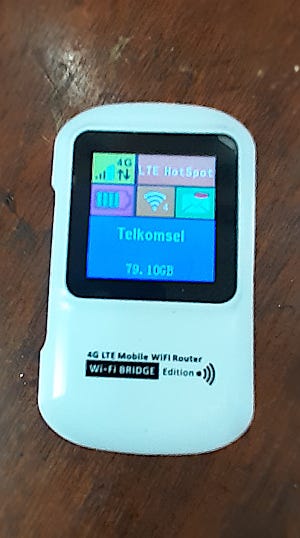
Author’s pic of unblocked 4G router

Island nations recognise the importance of keeping their people in touch, not least because of earthquakes, tsunamis and volcanoes (Caribbean, Pacific, Indionesia) and I meet many elderly people who are fully engaged with WhatsApp. So, cellphone connectivity is good.

We do not use any cellphone signal amplifiers or external aerials, but if you want to learn how to do it that way with more complexity then check out (budget warning):

Satellite phone

I bought a relatively cheap used Iridium 9555 handset and external aerial on eBay back in 2015. This is very expensive to use (US$1.50 / minute) with a very low data rate of 4,800 bps. Yes, you read that correctly - 4,800 bits per second.
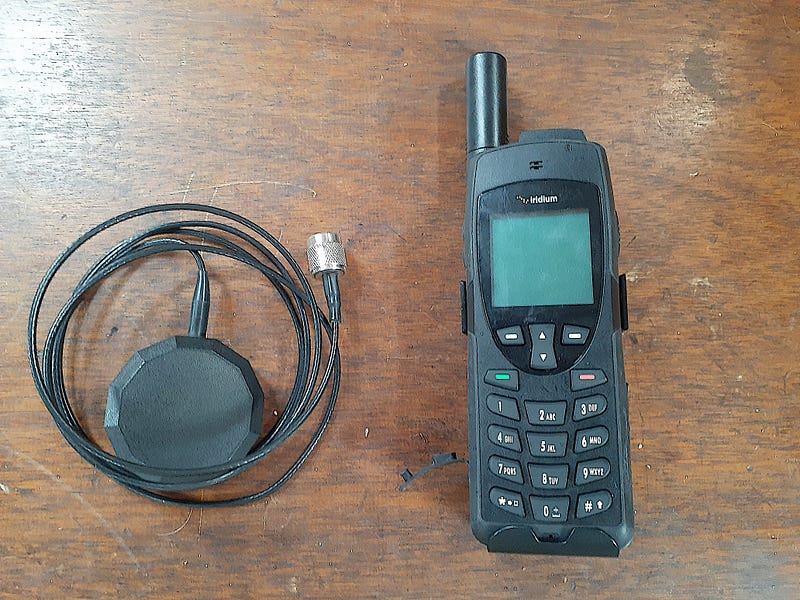
Author’s Iridium 9555 handset and external aerial

We use it mainly for downloading free GFS weather grib data files (typically 25 kb from saildocs.com, free) and urgent family emails when at sea, connected to a Mailasail Redbox router on the boat.
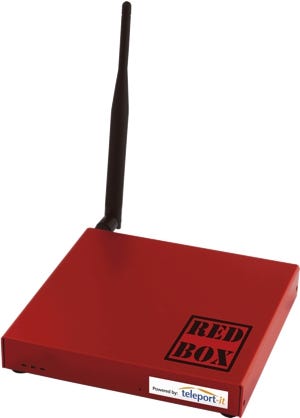
Author pic Mailasail Redbox

The Mailasail Redbox filters (at the remote Mailasail mailserver) offer a variety of internet connection ‘gateways’ when hooked to the satphone. It also compresses data, saving on connection costs and time.

As an aside the Redbox runs an internal network on my boat and hooks together various instrument systems. It will also bridge between networks.

Cost about £300 (~US$350).
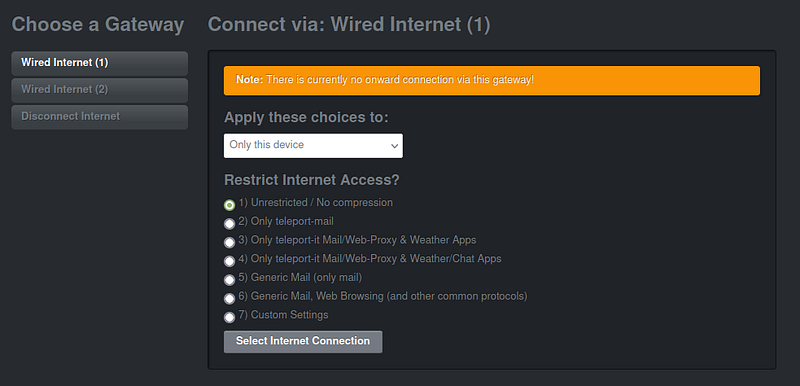
Mailasail Redbox internet connection options

It’s been a good system (7 years old now) and it’s comforting to be able to get weather forecasts when I’m a thousand miles from anywhere. A newer version is available.

The Iridium satphone/Redbox set-up worked well in a storm near Pitcairn Island in the South Pacific — we saw the forecast and realised we’d never reach Pitcairn, so we headed off to the Gambier Islands.

The Iridium set-up can also receive website text pages from saildocs.com via the Mailasail server. I just send an email to [email protected] e.g. ‘send www.bbc.co.uk/news’.

That’s how I learned that Trump got elected…

As an aside, voice weather forecast and weather faxes are available using SSB radio — I have an old receiver for this — but I prefer the grib versions as they are on-demand. I tend to miss radio skeds — stuff needs doing at the wrong time…

Of course, we also use the satphone for occasional voicecalls as well, when it’s a family birthday, say. We can also send texts via the satphone, Redbox not required for either.

DeLorme (now Garmin) InReach Explorer SE

It was inexpensive to buy and pocket-sized, and used mainly by the First Mate. It has a fiddly abc keypad but is otherwise simple to use.

It connects to the Iridium satellite network. There is a modest annual subscription fee plus $15 a month which can be suspended when not in use, with some free texts and an SOS capability. It has no voice capability.
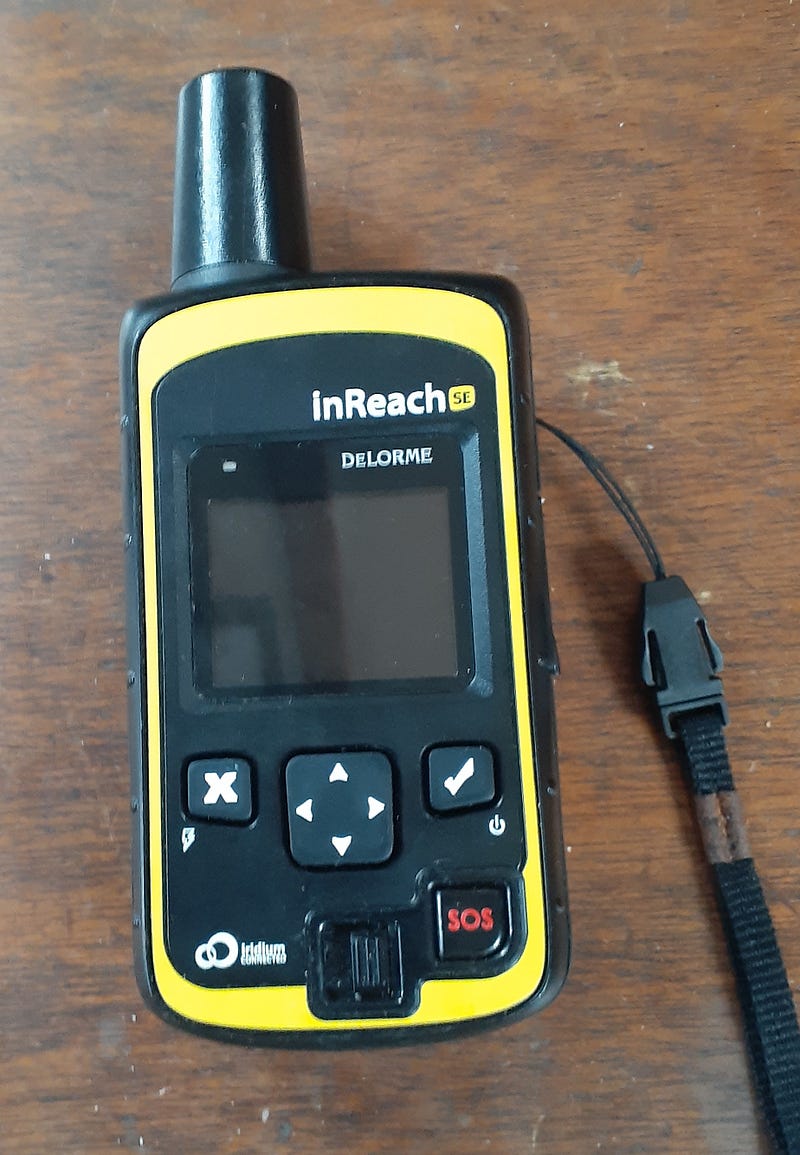
DeLorme/Garmin InReach SE. Author Pic.

We activate it for long sailing passages or when we have no internet at an anchorage and pressing business ‘back home’ to deal with. Wherever home is.

It’s a good satphone backup, just in case.

Stress or no stress?

In the modern world, being disconnected can lead to stress. When we are on a long ocean crossing we just cannot afford to have internet access (and at 4,800 bps through the Iridium handset forget it).

On arrival in a new country after maybe a couple of weeks at sea I have to clear up a few hundred regular emails and work through my social media (thankfully I only use a couple of platforms with low engagement). And then respond to my Medium readers. The stress builds up.

Higher bandwidth marine systems are available, but they cost a fortune to run.

Elon Musk’s Starlink offers hope for the future but at present costs it’s not even a pipe-dream for us. And then again, maritime coverage areas are still relatively sparse.
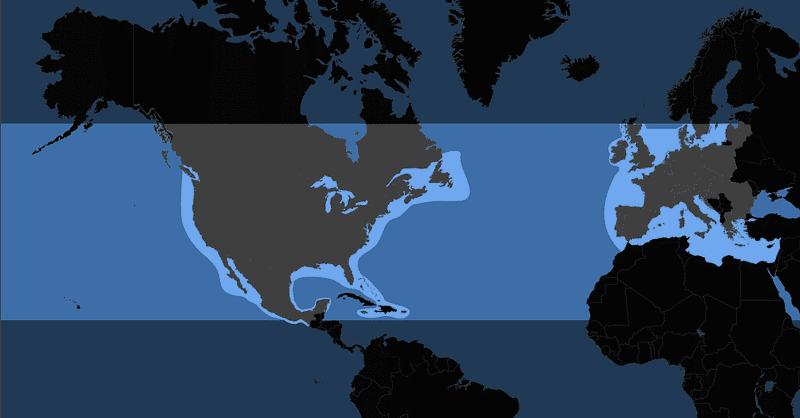
Image source: https://api.starlink.com/public-files/maritime-coverage-map.pdf as of December 2022

Starlink Maritime has an upfront hardware cost of $10,000 in addition to a monthly cost of $5,000/month. The hardware cost includes two high-performance Starlink terminals and two pipe-mount adapters.

I guess it’s OK for A-listers with superyachts in fancy places, but at least the terrestrial version works well in Ukraine.

So, that’s how we keep in touch when at sea or at an anchorage.

I hope some of you have found the information useful.

About me: If you follow me I guarantee variety in your inbox with some unusual perspectives! I write on a wide range of topics including humor, tech, space, geopolitics and travel, together with daily news events and the minutiae of my daily life living on a boat. Yes, I really do live on a boat (some readers don’t believe that). I also write about…

…low bandwidth connections in far away places

If you appreciate stories like these and want to support other writers and me, consider signing up to become a Medium member. It’s only $5 a month, giving you unlimited access to incredible stories on Medium. If you sign up using my link below, I’ll earn a small commission at no extra cost to you.

Or maybe just buy me a coffee? and tell me what you liked reading (or not)…

Living On A Boat
Satellite Communication
Marine Internet
Mifi
Starlink Internet
Recommended from ReadMedium