
Living and writing on a boat
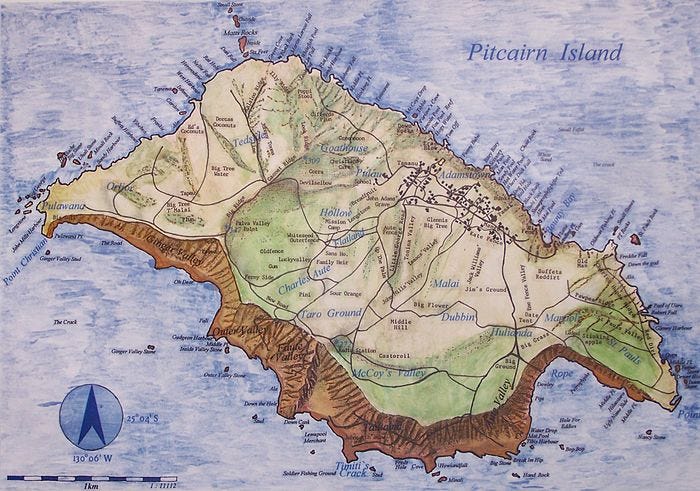
Pitcairn Island — So Near Yet So Far
A tale of what might have been at one of Darwin’s islands brought an unexpected delight somewhere else
Early morning bang!
We were ten days sailing out from Isla Isabella in the Galapagos Islands. The foundations of Darwin’s thinking were now 1400 miles back along our wake to the northeast. Easter Island was 1000 miles to the south and Pitcairn — our destination and the nearest ‘land’ — 900 miles to the southwest. The mainland? Well that was Peru, about 2,000 miles to the east.
It was lonely, but we’re used to that, the First Mate and I.
We’d come through the Panama Canal in early March 2019 and after 3 wonderful weeks in the Galapagos Islands we’d headed southwest for Pitcairn Island in mid-April.
This was not ‘the Milk Run’ route across the Pacific that most sailing folk followed, we were heading off the beaten track. Even so, a visit to Easter Island had been scrubbed from our plans as it was now too late in the southern autumn to visit — the weather would be heading for winter.
That particular morning in late April the wind was moderate and steady from the east; we were sailing at around 5 knots — that’s 120 miles a day — in a relatively benign sea state.
It was about 04:30, just before dawn. I was on watch, down below and reading, giving the First Mate an extra hour in her bunk. Every 15 minutess or so I’d go on deck and take a look around for ships. Seeing one would be very unlikely as this was a desolate area of ocean and not near any regular shipping routes or fishing grounds. And then it happened…
Bang!
Something had failed on deck above my head and my instinct told me it was the rigging. I ran up on deck.
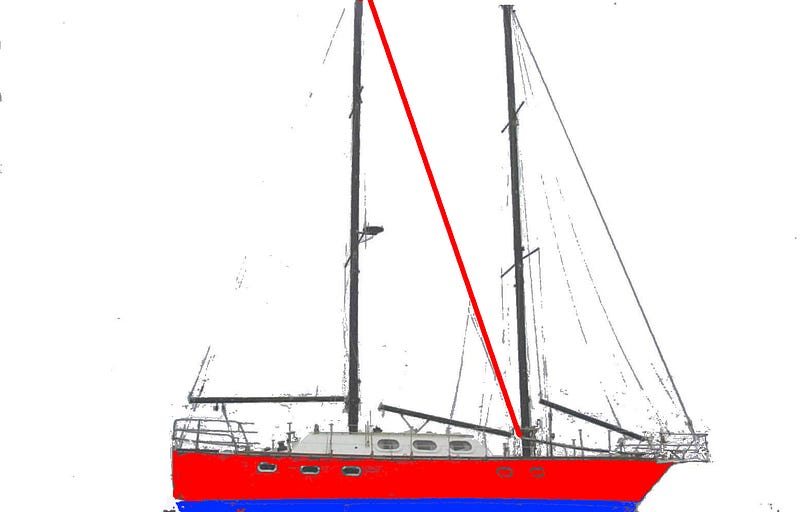
And there it was — one of our rigging stays had failed at the masthead and the roller furler was flailing about with a sail wrapped around it hanging almost literally by a thread — its halyard (a line which hoists the sail).
It wouldn’t stay like that for long until the whole lot came down on deck — or over the side. I had to act quickly.
But what to do?
As the doctors say ‘do not make things worse’. I called the First Mate and after an hour’s puzzling and fiddling we got the heavy furler and sail lowered down on deck and lashed securely to the guardrails as the sun rose. A fitting had failed at the masthead. That was it.
The rig is a schooner rig and the masts were safe, thank Neptune! You can’t call Green Flag out here and fortunately we’d been able to make it safe without me having to climb the mast. What next?
Push on. There was not much choice really, was there?
Pitcairn Island — our destination
Pitcairn Island is a small, remote island in the Pacific Ocean. It is one of the most remote inhabited islands in the world.
It was first colonized by Polynesians in the 11th century. They established a culture that flourished for four centuries and then vanished. Resources were scarce.
It was later discovered by a British explorer, Captain Philip Carteret, on 17 January 1767, although a Portuguese explorer had sailed past some years before. Carteret named it “Pitcairn’s Island” after the son of one of his officers, Robert Pitcairn, who was the first to set foot on shore.
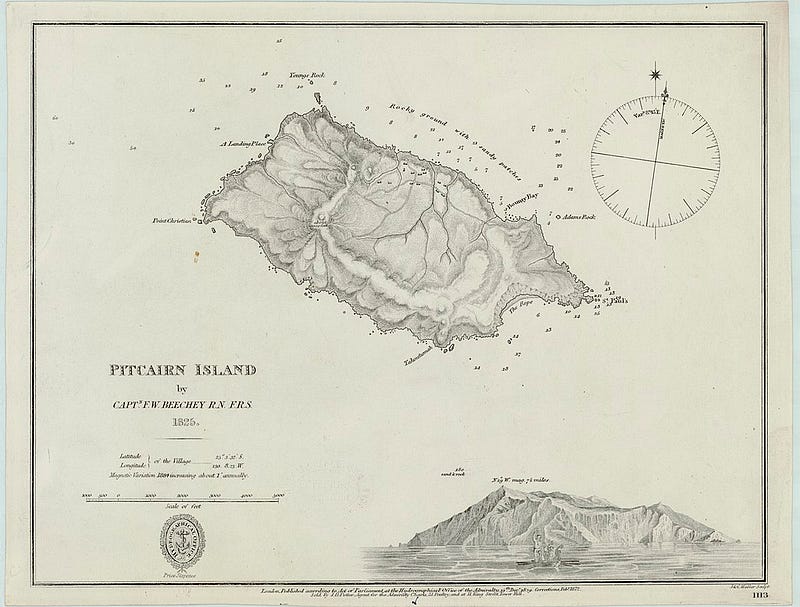
The island is best known for its mutiny and subsequent exile to that island of nine mutineers from HMS Bounty and their Tahitian companions from 1790 to 1808. This story has been retold in many books and films.
In 1814, six of the mutineers were granted amnesty for their part in the mutiny on condition that they remain on Pitcairn Island. They later found out that there was no way to escape because it’s such an isolated place.
When an American seal-fishing ship landed on the island in 1808, they found a thriving community but the only Englishman found there claimed to be “John Adams”. The wrecked Bounty could be seen in the shallow waters off Pitcairn’s shore.
In 1864, the British government began to take an interest in the island and appointed a resident magistrate to oversee the affairs of the colony. In 1903, the island was officially renamed Pitcairn Island and a new settlement called Adamstown was built.
The population of the island continued to grow and by 1960, there were over 200 people living on the island. However, over the years, the population has gradually declined.
The islanders developed a strong sense of community and kinship. They also developed their own unique culture and traditions. By 2018 the island was home to about 50 people, most of whom are descended from the mutineers of the HMS Bounty.
There is much more about the inter-racial tensions, polygamy, massacres and murders at Wikipedia.
It’s an interesting place and we wanted to visit, although anchoring and getting ashore from a boat is notoriously difficult and the reception from the locals is reportedly unwelcoming even though they need the ‘tourist dollars’. Yes, cruise ships call here, but needless to say, there’s no airport.
900 miles to go
As I wrote earlier, the seasons were turning. I was downloading a daily weather forecast over a satellite link. Things ahead were getting worse
A week after the rigging failure we were making reasonable progress but the weather was becoming much more variable with squalls and fronts coming through from the west. Depressions were more frequent.
120 miles to go
And then one night, we had to make the decision. There was a big weather depression going to hit Pitcairn as we arrived — IF we arrived. The island was by now 120 miles to the south west of us. We would be unable to anchor in the single exposed anchorage, unable to land. We’d have to sail around the island for a few days and wait for suitable conditions as some other boats had done in the past.
And so, still having concerns about the rigging, we headed north of west for the Gambier Islands, part of French Polynesia, 600 miles to the west. It was definitely a seaman-like decision, although hard to take.
The Gambier Islands
The original plan had been to sail from Pitcairn up to Tahiti, but the Gambier Islands looked interesting and were nearer. We need R&R and I needed to work on the temporary forestay that I’d rigged after the failure.
So, six days later we arrived in Mangareva in the Pacific atoll.
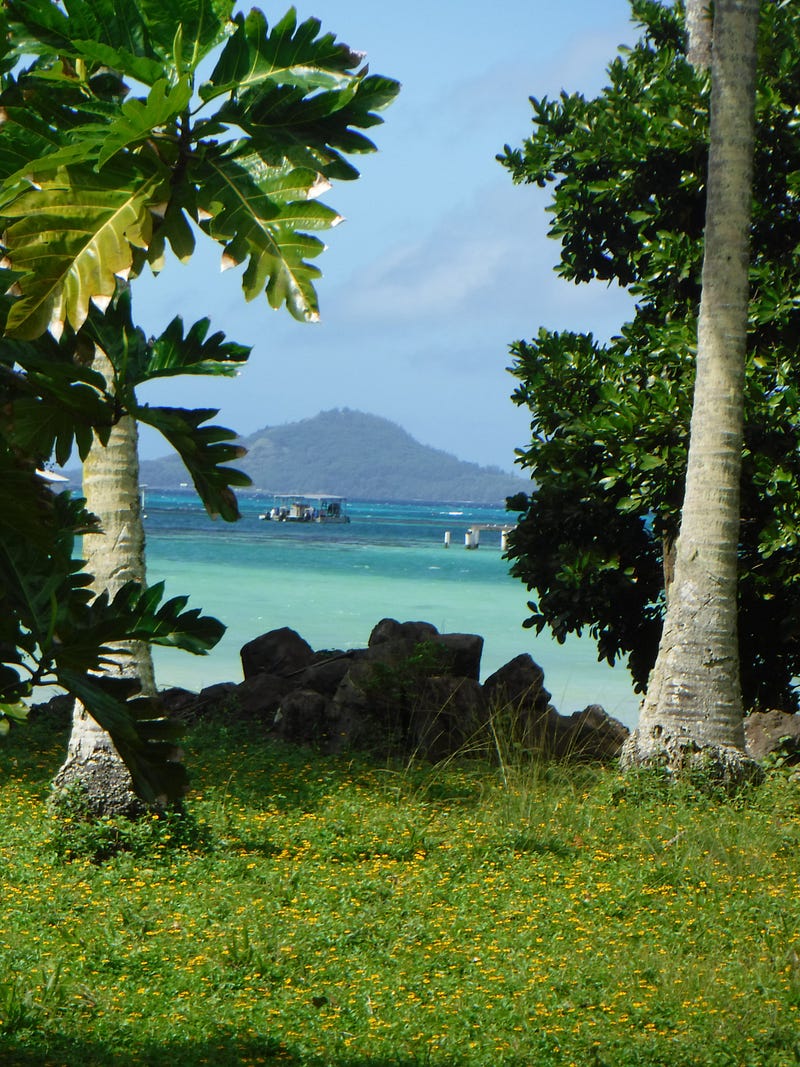
These islands were an unexpected delight with an interesting history, lots of pearl fishing, wonderfully large, sweet and free grapefruit, and (!) involvement in the French nuclear test series.
I’ll write later about our visit, so if you’re interested be sure to follow me here on Medium and find out about this fish and how we went foraging for food.
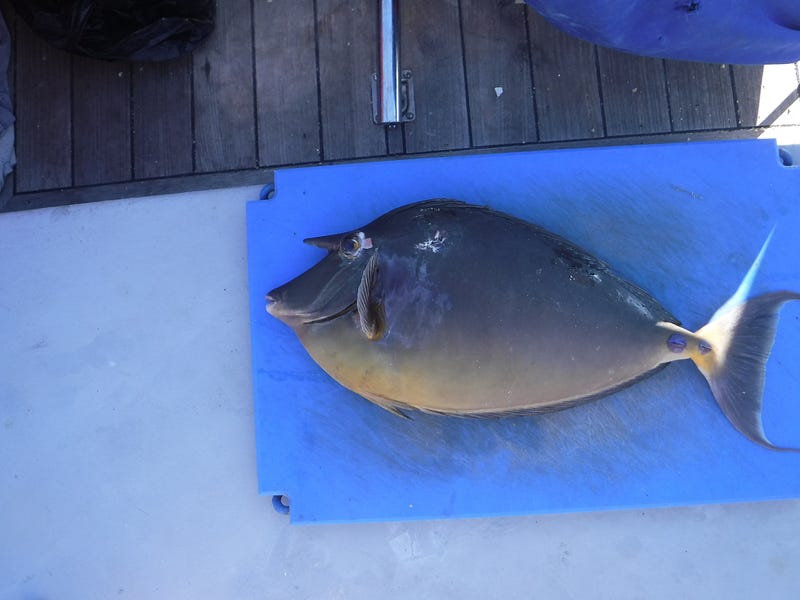
Did we eat it?
About me: I write on a variety of topics including humor, tech and travel, together with daily news events and the minutiae of daily life on a boat. I also write techno-thrillers…and about…
…living, writing and travelling to odd places in my boat
If you enjoy reading stories like these and want to support other writers and me, consider signing up to become a Medium member. It’s $5 a month, giving you unlimited access to incredible stories on Medium. If you sign up using my link below, I’ll earn a small commission at no extra cost to you.
You can follow me on Facebook Twitter @jamesmarinero . On Pinterest you will find many of my research photos from around the world. Check out my website where I occasionally have a free book on offer.


