
How I Spiraled Down The Dieting Rabbit-Hole.
And how God got me out of it.
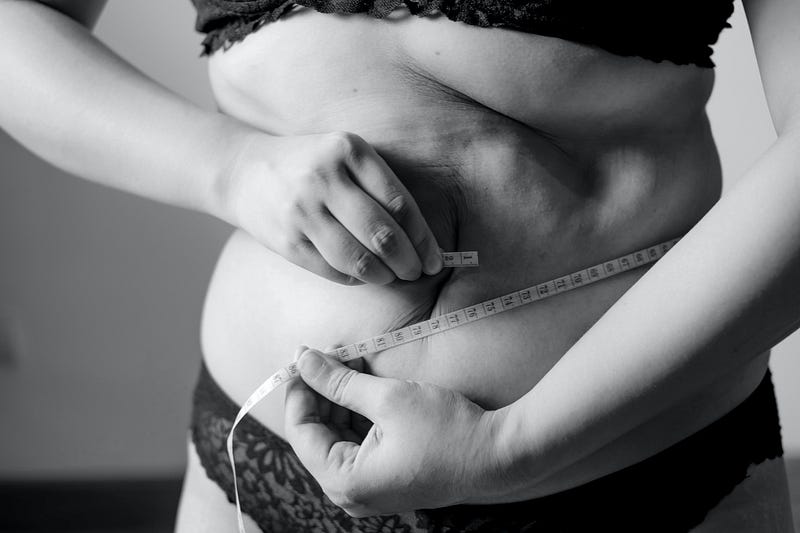
I was born and spent about eleven years of my life in Colombia.
I came to the USA in 2007. My life completely changed.
Before moving to the U.S., I had a relatively good diet, mainly comprised of home-cooked meals. Most of that changed, and I started to see the side effects.
As a pre-teen, I started gaining weight. By the time I turned thirteen, I had gained around 10 to 15 lbs.
Some may say this is normal for a growing teen, but my low self-esteem said otherwise. I thought I was getting, dare I say, fat.
Another reason I thought my weight gain was abnormal is because my diet changed to mainly processed foods, and I didn't grow in height that much.
As the years passed, I kept growing both vertically and horizontally.
I was an active teenager being a competitive swimmer (I lost the 10 lbs I gained and felt stronger than ever), but it wasn't until seventeen/eighteen that I took dieting to a different level.
I became obsessed with it. Losing weight became my number one priority.
During high school, I quit swimming and needed another way to channel my poor self-image and self-esteem issues.
By the time I was nineteen, I knew what I was doing wasn't healthy.
I did juice cleanses, extreme workouts, counted calories, only ate foods considered 'clean,' worked out for a minimum of one hour five days per week, and allowed myself only one cheat meal per week.
By twenty, I had full-blown disorderly eating habits that led me to binge eat after days of restriction.
I remember looking in the mirror during my junior year of college and deciding it was enough. I threw all the dieting rules out the window and started over.
The journey did not go as expected.
Unfortunately, eating in such a restricting way for years and then binging had its consequences.
I'm pretty sure this is why I developed appendicitis. At twenty-one, I had my appendix removed.
This came with a different host of problems.
For the first time in my life, I had digestion issues.
At first, they were severe. No matter what I ate or drank, I was constantly bloated. Sometimes it became excruciating, and all I could do was wait it out.
Through this season, I learned a valuable lesson about dieting and health. The only guideline you need to follow for dieting is eating foods that heal and nourish your body. That's it.
I had to re-learn what I could and couldn't eat — it was a long, frustrating, and arduous process.
After a few months, I felt relatively better. After a year, I had most of my symptoms under control.
What helped me throughout these years?
Eating mostly whole foods.
This is the one nutrition tip that works.
When my digestion issues first started, I stopped working out. Other events in life were happening at the time, contributing to my decision to stop going to the gym regularly.
I was afraid I would gain weight, but to my surprise, I didn't.
I know now it's because of that mindset and nutrition change — I prioritized eating only foods that didn't trigger any of my digestive symptoms.
Primarily whole foods and minimally processed foods.
I must admit I didn't help myself along the journey.
At one point, I became resentful of my body's change and inability to work as it used to.
Like beating a dead horse, I tried to force my body to eat the foods I was used to while simultaneously trying to lose weight again, still holding onto some of my disorderly eating habits.
I counted macros and calories, lifted weights again, did intermittent fasting, drank a gallon of water, etc.
Once again, I had to look at myself in the mirror and stop, just stop.
I didn't start genuinely healing until I was twenty-two, overwhelmed with graduate school and working as a graduate assistant, and having a part-time job off-campus.
In a way, I'm grateful for the overwhelming amount of work because it took my mind away from focusing so much on my appearance.
I started gaining back my normal hunger cues. I ate when I was hungry and stopped when I was full.
It felt as if I suddenly stopped binging, but the reality is I went months without obsessing over aesthetic goals. I didn't have the time or the energy for it.
My priorities shifted, and I am grateful to God every single day for that.
What felt like a tumultuous time turned out to be a blessing for my twisted mind. I needed to shift my perspective on health and dieting, my body image, and my priorities.
The reality that life was about to start after graduation made me realize how insignificant looking a certain way and being a number on the scale are.
I felt adulthood knocking at my door, and for the first time, I felt ready to answer.
Once I completed my master's degree, I felt healed.
I felt I was no longer a slave to calories, macros, and numbers.
My digestive problems did continue — I've spoken extensively about them. But my mind was no longer sabotaging my progress.
By the time I turned twenty-three, I felt I had won the biggest battle I had yet faced. I stopped myself from developing an eating disorder.
My perspective has completely changed, and my priorities are entirely different.
If you or anyone you know suffers from an eating disorder or disorderly eating habits, don't be afraid to seek help. I wish I had back then.
If you're afraid of talking to the people close to you like I was, there are plenty of resources available like BetterHelp — by the way, I'm not sponsored by them. They are easily accessible, so they may be a good first option.
Counseling and therapy services are more accessible than ever. I've been working with a counselor for four years now— whatever you do, don't give up hope that there's a life without restriction. There is.
You can transform your mind and what you see when you look at yourself in the mirror.
I did it, and I believe you can do it.