
How I Launched an AI Tutor Against All Odds

Cracking the Code of Product Market Fit — Part I
In the realm of business and entrepreneurship, achieving product-market fit is often considered the holy grail. As Marc Andreessen famously stated in 2007:
“The only thing that matters” is product-market fit.
This chapter of my Marketing: The Make or Break Force for Every Business series explores the essence of product-market fit, its significance in business success, and how it can shape the trajectory of a brand. We will delve into the story of Steve Jobs and his triumphant return to Apple, where he unleashed the groundbreaking iPod — a testament to the power of product-market fit, followed by my personal journey of launching an AI-powered preschool tutor for toddlers Animal Island Learning Adventure (AILA) at dm.ai amid COVID-19 pandemic.
Product-market fit refers to the alignment between a product and its target market. It signifies that a product meets the needs and demands of the market in a way that creates undeniable value and generates widespread adoption. Achieving product-market fit is critical as it determines the viability and potential success of a business. Without it, even the most innovative ideas may fall flat or struggle to gain traction in a competitive landscape.
To understand the true power of product-market fit, we must turn our attention to Steve Jobs and his visionary leadership at Apple. In the early 2000s, Apple was on the verge of decline, struggling to find its footing in a rapidly evolving tech industry. However, Steve Jobs returned to the company in 1997 and embarked on a mission to revolutionize the way we experience music.
Recognizing the potential of digital music and the frustrations surrounding existing music players, Jobs and his team set out to create a device that would seamlessly integrate music with technology. The result was the iPod — a portable media player that combined elegant design, intuitive user experience, and a vast music library.
The iPod was not just a music player; it was a game-changer. With its sleek design, easy-to-use interface, and iconic click wheel, the iPod captivated the masses and transformed the way we listened to music. Jobs understood the fundamental needs of music enthusiasts and crafted a product that not only met those needs but exceeded expectations.
The success of the iPod was not merely a stroke of luck. It was the result of meticulous planning, deep market understanding, and a relentless focus on achieving product-market fit. Here are the key factors that contributed to the iPod’s resounding success:
1. Identifying a Compelling Problem: Jobs recognized the frustration and inconvenience that music enthusiasts faced with existing music players. He identified the need for a device that could store and play a large music library, be easily portable, and provide a seamless user experience.
2. Designing an Intuitive Solution: Apple’s design prowess shone through with the iPod’s sleek and minimalist aesthetic. The click-wheel interface made navigation effortless, and the integration with iTunes allowed for seamless music synchronization.
3. Building an Ecosystem: Apple’s strategic approach went beyond the iPod itself. They created a comprehensive ecosystem that included iTunes as a digital music store and software for organizing and syncing music. This ecosystem strengthened the product-market fit by offering a seamless end-to-end experience.
4. Timing and Market Readiness: The launch of the iPod coincided with the rise of digital music and the increasing popularity of MP3 files. Apple seized the moment and positioned the iPod as the go-to device for enjoying digital music.
The iPod’s extraordinary success demonstrated the immense power of achieving product-market fit. It not only propelled Apple into a new era of growth but also revolutionized the music industry. The iPod became synonymous with portable music, and its success laid the foundation for future iconic products like the iPhone and iPad.
The lessons learned from the iPod’s journey extend beyond Apple’s success story. It serves as a reminder that understanding your target market, identifying their pain points, and delivering a solution that aligns perfectly with their needs is the key to achieving product-market fit.
Product-market fit is the cornerstone of business success, as Marc Andreessen aptly stated. The story of Steve Jobs and the iPod exemplifies the transformative power of achieving product-market fit. By identifying a compelling problem, designing an intuitive solution, building an ecosystem, and capitalizing on market readiness, Apple achieved a level of success that reshaped an entire industry.
As you embark on your own entrepreneurial journey, remember the critical importance of product-market fit. Invest time in understanding your target market, their needs, and the unique value proposition your product brings. By relentlessly pursuing product-market fit, you will be laying the foundation for success and positioning your brand for remarkable growth and impact.
“If I had asked people what they wanted, they would have said faster horses.” ― Henry Ford
Innovation takes unique insights, great vision, and relentless execution. Lots of times, it’s an uphill battle swimming upstream against the current. When many more people say NO to you than those who say yes, you still believe in it and passionately work at it; you are a contrarian.
In this interview with Bloomberg, Vinod Khosla, Khosla Ventures founder, talks about investing in green technology, the future of venture capital returns, and how to be a successful investor. A contrarian produces a huge consequential outcome with exponential return on investment (ROI). OpenAI is one of Khosla Ventures' portfolio companies.
Today, OpenAI has over 100 million users thanks to ChatGPT. The website generated 1.6 billion visits in June 2023. Five years ago, most consumers considered artificial intelligence (AI) as research and development (R&D). I was recruited to join Dark Matter Artificial Intelligence (DMAI) as Chief Marketing Officer in March 2019, there was not a product at the company. I was the only go-to-market person out of hundreds of employees who work on various AI projects.
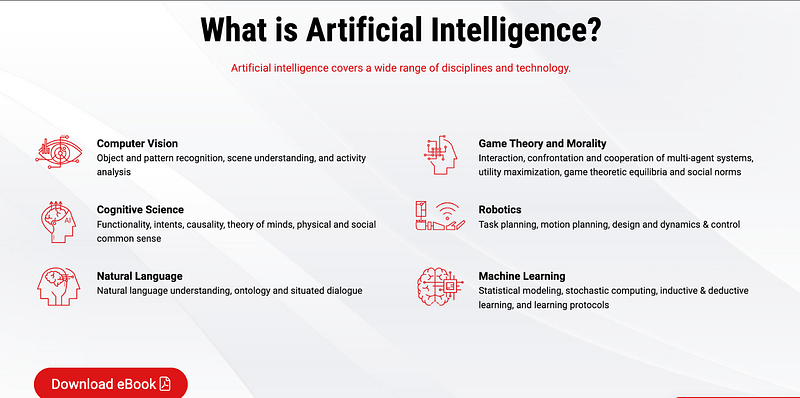
Not a Ph.D. or engineer, I had a steep learning curve at the beginning. To build trust and awareness with consumers, I brought in creative talents quickly and published our eBook. We filmed an exclusive interview with Prof. David Mumford, one of the most influential scientists in the AI history.
What if we can provide an AI assistant for everyone on their life journey of learning, working and living? We named it MAIA (My AI Assistant). To test the idea, we run pilots with 3rd — 5th graders around the country. At that time, without Generative AI and Large Language Models in full swing, it’ll take us much time to build the minimum viable product (MVP) and bring it to market.
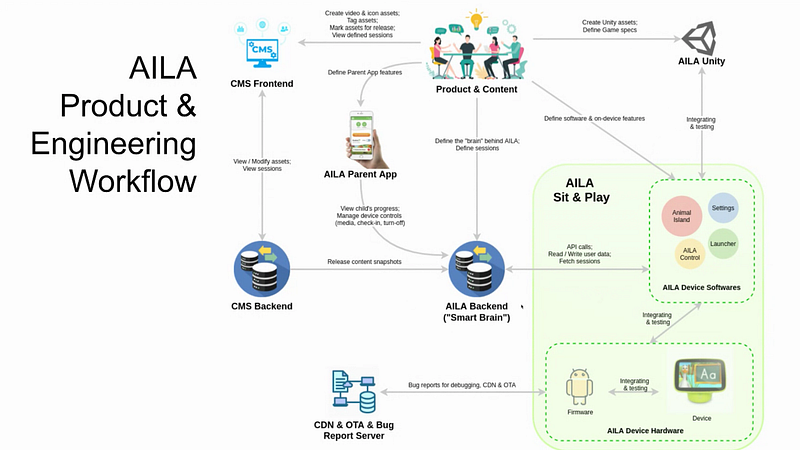
How about an AI Tutor for toddlers with a full preschool curriculum hosted on the cloud with our proprietary algorithm, connected child friendly hardware and mobile app for parents? That’s the Animal Island Learning Adventure (AILA) Sit & Play Preschool Learning System.
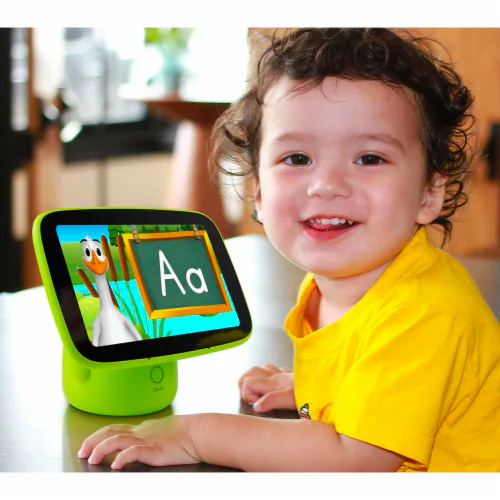
It is a contrarian product for a blank space as an AI tutor on a toddler-friendly tablet for 1–3 years old children, whose parents may resist a screenbased electronic device no matter how smart it is. All other tablets, such as Amazon Fire Kids Tablet, start at 3 years old. Besides that, our cost of goods sold (COGS) was higher than the retail price of other generic Android tablets in the market. At a manufacturer recommended retail price (MSRP) of $199, we have an uphill battle to differentiate our AI Tutor from other preschool electronic learning toys that hit the sweet spot of pricing between $19 and $79.
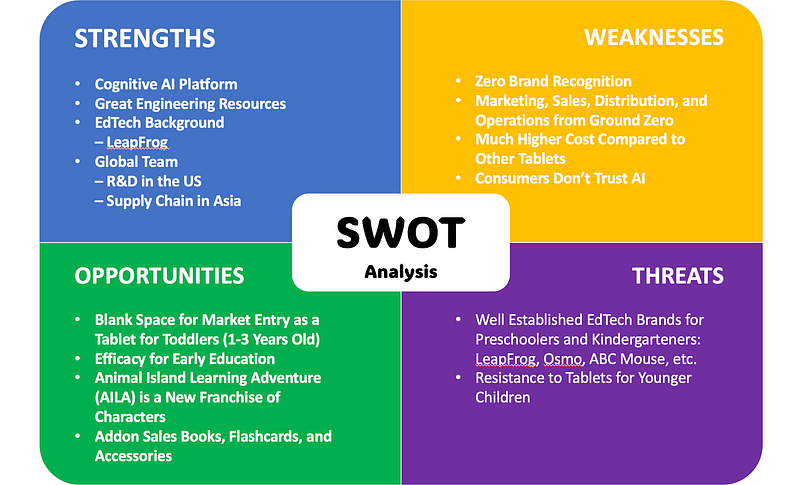
From the beginning, many people were skeptical or even dismissive of the idea of an AI Tutor for toddlers. It took cross-functional teams between content, engineering, and marketing to make it happen all together.
Against all the odds, AILA became the #1 New Release on Amazon on April 10, 2020 shortly after its launch at the end of March. Amid COVID-19 pandemic, we achieved product-market fit and had a successful launch.
In Part II, I’ll delve into product marketing with unique insights and how to measure product market fit. Read more now:
Marketing: The Make or Break Force for Every Business


