
How I Cultivated a Self-Sufficient Mindset That Made Living Alone Easier
These daily habits helped me stay sane and use solitude to embrace personal growth

Ever since I started working in July 2018, I’ve been living alone in a two-bedroom apartment. In the first few months, I didn’t have an internet connection or a TV. I knew nobody else well enough to socialize. It was just me, my books, and a shaky 2G internet connection that took several minutes to load a text-only page.
It’s been more than two years now. I got myself high-speed internet, but I still don’t have anyone to socialize with. I spend most of my time either in my office working or by myself at home. And no, irrespective of how gloomy a picture this might paint, it isn’t as bad as you might think. As a creative person, I’ve learned to make the most of my solitude and turn loneliness into art. A study published in the American Journal of Sociology established that unmarried persons who live alone are comparatively in better mental health than those who live with others.
To me, being self-reliant and self-sufficient has become a way of life. But it wasn’t always the case. I struggled a lot with feelings of loneliness and boredom in the initial days. The fear of missing out was all-consuming at times, and I used to feel that everyone in this world has someone to hang out with except me. But over time, with some conscious steps, I’ve cultivated a mindset that has helped me survive living alone while taking care of my physical and mental health. After all, as Viktor Frankl said, life is more what we make of it than what happens to us.
“The one thing you can’t take away from me is the way I choose to respond to what you do to me. The last of one’s freedoms is to choose one’s attitude in any given circumstance.”
— Viktor E. Frankl
Like everything else in life, it’s possible to cultivate a healthy attitude toward solitude and to enjoy one’s own company without craving companionship all the time. In this article, I’m going to discuss and outline the daily habits and conscious efforts that helped me move toward a more self-sufficient mindset. If you live alone and are finding it hard to cope with the absence of human interaction, these strategies are gentle suggestions for self-care while living on your own.
What You Do Every Day Might Very Well Become Your Life
I’ve learned from experience that having a daily routine not only feels comforting; it also gives you a lot of mental peace.
Living alone can be harsh because you don’t have anyone else to keep tabs on your behavior. It’s easy to let your life slip into disarray. However, these six daily habits, which anyone can use, kept me grounded.
1. Get a change of scenery every once in a while
When you get sucked into the daily humdrum of life, alternating between your workplace and home, it can get tiring to see nothing but the four walls of your room or your computer screen all day long.
When things got too frustrating, I decided I needed to make a conscious effort to spend more time with nature. I started going out to the terrace for a 20-minute walk each evening just before sunset. I didn’t take my phone with me, and I used that time to listen to the wind and the bird songs, and to appreciate the silence around me. I was worried I might be wasting time, but this short walk left me so invigorated that I could get back to my work with renewed energy. This helped improve my productivity as well.
Since I am fortunate enough to live on a beautiful campus, my evening walk also gives me an excuse to capture a lot of beautiful photographs.

This belief was further corroborated when I came across this study by Nature, which established that spending at least 120 minutes a week (17 minutes a day) in nature is associated with good health and wellbeing.
How you can do this:
Either take a short morning walk or a walk on the terrace at sunset. If you live in a place that does not have access to nature, you can also walk in a mall or around your neighborhood. The idea is to step out of the place you spend most of your time and get yourself a change of scenery.
No matter how busy your life is, this time of the day will be yours. You can use it to unwind, ideate, or take some time off. The effects on your mental health and productivity will be almost immediate.
2. Go on an “idea diet”
I used to waste a lot of time before going to bed scrolling through social media. This can have a detrimental effect on your mental health if you’re living alone, especially when you see all your friends posting pictures of the parties they’ve been to or all the amazing places they’ve visited while you’re cooped up inside your house.
It took me a lot of willpower to leave my phone on a table far away from my bed before lying down to sleep. Instead, I took a book or an e-reader and spent the time before falling asleep reading.
I call this the “idea diet.” Instead of filling my brain with the mindless negativity of social media, I was spending the time getting creative ideas into my head. Those 15 or so minutes I spent reading helped me relax at the end of a long, tiring day and put me in a good mood. Research has shown that reading fiction significantly improves a person’s mood and can have a long-lasting impact on their mental health.
For a lover of reading, books are like those friends who offer you a warm hug when you are at your lowest. They don’t judge or ask questions but are there with you. And sometimes, that’s all you need.
How you can do this:
Ditch your phone. Yes, it’s going to be difficult because it’s never easy to break out of a habit. If you find yourself struggling, you can set the alarm for a few minutes and use the time until it rings to read.
Take a paperback or an e-reader with you to bed. Even if you are not a reader, it can never hurt to pick up a book. When you read non-fiction, it is as if you are absorbing the life experiences of the greatest leaders, entrepreneurs, and thinkers of all time. Even if you read fiction, it can help you get better at the language. No matter what your day job is, having good communication skills always helps.
“Reading is like a super power. And when you can relate books to each other (combining what you learn from Old Man and the Sea with the latest book on Bitcoin, for example) then it’s as if you’ve read an exponential number of books.”
— James Altucher
3. The joy is in the motion
Exercise helps release endorphins, the neurotransmitters in your brain responsible for making you feel happier. Exercise is also known to reduce anxiety and stress and help people suffering from depression cope better. After spending months just sitting all day long and doing nothing, I took matters into my own hands and started working out. I designated 30 minutes each evening for some bodyweight exercises at home that helped me lose 5 kg and feel great about myself.
How you can do this:
- If you’ve never worked out, you can start your day with a few minutes of morning stretches. Increase your activity by a minute or two each day. Having a designated time for working out or stretching always helps you fit it better into your routine without feeling lost.
- Get a standing desk and spend at least half of your time working on it.
- Walk while talking on the phone.
4. Write it out for the right emotions
Writing in a journal is one of the most productive ways to wrap up your day. Even before I started living alone, I’d been writing in my journal almost daily for the past 15 years. I use it to generate ideas, boost my productivity, and understand my emotions better. Several studies also suggest that journaling can be an excellent tool for self-awareness and growth.
How you can do this:
Take a blank notebook and make a point to write in it every night. Here are a few prompts I use that you might find helpful:
- What can I be thankful for today? This will help you make gratitude a part of your life. Studies have shown that practicing daily gratitude can boost mental health and improve happiness in general.
- What did I accomplish today? This will help you get a clear sense of how you spent the day.
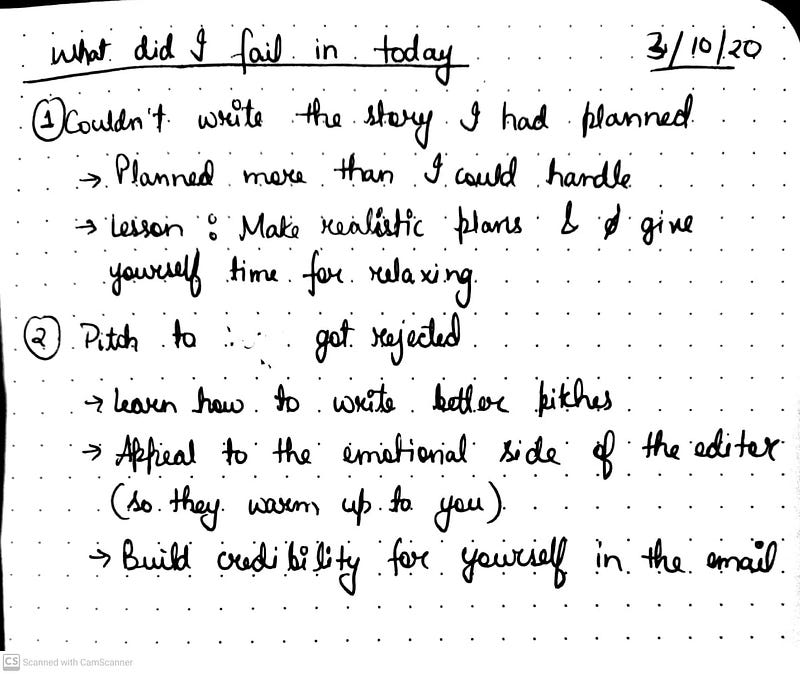
- What did I fail in today? There is no learning without failure. When we learn to analyze our failures and look at them objectively, only then will we be able to derive valuable lessons from them.
- What are ten ideas I would love to work on? This would help you embrace your creativity and also exercise the idea muscle in your brain so it can generate better ideas on a daily basis.
5. Know what you’re putting into your body
Studies have shown that the quality of a person’s decisions declines after an extensive session of decision-making. This phenomenon is known as decision fatigue. If you spend too much time planning what you’ll eat for lunch and dinner every day, you end up exhausted. The decisions you make after meal planning will suffer.
I used to obsess over my meals a lot in the initial stages of living alone. Every afternoon before cooking lunch, I used to open my fridge, stare inside for several minutes, and get frustrated because I didn’t have the ingredients for what I wanted to eat. To avoid this, I started planning my meals a week in advance. I usually take a print out and stick it to the entrance to my kitchen so I don’t skip the routine.
Not only did this save me from unnecessary frustration before each meal, but it also helped me plan my grocery shopping accordingly so I would never forget to buy the important items while going out.
How you can do this:
Every weekend, sit down and write out your weekly meal plan. As per the food you like to eat, plan your breakfast, lunch, and dinner for each day of the week. Next, according to the kind of food you intend to prepare, make a shopping list and carry it with you when you go out.
Remember to give yourself the leeway for cheat meals. Also, keep extra items like eggs, instant noodles, or sausages in the fridge so you have a backup plan if you aren’t in the mood to have the designated meal for the day.
6. Get the creativity in your soul flowing
Since I am a writer, I find happiness in writing daily. It’s not that I measure my happiness in how productive I’ve been but that I always find my mood significantly better after completing a creative project. Studies have shown that creative pursuits directly lead to more happiness and help a person stay motivated.
How you can do this:
Find a creative outlet and put everything you have into it. It doesn’t matter if you are bad at it or can’t find a way to monetize it. The point is to take a step outside your comfort zone and try to create something new and different.
You can start by doing something you’ve always wanted to try. Or you can take up a home improvement project. Paint a landscape, write an article, learn to play an instrument. Make a daily habit of nurturing your creativity. You can do it on your own or enroll in an online class. After a while, if you feel that a creative outlet isn’t working for you, you can always move on to something else.
Mindset Shifts
Aside from the daily habits, I practiced some mindset shifts that helped me preserve my mental peace during the time I lived alone.
Be your own comparison
What worked for someone else might not work for you. Just because that friend on Instagram goes to parties every weekend doesn’t mean you need to do the same while living alone.
Look for purpose in things that truly make you happy. Filling your silences with activities that provide instant validation will only make you feel worse later on. True peace and self-awareness come from accepting yourself as you are and not from judging yourself by standards set by society.
Practice self-compassion and kindness
The first few days (or weeks or months) won’t be easy. You have to give yourself time. Celebrate small wins. There can be days when the most you did was drag yourself out of bed and make yourself a meal. That is no mean feat. You don’t have to be at your productive best every single day of the year.
There were days when I was struggling to write an answer to the question “what did I achieve today” in my journal before going to bed. All I could think of was “Nothing. Nothing. Nothing. You are such a failure.” But then I remembered I had done the laundry, and I added that. One measly task, but it was enough to make me feel better.
When you live alone, you are your own cheerleader. Sure, the voices inside your head will try to pull you down, claiming you wasted the entire day, but don’t listen to them.
It does not matter if you failed.
You tried.
And on some days, that’s all you need to do.
Take up all the space
One of the biggest perks of living alone is that you have nobody else encroaching on your personal space. The entire house is yours, and you can do whatever you want. Walk out of the shower naked, dance, sing out loud — spread out as much as you want, and then spread out some more.
This really helped me a lot on days when I was at my lowest. I started having whole conversations out loud. I stood in front of the mirror and practiced speeches I would give when I pitch my products. I talked to my houseplants about how grateful I was to have them living with me.
Of course, it sounds silly, and you really need to get rid of these absurd habits when you’re in your office or in the presence of other people, but trust me, being silly when you’re alone helps.
Don’t be afraid to ask for help
I exercised, went on walks, ate healthy, journaled daily, and read a lot of books. But there were days when none of these was enough. I felt anxious and borderline depressed. Since I had volunteered to be my biggest cheerleader, I pulled myself up and sought a therapist. A few sessions later, I was feeling myself again.
Remember: No matter how easy or hard the battle is, you don’t always have to fight it alone. Studies have shown that for people who live alone, periodic therapy sessions can go a long way in helping them maintain positive mental health. In today’s digital age, seeking therapy has become easier than ever, with so many counselors providing online sessions at nominal costs. You don’t have to wait until you have a breakdown to seek help. Simply wanting to feel better is a perfectly good reason to make an appointment.
Wrapping Up
The most important lesson you need to remember is that loneliness and solitude are different. The former comes from the absence of something (companionship, understanding, mental peace) while the latter stems from abundance. If you learn to accept yourself and your silences, you will stop craving company and learn to nurture your solitude into something beautiful.
“I have always felt loneliest in the presence of other people. People I can’t connect with. People I feel unseen by. People who make me feel insincere or uncomfortable. For me, loneliness comes from a sense of missing something. I never miss anything when I’m alone.”
— Kate Christensen


