
FUTURE
How Homelessness Became Our Magic Adventure
We Live in a Cold Caravan
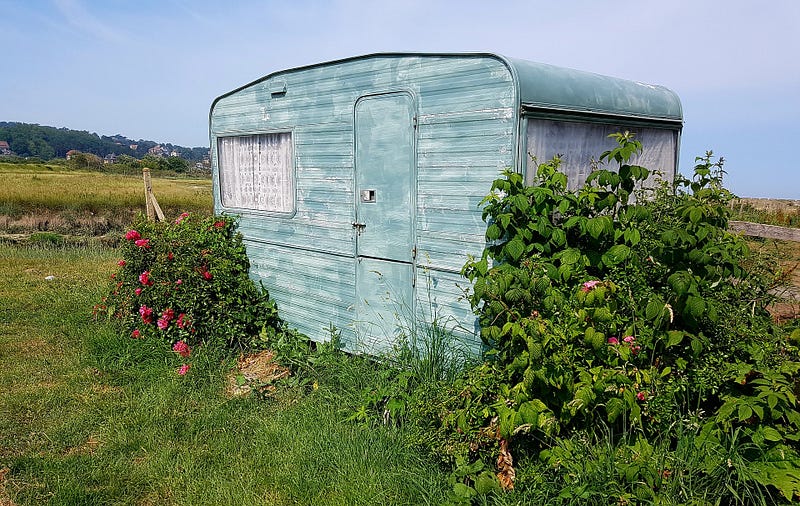
Alexander Bower, a fellow changemaker, inspired me to write this story. Because the life of a changemaker seems adventurous and glossy. Traveling to Indonesia, talking to influential people, contributing to impactful projects. But there’s another side to it. There’s a price to pay before the necessary change for all of us will have happened. Before we can all live happily ever after.
Today, I’ll tell you about our journey into an impactful life. It’s an adventurous story, not a sad story. We make choices. And the fact that we are living a full life choosing love is compensating for the discomforts.
Mike and I are changing economies with our work. Aligning our money systems with ecology and the human spirit. Raising awareness for our broken human systems such as business models, societies, and laws. Contributing to the change by putting our hands literally in the soil of regenerative farms. And designing new tomorrows.
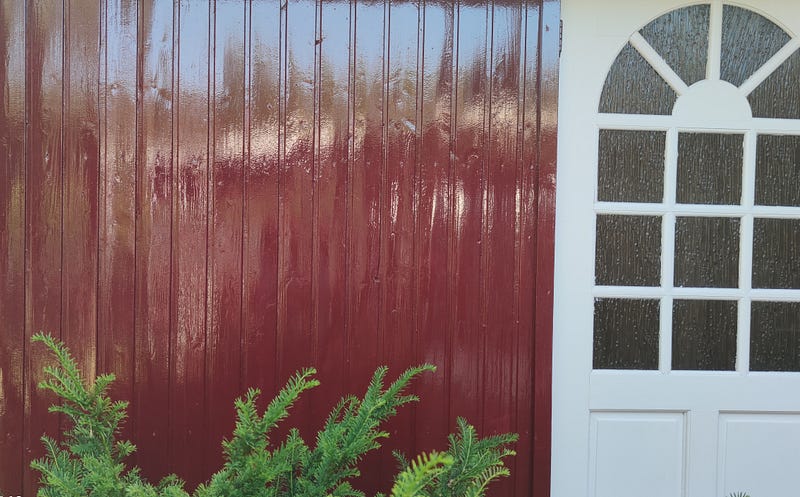
We are walking our talk. And we live in a cold, red caravan.
Why this is relevant for all of us? Well, that’s simple. Everyone can become homeless in a split-second. Financial hygiene is not so easy in the western world of debts and free-market prices. We have become slaves of hard work and modest paychecks while real estate speculators earn the big bucks. Luckily, a lot of people are working on solutions. But we need more action. And faster results.
Mike and I are no victims, you know. None of us are. We can stand tall and do what it takes to unleash the abundance of nature and support healthy, local economies. And find ways to live with our personal choices. It’s an adventurous life worth living. But it would have been nice to have a flexible way to live legally in a small, affordable, healthy house.
And I wish a full, magical life for you all.
Mortgage Rate 12%
Personally, I have never been really poor. Not rich either. I held business jobs. Earned a steady income. I did change jobs often due to getting bored easily in the business world. Thus, my pension fund looks more like a hole than a juicy donut.
My first house was located under the smoke of Amsterdam. I bought it together with my ex-husband in 1991. And I remember we paid approximately 12% interest on our loan. Not many of the 346,000 people taking out a mortgage in the Netherlands in 2018 realize this. But I remember those times well.
Imagine what would happen if interest rates would rise to that level again? And all those people, who now pay around 2% across Europe, would have to pay 12%? I don’t dare to think about it.
Extreme poverty and misery will be upon us. And no bank will take responsibility and will accept that you hand in your front door keys then. Your home is your responsibility. Huge debt and all…
Divorce
What happened to me? I got divorced. In 2013, my marriage broke up. Our house was still largely mortgaged. So I received a bit of money and I went to live in a small house in nature. A rental. Free market price. I could afford it. I had a steady job as an international marketing manager for a high-tech company.
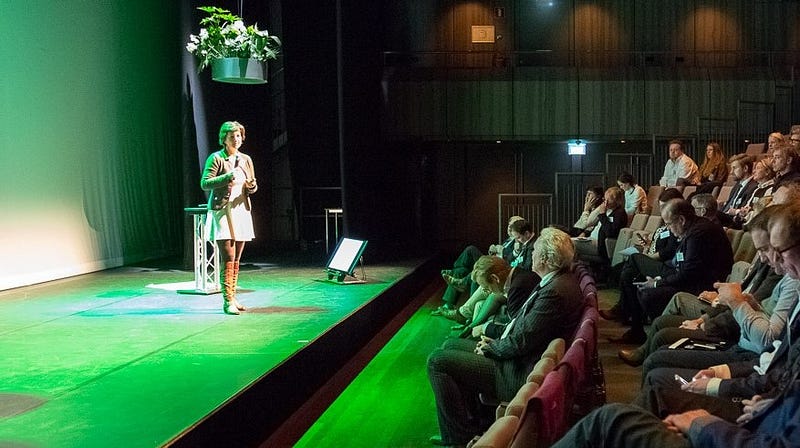
In 2014, the longing to live an impactful life became overwhelming. I became an entrepreneur with regenerative projects. And experimented with my income streams. Impactful work is often done with start-ups and NGOs. No easy money there. And when you are not famous (yet), appearances on stage are often offered for ‘visibility’, not money.
And I was still studying big time.
After a few years of living in my small house in nature, I realized that I had spent nearly €30,000 on rent. Down the drain. Nothing to show for it. That’s what free-market prices do. And I could afford it no longer. The place had helped me heal my spirit, find my strength, so I thanked her warmly for her comfortable shelter underneath my friend the walnut tree.
I went in search of another home solution.
Social housing wasn’t an option. There was still a huge waiting list before me. I was alone, could handle it. But if you have children to take care of, I have compassion. No parent should have to deal with being homeless.
A small, affordable, healthy home is a basic need!
It’s ironic that we prove the professional business case for healthy buildings in our Healthy Building Network. But that, due to the broken systems in economies and societies, accessibility is a long way off for normal citizens.
Legally Squatting
For me, my next home was an anti-squatting house.
“Anti-squatting is basically legal squatting: the act of allocating empty buildings to the applicants, this time legally and under supervision. These buildings are mostly vacant industrial buildings, schools, or hospitals. [..] However, it does not resolve the housing crisis in the Netherlands.” — Utrecht Centraal
My home lasted less than a year. They wanted to make cramped homes for seasonal immigrants. 6 people in one unit, working for the building and farming industry. It didn’t happen. It’s again empty now.
Not wanting to relocate so often, and with limited anti-squatting options where I live, I bought a caravan with my divorce money.
A cold caravan. Not insulated. With only 10 Amps of electricity, we have to adapt our appliances. It’s moldy if we aren’t careful. This morning it was 2 degrees Celsius when I woke. The water pipes can freeze. And our freezer stops working below 5 degrees.
However, it’s an inspiring place to make our impact. Simple living with little stuff and a low ecology footprint. In the forest of Limburg. She’s red. She’s cozy. She’s where Mike and I found love. Designing life’s new systems with squirrels, deer, and foxes closeby.
Legally, we aren’t allowed to live in her permanently, though. So, we divide our time between our caravan, my mum’s attic, Mike’s 7-year adventure with Foundation Phien, and our impactful projects abroad.
Widower and Daughters
Mike’s life adventure has been different from mine. Mike earned an honest living as a truck driver. He became a widower young in life and raised his two young children alone. Often working 50 hours a week to pay the rent. Luckily helped by family members to give his daughters a relatively worry-free childhood and grow up to be the beautiful, loving mothers they are now.
Transport companies aren’t that stable. Bankruptcy is no exception.
“A wave of bankruptcies will roll through the Netherlands from this autumn, credit insurer Coface said in a report on Thursday. According to the company’s calculations, nearly 8 thousand companies will be declared bankrupt in the 18 months after the summer.” — NL Times, June 2020
Mike lost his job in the year when he turned 50. He was too old, too much of a risk for employers, to get anything but temporary jobs. No fat paychecks. No glossy living. Gaining huge wisdom and a compassionate heart in the process.
Mike owned a home once. He paid 12.8% interest on the loan. And when he broke up with his girlfriend, he got in deep money trouble. He found his way out but swore never to be in debt again. Wise man...
Foundation Phien started 7 years ago. The idea is that the land will be given back to families and nature. So families can live a self-sustaining life in a small house with a hectare of food-forest. An idealistic project providing solutions for the earth and for people like us. Solutions for young children growing up in poverty and for old people dying lonely and broke.
But bureaucratic mills grind slowly. The permits for renovating the farm and building the small houses are still not given. The farmhouse itself is 100 years old. And because we need to renovate in order to live off-grid and sustainably, there is currently still no proper insulation. No hot water in the house. No comfort at all.
At this moment, Foundation Phien is the subject of a documentary on national television. Made by internationally acclaimed filmmaker Wiek Lenssen. ‘Bouwen aan het paradijs’. Translated: Building our Paradise. Mike is one of the people featured in this film.
Foundation Phien provides solutions for young children growing up in poverty and for old people dying lonely and broke.
Our Future
Mike and I will spend the rest of our lives loving, living, and working together. Building multiple solutions for a fair, inclusive, and regenerated world. Earth care. People care. Fair share.
So, what will be our future? Last year, our impact grew. I’m now more and more recognized for my expertise in complexity science, systemic design for complex social systems, and nature-based solutions for cities and the countryside.
Recognized as a Blue Economy Expert for the EU Commission.
Juicy detail: these projects for the EU Commission have earned me only €400 so far but make miracles happen when talking to people who need to hear the truth from someone with status.
Our book ‘Abundanism’ will appear this year. We’ll tell you how the work of two scientists, James Lovelock and Lynn Margulis, is at the basis of the new world we are building. Finding regenerative solutions for all broken human systems. Adapting to local ecosystems and local cultures.
Mike and I complement each other and together we have a bigger impact than ever before.
Land Speculation and Tax Reform
There are positive things to tell about the systems change too. Although our governments often don’t understand it (yet), many changemakers are working bottom-up.
The big culprits of the broken system are land and real estate speculation and tax systems. Municipalities, provinces, and national governments keep pointing fingers at each other. In the meantime, houses are getting more and more expensive. And the risks and burdens for citizens rise and rise.
“This year, existing homes in the Netherlands are likely to be on average 7.8 percent more expensive than in 2019, representing an increase of between 20,000 and 25,000 euros.” — Rabobank analysis
Henry Mentink, the guardian of a beautiful estate Het Veerhuis, is one of our fellow changemakers. He has taken the land and building off the capitalist market helped by crowd-funding and gave it to the community in a foundation. Never to be sold on any market again.
Together with economist Damaris Matthijsen, he has started a campaign to put all land on earth (57,308,738 square miles) on the Unesco World Heritage List. Creating real commons. Community Land Trusts are popping up like daisies in a lush green field. Will they change the future?
Land speculation is a large problem in the farming world too. Farmers need to make linear business models without care for the earth or their animals to pay for the land. New initiatives like Land van Ons and Aardpeer are now changing the landscape. Connecting organic, regenerative farmers with citizens. Crowd-funding land to create biodiversity and ensure healthy food systems.
Building the healthy houses we need and renovating our housing portfolio is not an easy endeavor in a country of roughly 41,800 square kilometers (16,100 sq mi) and 7.9 million households. Land use is competitive and landowners, including our government, are often selling or leasing the land to the highest bidder. Lately, that’s often a greedy foreign investor who sees money in solar panel fields instead of using land for healthy houses and healthy food production.
“There has been an explosive increase in solar parks, almost all of which are in the hands of foreign investors,” says Jan Rotmans, one of the biggest drivers of the energy transition as professor of transition science and sustainability at Erasmus University. 79 percent of the 33 largest solar parks are now in foreign hands” — Netherland News Live
Jan Jongert, architect and founding partner of Superuse Studios, is climbing the soapbox for tax reform in the building industry. I hope it helps as another puzzle piece next to creating healthy ownership of land.
Our Own Future
Our own future housing situation is not clear yet. Even a small house in the cheapest Dutch region is out of our buying league as long as we are entrepreneurs with an unsteady income. Living frugally, attracting multiple income streams, and increasing our impactful work is the way to go for us.
Even a small house in the cheapest Dutch region is out of our buying league.
Building a tiny house with Foundation Phien is no longer an option for us either. The stakes are too high for people like us who don’t have the skills to build their own house. Ecological building materials eat up the whole budget. And the tax-office is not kind for foundations. The land and small house have huge (virtual) value. Lawyers are trying to come up with solutions for the foundation and the pioneers but nothing’s final yet.
Our Voices
To our governments I want to say, go back to the drawing table. Change the systems to become more flexible. Putting a bandaid on is not enough. Think upstream, feel your heart, and optimize more stakes than just one. Work together with businesses and NGOs to change the business models and drive out speculation. It can be done.
To my readers, it’s time to stand up and make our voices heard. We all have different stories to tell, but I’m sure many of you have trouble keeping your head above the rising water of our broken human systems. Working too hard, stressing over money, and having no time to spend on the really important things in life. Raising our children. Loving and living healthy lives.
And it’s up to all of us to do something. Stop pretending that money is God. It’s driving the world insane! Let’s think about multiple values and heal these completely broken human systems. Let’s build a regenerative future for us all.
Being homeless and living the freedom lifestyle are two sides of the same coin. I just wish we could live in a society with flexible systems. In which I would be allowed to make my own balance of money, time, and freedom. Creating my magic adventure in my own way…
You can also consider joining our wave of change on Patreon.
And in the meantime, Mike and I play with the squirrels, listen to the wind whispering solutions, and love with heartfelt intensity.
Thank you, Mike, for adding your wise energy to my words.
Want to connect? You can find me somewhere on our beautiful planet, with my hands in the soil and my eyes gazing at the stars. Or find me via Linktree.
© Désirée Driesenaar


