
Theciva
How Google Ended Up Selling Google.com To Its Ex-Employee?
Who Thought A Late Night Search Could Result In This
“I can’t shake that feeling that I actually owned Google.com,” says Sanmay Ved who bought the world’s most trafficked domain for just $12, though only for a minute. The technical vulnerability he unknowingly discovered in Google’s own Domain Registrar Service allowed him to buy ‘google.com’.
29 September 2015, 10:50 PM IST (1:20 AM ET)
Up late night, Sanmay was exploring Google’s Domain interface when he searched for ‘google.com’.
Google Domain is Google’s very own internet domain name registration service. Launched in 2015, but still in beta.
To Sanmay’s astonishment, Google domains showed ‘Google.com’ to be available for just $12 which is around ₹900.
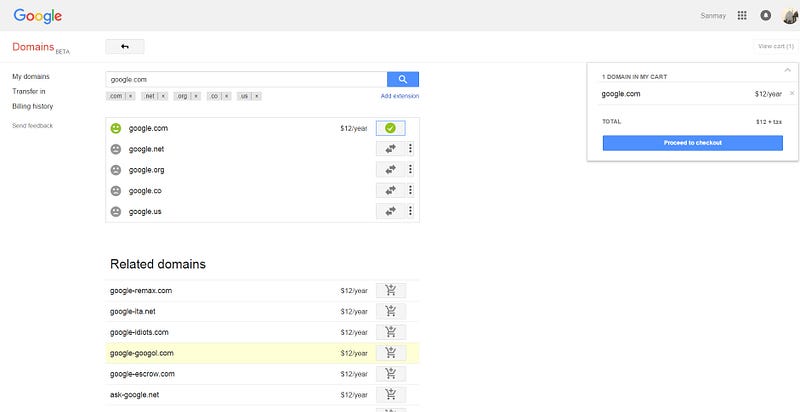
He clicked on the ‘Add to cart’ icon beside the domain’s listing, which shouldn’t have been there in the first place as Google.com is already registered.
The domain got added to his cart instantly. And he could now ‘Proceed to checkout’.
He continued the transaction further, expecting an error saying the transaction couldn’t happen. But he got nothing of an error.
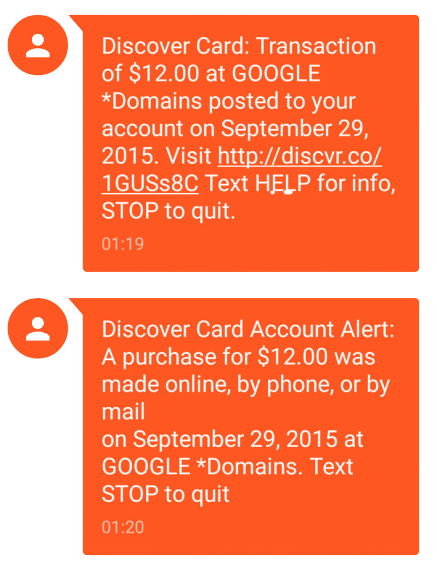
His card was charged $12 and the registration was successful, making him the owner of a domain worth $102,650,332,250.
Two Unusual Emails
Soon as the registration was successful, he received two emails. One from [email protected] and another from [email protected].

This wasn’t the first time he bought a domain but never had he ever received such emails in the past.
He chose not to disclose the email’s content publicly since it was related to Google.com.
Google.com and its subdomains were now his.
His newly bought domain successfully showed up in his Google Domains order history and on Google’s Search Console (aka Google Webmaster Tools).
He got some messages in Search Console confirming that he has become the verified admin/owner of Google.com.
He started receiving messages concerning the Google domain and its subdomains.
Google cancelled the registration.
A minute or two after the registration, however, Google cancelled it, informing Sanmay through an email. The order history on Google Domains reflected the cancellation.
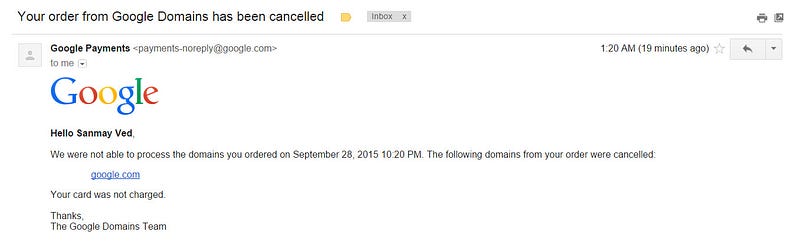
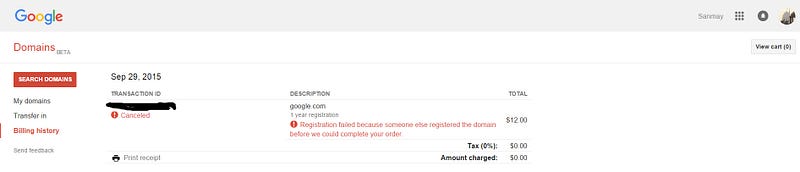
Sanmay went to Google Domains and searched for ‘google.com’ again. It finally showed as unavailable.
600613.com
Just a day after Indian Prime Minister Narendra Modi’s US trip where he met Google CEO Sundar Pichai, Google gave Sanmay a monetary reward in what Sanmay calls “a very Googley way”.
Sanmay, in his blog, preferred to keep the amount undisclosed.
But Google, later, announced the amount which was $6006.13 (~₹4,50,000). If you’re curious why that amount, it’s because the amount numerically spells out as ‘Google’.
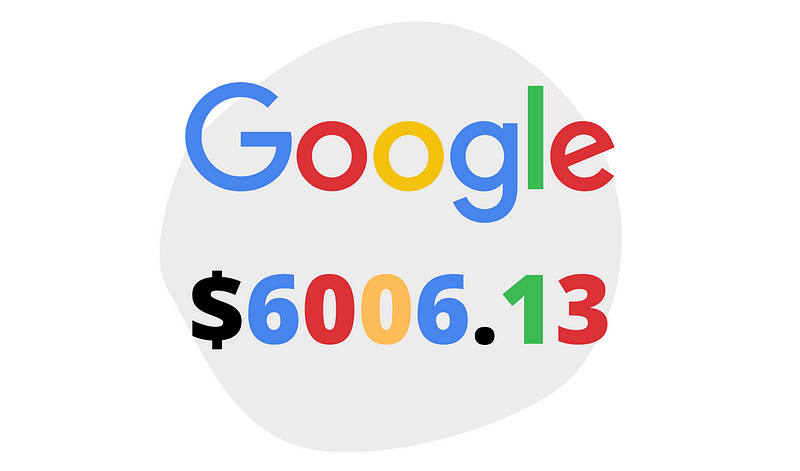
The blog post considered Sanmay a winner of their Bug Bounty Programme where they reward hackers who find a vulnerability in their services.
Sanmay wrote back to Google telling them “It was never about money” and asked Google to donate the whole amount to Art of Living India Foundation.
Google followed his request and donated double the amount to Art Of Living’s education program which runs hundreds of schools across India, providing free education to tens of thousands of poor children.
A Stroke of Luck
Sanmay believes he got lucky when he bought the domain. He had worked for five and a half years at Google before and considers himself a loyal Googler and Xoogler, reporting several vulnerabilities in the past which had gone unnoticed.
He “loves Google to heart” which, he believes, is why some divine force had given him the ownership for a few minutes.
Google still had a better situation than Microsoft
Google isn’t the only company to have a domain issue. Microsoft, in the past, had several times forgot to renew its domain.
In 2003, Microsoft forgot to renew the domain of its webmail service hotmail.co.uk. As a result, Microsoft lost its claim over the domain.
Sanmay had bought ‘google.com’ through Google’s Domain service that helped Google to recover quickly. But in the case of Microsoft, the domain service was The Registrar. So they had no option to get the domain back from a buyer without his discretion.
The domain was available in the open market for anybody to buy. Thankfully, a good-intentioned person got the domain and returned it to Microsoft.


