
Theciva // Hooked?
The Deceptively Easy Trick To Keep Your Eyes Off Your Phone
Why’d you open Gmail when Instagram is more attractive?
So you’ve finally decided to stop sticking your eyeballs to a screen all day?
That’s great.
But your love for your smartphone doesn’t seem to have any plans to go away with a blink. (But yes, a blink can be helpful.)
That’s so because years of psychological studies have been used to make smartphones more captivating.
You can’t spill water at their years of work in a moment, can you?
Not in a moment, but yes, you can.
This trick will make your phone a boring box. And help you throw it away and work.

But before knowing how you can keep your eyes from staring on the screen, you need to know
Why You Have Your Eyes On Your Phone All Day, in the first place?
Smartphone apps are designed to be captivating.
It’s not your fault if you feel a sudden urge to check your phone for any notifs.
And it’s not your fault either when you get drowned in an app for hours and you look at the clock and your eyeballs get enlarged with shock.
It feels like a minute on your phone is an hour in the real world.
That’s all because the smartphone industry has thrived to be tempting and attention-grabbing.
And they have succeeded.
Just go back and stare at your phone’s home screen for a while without opening any app.
You’ll surely notice these things:
- Colourful app icons fighting for your attention.
- Push notifications, so compellingly written that you can’t avoid them.
- Red bubbles on app icons that scream they have something new which you should prioritize.
Tech giants like Facebook and Google have years of research to back the argument that these tricks make their app/service more enticing for the users.
Theory Of Variable Reward Is Another Reason
Nir Eyal, in his blog, has written about variable rewards as a reason for technology addiction. He describes a study by B.F. Skinner in the 1950s where two lab mice had been provided with a lever. Whenever each of the mice pressed that lever, it was rewarded a treat.
But the nature of reward differed.
The first one was rewarded with the same treat every time.
While the other was rewarded different treats every time he does the same. Sometimes he gets a bigger treat and sometimes a smaller one and sometimes no treats. (variable rewards)
Unlike the other mouse that received the same treat every time he pressed the lever, the mouse that received variable rewards pressed the lever more often and compulsively.
Similar to the way how the mice react when expecting treats, we eagerly check our phones at the slightest ring or buzz because the dopamine trigger in our brains compels us to answer.
The normal notifications we receive every day are akin to the mice’s smaller treat. While big treats are messages that give us pleasure like a message from a friend or a video from your favourite creator.
You don’t exactly know which reward are you gonna get.
The Fear Of Missing Something Important (FOMSI) gets you to pick your phone more and more often.
Because when you aren’t checking your phone, you’ll be fearing
- What if I miss an important news story?
- What if something important from my friends is waiting for me?
Their weapons are colours
Services like Facebook and Google have leveraged the use of different colours to make us think they are high priority.
They have moved from poor, dull logos to brighter, more colourful ones.
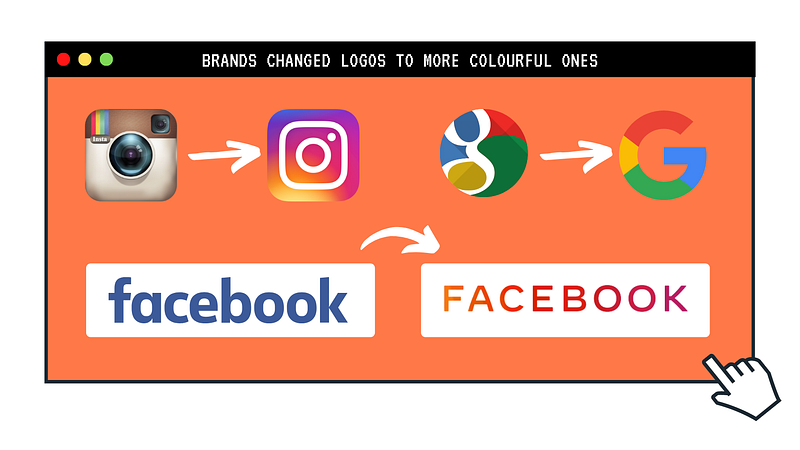
Colour and shape are the icebreakers when it comes to grabbing attention.
The New York Times interviewed Thomas Z. Ramsoy, the chief executive of Neurons. His business uses brain scans and eye-tracking technology to study apps, updates and future technology. The company often measures the electrical activity of the brain while a consumer is interacting with a phone, such as texting and scrolling Facebook.
“Color and shape, these are the icebreakers when it comes to grabbing people’s attention, and attention is the new currency,” he said. “Having an interface that grabs people’s attention without disturbing them in the wrong way, without consciously intruding in their space, that’s the fine line.”
But why are we so attracted to colours?
In a Medium post, tech entrepreneur Megan E. Holstein said “LCD colour screens stimulate parts of our brain we inherited from ancestors long ago. In nature, bright colours mean items of interest.”
Bright colour in a smartphone is adopted to make you feel that they have something you will find interesting or useful. Which isn’t the case most often.
So when the problem is colours, how can we stop it from distracting us?
Turn into a colour blind
Just kidding.
You don’t have to lose your eyes for that.
Instead, turn your phone’s display into greyscale (US; grayscale).
Greyscale mode removes all colours from your display making it black and white (monochrome).
No colours mean no distractions.
No distractions mean a more productive you.
Here’s how you can enable greyscale in your phone:
Turn On Greyscale in Android
- Turn on Developer Settings by going to ‘About Device’ and then pressing ‘Build Number’ several times until the phone says ‘you’re a developer’.
- Go back to settings and above ‘About Device’ you will now see ‘Developer Options’.
- Open it, select ‘Simulate Colour Space’ and set it to ‘Monochrome’.
Turn On Greyscale in iPhones
- Open up the Settings app in iOS.
- Go to ‘General’ and then click on ‘Accessibility’. The greyscale option can be found in the ‘vision’ section.
- Turn it on.
Ever thought why Notifications are red?
The simple explanation is that red is the most attention-grabbing colour.
You work, on the other hand, isn’t that attention-hungry.
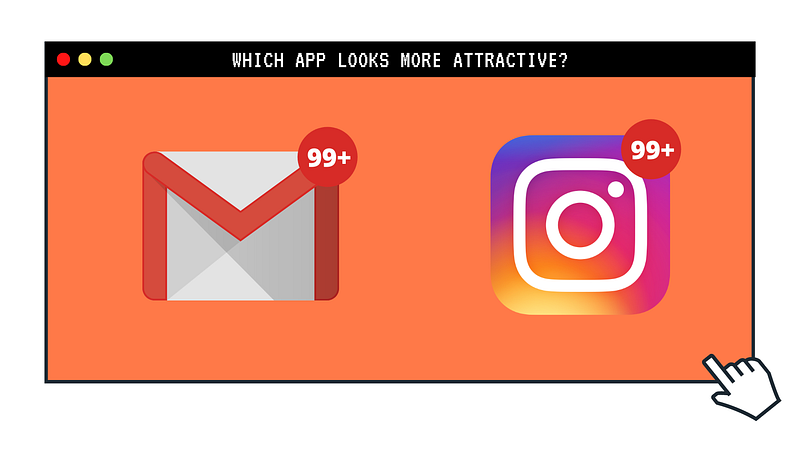
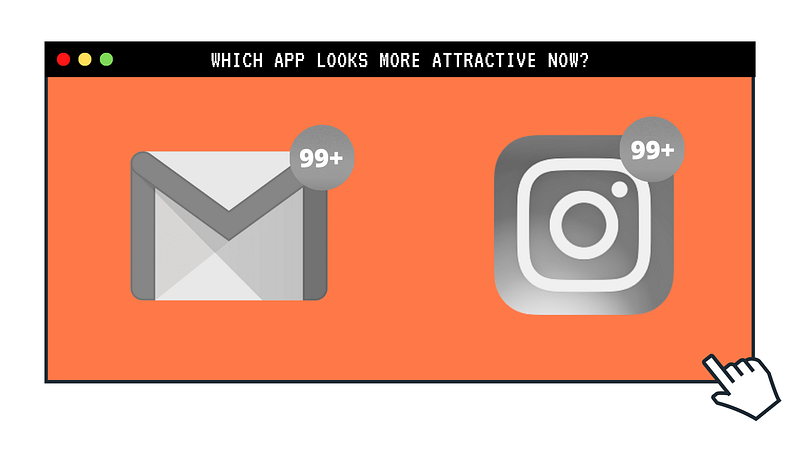
Companies leave no stones unturned to keep you hooked to their apps.
And this the time you break yourself free from their distractions.
To help you with this, we have our new series titled Hooked?
This is the first episode of which.
Share This Story
FACEBOOK | TWITTER | PINTEREST | EMAIL | LINKEDIN | POCKET
Follow Theciva
Recommended
How To Ignore Emails Without Getting Caught?
What Dark Mode Does To Your Eyes And Your Phone?
4 Quick Zoom Tweaks That Will Definitely Improve Your Meetings


