LGBTQIA, Equality
How Gender Fluidity Kills Toxic Binary Stereotypes
Your individual make up goes way beyond anatomy
If you have ever been unfairly squashed into a gender-box you didn’t deserve or want to be in, you’ve been affected by a societal stereotype.
If you have ever been asked to abolish a part of yourself to be suitable, you might have wondered why. Why all these limits? Why the pressure to throw away a part of you that feels perfectly natural?
We are all vastly unique. And yet, in many ways that matter, we seem to overlap.
Are we more similar than different?
Society is quick to divide us into groups, and generalize accordingly. Boys should love sports. Girls should learn to bake. Men don’t show their emotions. Women spend fortunes on their appearance.
And while a lot of people do fall into these categories, an equal amount of people don’t. And it shouldn’t be a big deal when they don’t.
We are always evolving. What’s widely accepted today, wouldn’t have been the case decades ago. Like female football teams, stay at home dads, women in military roles, men on the runway.
And while we’ve made some big steps towards equality in the past, a large portion of society’s view of female and male roles still remains rather uptight.
And it’s understandable — we have a long trail of history behind us, and we hold our traditional views dear. But can some of those traditional views be restraining?
According to The Mask You Live In, neuroscientists and psychologists agree that male and female brains are not that different after all. Research shows a 90% percent overlap in the psychological construct of both genders.
Also, let’s not forget the 1.7% of the population born intersex.
But as a society, we’ve developed extremes at both ends of the spectrum.
More people than we like to admit are affected daily by toxic masculinity and diminished femininity.
Gender stereotypes projected on people from a young age may cause them to forcibly suppress parts of themselves, for long periods of time. Often, at the exact age when self-discovery should be encouraged, it is instead suffocated.
The individual within suffers, and this can lead to harsh behaviours in return.
Our true self may be censored.
Since the moment we are born, we are shaped and molded to fit in.
Most of us will have experienced gender-specific expectations being imposed on us by well-meaning others. Whether or not they were a big deal to us at the time, some of them were annoying. Some limiting. Some even haunting.
And of course it often feels good to fit in the narrative, too. I cook hot dinner for my partner every day, because I genuinely enjoy doing it. He goes out and buys me things, because he genuinely enjoys giving gifts.
Stereotypes are ok, when they feel authentic and are chosen by the individual.
It’s also understandable, why people would expect a gender to behave a certain way. We simply can’t help how we’ve been brought up for generations.
Sometimes we know no different. Sometimes we don’t understand. Sometimes we cannot imagine how an entirely new concept could work in practice.
But things get tricky when people are expected, forced, or even emotionally blackmailed to follow these pre-printed scripts; regardless of how they feel inside.
So many people can’t chase their true dreams because something else has been conspired for them.
Many of us are also held backwards by our own presumptions about others, and how we think others perceive us.
I’m also quilty of this. I once gave up on my friendships with women, because I had a lifelong history of failed tries and broken bonds. So I subconsciously grouped all women together and put them in a box marked ‘Caution.’ For years that box stayed firmly sellotaped.
But then, meeting a non-binary friend completely opened my eyes.
Can we switch off the pressure?
The number of gender-fluid people is fast growing. In the UK, 1 in 250 people identify as non-binary.
And it seems far removed from being just a trend.
Social media, blogs, and online hubs like Medium, have given people the space to share their stories far and wide. Which means more people have been inspired to address their own experiences with unhealthy gender bias.
For many, gender fluidity is a form of self-care, and self-defense.
It’s an escape. It’s a way to rip off the ear tags, and climb out of the cages we don’t belong in.
And even for those of us who are happy in our gender, taking some inspiration from the gender fluidity concept can be eye-opening.
It can help us be more considerate and open. We can guide our kids to safely explore their talents, and discover who they are, in an unconfined way. We can learn to better support our friends and ourselves, when we do or crave things that are not considered ‘the norm’.
Because what is normal anyway? What’s normal to me can seem crazy to you. And we should be given the freedom to decide for ourselves.
Most importantly, we can move past controversy, and discover the open side of our mind (which most people do have by the way).
We can hold space for people to feel more content in their own personhood.
“Controversy is a bourgeois pastime. Our deeds are our true arguments.”
— George Orwell
I don’t want to be categorized, I just want to be me.
If you resonate with this statement, then you already understand the gender fluidity concept perfectly — including the people who decide to live it.
I love the idea. I feel amazing as a woman, but I have masculine and queer sides of me too. And I want to be able to express those fully without being suffocated by any narrow estimates. I don’t want to ever be robbed of those choices.
I don’t want to be told what I should look like, who to love, or when to have kids.
Equally, I want to be happy for people who have managed to find their way out of frustrations, or even traumas. I want everyone to be unapologetically themselves, or do whatever it takes to get there. (As long as it’s safe and healthy.)
Imagine a world where you can choose the labels that work for you.
How would it feel if you weren’t restricted to fit in a box? Who would you fancy, if you weren’t told who you’re supposed to be attracted to?
What would you do if you weren’t supposed to become anything?
Allowing ourselves to be fully authentic is healing. Whatever your true authentic is.
Many people’s true authentic fits in perfectly with the mainstream. And that’s fantastic too.
Fluidity just means not feeling confined. It means navigating through this life as your own entity.
It means being free to choose whatever you want your life to be, and spend it with whomever you happen to fall in love with. Regardless of gender, class, race, background or beliefs.
This attidude aids inclusivity for feminine men and masculine women, and everyone in between. It helps us understand the comments one might find cheeky or innocent, can really hurt another.
It means teaching our kids to be themselves, without enforcing what or who they should or shouldn’t like. As parents, we make suggestions, offer guidance and protect our kids. But we also help them express their authentic sides and explore their own truth, on their own (healthy) terms.
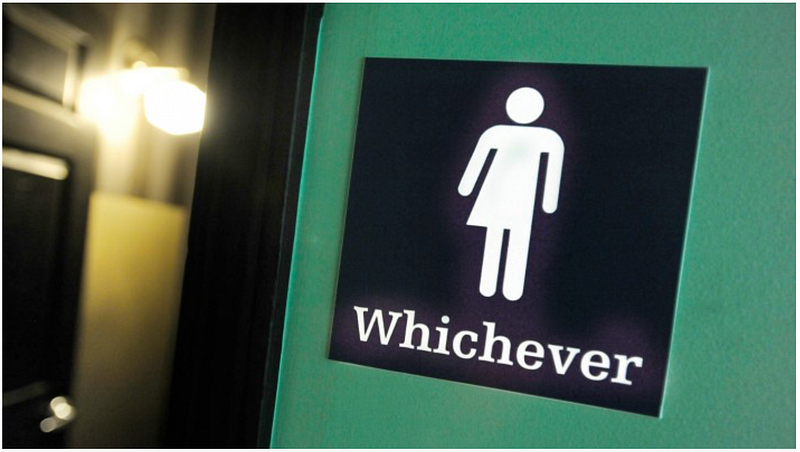
Of course there are a lot of grey areas. In fact, that’s what fluidity is all about.
One of London’s most iconic dance clubs, Fabric, was rocking non-binary toilets long before they were cool.
But they’ve also always kept an attended women-only corner, which a lot of girls were grateful for. Harassment and assault is a real struggle in our society. Non-binary toilets keep queer or transitioning people free from abuse, while the ladies’ room also offers harassment-free refuge to women. How do we go about that?
There’s no straightforward answer. Only questions.
Would anything change if we, as a society, applied more fluidity to our perception of genders and crushed the walls of restriction?
Would there be less toxic behaviour if people felt less frustrated to begin with?
For now, all we can do is love and support other people in their choices. Appreciate the courage and resilience it took to stand up for their truths. And celebrate the freedom they’ve gained in return.
Yes, gender is real.
But our complex, individual make up, that goes way beyond anatomy, is also real. How our unique Self feels as a person, is also real.
It’s totally ok to be comfortable in what’s considered a stereotype, if it makes you feel good.
It’s also ok to enjoy a wider range of possibilities, and we should encourage each other to explore them all.
We don’t always have to understand each other, and we don’t always have to agree. But it is crucial we learn to listen.
Listen to other people’s stories and their perspectives, and imagine yourself wearing their shoes. We can learn so much from each other. Staying open-minded, considerate, and equanimous, can sling open a surprising number of new doors.
In the past, I used to be too quick to judge. But who was I to be critical of other people, not knowing the first thing about their reality, and what they had been through?
For all I knew, if I was made to follow mainstream norms, I certainly wouldn’t have been me. So I did a 180.
I learned to swap judgement for curiosity, and rejection for compassion.
I realized that when we look at others, we are looking into a mirror.
We’re all trying to do the same — to be somewhat happy in this life, despite everything.
Offer freedom to others, and you free yourself.