
How Encouraging Little Boys To Play With Dolls Will Set Them Up To Be Good Fathers
Also — enough of this pink is for girls, and blue is for boys nonsense.

“I’m not playing with that; it’s for girls!”
He’s five years old and already believes dolls are for girls. Who told him this? His parents? Maybe, but he also sees this message in every toy shop, nursery, and play park. His world and lived experience continually perpetuate and reinforce his developing gender beliefs and internalised sexism.
His little antennae work overdrive to make sure his world is safe. He is constantly processing information and complying to fit in, to be loved, and to be what is expected of him.
He has no more free choice over what toys he plays with than a volunteer in mentalist and illusionist Derren Brown's performance. His culture and society at large hypnotise him.
Equality appears to have come on leaps and bounds, not discounting the enormous reverse step of abortion rights in America or the cataclysmic landslide of women’s rights in countries like Afghanistan.
But, the progress I speak of is limited to the adult world. The segregation and division among children seem to be deepening.
I recently walked through a giant toy shop looking for a present for a godchild. What I saw left me nauseous.
The store was drenched in pronatalism.
The store had specific boys’ and girls’ sections. This isn’t unusual. But it is damaging for many reasons.
The girls’ section may as well have had a subheading “mum in training tools.”
The toys in the girls’ area consisted primarily of dolls, pushchairs, and toy kitchens. From floor to ceiling, the restricted variety of toys oozed different hues of pink.
Meanwhile, the boys’ section was multi-colored, interesting, and jam-packed full of variety. A toy medley of opportunity and promise. Lego, trucks, cars, games, and sporting equipment. Toys to engage enthusiastic minds and take them on adventures.
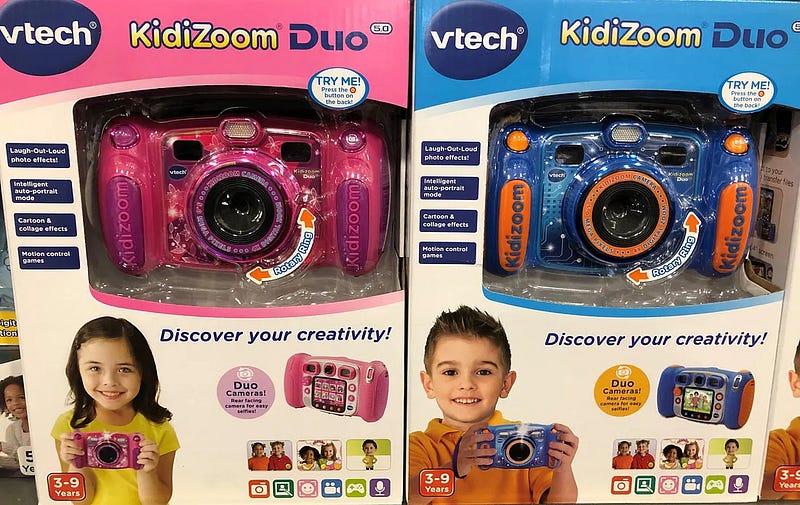
Toys are even less androgynous now than they were several decades ago. They are categorised by colour, label, or description to highlight what gender they are designed for.
Toys marketed for specific genders place children in corners; they are restrictive and build division.
Gendered toys tell boys and girls that looking after babies and playing house is a woman’s responsibility. These toys prime girls into a role that the patriarchy wants them to take. While in the same breath, it tells boys they are not responsible for babies or household duties.
Gendered toys tell boys they can go and have fun with cars and building blocks, use their brains on science puzzles, or run around and play while girls stay home and look after the baby.
I understand this may make you uncomfortable. Perhaps you are reading this and thinking, “But little Sophie asked for a dolly.” I don’t dispute this, but we have forced dolls onto little girls to such an extent that we have contorted their free will.
We have removed other toy options and compelled girls to conform. Similarly, we’ve pushed little boys away from dolls. Society, patriarchy, capitalism, and culture have a stake in this manipulation.
This study analysed how gender socialisation influences children. They observed children playing with dolls or trucks and, for the purpose of their study, manipulated the level of encouragement the parents provided for each toy.
The study found that children prefer the toys they have in their homes. The toys they have already been pushed toward. This highlights the impact of influence.
Personally, I think seeing a toddler or young child pushing a doll in a pram is grotesque at the best of times. But I find it particularly disconcerting that most of the time, this child is a girl. And yet, we have been brainwashed to think it is cute.
“Oh, look how nurturing she is; isn’t that sweet.”
Barely out of nappies (or diapers for you Americans) herself, our culture trains girls to be mothers — the baby trap. This situation even invites comments such as, “She’ll make such a good mother.”
What the actual frigajig?! She’s two years old; at least let her be a child herself before obsessing over her uterus.
You know these comments are said. You’ve probably heard them and maybe even said them yourself.
What if this little girl grows up and circumstances don’t allow her to have children?
All her life, the expectations of being a mother have been draped over her. Whether she wants to or not is another matter.
If we raise little girls to believe their primary worth lies in motherhood, what happens if this path is unattainable? What then?
When women want to be mothers and circumstances prevent this, disenfranchised grief may set in, which can take years of work to heal from. They may experience a crippling sense of inadequacy and feel like they are letting people down while sensing that the world views them as less than and worthless.
But it’s not just little girls that suffer from the gendered role of dolls. Boys are equally affected.
Men get a raw deal.
There is a general criticism of men not being involved enough with their children. Yet, throughout their own childhood, men are told dolls are for girls. Short of hearing the actual words, using toys and playing make-believe teaches boys their purpose is found away from children and outside the home.
Boys are taught that the responsibility of child-raising lies in the female domain.
A ubiquitous dialogue, both with and without words, surrounds the expectation of young girls being mothers when they grow up. This is reductive and restrictive. Little girls are bursting with potential outside of their reproductive possibilities.
For young boys, the dialogue is about what they want to be when they are older. Thankfully, fatherhood is rarely mentioned, let alone pushed on them.
With these different dialogues toward girls and boys, it’s no wonder men (and some women) grow up carrying cognitive biases that the care of children falls to women.
And what of the boys who want to play with dolls? The boys who are more attracted to the pink aisle than the toys labeled for boys. They are likely ridiculed, shamed, and bullied.
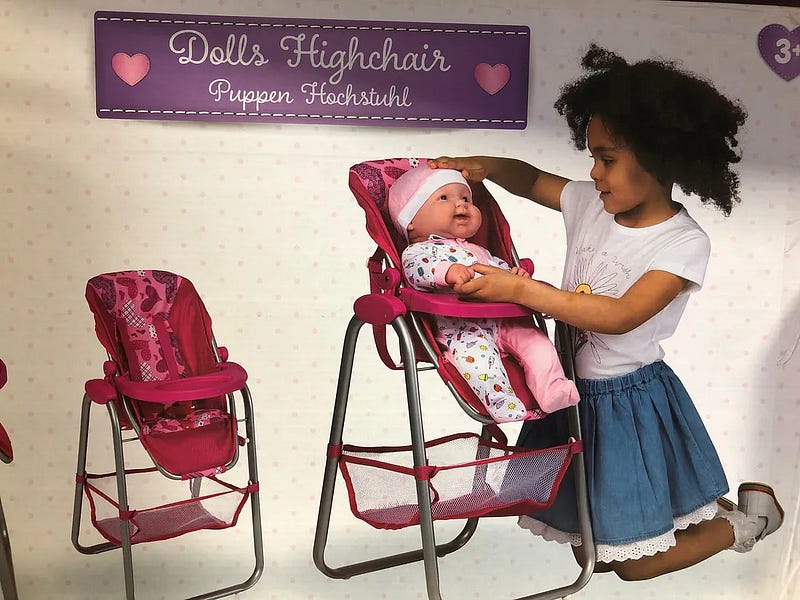
And don’t tell me girls are instinctively more nurturing.
Many studies have found a notable difference in how babies are treated based on their perceived gender.
For instance, if a baby is presented as a boy through the use of blue clothing and a male name, participants are more likely to engage them with toy trucks and tools. If the same baby is presented as a girl with pink clothing and a female name, participants direct them toward dolls and smile at them more.
Nature versus nurture is at play here. Gender stereotyping is the first restrictive box we place around our children.
For those who argue that little girls are just copying their mothers. This isn’t quite the flex it sounds like — think about it.
Time to invite greater equality
The lack of women in STEM is similar to the staffing issues in what has historically been considered more female roles — such as teaching and nursing. For too long, these roles have been heavily gendered.
This Guardian article outlines gendered toys’ role in deterring girls from engineering careers. They noted that STEM-type toys were three times more likely to be listed for boys than for girls.
It’s time to relegate the pink-for-girls-and blue-for-boys rhetoric.
Give girls building blocks and science kits, encourage them to get muddy, wear blue and black, and cut their hair short. If dolls must stay in circulation, give them to boys as well. Give boys permission to like pink and play dress up.
California is leading the way. The state recently introduced a law stipulating that major retailers must have gender-neutral aisles in their toy stores.
Sweden is also tackling gender stereotypes by introducing gender-neutral preschools. In these schools, children are not boxed into their gender or directed to specific toys.
Let’s set the younger generation up for a world of greater equality than we see today—a world with proper gender balance.
By making dolls unisex toys, we communicate that raising children is everyone’s responsibility, not just a woman’s. It also empowers little girls to imagine a future that doesn’t restrict them to motherhood.
If dolls were to become unisex toys, boys would grow up knowing that if they have children when they are older, they have an equal responsibility for their care.
By encouraging boys to play with dolls and girls to engage with trucks and building blocks, we shatter glass ceilings, open up opportunities, and reduce shame, pressure, and pigeonholing. We empower our children to be whatever they want to be.
Let’s use dolls to segue our way to a generation of incredible fathers.
What do you think?


